

The Osterman Weekend 1983

Directed by
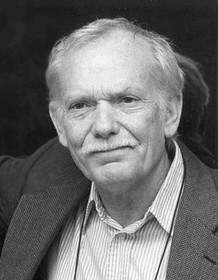
Sam Peckinpah
Made by

Osterman Weekend Associates
The Osterman Weekend Plot Summary
Read the complete plot summary and ending explained for The Osterman Weekend (1983). From turning points to emotional moments, uncover what really happened and why it matters.
CIA director Maxwell Danforth [Burt Lancaster] watches a recording of agent Laurence Fassett [John Hurt] and his wife in an intimate moment, a disturbing prelude to a violence that shocks Fassett to the core. When Fassett heads toward the shower, two KGB assassins slip into the bedroom and murder his wife, an act that shocks Fassett not because of its brutality alone, but because the CIA had sanctioned the hit. Grief and rage consume him as he searches for answers, and his pursuit leads him to a dangerous discovery: a Soviet spy network known as Omega.
Fassett’s grief becomes a strategic problem for the agency, because he links the killings to a covert operation that could threaten American interests if exposed. He identifies three men as the top Omega operatives: television producer Bernard Osterman [Craig T. Nelson], plastic surgeon Richard Tremayne [Dennis Hopper], and stock trader Joseph Cardone [Chris Sarandon]. Rather than publicly arresting them—an action that could provoke a KGB backlash—Fassett proposes an intricate workaround: recruit one of these three to the West’s side and use that insider to unravel the entire network with greater efficiency. His eye falls on John Tanner [Rutger Hauer], a controversial television journalist known for his sharp critiques of government power. Tanner has been close friends with Osterman, Tremayne, and Cardone since their Berkeley days, and Fassett believes he can steer one of them toward betraying Omega.
The CIA discreetly approaches Tanner, presenting him with a stark ultimatum: his closest allies are Omega agents, and the agency will not reveal this to the public. At first, Tanner’s skepticism is high, but Fassett can show him taped conversations with a shadowy Russian contact—clips in which Cardone discusses the possibility of targeting Tanner, Tremayne hints at leaving the country if “it” goes down, and Osterman speaks of radical change with the caveat that he wants it all to be paid for in a Swiss bank account. With this damning evidence, Tanner slowly comes to believe that the threat is real. He agrees to the risky plan, but only if the weekend reunion—a gathering of Osterman, Tremayne, Cardone, and their spouses—can be staged at his own home, and only if Danforth agrees to appear as a guest on Tanner’s show.
Tanner’s personal life is already strained. He asks his wife Ali [Meg Foster] to take their son away for the weekend to avoid dragging them into an operation they don’t understand. Fassett assures him that keeping the family safe at home is the CIA’s best defense, but Tanner remains unsettled. Fassett continues setting the stage: he sets up a large van on the grounds with a contingent of CIA agents nearby, and the home is wired with closed-circuit video to feed him evidence for the investigation. Ali’s patience wears thin as she senses the danger and the secret-carrying nature of her husband’s work.
The weekend arrives with a tense mood. Osterman, Tremayne, and Cardone—each harbored their own troubles engineered by the CIA to undermine them—move into Tanner’s house, their couples bringing a palpable strain to the atmosphere. On the second night, Fassett shares a video feed to Tanner’s dining room TV about Swiss bank accounts and illegal financial manipulation, a move that inflames Virginia Tremayne [Helen Shaver] and enrages Ali. Osterman reveals his discomfort with the whole enterprise, while the guests settle in for what promises to be a fragile, high-stakes convergence. The atmosphere is thick with suspicion, and the tension escalates when Tanner’s son discovers the head of their family dog in the fridge—a decoy that underscores Fassett’s intent to push boundaries—and Tanner, exasperated, demands that the CIA arrest the suspects.
The plot accelerates as Cardone and Tremayne, along with their wives, flee in Tanner’s RV after a standoff with Osterman. Tanner confronts Osterman, and a brutal confrontation follows, where Osterman asserts that he is not a traitor but merely engaged in illicit financial activity meant to shield funds from taxation. Osterman maintains that his actions are not aimed at harming the United States, even as the family becomes increasingly endangered. Fassett interrupts the confrontation with a calculated move: he detonates an explosive device remotely attached to the RV, killing Tremayne and Cardone, and unleashing a deadly assault on the house with his soldiers.
As chaos erupts, Fassett taunts Tanner, revealing that Danforth authorized his wife’s murder. He offers to release Tanner’s family if Tanner will expose Danforth on television, turning the trap into a televised spectacle that would shift the balance of power. The standoff culminates in a dramatic broadcast: Danforth prepares for a remote interview, while Tanner—assisted by Osterman—executes a carefully pre-planned sequence. Tanner introduces Fassett on the air, and Fassett, who is simultaneously beamed from a remote location, exposes Danforth as a murderer. Danforth’s public fury erupts in a paranoid tirade, and he vows to annihilate Fassett. Yet the crucial twist arrives when Tanner, having set a pre-recorded set of questions with Osterman’s help, uses the live feed to locate Fassett and shoot him. The angle of Fassett’s death preserves Tanner’s anonymity, making Fassett’s demise appear to be the result of Danforth’s threats turning real. In the end, Tanner’s wife, son, and dog are rescued, and the truth about Omega, Fassett’s actions, and the CIA’s heavy-handed tactics is laid bare in a way that leaves the audience to weigh the costs of such power.
This film threads a taut line between personal loyalty and political manipulation, exploring how a man driven by personal loss can be drawn into a high-stakes game of espionage and deception. It questions the ethics of covert operations carried out in the name of national security, and it probes the limits of trust when the very people who are meant to protect a nation become the architects of its darkest secrets. The conclusion leaves viewers with a striking final image: a family saved at the last moment, and a public exposure that exposes the risks—and the price—of fighting shadows in the name of safety.
The Osterman Weekend Timeline
Follow the complete movie timeline of The Osterman Weekend (1983) with every major event in chronological order. Great for understanding complex plots and story progression.
Danforth watches Fassett's tragedy
CIA director Maxwell Danforth watches a recording of Fassett and his wife in their home. When Fassett goes to the shower, two KGB assassins enter and kill his wife, an act the CIA had sanctioned. Fassett is left consumed by grief and rage, setting his vendetta in motion.
Fassett begins the hunt
Grief pushes Fassett into a methodical pursuit of the killers and the larger Omega network. He follows leads that uncover a Soviet spy ring and fuels his determination to unravel it. The pursuit is fueled by both personal loss and a sense of professional duty.
Omega top agents named
Fassett identifies three men as the top Omega agents: Osterman, Tremayne, and Cardone. He argues that arresting them would alert the KGB, so he proposes turning one to the West instead. He targets John Tanner, a controversial journalist with long ties to the trio.
Tanner is contacted and skeptical
The CIA approaches Tanner and lays out Fassett's theory, showing him videotaped evidence of his friends meeting with a Russian contact. At first, Tanner is skeptical about the plot, but the evidence begins to mount. He agrees to consider turning one of the Omega men during the upcoming reunion, provided Danforth appears on his show.
Osterman reunion planned
The Osterman reunion takes place over the weekend at Tanner's house, with the three Omega men present after recent CIA-engineered perturbations. Tanner invites Danforth to appear as a guest on his show. The mood is tense as the plan starts to unfold.
Ali and son kidnapped and rescued
On the way to the airport, Ali and Tanner's son are kidnapped, creating a personal crisis for Tanner. Fassett uses CIA support to ensure a rapid rescue, and Ali and their child are saved without harm. The kidnapper is shot dead in the process.
Surveillance and tension rise
The house is wired with closed-circuit video so Fassett can monitor the gathering. On the second night, video clips fuel paranoia and a disturbing moment with the family dog decoy. Ali becomes aware something is deeply wrong, heightening the stakes.
Guests reveal motives and quarrels
Osterman, Tremayne, and Cardone reveal their greed and the nature of their money schemes, including Swiss bank accounts to avoid attention. Tremayne's wife Virginia grows furious over the talk of money, while Ali confronts her in a heated moment.
Assassination orders and the RV escape
Fassett orders the CIA guards to kill Osterman, who fights back with bare-handed martial skill. Cardone and Tremayne and their wives escape in Tanner's RV, while Tanner presses Osterman for answers. Osterman dismisses the accusation and tries to justify their actions.
Fassett's TV revelation
Fassett appears on television and admits he knows Osterman and the others are tax evaders, not traitors. He uses the broadcast to undermine the trio and push his own agenda. The confrontation signals the next escalation in the quiet war.
Tanner locates Fassett and fires
In a chilling turn, the broadcast is used to triangulate Fassett's location. Tanner, with Osterman's help, locates Fassett and shoots him, ensuring Fassett's death ends the chase while preserving Tanner's anonymity.
Rescue and afterglow
Tanner rescues his wife, son, and the family dog after Fassett's death, and the plot is left in a state of unsettling resolution. The immediate threat is neutralized, but the moral ambiguity lingers. Tanner returns to his life, carrying the memories of the events.
The Osterman Weekend Characters
Explore all characters from The Osterman Weekend (1983). Get detailed profiles with their roles, arcs, and key relationships explained.
Bernard Osterman (Craig T. Nelson)
A suave television producer and principal Omega operative, Osterman exudes calm pragmatism and financial savvy. He values wealth and influence, counterbalancing moral questions with calculated risk. Though capable of manipulation, he remains confident in his own worldview and in the utility of the Omega network. His role makes him a key target of suspicion as Tanner tests who among his circle can be trusted.
Richard Tremayne (Dennis Hopper)
A plastic surgeon whose outward charm masks a readiness to relocate and sever ties if the political winds shift. Tremayne is anxious about his future and entangled in Omega through loyalty and greed. He embodies the tension between personal safety and public duty, showing how fear can drive one toward complicity. His reactions reveal the fragility of moral codes under pressure.
Joseph Cardone (Chris Sarandon)
A smooth stock trader whose business acumen translates into strategic risk within Omega. Cardone is cool, calculating, and ready to exploit opportunities for power. His allegiance seems flexible, depending on how wealth and influence can be best leveraged. His presence keeps the network's economic dimension at the fore.
Laurence Fassett (John Hurt)
CIA director portrayed as the mastermind behind the weekend's manipulation, orchestrating covert operations and the murder cover-up. Fassett embodies bureaucratic coldness, rationalizing murder in the name of national security. His televised confrontation with Danforth unravels the moral rot at the top of power.
John Tanner (Rutger Hauer)
A controversial TV journalist who distrusts government power, serving as the moral axis around which Omega's secrets rotate. He cautiously tests his friends’ loyalties and uses media to expose the truth while guarding his own safety. His wit and resolve drive the plot toward a dramatic, televised confrontation.
Maxwell Danforth (Burt Lancaster)
CIA director whose authority leads to violent actions and a public cover-up; he embodies the dangerous edge of power when unchecked by accountability. His orchestration of violence contrasts with the eventual exposure he faces on live television. Danforth's defiant tirade exposes a willingness to crush dissent for political control.
Ali Tanner (Meg Foster)
Tanner's wife, a stabilizing presence who becomes aware of her husband’s dangerous entanglements. Her kidnapping heightens the personal stakes and tests family loyalty under pressure. Ali’s concern and resilience illustrate the human cost of spy games.
Virginia Tremayne (Helen Shaver)
Wife of Tremayne, quick to react when tensions spill into violence and politics intrude on domestic life. She captures the volatile blend of anger and fear within the orchestrated weekend. Her outburst during the video confrontation marks the emotional toll of living under suspicion.
The Osterman Weekend Settings
Learn where and when The Osterman Weekend (1983) takes place. Explore the film’s settings, era, and how they shape the narrative.
Time period
Cold War era
Set during the late Cold War, the story weaves together themes of Russian espionage and Western counter-surveillance. The plot revolves around illicit Swiss banking and covert money trails, hinting at the era's financial dimensions of power. The tension between public accountability and secret operations mirrors real-world anxieties of the period.
Location
Tanner's house, Osterman's reunion location, CIA headquarters, television studio, Tanner's property
The action centers on a weekend gathering at Tanner's house for an Osterman reunion and on the CIA's operations hub, underscoring the collision of private life with state power. Scenes unfold at the TV studio and in the grounds around Tanner's property, where surveillance and covert orders shape the action. The settings emphasize how trust collapses when personal ties intersect with international espionage.
The Osterman Weekend Themes
Discover the main themes in The Osterman Weekend (1983). Analyze the deeper meanings, emotional layers, and social commentary behind the film.
🕵️
Espionage
Omega is a shadowy network that blurs lines between friendship and loyalty. Fassett demonstrates how intelligence work weaponizes personal connections, turning friends into possible betrayers. The plan to 'turn' one Omega member shows how trust can be manufactured and exploited. The finale reframes espionage as a public reckoning when truth is broadcast and power is challenged.
🎭
Power & Corruption
The film presents authority as a hidden mechanism of murder, cover-ups, and financial crime. Danforth’s order to kill on his own authority exposes the moral cost of unchecked power. The Swiss bank accounts plotline reveals wealth can shield wrongdoing from scrutiny. The narrative argues that information control is a weapon as dangerous as any physical weapon.
🎥
Media & Image
John Tanner’s role as a television journalist makes media a battleground and a tool for truth. The remote interview technique becomes a trap that lures power into the open while preserving chosen narratives. The contrast between public spectacle and private violence highlights how media can shape perception and accountability. When secrets go public, the film questions who really controls the story.
👨👩👦
Family
The threat to Tanner’s wife Ali and their child grounds the spy plot in emotional stakes. Family safety becomes leverage in the political game, forcing characters to choose between allegiance and protection. Ali’s resistance and resilience anchor the human cost of espionage. The resolution ultimately restores family bonds amid a wider political firestorm.

The Osterman Weekend Spoiler-Free Summary
Discover the spoiler-free summary of The Osterman Weekend (1983). Get a concise overview without any spoilers.
In a quiet stretch of the countryside, an isolated weekend house becomes the unlikely stage for a high‑stakes game of suspicion. The host, a hard‑edged investigative news program anchor, is quietly recruited by the intelligence community. Persuaded that the old college friends gathered for a leisurely reunion may be entangled in a plot that threatens national security, he finds his professional instincts colliding with a personal invitation to a seemingly ordinary gathering.
John Tanner brings his sharp, confrontational style to the table, yet his marriage to Ali and his role as a father already keep his life in a delicate balance. Across the lake, the CIA’s own presence is felt through Laurence Fassett, a seasoned operative whose calm demeanor masks a relentless drive for answers. The trio of old friends—Bernard Osterman, a television producer, Richard Tremayne, a plastic surgeon, and Joseph Cardone, a stock trader—share a history of intellectual camaraderie that now feels haunted by hidden agendas. Their spouses add another layer of interpersonal tension, turning what could be a simple reunion into a charged atmosphere of unspoken doubts.
The film’s tone is a slow‑burning thriller, where the bucolic setting is contrasted with a palpable undercurrent of paranoia. As the weekend unfolds, the lines between loyalty and betrayal blur, and the characters must navigate a web of personal histories, professional obligations, and the ever‑looming shadow of covert power. The atmosphere is one of restrained dread, inviting the audience to wonder how far each participant will go to protect what matters most, and what price will be paid when trust becomes a weapon.
Movies with Similar Twists and Themes
Uncover films that echo the narrative beats, emotional arcs, or dramatic twists of the one you're exploring. These recommendations are handpicked based on story depth, thematic resonance, and spoiler-worthy moments — perfect for fans who crave more of the same intrigue.



Featured on this page

What's After the Movie?
Not sure whether to stay after the credits? Find out!




Explore Our Movie Platform
New Movie Releases (2026)
Famous Movie Actors
Top Film Production Studios
Movie Plot Summaries & Endings
Major Movie Awards & Winners
Best Concert Films & Music Documentaries
Movie Collections and Curated Lists
© 2026 What's After the Movie. All rights reserved.