What Is The Night of the Generals About?
The premise of The Night of the Generals in 325 words, with nothing given away. The full story follows below.
In the bleak winter of occupied Warsaw, a German intelligence officer is pressed into service to untangle a murder that threatens to expose more than a single crime. The city’s streets are shrouded in fear and suspicion, and the investigator’s methodical mind moves through a landscape where loyalty is bought and betrayal is commonplace. The tone is a cold, calculated thriller, letting the weight of the war’s oppression seep into every inquiry.
The trail leads him to the inner circle of the Nazi hierarchy, where three senior generals each carry their own hidden agendas. General von Seidlitz‑Gabler appears as a seasoned commander whose cautious demeanor masks deeper calculations. General Kahlenberge is portrayed as a figure wrapped in ambition, hinting at a willingness to reshape the regime’s future. General Tanz radiates fierce devotion to the Führer, embodying the brutal resolve of the SS. Their interactions create a tense chessboard of power, suggesting that the murder may intersect with larger plans that could shake the very foundations of Hitler’s rule. The investigation becomes a delicate balance between uncovering facts and navigating a world where every answer invites new danger.
Decades later, the same unresolved mystery resurfaces, pulling a seasoned French police inspector into the dark legacy left behind by the war. Inspector Morand inherits a case that has lingered in the shadows of history, confronting aging witnesses and the lingering echo of old loyalties. The film weaves together the stark immediacy of wartime espionage with the lingering chill of a cold‑case revival, allowing the past to permeate the present.
Stylistically, the story moves at a measured pace, favoring patient deduction over spectacle. It immerses the viewer in a world where moral codes are fluid and the line between justice and survival blurs. The interplay of duty, ambition, and concealed motives sustains a pervasive sense of intrigue, inviting the audience to ponder how the sins of a tumultuous era continue to reverberate long after the guns fall silent.
What Happens in The Night of the Generals?
The complete story of The Night of the Generals, from the first scene to the last, in 869 words (about 4 minutes). Spoilers throughout. Names in the text link to 7 cast member pages.
Spoilers ahead
In a tense, morally complex thriller set between 1942 and 1965, a brutal murder in German-occupied Warsaw pulls a calculating Abwehr investigator into a long shadow of power and deceit. The case opens with the murder of a prostitute who is also a German agent, drawing in Major Grau (portrayed by Omar Sharif) as he follows a trail that points toward three powerful figures: General von Seidlitz-Gabler (portrayed by Charles Gray), General Kahlenberge (portrayed by Donald Pleasence), and General Tanz (portrayed by Peter O’Toole). Grau’s painstaking questions and cross-checks begin to reveal a conspiracy that could threaten the Nazi machine from within, but the moment he narrows the field, fate intervenes: a sudden promotion and a transfer to Paris cut the investigation short, leaving the truth suspended in the air.
Years later, Paris in July 1944 becomes a kaleidoscope of intrigue, ambition, and danger. The three generals are still central players: Kahlenberge is deeply involved in a plot to topple Hitler, Gabler is aware of it but sits on the fence, and Tanz—now a Waffen-SS General in command of the fictitious SS-Panzer Division Nibelungen—remains fiercely loyal to the Führer. The city hums with clandestine meetings, coded messages, and dangerous liaisons as Grau’s original suspects move through the corridors of power while their private lives unravel in public. Into this volatile mix enters the night of 19 July 1944, when Tanz orders his driver to procure a French prostitute. The execution is chillingly brutal: the woman is murdered, and Hartmann—Tom Courtenay in the role—becomes implicated. Yet Tanz offers Hartmann a chance to desert, an option Hartmann accepts, setting in motion a chain of events that Grau will chase across time.
As Grau, now a lieutenant colonel, re-enters the case, the pattern seems clear to him: Tanz is the killer. He arrays the evidence, reconstructs the night of the crime, and begins to pull at the threads that could bind Tanz to the murders in Warsaw and Paris. But in the wake of these discoveries, an even bigger shock hits: Hitler has survived an assassination attempt, and Tanz—ever the consummate shape-shifter—kills Grau and smears him as a conspirator to seal his own innocence. The balance of power shifts once more, and the war’s shadow reaches forward into the quiet, almost forgotten years that follow.
Fast forward to 1965, when a fresh murder of a prostitute in Hamburg triggers a new investigation led by Inspector Morand (portrayed by Philippe Noiret). Morand, who owes Grau a debt for past help, reopens the cold case with a cool, methodical eye. He revisits the key players: General von Seidlitz-Gabler and General Kahlenberge, interviewing them to parse what they knew and when they knew it. The hunt narrows to Tanz, who has recently been released from prison after serving a lengthy sentence as a war criminal. Morand follows a thread that leads him toward Hartmann—the same driver who carried out the fateful orders years earlier—and discovers Ulrike, the daughter of von Seidlitz-Gabler, who had a complicated relationship with Hartmann during the war and is now estranged from her parents. Ulrike is portrayed by Joanna Pettet, a detail that deepens the emotional texture of the pursuit as Morand pieces together how past loyalties resurface in the present.
As tensions tighten at a reunion dinner for Tanz’s former Panzer division, Morand confronts Tanz with the accumulated evidence and the testimony of Hartmann, who has been living in hiding and is finally brought forward as a witness. The confrontation exposes the web of loyalties and betrayals that Tanz has woven to protect himself, and in a final, devastating moment, Tanz commits suicide in a secluded room rather than face exposure. The case—closed in blood and shadow—leaves the investigators with a quiet, unsettling sense that history’s crimes can echo across decades, resurfacing in the most unexpected places and testing the limits of memory, justice, and conscience.
- The narrative unfolds with a cool, calculated pace that favors patient deduction over sensational action, allowing the moral ambiguities of wartime decisions to breathe on the page.
- The film anchors its international tapestry with a compact cast of powerful figures who each carry their own private codes and scars, making the pursuit as much about personal vindication as it is about uncovering a conspiracy.
- Throughout, the story balances two timelines with careful precision: the wartime hunt in the early 1940s and the cold-case revival of 1965, highlighting how the sins of the past reach through time to shape choices in the present.
- The emotional center rests on the uneasy alliance between duty and desire, as Ulrike’s fractured relationship with her parents and her past ties to Hartmann add a human layer to a plot driven by political intrigue and wartime violence.
In the end, the film leaves viewers with a stark meditation on loyalty, danger, and the ways in which truth can be manipulated, even when the cost is measured in lives already lost and reputations already shattered. The juxtaposition of historical upheaval and personal tragedy creates a narrative that is as much about memory as it is about murder, inviting audiences to weigh the responsibilities of those who serve and the collateral damage that accompanies the pursuit of power.
The Night of the Generals Timeline: Every Key Event in Order
12 key events in the order they happen, from “Grau begins investigation into Warsaw murder” to “Final confrontation at the Panzer division reunion”. 12 events name a place, across 5 locations.
- 1
Grau begins investigation into Warsaw murder
In German-occupied Warsaw, a prostitute is murdered. Major Grau of the Abwehr launches an investigation into the killing, collecting early clues and interviewing witnesses. His findings point toward the involvement of one of three German generals: von Seidlitz-Gabler, Kahlenberge, or Tanz.
When:1942 Where:Warsaw, Poland
- 2
Grau's pursuit halted by promotion
Grau's pursuit is abruptly halted when he is promoted and transferred to Paris, at the instigation of the very officers he suspects. The investigation is effectively suspended as he leaves Warsaw. The three suspects remain, and the case goes cold.
When:1942-1943 Where:Berlin, Germany
- 3
Paris becomes a battleground for the generals
By July 1944, Paris becomes a hotbed of intrigue as Grau and the three generals converge there. Kahlenberge is deeply involved in the plot; Gabler knows of its existence but remains on the fence while pursuing extramarital affairs; Tanz is loyal to Hitler and has moved into the SS.
When:July 1944 Where:Paris, France
- 4
Tanz orders murder of a prostitute
On the night of 19 July 1944, Tanz orders his driver Kurt Hartmann to procure a French prostitute. Tanz murders her in the same brutal manner as the Warsaw killing and implicates Hartmann in the act. Hartmann is offered the chance to desert as part of the cover-up.
When:19 July 1944 Where:Paris, France
- 5
Grau restarts the investigation in Paris
Grau, now a lieutenant colonel in Paris, learns of the murder and restarts his inquiry. He gathers enough evidence to accuse Tanz of the crime, though his timing draws suspicion from the conspirators. The investigation intensifies as Grau closes in on the killer.
When:July 1944 Where:Paris, France
- 6
Hitler assassination attempt reshapes the case
The following day, senior Wehrmacht officers attempt to assassinate Hitler, diverting attention from the murder. Grau presents his accusation to Tanz in person, but the news that Hitler survived shifts the dynamic. Seizing the moment, Tanz kills Grau to prevent exposure and frames him as a conspirator.
When:July 1944 Where:Paris, France
- 7
The 1944 case ends without resolution
With Grau dead and Hitler alive, the 1944 investigation collapses, and Tanz remains unexposed for the moment. The Paris plot and the murder are left unresolved in the eyes of the authorities. The killer evades accountability as the war moves forward.
When:July 1944 Where:Paris, France
- 8
Morand reopens the case in 1965
In 1965, Inspector Morand of Interpol reopens the cold case after Hamburg prostitute murders draw renewed attention. Morand owes Grau for not revealing his Resistance ties during the war. The investigation shifts from wartime intrigue to a persistent hunt for a modern killer.
When:1965 Where:Hamburg, Germany
- 9
Interviews with Seidlitz-Gabler and Kahlenberge
Morand interviews General von Seidlitz-Gabler and Major General Kahlenberge, who reveal limited information but implicate Tanz as the likely killer. They confirm wartime plots and relationships that tie to the murders. The leads narrow the suspect pool and sharpen Morand's focus.
When:1965 Where:Hamburg, Germany
- 10
Hartmann and Ulrike enter the trail
Morand traces Hartmann, who is still in hiding, and Seidlitz-Gabler directs him to Ulrike, the general's daughter who had a relationship with Hartmann and is now estranged. The connection to the wartime circle becomes clearer as the hunt intensifies.
When:1965 Where:Hamburg, Germany
- 11
Hartmann discovered living with Ulrike
Hartmann is found living with Ulrike, reinforcing the link to Tanz's past and the killings. Morand pieces together how the Warsaw and Paris murders fit into a single pattern carried forward decades later. The evidence accumulates toward a single suspect.
When:1965 Where:Hamburg, Germany
- 12
Final confrontation at the Panzer division reunion
At a reunion dinner for Tanz's former Panzer division, Morand confronts Tanz with Hartmann as a witness. Tanz withdraws to a vacant room and shoots himself, ending the long-running case and erasing the killer from the scene. The investigation finally closes with Tanz's suicide.
When:1965 Where:Germany
Who Are the Main Characters in The Night of the Generals?
8 characters, among them Corporal Hartmann (Tom Courtenay), Major Grau (Omar Sharif) and General Franz Tanz (Peter O'Toole): who each one is and the part they play in the story. Every profile links to the actor’s page.
-
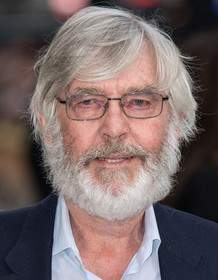
Corporal Hartmann (Tom Courtenay)
Played by Tom Courtenay
Hartmann is Tanz’s driver who becomes increasingly entangled in the murder plot. He is offered desertion as a way out, which he accepts, and he later hides while the conspiracy shifts. His evolving loyalties and risky choices make him a crucial link between wartime crimes and the later investigation.
- 🧭 Loyalties
- 💥 Coercion
-
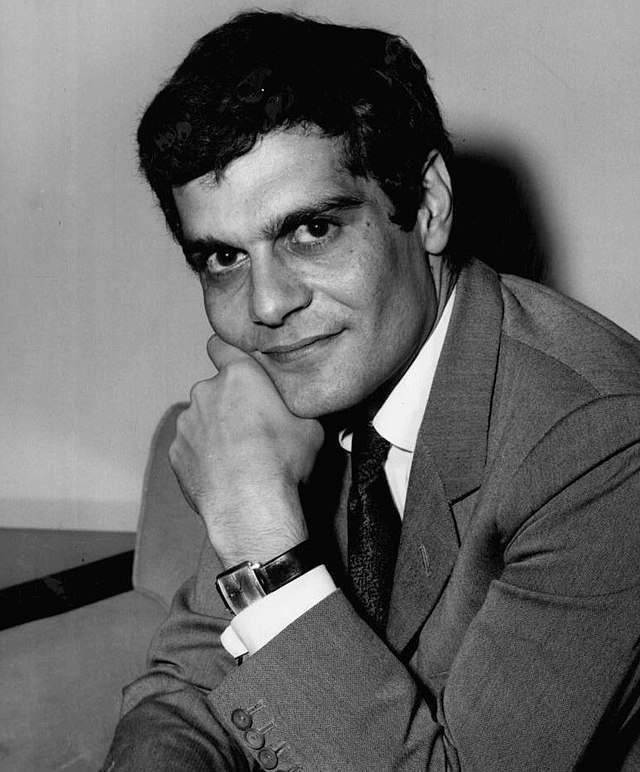
Major Grau (Omar Sharif)
Played by Omar Sharif
An Abwehr officer who relentlessly pursues the killer across occupied territories. His evidence points toward powerful generals, but political maneuvering and bureaucracy threaten to derail the case. Grau embodies the tension between duty and the danger of exposing senior figures.
- 🧭 Investigation
- ⚖️ Duty
-
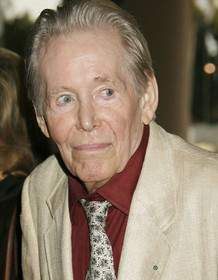
General Franz Tanz (Peter O'Toole)
Played by Peter O'Toole
A highly decorated officer fiercely loyal to Hitler, Tanz orchestrates the murders to protect a larger plan and maintain his status. He exudes cold calculation and control, yet his actions eventually unravel as the truth closes in. Faced with exposure, he kills Grau and ultimately takes his own life to avoid consequences.
- 🎖️ Power
- 🔪 Cruelty
- GV
General von Seidlitz-Gabler (Charles Gray)
Played by Charles Gray
A senior Wehrmacht commander who is entangled in the plot while maintaining appearances in the military hierarchy. His extramarital affairs reveal personal vulnerabilities amid political machinations. He ultimately contributes to steering the investigation toward the conspirators.
- 💼 Politics
- 💔 Affairs
-
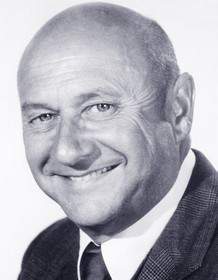
Major General Kahlenberge (Donald Pleasence)
Played by Donald Pleasence
A high-ranking staff officer deeply involved in the anti-Hitler plot, he represents the cold logic of military power used to facilitate treason. His role demonstrates how bureaucratic authority can enable atrocities. His involvement comes to the fore in the 1965 pursuit of accountability.
- 🛡️ Authority
- 🧭 Strategy
-
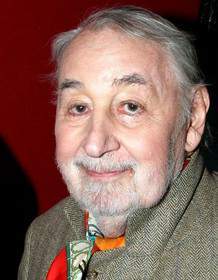
Inspector Morand (Philippe Noiret)
Played by Philippe Noiret
An Interpol inspector who reconnects with Grau decades after the war and reopens the cold case. He embodies persistent investigative resolve and a commitment to linking wartime crimes with present-day accountability. Morand drives the cross-era pursuit that culminates in a confrontation with Tanz.
- 🔎 Investigation
- 🧭 Memory
- UV
Ulrike von Seidlitz-Gabler (Joanna Pettet)
Played by Joanna Pettet
The daughter of von Seidlitz-Gabler, she had a relationship with Hartmann and is now estranged from her parents. Her position places her at the intersection of personal history and wartime actions, making her a key conduit between Hartmann and the Seidlitz-Gabler family.
- ❤️ Family
- 👩 Relationships
-
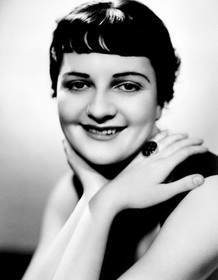
Eleanore von Seidlitz-Gabler (Coral Browne)
Played by Coral Browne
A married woman connected to General von Seidlitz-Gabler, her presence underscores how power and romance intertwine in occupation-era society. She navigates a world of intrigue with sophistication, highlighting manipulation and desire amid military politics.
- 💼 Influence
- 💔 Affairs
Where and When Is The Night of the Generals Set?
The Night of the Generals is set in Warsaw, Paris and Hamburg (1942-1944, 1965). Here is why the time and place matter to the story.
When
1942-1944, 1965
The story shifts between the early years of World War II and the mid-1960s, when memories of the war resurface in an Interpol inquiry. Wartime events center on Grau's pursuit of a killer within a corrupt network of generals, while the 1965 segments track a renewed investigation that seeks accountability across decades. The film ties the urgency of occupied Warsaw and Paris to the distant echoes of justice in Hamburg during a very different Europe.
Where
Warsaw, Paris, Hamburg
The narrative unfolds across key wartime cities. Warsaw is the setting for the original murder that starts the investigation, reflecting the harsh reality of German-occupied Poland. Paris becomes a hub for high-level Wehrmacht intrigue and plotting against Hitler, while Hamburg provides a backdrop for postwar investigative threads. These locations underscore how war encroaches on private lives and state power alike.
- 🗺️ Warsaw
- 🗺️ Paris
- 🗺️ Hamburg
What Are the Themes of The Night of the Generals?
3 ideas the story keeps returning to, among them Moral Ambiguity, Conspiracy and Murder and Memory and Accountability.
-
01
Moral Ambiguity
Duty, loyalty, and personal survival collide in wartime. Grau operates within a system that may protect its own, while Tanz exemplifies brutal fidelity to power. Hartmann is pulled by coercion and self-preservation, highlighting how opaque authority can distort right and wrong. The narrative probes how quickly morality dissolves when lives and careers hang in the balance.
-
02
Conspiracy and Murder
A murder trail moves through Warsaw and Paris as generals maneuver to safeguard a larger plot against Hitler. The killings are used as instruments of political leverage and cover-up, revealing how war-time elites manipulate truth. The investigation exposes a machinery of power where murder becomes both tool and shield. The consequences ripple across time, affecting future generations.
-
03
Memory and Accountability
decades later, an Interpol inspector revisits the case to seek accountability. The interconnected fates of Hartmann, Ulrike, and the conspirators reveal how memory can haunt the present. The pursuit questions whether history can convict the living and whether justice can arise from long-suppressed crimes. The finale asserts that the past remains a force that demands reckoning.
What Kind of Film Is The Night of the Generals?
Dark in tone, with slow pacing and a complex story, going by the plot summary.
- Tone
- Dark
- Pacing
- Slow
- Story
- Complex
- Intensity
- High
- Ending
- Sad
A slow-burning, morally complex thriller that methodically follows a decades-spanning murder investigation within the Nazi high command, creating a tense and oppressive atmosphere where the pursuit of justice is constantly shadowed by political intrigue and personal betrayal.
- suspenseful
- morally complex
- methodical
- oppressive
- paranoid
- somber
- crime investigation
- nazi germany
- political conspiracy
- assassination plot
Content notes: murder, war violence, suicide, nazi war crimes.
Quiz
How well do you remember The Night of the Generals? Test yourself on the story.
Where to Watch The Night of the Generals
Rent or buy it from Amazon Video and Apple TV Store. US availability and prices from JustWatch.





Streaming availability in the US, powered by