

What Is The Mouse on the Moon About?
The premise of The Mouse on the Moon in 315 words, with nothing given away. The full story follows below.
In the rolling hills of a diminutive European kingdom, the ancient stone walls of Grand Fenwick’s castle hide a surprisingly modern dilemma: a sudden shortage of hot water threatens both comfort and the country’s fragile finances. The duchy, famed for its quirky customs and centuries‑old aristocracy, finds itself staring at a crisis that feels far larger than its borders, prompting the leadership to look beyond its own modest borders for a lifeline.
At the heart of the effort stands the imperious yet endearing Grand Duchess Gloriana XIII, whose regal poise masks a practical concern for her people’s well‑being. She relies heavily on her shrewd Prime Minister, Rupert Mountjoy, a man whose schemes blend ambition with a touch of eccentricity, as he drafts an unlikely diplomatic overture. Assisting them is the kingdom’s solitary scientific mind, Professor Kokintz, whose inventive spirit is matched only by his willingness to entertain the most outlandish possibilities. Adding youthful optimism to the mix is his son, Vincent, a bright‑eyed idealist dreaming of the stars while navigating his father’s lofty expectations.
Across the Atlantic, the United States and the Soviet Union, both eager to showcase their commitment to international cooperation in the space age, respond with offers that are as generous as they are competitive. Their involvement turns the modest water‑crisis into a stage for Cold‑War posturing, with each superpower hoping to shine a spotlight on its own technological prowess—yet both are intrigued by the tiny nation’s sudden ambition.
The film swirls together dry British wit, satirical politics, and a gentle affection for the underdog. As Grand Fenwick’s leaders juggle grandiose plans with everyday necessities, the story teases the audience with the notion that even the smallest country might find a way to reach for the moon—if only to secure a comfortable bath. The tone remains light‑hearted and buoyant, promising a charming blend of history, comedy, and a splash of interstellar imagination.
What Happens in The Mouse on the Moon?
The complete story of The Mouse on the Moon, from the first scene to the last, in 618 words (about 3 minutes). Spoilers throughout. Names in the text link to 1 cast member page.
Spoilers ahead
Financial disaster looms for Grand Fenwick when the country’s only export, wine, begins exploding in the faces of would‑be drinkers. Grand Duchess Gloriana XIII, played by Margaret Rutherford, faces the crisis with a mixture of old‑world charm and stubborn poise as the duchy slides toward financial collapse. To save the realm, the government’s cunning Prime Minister Rupert Mountjoy, [Ron Moody], hatches a plan that sounds almost too good to be true: appeal to the United States for a loan, ostensibly to fund Grand Fenwick’s entry in the race to the Moon, but really to rescue the duchy while delivering a sly promotion of television and modern plumbing so the prime minister can enjoy a hot bath in comfort. He calculates that the Americans will not swallow the tale whole, yet they may view the half‑million dollars he asks for as cheap propaganda in support of their grandiose calls for international space cooperation. The twist is sweeter still when the Americans respond with a gift that doubles the loan amount, a gesture Mountjoy greets with gleeful triumph. The Soviets, not wishing to be outdone, answer with their own competitive remark—a rather antiquated rocket, whose nose cone even shatters a Parliament window in the process.
Mountjoy seeks out resident scientist Professor Kokintz, [David Kossoff], and asks him to choreograph a tiny explosion during the “launch” to make the mission appear spent, as if the money has already gone toward real space achievement. At the same time, the news media spins a cheerful narrative of international cooperation in space, proudly citing American funding, Soviet rocket technology, and even a British‑made watch worn by Vincent as part of the moon mission’s charm. The public eats it up, and Mountjoy’s gamble seems to be paying off—until the personal side of the plan begins to surface.
Vincent Mountjoy returns from England with the air of a young man who has absorbed a strong sense of fair play and a genuine desire to become an astronaut. Mountjoy’s disappointment at his son’s honesty is tempered by Kokintz’s startling discovery: the exploding wine, if treated correctly, could serve as efficient rocket fuel. The two men begin quietly preparing the ship for a real launch, turning a farce into a covert propulsion project. Meanwhile, Maurice Spender, a bumbling spy sent by cautious British officials, tours the ship and reports back that it’s all a hoax—a revelation that adds comic tension as the crew presses forward.
The moment of truth arrives when Mountjoy invites the Americans, Soviets, British, and other European dignitaries to witness the launch. To everyone’s astonishment, the rocket lifts off with Kokintz and Vincent aboard, and Kokintz calculates a three‑week journey to the Moon. The arena of global prestige buzzes with excitement as the rival powers scramble to beat the launch, racing their own rockets ahead of schedule. In a twist of fate, Vincent accidentally flips a switch, accelerating the vessel and making him and Kokintz the first humans to set foot on the Moon. The latecomers find themselves left in the dust, nearly docking with the wrong ships and then hitching a ride home with Kokintz and Vincent when their own return attempts go awry.
Back on Earth, the return is marked not by triumph alone but by a flurry of diplomatic posturing as the Americans and Soviets try to salvage a propaganda victory, while the British and other European figures debate what really happened. In the end, the memorial ceremony in Grand Fenwick turns away from the geopolitical squabbles and toward a symbol of triumph: Grand Duchess Gloriana XIII unveils a statue commemorating the Moon mission, a cheeky, quiet nod to the country’s unlikely role in one of the era’s most theatrical space‑aged hoaxes.
The Mouse on the Moon Timeline: Every Key Event in Order
14 key events in the order they happen, from “Economic crisis drives loan request” to “Gloriana unveils the commemorative statue”. 14 events name a place, across 11 locations.
- 1
Economic crisis drives loan request
Grand Fenwick faces a financial disaster as its wine exports collapse in the market. Mountjoy decides to ask the United States for a loan, ostensibly to fund a Moon race. He believes the Americans will view the request as inexpensive propaganda to promote international co-operation in space, saving the duchy in the process.
When:Pre-launch period Where:Grand Fenwick
- 2
US loan becomes outright gift
The Americans not only grant the loan but send back double the amount as a gift. Mountjoy interprets this windfall as a stroke of lucky propaganda, convinced that Grand Fenwick's space ambitions are timely. The windfall fuels the project and solidifies his plan to stage a launch.
When:Shortly after loan agreement Where:Grand Fenwick / United States
- 3
Soviet rocket delivers obsolete hardware
The Soviets respond by delivering an old rocket, hoping to outdo the Americans. The launch broadcast is punctured when its nose cone accidentally smashes a window in Grand Fenwick's Parliament. The incident becomes a symbolic misstep in the hoax-filled plan.
When:Following loan gift Where:Grand Fenwick Parliament
- 4
Mountjoy plans a staged explosion
Mountjoy asks Professor Kokintz to arrange a small explosion during the 'launch' to show that the funds have been spent. He hopes to fool observers into believing the project is real and well-funded. Kokintz agrees and begins to orchestrate the deception in secret.
When:Launch preparations Where:Launch facility / ship
- 5
Media celebrates 'international cooperation'
News media commends Grand Fenwick for promoting international co-operation in space. They cite the American funding, Soviet rocket technology, and even a British horology element—the watch Vincent wears—as part of the mission's lore. The coverage helps sell the hoax to a global audience.
When:Launch preparations Where:Grand Fenwick / international media
- 6
Vincent returns home, aims for space
Vincent returns after studying in England, bringing a strong sense of fair play and ambition to become an astronaut. Mountjoy is disappointed that Vincent won't be a dutiful heir, but instead a rising rival who wants to fly. The new dynamic sets the stage for the actual flight.
When:Post-education return Where:Grand Fenwick
- 7
Kokintz discovers rocket fuel from wine
Professor Kokintz reveals that exploding wine, properly treated, can serve as rocket fuel. The discovery provides a plausible rationale for the staged expenditure and the claimed propulsion. Vincent and Kokintz secretly begin preparing the rocket for flight.
When:After Vincent's return Where:Kokintz's lab aboard the ship
- 8
Secret partnership for the flight
Kokintz and Vincent work in secret, planning the launch and improvising with limited resources. They begin modifying the vessel and rehearsing the mission away from prying eyes. The plan hinges on convincing others that the mission is a real, funded voyage.
When:Pre-launch Where:Ship / Launch facility
- 9
Spender uncovers the hoax
Maurice Spender, a bumbling British spy, tours the ship and witnesses the 'truth' behind the mission. He reports back to his bosses that the launch is a hoax, adding a layer of international intrigue. His suspicions set up a potential diplomatic headache for Grand Fenwick.
When:Pre-launch Where:Ship
- 10
Dignitaries attend the launch
Mountjoy invites the Americans, Soviets, British, and other European dignitaries to witness the launch. The ceremony marks the public face of the project. The rocket lifts off with Kokintz and Vincent aboard, seemingly as a real government-backed flight.
When:Launch day Where:Launch site, Grand Fenwick
Show the other 4 events of The Mouse on the Moon Hide the last 4 events
- 11
Moon trip and first landing
The voyage is supposed to take three weeks to reach the Moon, and Vincent accidentally hits a switch that speeds up the journey. Kokintz and Vincent become the first humans to set foot on the Moon. The arrival disrupts expectations, leaving the later fleets to scramble, with their propaganda plans in disarray.
When:Three weeks after launch Where:Moon
- 12
Rival nations race home in chaos
The Americans and Soviets race to salvage a propaganda edge, nearly entering the wrong ships and then plummeting into the soft lunar dust as they attempt lift-off. They unexpectedly hitch a ride back with Kokintz and Vincent to return home. The whole space-race mood collapses into farce.
When:After Moon landing Where:Moon and lunar vicinity
- 13
Return and memorial ceremony
The astronauts return to Grand Fenwick during a memorial ceremony, having been out of radio contact for weeks and presumed lost. Diplomats immediately start squabbling about who reached the Moon first. The affair ends up as a public relations satire rather than a serious triumph.
When:Upon return Where:Grand Fenwick
- 14
Gloriana unveils the commemorative statue
Grand Duchess Gloriana XIII unveils a statue commemorating the successful moon mission. The ceremony provides a celebratory culmination amid the diplomats' squabbling, underscoring the film's satirical tone.
When:Memorial ceremony Where:Grand Fenwick
Who Are the Main Characters in The Mouse on the Moon?
5 characters, among them Grand Duchess Gloriana XIII — Margaret Rutherford, Prime Minister Rupert Mountjoy — Ron Moody and Professor Kokintz — David Kossoff: who each one is and the part they play in the story. 4 of them link to the actor’s page.
-
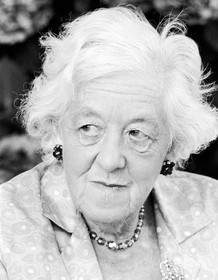
Grand Duchess Gloriana XIII — Margaret Rutherford
Played by Margaret Rutherford
Regal and composed, she remains above the schemes of her ministers while embodying the duchy’s eccentric charm. She projects dignity even as the story parodies her power and the world’s expectations of royalty. Her decision to unveil a monument at the end marks a wry, ceremonial victory over international competition.
- 👑 Royalty
- 🧠 Wry satire
-

Prime Minister Rupert Mountjoy — Ron Moody
Played by Ron Moody
A cunning, self-serving politician who sees the space program as a funding ploy and a vanity project. He orchestrates the loan and leverages foreign goodwill for political gain, while showing a flair for grand bravado. His machinations drive the central satire of national pride clashing with global scrutiny.
- 🗳️ Politician
- 💡 Schemer
- PK
Professor Kokintz — David Kossoff
Played by David Kossoff
A resident scientist whose cheerful demeanor hides a practical, problem-solving mind. He discovers that exploding wine can be repurposed as rocket fuel, and he helps drive the moon mission forward. He represents the odd blend of scientific curiosity and willing complicity that fuels the film’s misadventures.
- 🔬 Scientist
- 🧪 Inventor
- MS
Maurice Spender — Terry-Thomas
Played by Terry-Thomas
A bumbling British spy who clumsily surveys the ship and reports back, triggering countermeasures and suspicion. His comic incompetence provides a foil to the more strategic scheming around the mission. He embodies the era’s spy farce that undercuts supposed vigilance with sheer ineptitude.
- 🕵️♂️ Spy
- 😂 Comic relief
- VM
Vincent Mountjoy
Mountjoy’s son, educated in England, who embodies the modern, fair-minded aspiration to become an astronaut. He brings a sense of ambition and integrity to the mission, and his enthusiasm clashes with the political machinations back home. He ultimately becomes part of the Moon landing, symbolizing genuine courage over calculated propaganda.
- 🧑🚀 Astronaut-in-waiting
- 🕊️ Idealism
Where and When Is The Mouse on the Moon Set?
The Mouse on the Moon is set in Grand Fenwick and Moon (1960s). Here is why the time and place matter to the story.
When
1960s
The story unfolds during the Cold War era, when the United States and the Soviet Union guard dominance in space. Propaganda and grand gestures shape international relations, while technology like rockets and watches symbolize prestige. The period's sense of national pride is mirrored in Grand Fenwick's bold yet ridiculous bid to join an international space venture.
Where
Grand Fenwick, Moon
Grand Fenwick is a tiny, fictional duchy in Central Europe, famed for its erratic wine and idiosyncratic politics. Its Parliament and royal household become the stage for a global satire as leaders scheme to manipulate the space race. The setting juxtaposes a quaint duchy against the connotations of Cold War diplomacy, while the exploding wine provides the most literal symbol of its brinkmanship.
- 🏰 Grand Fenwick
- 🚀 Space race satire
- 🌕 Moon
What Are the Themes of The Mouse on the Moon?
3 ideas the story keeps returning to, among them Political Satire, Space Race Satire and Diplomacy vs Propaganda.
-
01
Political Satire
A playful lampoon of Cold War diplomacy, the film uses Mountjoy's scheming and the wheeling-dealing with foreign powers to expose how grand gestures can mask petty politics. Delegates from multiple nations are drawn into a theater of bluster, where rhetoric often substitutes for substance. The ending underscores how domestic vanity can steer international affairs into farce.
-
02
Space Race Satire
The makeshift Grand Fenwick space program turns the space race into a circus of miscommunication and comic improvisation. An exploding wine fuel experiment becomes a literal rocket, highlighting how improvisation and luck replace sophistication in cutting-edge ventures. The mishaps culminate in a Moon landing that exposes the ridiculous competition behind national prestige.
-
03
Diplomacy vs Propaganda
Diplomacy is treated as performance art, with nations using cooperation as a backdrop for their own propaganda. The Americans, Soviets, and British all claim credit for events that are knowingly staged or accidental, revealing the gap between public narratives and real outcomes. The film suggests that true cooperation is less important than the spectacle of unity.
What Kind of Film Is The Mouse on the Moon?
Whimsical in tone, with steady pacing and a straightforward story, going by the plot summary.
- Tone
- Whimsical
- Pacing
- Steady
- Story
- Straightforward
- Intensity
- Low
- Ending
- Happy
A charming and whimsical Cold War satire that follows a tiny nation's accidental but triumphant moon mission, creating a lighthearted and comical feel throughout.
- satirical
- quirky
- lighthearted
- celebratory
- comical
- charming
- cold war satire
- small vs large
- space race
- diplomatic farce
Quiz
How well do you remember The Mouse on the Moon? Test yourself on the story.
Where to Watch The Mouse on the Moon
Stream it on FlixFling and fuboTV, or rent or buy it from FlixFling. US availability and prices from JustWatch.
Stream 9
 FlixFling
  fuboTV
  MGM Plus
  MGM Plus Roku Premium Channel
  MGM+ Amazon Channel
  Mometu
  Philo
Philo  ScreenPix Amazon Channel
  ScreenPix Apple TV channel
 Rent or buy 1
Streaming availability in the US, powered by 


