
The Man in the White Suit 1951

Directed by
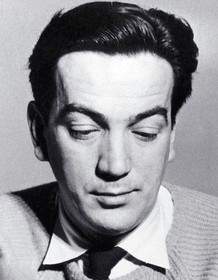
Alexander Mackendrick
Made by

The Rank Organisation
The Man in the White Suit Plot Summary
Read the complete plot summary and ending explained for The Man in the White Suit (1951). From turning points to emotional moments, uncover what really happened and why it matters.
Sidney Stratton, a gifted research chemist and former Cambridge scholar, is driven by a bold dream: to create a fibre that never wears out and resists dirt. His obsession with perfecting this miracle material leads him to pursue costly laboratory facilities, a pursuit that repeatedly burns bridges with employers who don’t want to bankroll his experiments. He ends up working as a labourer at Birnley Mills, where his genius remains largely unseen by the day-to-day pace of the factory floor. Yet behind the scenes, Stratton uses restricted access to research gear, grinding away at the challenge until, through stubborn experimentation, he yields a breakthrough—an extraordinary synthetic fibre that behaves unlike any other textile.
The fabric itself commands attention. Woven into a suit, it shines with an intense, pure white glow, a feature born from traces of radioactive compounds in its molecular structure. Crucially, the material repels dye and resists wear, promising a revolution that could render conventional clothing obsolete. At first, the world sees a scientific triumph: the press hails Stratton as a pioneer, and mill owners sense an opportunity to redefine the industry’s prestige. The immediate response from the textile world is celebratory; the potential economic windfall appears enormous, and Stratton basks in the glow of public adulation.
But the jubilation is short-lived. As the implications sink in, both management and labor begin to glimpse the storm clouds gathering. If garments made from Stratton’s fibre never wear out, the demand for mass-produced clothing would plummet, threatening the livelihoods of thousands and destabilizing a delicate economic balance. Industrialists worry about ruinous unemployment and collapsing profits, while union leaders fear the loss of bargaining power and the social upheaval that could follow. Pressure mounts from all sides. In a fraught attempt to secure control over his invention, the mill owners press Stratton to relinquish the formula; meanwhile, some union figures push him to suppress it altogether. Stratton, however, remains steadfast, convinced of the greater good and unwilling to surrender his discovery for short-term gain or coercive deals.
The personal angle intensifies when the mill owner’s daughter enters the scene. Daphne Birnley is drawn into the conflict, initially tasked with persuading Stratton to abandon the work in exchange for a settlement of £5,000. She embodies a moral complexity: she is torn between a dutiful compliance with the interests of her father and a growing respect for Stratton’s unwavering conviction. As their interactions unfold, Daphne’s stance shifts from negotiation to endorsement of openness—she urges him to publish rather than conceal, recognizing the broader good his invention could serve. Yet the larger forces arrayed against him continue to press inward, and Stratton begins to comprehend that alliances are scarce. He discovers that even those closest to the venture—workers, bosses, and friends—are wary of the consequences and fear the disruption that would ripple through every level of society.
The tension crescendos into a dramatic chase through the night. Stratton, wearing the luminous white suit, is forced to run from a mob of industrialists and workers who view him as both an opportunity and a threat. The pursuit is relentless, and the street becomes a stage for a perilous confrontation between progress and panic. Just as the crowd seems poised to close in, a crucial flaw in the fabric reveals itself: the very material that promised liberation begins to fail. The radiant suit disintegrates before the spectators’ eyes, the glow fading as the fibres unravel. The crowd, lacking restraint and buoyed by conflicting motives, strips away the remnants of the garment, leaving Sidney Stratton standing in his underclothes, exposed to the judgment of a society that cannot decide whether to crown him as savior or exile him as trouble.
In the aftermath, the crowd’s triumph feels hollow. Among the onlookers, only Daphne Birnley and Bertha, a sympathetic mill worker, show a measure of pity for the scientist whose invention disrupted their world. The next morning, Stratton faces dismissal from Birnley Mills, a formal consequence of the social upheaval he sparked. He gathers his belongings, re-examines his laboratory notes, and experiences a sudden clarity: a fresh insight that reignites his determination. With a quiet resolve, he proclaims, “I see!” and steps forward with renewed vigor, certain that his quest is far from over and that a better path may lie ahead—one that will come from continuing to push the boundaries of science, even in the face of resistance.
In the end, the film leaves us with a moment of tempered hope and a warning about progress. The luminous fibre, though brilliant, exposes harsh truths about how society values invention, employment, and economic stability. Stratton’s journey—marked by genius, integrity, and relentless perseverance—remains a testament to the complex dance between scientific discovery and the human consequences it provokes.
The Man in the White Suit Timeline
Follow the complete movie timeline of The Man in the White Suit (1951) with every major event in chronological order. Great for understanding complex plots and story progression.
Obsession and early career dismissals
Sidney Stratton, a gifted chemist, is obsessed with creating a fibre that never wears out and resists dirt. His fixation leads to clashes with employers and repeated dismissals from textile mills across Northern England. The pattern of rejection sets him on a solitary path toward his breakthrough.
Secret access at Birnley Mills
At Birnley Mills, Stratton secretly gains access to research equipment and, through persistent effort, produces a revolutionary synthetic fibre. The material's properties are extraordinary: it never wears, resists dirt, and the suit made from it glows faintly due to traces of radioactive compounds. He quietly perfects the process away from the public eye.
The radiant suit and first praise
A suit tailored from the fibre emerges as a brilliant white garment that cannot absorb dye and appears faintly luminous. The press and mill owners hail the discovery as a breakthrough and celebrate Stratton as a scientific pioneer. For a moment, he is celebrated as a symbol of progress.
Industry fears and coercion
However, industry leaders and unions quickly realize the fibre's potential to collapse the textile trade if a saturated market develops. They coerce Stratton to relinquish his formula under threat of economic ruin. Stratton, proud and convinced of the good of humanity, refuses to compromise.
Daphne Birnley's mission
The mill owner's daughter, Daphne Birnley, is enlisted to persuade Stratton to abandon his work for a £5,000 settlement. He is initially willing to consider the offer but becomes persuaded by her integrity. Instead, she urges him to make his discovery public.
Daphne's awakening and advocacy
Daphne grows to admire Stratton's integrity and chooses to support transparency over silencing the breakthrough. She advocates that the world should know about the fibre's existence. The momentum toward publication begins to take shape.
Opposition broadens
Stratton realises that his invention has no allies: employers, workers, and even acquaintances oppose its release. He sees the looming economic ruin it could cause and the ethical dilemma of promoting a technology that could devastate livelihoods.
Night chase and revelation of risk
The climax unfolds as Stratton is pursued through the streets at night, wearing the glowing white suit. A mob of industrialists and workers closes in, testing the limits of his resolve.
Fabric fails under pressure
As the crowd closes in, the fabric's chemical structure proves unstable and disintegrates before their eyes. The suit's remnants are stripped away by the mob, leaving Stratton in his underclothes.
Pity from allies
In the aftermath, Daphne and Bertha, a sympathetic mill worker, express pity for Stratton's plight. The crowd's triumph is tempered by the sight of his downfall.
Morning dismissal
The following morning, Stratton is dismissed from Birnley Mills. He gathers his belongings and studies his laboratory notes, sensing that a new path may await him.
A new insight
As he reviews his laboratory notes, a sudden insight strikes him and he murmurs that he sees a path forward. The moment rekindles his determination to continue the quest, now prepared to pursue opportunities elsewhere.
New quest begins
With renewed resolve, Stratton departs to resume his work at a new destination. The film closes on a note that his search for the revolutionary fibre will continue, undeterred by the day’s backlash.
The Man in the White Suit Characters
Explore all characters from The Man in the White Suit (1951). Get detailed profiles with their roles, arcs, and key relationships explained.
Sidney Stratton (Alec Guinness)
A brilliant, obsessive chemist who invents a never-wearing, nearly luminous fibre. His optimism and single-minded pursuit of a better material are tempered by naivety about social consequences, drawing him into a collision with both industry and labor. He remains relentlessly hopeful that his discovery can benefit humanity, even as it sparks conflict.
Daphne Birnley (Joan Greenwood)
The mill owner's daughter who initially tries to buy Stratton's silence, then comes to admire his integrity. She advocates for transparency, persuading him to consider a public release. Her arc moves from pragmatic persuasion to moral support for scientific progress.
Alan Birnley (Cecil Parker)
A cautious, profit-minded mill owner who sees the invention as a threat to his business model. He pressures Stratton to relinquish or suppress the formula, representing the capitalist urge to control disruptive technology. His stance embodies the conflict between economic survival and innovation.
Bertha (Vida Hope)
A sympathetic mill worker who witnesses the social and human cost of rapid change. She expresses pity for Stratton and notes the broader human impact of the invention on workers’ lives. Her perspective grounds the story in everyday labor realities.
The Man in the White Suit Settings
Learn where and when The Man in the White Suit (1951) takes place. Explore the film’s settings, era, and how they shape the narrative.
Location
Birnley Mills, Northern England
The story unfolds in industrial Northern England, centered on Birnley Mills. The gritty factory townscape, smokestacks, and assembly lines define the setting, reflecting the era's reliance on mass production. The mill environment foregrounds the tension between innovation, labor, and management that drives the plot.
The Man in the White Suit Themes
Discover the main themes in The Man in the White Suit (1951). Analyze the deeper meanings, emotional layers, and social commentary behind the film.
💡
Progress vs Consequences
A revolutionary fibre promises endless wear-and-tear resistance, signaling scientific progress. The invention risks upheaving employment and the profitability of the textile industry, prompting fear among owners and workers alike. The narrative probes whether societal benefit justifies potential economic ruin, forcing characters to weigh innovation against stability.
🏭
Industrial Impact
The loom of capitalism compresses the fate of workers and mills as the fibre's promise threatens demand. Managers pressure Stratton to suppress the discovery, while unions fear job losses, highlighting the collision between progress and profit. The setting uses the factory as a battleground over control of technology.
🕊️
Integrity
Stratton refuses to compromise his principle, choosing public good over personal gain. His idealism clashes with practical fears, yet he remains committed to sharing knowledge. The arc tests whether ethical steadfastness can survive in a world driven by money and power.
😨
Mob and Fear
Public fear and hostile crowds chase Stratton through the streets, exposing how quickly society turns against disruptive innovation. The suit's glow becomes a symbol of progress under siege by suspicion. The ending reveals how collective anxiety can eclipse rational hope.

Coming soon on iOS and Android
The Plot Explained Mobile App
From blockbusters to hidden gems — dive into movie stories anytime, anywhere. Save your favorites, discover plots faster, and never miss a twist again.
Sign up to be the first to know when we launch. Your email stays private — always.
Explore the mobile appThe Man in the White Suit Spoiler-Free Summary
Discover the spoiler-free summary of The Man in the White Suit (1951). Get a concise overview without any spoilers.
In a soot‑stained industrial town where the clatter of loom shuttles forms the backdrop to everyday life, a shy but brilliant chemist named Sidney Stratton pursues a singular dream: a fabric that never soils, never frays, and never needs replacement. His obsession with a miracle fibre pushes him from the polished halls of academia into the gritty world of Birnley Mills, where he works amid the hum of machinery while secretly coaxing his invention to life. The result is a luminous, pristine suit that promises to upend the very foundation of the clothing trade.
The film’s tone balances measured, almost reverent curiosity with a growing undercurrent of unease. The mills and factories are rendered with a stark, industrial aesthetic, their steel‑gray interiors contrasting sharply against the radiant white of the invention. This visual clash mirrors the societal tension between progress and stability, hinting at how a single breakthrough can ripple through an economy built on constant consumption. The world feels both grounded in the tangible labor of the early twentieth‑century textile industry and tinged with the speculative glow of scientific possibility.
Against this backdrop, Sidney finds himself navigating a web of relationships that reflect the broader stakes. The mill owner’s daughter, Daphne Birnley, enters as a bridge between the corporate interests that would seek to control the discovery and the human side of its impact. Their interactions hint at a delicate dance of persuasion, respect, and shared curiosity. Even the workers, embodied by figures such as Bertha, watch the unfolding drama with a mix of hope and apprehension, aware that the fabric’s promise could rewrite the rules of their trade.
At its core, the story asks what happens when an invention designed to free humanity from the mundane also threatens the livelihoods that have defined it for generations. It sets the stage for a compelling clash of ambition, ethics, and the quiet resolve of a man who believes that science, however controversial, should forge ahead—no matter whose world it may change.
Movies with Similar Twists and Themes
Uncover films that echo the narrative beats, emotional arcs, or dramatic twists of the one you're exploring. These recommendations are handpicked based on story depth, thematic resonance, and spoiler-worthy moments — perfect for fans who crave more of the same intrigue.


Featured on this page

What's After the Movie?
Not sure whether to stay after the credits? Find out!
Check out our other apps:

SAT Sphere
Build confidence for the Digital SAT.

Mori Atlas
Discover wild places worth protecting.

Luntero
Search smarter for a home in Amsterdam.

Plot Explained
Unravel movie endings and hidden clues.

Pokechamp
Dive into Pokémon data and battle logic.

Driving Theory
Get ready for your European theory test.

Movie Dust
Plan your next cinema trip with ease.

Musemap
Find art and culture as you travel.

Selkobase
Compare credentials before committing.

Local Manual
Turn an unfamiliar country into practical next steps.

Lernavi
Compare school systems before your next move.

GymRoam
Find a workout stop wherever your plans take you.
Explore Our Movie Platform
New Movie Releases (2026)
Famous Movie Actors
Top Film Production Studios
Movie Plot Summaries & Endings
Major Movie Awards & Winners
Best Concert Films & Music Documentaries
Movie Collections and Curated Lists
© 2026 What's After the Movie. All rights reserved.
Privacy Policy