
The Last Judgment 1961

Directed by
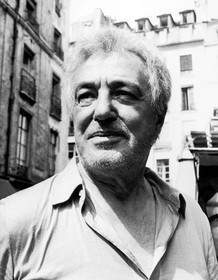
Vittorio De Sica
Made by

DDL Cinematografica
The Last Judgment Plot Summary
Read the complete plot summary and ending explained for The Last Judgment (1961). From turning points to emotional moments, uncover what really happened and why it matters.
In a Naples that is waking up to the mixed blessings of an economic boom, a granitic, almost biblical voice seems to descend from the heavens and declare that catastrophe will strike at a precise hour. The proclamation is delivered with stunning clarity:
At 18 begins the Last Judgement!
This thunderous message is first treated with scorn, then with growing fear, as the city’s rhythm shifts under the weight of a sudden moral alarm. The film dramatizes this moment through a mosaic of vignettes, each one a fragment of life in a city where fortunes diverge as wildly as the lanes of its bustling streets. Giorgio [Paolo Stoppa] emerges as a shrewd defense lawyer whose long-winded rhetoric and quick wit pull him through a labyrinth of dilemmas, while Irene [Anouk Aimée], Giorgio’s wife, becomes entangled in the tense, shifting codes of desire that thread through Naples’ different classes.
The narrative threads weave in and out of the everyday: the elaborate ball prepared by a duke, a social climb that finds its footing against the grittier reality of the poorest districts, and the small, almost banal infidelities that test loyalty and patience. The image of a husband who discovers his wife with her lover becomes a sharp, intimate counterpoint to the broader satire. A cynical, suggestion-filled underworld appears in the form of a Merchant of Children [Alberto Sordi], who profits from selling the most vulnerable abroad, exposing a chilling commerce that lurks beneath the city’s glitter and charm. This is balanced by the portrait of a young man of good company, Cimino [Vittorio Gassman], whose polished exterior invites sneers and scorn from a crowd ready to judge at a moment’s notice.
Amid these stories, Giovanna [Eleonora Brown] and her family press forward, their lives intersecting with strangers who carry different weights of fate. Giovanna’s father [Lino Ventura] does his best to shield his daughter from the moral hazards that swirl around them, a small but resolute effort against the tide of impulse and spectacle. The city teems with a chorus of minor figures who populate the background but are essential to the texture: a Waiter [Nino Manfredi] moving between tables, a mother figure [Elisa Cegani] who watches over Giovanna, and a variety of everyday people who give the Naples of the film its pulse.
The mood of the piece is punctuated by cameo figures that give the story its kaleidoscopic flavor. A man with a remarkable nose, played by Jimmy Durante, threads through the scenes as a reminder that oddities and absurdities exist side-by-side with gravity and fear. The cast also introduces a figure who epitomizes vulnerability and resilience: the foreign Lady [Melina Mercouri], a traveler who encounters the city and its souls in the midst of its upheaval, while a singer [Domenico Modugno] performs in the corners of the social stage, echoing the humanity and humor that survive even when judgments loom. The widower [Fernandel] adds a touch of quiet sorrow, a counterpoint to the exuberant chaos that surrounds the ball and the flood.
As the announcements escalate, the city’s mood becomes a living, breathing entity. The poor man [Lamberto Maggiorani] and others in the crowd move with a mix of hope and fear, their days braided with moments of tenderness, cruelty, and sudden possibility. The narrative hovers between the melodramatic and the playful, between moral catastrophe and irreverent laughter, showing how a city can absorb a prophecy and still carry on with its traditions, its rituals, and its stubborn vitality. The ball at the Duke’s residence stands as a symbol of social aspiration and human folly alike, a place where appearances are polished for a moment before they are devoured by the next astonishment.
The voice’s promise—seemingly from a divine source—appears to move through the human crowd as if it were a palpable force, testing how each character will respond: some repent, some revel, some pretend indifference. The film emphasizes that those who hesitate too long may be left behind, while those who choose to seize the moment can find a new, if fragile, sense of meaning. The interplay of fear, joy, and irony runs like a thread through every stitched scene, giving weight to the film’s satire while allowing space for humanity to emerge in small acts of courage and kindness.
Then, a flood arrives, as if the city itself decided to test the seriousness of the prophecy. The disaster is not merely physical but symbolic, washing through the streets and erasing the line between judgment and mercy. After the water recedes, the Last Judgment begins in earnest, only to end as mysteriously as it began. When the sun finally returns, Naples resumes its life with the same stubborn pace, and the memory of doom dissolves into the ordinary, almost soothing rhythm of daily routine. People hurry to the Duke’s ball once more, the crowd’s frenzy gives way to routine, and the sound of an ironic lullaby—crafted in the moments just before—lingers as a reminder that life in Naples, in all its contradictions, goes on.
If you’re looking for a film that stitches together social satire, human fragility, and a city’s unbreakable spirit, this story offers a panoramic meditation on morality, desire, and the stubborn resilience that keeps a community moving forward. The ensemble cast—each figure a thread in the fabric of Naples—provides a study of how ordinary lives intersect with extraordinary events, and how, even when the heavens seem to judge, life continues to unfold with stubborn grace.
Characters mentioned with actor links:
- Giorgio Paolo Stoppa
- Irene Anouk Aimée
- Pickpocket Ernest Borgnine
- Merchant of Children Alberto Sordi
- Cimino Vittorio Gassman
- Giovanna Eleonora Brown
- Giovanna’s father Lino Ventura
- Waiter Nino Manfredi
- Signora Matteoni Silvana Mangano
- The foreign Lady Melina Mercouri
- The singer Domenico Modugno
- The widower Fernandel
- The poor man Lamberto Maggiorani
- The man with the large nose Jimmy Durante
- Coppola Renato Rascel
- The mother of Giovanna Elisa Cegani
The Last Judgment Timeline
Follow the complete movie timeline of The Last Judgment (1961) with every major event in chronological order. Great for understanding complex plots and story progression.
Naples wakes to a looming Last Judgment
Naples wakes to the mixed effects of the new economic boom, with everyday life unsettled by grand promises and precarious anxieties. From a stentorian voice that sounds almost heavenly, residents are told that the Last Judgment will begin at 18:00. The proclamation arrives with awe and skepticism, shifting the mood from routine to rumor.
The announcement escalates from disdain to fear
At first, the voice is dismissed as a nuisance, a mere spectacle, but it grows more insistent and frightening. People across the city react differently: some joke, others whisper, many brace for the unknown. The idea of an imminent judgment begins to permeate conversations at markets, stairwells, and taverns.
Fragmented lives spiral around the proclamation
The plot fractures into a mosaic of Naples' stories, each character faced with the looming day. From lovers and merchants to officials and dreamers, every thread underscores the social texture of the moment. The looming judgment frames choices, sometimes in satire, sometimes in fear.
Preparation for the Duke's grand ball
In the city’s center, plans begin for the Duke’s magnificent ball that all Naples is asked to attend. People across strata discuss outfits, costs, and the symbolic weight of participation. The ball becomes a focal point around which many subplots orbit as the day tightens.
Struggle to dress in the poorest districts
In the poorer quarters, residents scramble to dress up, hoping to be part of the celebration. Hats, fabrics, and nerves are stretched as the city tries to present itself on the big night. Even as economic disparity sharpens, the desire to participate exposes a shared hunger for normalcy.
Rich suitors and bored romance
Wealthy men and women flirt and scheme, chasing social advantage through romance and appearance. The looming day amplifies vanity, as social games crowd out genuine feeling. Yet their actions ripple into the wider sense that judgments can be imagined as social verdicts.
A husband discovers wife with her lover
In a domestic scene, a husband uncovers his wife with her lover, shaking his trust. The discovery becomes a microcosm of the day’s larger ethical tensions and the fragility of relationships. The event adds to the mosaic of Naples’ moral weather under the looming judgment.
A cynical dream of selling children in America
A venal imagination surfaces as a man contemplates exploiting others, even children, for gain in America. The thought exposes a mercenary underside of society that the city pretends to ignore. This grim fantasy is treated with a mix of skepticism and dark humor within the broader satirical tapestry.
A well-born youth mocked by the crowd
A young man of good company becomes the target of sneers from a volatile crowd. The ridicule reveals how public opinion can punish privilege under the pressure of fear and superstition. His status offers a counterpoint to the ball’s grandeur and the city’s moral weather.
A verbose lawyer defends a lobbyist
In a satirical legal exchange, a long-winded lawyer defends a lobbyist, turning rhetoric into weapon and shield. The scene critiques how language can manipulate law and public opinion during a time of collective unease. The courtroom becomes a stage for the era’s hypocrisy.
A flood interrupts the day
As the announced time approaches, a terrible flood sweeps through the city, disrupting fragile social balance. The flood becomes a dramatic banner for the sense that prophetic voices can bend reality. People struggle to cope as waters complicate plans for the ball and moral judgments.
The Last Judgment arrives
When 18:00 arrives, the Last Judgment begins with solemnity, yet its progress is opaque. The city experiences a moment of ritual that feels both real and illusory. This juxtaposition highlights the film’s satire of faith, fear, and social order.
The Judgment ends as mysteriously as announced
The judgment ends as mysteriously as it began, leaving questions rather than conclusions. The sun returns and daily life resumes, or pretends to resume, with the ball still in view. A sardonic lullaby of indifference replaces fear as people search for meaning in the day’s chaos.
Sun returns; the ball goes on; memory fades
The sun’s warmth returns and people hurry toward the Duke’s ball, clinging to a moment of joy. The city’s memory of fear is short as a chorus of irony and a 'Lullaby' comments on social masks. The day closes with a sense that fear gave way to entertainment, leaving the voice’s warnings as distant echoes.
The Last Judgment Characters
Explore all characters from The Last Judgment (1961). Get detailed profiles with their roles, arcs, and key relationships explained.
Giorgio — Paolo Stoppa
A verbose, resilient defense attorney who navigates a web of outrageous cases. He embodies a pragmatic, possibly cynical approach to law and society, delivering sharp, if sometimes empty, rhetoric. Through Giorgio, the film critiques how legal flurry can coexist with moral ambiguity in a changing city.
Irene — Anouk Aimée
Giorgio's wife, a woman who becomes entangled in an affair, illustrating the fragility of marriages amid social pressure. She embodies the tension between private desire and public propriety. Her choices reveal the complex dynamics of love in a city where appearances matter.
Defense lawyer — Vittorio De Sica
A wordy, theatrical lawyer whose defense strategies reveal the malleability of truth in a crowded city. He uses eloquence to navigate cynical stories and social hypocrisy. His presence offers a meta-commentary on the performative nature of justice.
Pickpocket — Ernest Borgnine
A petty thief who moves through Naples' crowded streets, embodying the economic desperation that drives ordinary people. His actions illuminate how the city’s rhythms can both shelter and exploit the vulnerable. He interacts with other vignettes, highlighting the interconnectedness of urban life.
Giovanna — Eleonora Brown
A young character whose presence punctuates the personal lives threaded through the city. Her experiences reflect how the new era’s opportunities and anxieties touch the younger generation. She stands at the crossroads of tradition and modernity in Naples.
Cimino — Vittorio Gassman
A sharp, socially aware figure who navigates the social hierarchies and pretensions of Naples' upper strata. His arc reveals how reputation and bravado operate in a world on the brink of upheaval. Cimino embodies the tension between appearance and reality.
Merchant of children — Alberto Sordi
A cynical, entrepreneurial man who hatches schemes around exploiting others—here, literally selling children in America as a drastic symbol of moral decay. His character satirizes the commodification of vulnerability in a booming economy. He functions as a mirror to society's willingness to profit from others' misfortune.
Giovanna's father — Lino Ventura
Parent to Giovanna, a figure of authority and protection in a city where family ties matter amid upheaval. His reactions to the surrounding chaos illustrate traditional values trying to hold firm against modern temptations. He represents the older generation's stance in a transforming Naples.
The Last Judgment Settings
Learn where and when The Last Judgment (1961) takes place. Explore the film’s settings, era, and how they shape the narrative.
Time period
1960s
Set during the early 1960s, as Italy experiences rapid economic growth and urban transformation. The country grapples with newfound wealth, social mobility, and moral ambiguities that surface in public and private life. The narrative threads through a city-wide sense that progress brings both excitement and anxiety.
Location
Naples, Italy
Naples is depicted as a vibrant, crowded port city at a crossroads of tradition and change. Its streets host a mosaic of social classes, from bustling markets to luxurious ball preparations. The city endures a dramatic flood that tests its resilience, only to recover and resume everyday life, illustrating the persistence of daily gestures amid upheaval.
The Last Judgment Themes
Discover the main themes in The Last Judgment (1961). Analyze the deeper meanings, emotional layers, and social commentary behind the film.
⚖️
Judgment
The film foregrounds a looming, almost prophetic voice that declares judgment over the city. This 'Last Judgment' arrives as a test of conscience, revealing how people respond to moral pressure. Through a collage of vignettes, the story questions whether individual acts, however small, measurably alter fate.
💼
Economy
The Naples of economic boom becomes a stage for desire, greed, and social ambition. Wealth, status, and the dream of mobility drive characters into calculated risks and hypocritical poses. The interplay between wealth and poverty exposes how economic change shapes personal ethics without offering straightforward redemption.
🌊
Chaos and Community
The flood and the bustle of public life disrupt routine, forcing strangers to collide and cooperate. In the chaos, acts of kindness and selfishness alike surface, revealing a community that survives by improvisation. The Last Judgment arrives not only as divine retribution but as a mirror for collective behavior.

Coming soon on iOS and Android
The Plot Explained Mobile App
From blockbusters to hidden gems — dive into movie stories anytime, anywhere. Save your favorites, discover plots faster, and never miss a twist again.
Sign up to be the first to know when we launch. Your email stays private — always.
Explore the mobile appThe Last Judgment Spoiler-Free Summary
Discover the spoiler-free summary of The Last Judgment (1961). Get a concise overview without any spoilers.
In Naples, where the rhythms of daily life pulse between tradition and the promises of an economic boom, an unseen voice thunders from the sky one morning with a declaration that halts the city in its tracks: the final judgment will arrive at six o’clock that evening. What begins as skepticism soon ripples into something far more complex, as citizens from every corner of society confront the weight of an impossible announcement. The film captures this singular day through a mosaic of interwoven lives, each fragment revealing how differently people respond when faced with the prospect of ultimate accountability.
Among those swept into the unfolding drama are Giorgio, a defense lawyer whose sharp wit navigates moral labyrinths, and his wife Irene, whose desires become entangled in the city’s shifting social codes. From the polished Cimino to a merchant whose trade exposes darker currents beneath the city’s charm, each character carries a different weight of fate. Giovanna and her father move through the chaos with quiet resolve, while cameo figures—a traveling foreign lady, a weary widower, a singer echoing humanity from the margins—add texture to a tapestry already rich with contradiction.
The tone shifts between satire and sincerity, allowing moments of irreverent humor to coexist alongside genuine fear and tenderness. As the hours tick toward the prophesied hour, Naples itself becomes a character—vibrant, stubborn, and unwilling to surrender its vitality even when the heavens seem to speak. The film offers a meditation on morality and resilience, where ordinary lives intersect with an extraordinary event and where the boundary between judgment and mercy blurs in unexpected ways.
Movies with Similar Twists and Themes
Uncover films that echo the narrative beats, emotional arcs, or dramatic twists of the one you're exploring. These recommendations are handpicked based on story depth, thematic resonance, and spoiler-worthy moments — perfect for fans who crave more of the same intrigue.
Featured on this page

What's After the Movie?
Not sure whether to stay after the credits? Find out!
Check out our other apps:

SAT Sphere
Build confidence for the Digital SAT.

Mori Atlas
Discover wild places worth protecting.

Luntero
Search smarter for a home in Amsterdam.

Plot Explained
Unravel movie endings and hidden clues.

Pokechamp
Dive into Pokémon data and battle logic.

Driving Theory
Get ready for your European theory test.

Movie Dust
Plan your next cinema trip with ease.

Musemap
Find art and culture as you travel.

Selkobase
Compare credentials before committing.

Local Manual
Turn an unfamiliar country into practical next steps.

Lernavi
Compare school systems before your next move.

GymRoam
Find a workout stop wherever your plans take you.
Explore Our Movie Platform
New Movie Releases (2026)
Famous Movie Actors
Top Film Production Studios
Movie Plot Summaries & Endings
Major Movie Awards & Winners
Best Concert Films & Music Documentaries
Movie Collections and Curated Lists
© 2026 What's After the Movie. All rights reserved.
Privacy Policy