
The Inner Circle 1991

Directed by
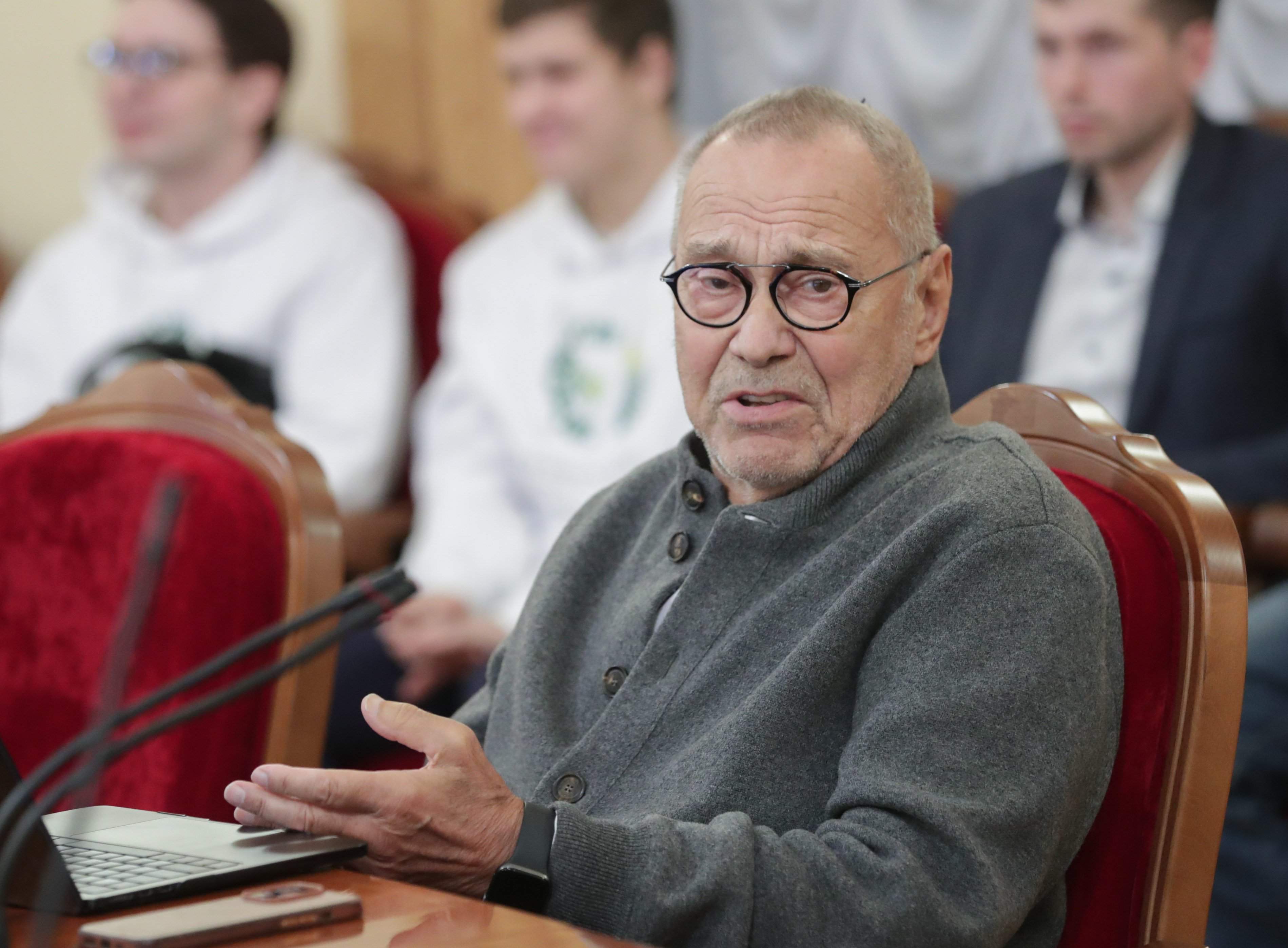
Andrei Konchalovsky
Made by

Columbia Pictures
The Inner Circle Plot Summary
Read the complete plot summary and ending explained for The Inner Circle (1991). From turning points to emotional moments, uncover what really happened and why it matters.
Ivan Sanshin, Tom Hulce, works as a projectionist at the headquarters of the state security service and is urgently summoned to the Kremlin. His skill earns him a private projectionist post to Stalin, Aleksandr Zbruev, and his inner circle, including the head of state security, Beria Bob Hoskins.
Shortly after this, a Russian Jewish couple in his cramped apartment building is arrested, leaving behind their little daughter Katya, Mariya Baranova. Anastasia, Ivan’s wife, would like to adopt the child, but Ivan refuses because the parents are “enemies of the people”. Yet Anastasia secretly visits Katya at a state orphanage.
As German troops approach Moscow in 1941, Ivan and Anastasia are sent on a train to a safe town. Beria accompanies them and, in a moment of drunken violence, rapes Anastasia, sending Ivan back to Moscow. For a long time he hears nothing of her until she reappears, pregnant and abandoned. The trauma has unhinged her, and she ultimately takes her own life.
In 1953, the lonely Ivan is visited by Katya, now a 17-year-old, who treasures the memory of Anastasia’s affection. Ivan offers help, but she says she wants to go her own way.
Following Stalin’s death, Ivan, while on crowd-control duty to the masses waiting to view the corpse, sees Katya being jostled in the crush. He rushes in to rescue her and, this time, she is ready to accept his protection.
The Inner Circle Timeline
Follow the complete movie timeline of The Inner Circle (1991) with every major event in chronological order. Great for understanding complex plots and story progression.
Appointment as Stalin's private projectionist
Shortly after his marriage to Anastasia, Ivan Sanchin is urgently summoned to the Kremlin. He proves his skill and is appointed private projectionist to Stalin and the inner circle, including Beria. He feels proud and venerates the dictator as if he were a god.
Katya left behind after a family arrest
In Ivan's cramped apartment building, a Russian Jewish couple is arrested, leaving their little daughter Katya behind. The incident places Katya directly into Ivan's orbit and foreshadows how state oppression touches ordinary lives. The tension in the building mirrors the larger purges shaping the era.
Ivan forbids Anastasia from adopting Katya
Anastasia wishes to adopt Katya, but Ivan refuses because the child's parents are enemies of the people. The conflict strains their marriage and highlights the clash between personal loyalties and political rules. Katya's future life becomes tangled in this decision.
Anastasia secretly visits Katya at the orphanage
Anastasia secretly visits Katya at a state orphanage, defying Ivan's ban. The clandestine visits reveal a deep mother-daughter bond and the risks of disobeying state authority. The secrecy underscores how love and duty pull in opposite directions.
Escape by train as German forces advance; Beria's assault
With German troops approaching Moscow in 1941, Ivan and Anastasia are put on a train to a safe town. On board, Beria seduces Anastasia, gets her drunk, and rapes her, while Ivan is sent back to Moscow. The traumatic sequence foreshadows the couple's eventual separation and Anastasia's fate.
Anastasia returns pregnant and abandonded; she dies
After the evacuation, Anastasia returns pregnant and abandoned. Her experiences have unhinged her, and she ultimately commits suicide. Ivan remains unaware of her fate for a long time.
Katya visits Ivan in 1953; seeks independence
In 1953, Katya, now 17, visits Ivan and treasures the memory of Anastasia's affection. She tells him she wants to go her own way, and he offers to help but she declines. The reunion underscores the enduring impact of the past on her future.
Stalin dies; crowds gather to view the corpse
Shortly after Stalin's death, crowds gather to view the dictator's corpse, signaling a new era in which fear and reverence intertwine. The event reshapes the political atmosphere surrounding Ivan and Katya. The mood is heavy and uncertain as the old order begins to fade.
Ivan rescues Katya from the crush
On crowd control duty, Ivan pushes through the throng to shield Katya when she is jostled by the crush. The rescue rekindles his protective instinct toward her and cements their fragile bond. The moment marks a reawakening of their guardian-ward relationship.
Katya accepts Ivan's protection
After the close brush with danger, Katya is ready to accept Ivan's protection, signaling a renewed bond between guardian and ward. She agrees to lean on him as they navigate life in a changing Soviet landscape. The partnership becomes a quiet anchor in a turbulent era.
A fragile bond rooted in shared history
Ivan's loyalty shifts from blind service to Stalin toward a more personal guardianship of Katya as they face a new era together. The evolving relationship reflects the film’s central tension between power, loyalty, and family. Their bond survives the ashes of a dictator's death and the dawn of a new political climate.
The Inner Circle Characters
Explore all characters from The Inner Circle (1991). Get detailed profiles with their roles, arcs, and key relationships explained.
Ivan Sanshin (Tom Hulce)
A skilled projectionist who becomes Stalin’s private projectionist and a trusted insider. He idolizes the dictator yet increasingly grapples with the human costs of serving a coercive state. His arc tracks a gradual awareness of the moral compromises demanded by power.
Anastasia
Ivan’s wife, torn between affection and fear, who longs to shelter Katya but is thwarted by the regime’s suspicion. Her war-time ordeals leave her traumatized, culminating in a despairing act after a series of devastating events.
Katya (older, 17)
The daughter of the arrested Jewish couple, she grows up carrying the memory of Anastasia and the trauma of her family’s disappearance. By 1953 she seeks independence and protection, challenging the expectations placed upon her by the state.
Beria
Head of state security, a brutal enforcer who exercises absolute power and uses violence to maintain control. His actions drive the central conflicts and reveal the intimate dangers lurking behind the inner circle’s loyalty.
Stalin
The revered Soviet leader whose presence shapes every decision within the inner circle. His death in 1953 marks a turning point that alters power dynamics and the fates of those around him.
The Inner Circle Settings
Learn where and when The Inner Circle (1991) takes place. Explore the film’s settings, era, and how they shape the narrative.
Time period
1941-1953
The film spans the German invasion of the Soviet Union and the defense of Moscow in 1941, continuing through the postwar Stalin era to Stalin’s death in 1953. It juxtaposes frontline danger with political paranoia within the inner circle. The period captures both wartime upheaval and the oppressive climate of late Stalinist Russia.
Location
Kremlin, Moscow, Russia
The story centers in Moscow, with the Kremlin as a symbol of Soviet power during the war. It also visits a crowded Moscow apartment building and a state orphanage where Katya awaits a future. A wartime train journey to a safer town marks a shift in setting as German forces threaten the capital. The city backdrop emphasizes the clash between personal lives and an all-seeing state.
The Inner Circle Themes
Discover the main themes in The Inner Circle (1991). Analyze the deeper meanings, emotional layers, and social commentary behind the film.
👑
Power and Authority
Proximity to Stalin’s inner circle exposes the seductive lure and dehumanizing costs of absolute power. Ivan’s role as a trusted projectionist ties personal fate to a regime that treats family life as expendable. The narrative shows how loyalty to the dictator can override ethics and empathy.
🧠
Trauma and Memory
Anastasia’s abuse and Katya’s family losses haunt the characters, shaping choices and perceptions long after the events. The story treats trauma as a persistent force that alters memory and future decisions. Katya’s recollections of Anastasia drive her sense of self and resolve.
⚖️
Moral Dilemma
Characters confront choices between survival, loyalty, and personal integrity within a repressive system. Ivan must balance protection of Katya with the constraints of state power, while relationships strain under political pressure. The film frames these decisions as a critique of power-driven ethics.

Coming soon on iOS and Android
The Plot Explained Mobile App
From blockbusters to hidden gems — dive into movie stories anytime, anywhere. Save your favorites, discover plots faster, and never miss a twist again.
Sign up to be the first to know when we launch. Your email stays private — always.
Explore the mobile appThe Inner Circle Spoiler-Free Summary
Discover the spoiler-free summary of The Inner Circle (1991). Get a concise overview without any spoilers.
In the stark, snow‑laden streets of wartime Moscow, the world is a tightly wound tapestry of surveillance, propaganda and whispered fear. Ivan Sanshin works in the dim glow of a state security headquarters, tending the massive reels that bring images to the eyes of the regime. His uncanny skill with the projector catches the attention of the highest echelon, landing him a rare and privileged position as the personal film‑projectionist for the Soviet leader himself. The role drapes him in a cloak of secrecy, where every flicker of light is both a privilege and a peril, and the very act of watching becomes an intimate conduit to a man whose shadow looms over the nation.
Beyond the cavernous corridors of power, Anastasia, Ivan’s devoted wife, nurtures a quieter, more fragile world within their cramped apartment. Their marriage is a study in quiet endurance, each day a balancing act between the demands of a demanding job and the yearning for a normal life. When an orphaned child appears on their doorstep—an innocent caught in the unforgiving machinery of the state—Anastasia’s heart opens to the possibility of adoption, while Ivan wrestles with the stark reality of labels like “enemy of the people” that dictate who can be welcomed into a home.
As the looming threat of the German advance in 1941 chills the city, the atmosphere tightens into a collective breath held in anticipation. The ever‑present presence of figures such as the feared head of state security, Beria, adds a layer of unease that infiltrates even the most private moments. Travel, directives, and sudden relocations become part of daily life, pulling Ivan and Anastasia away from the familiar streets they have come to know.
Time stretches forward, and the echoes of those early choices linger. The girl whose fate once intertwined with the couple’s path resurfaces, carrying with her the haunting memory of a love that could not be spoken. Their connection, suspended between duty and desire, hints at a future where past and present may finally confront each other, leaving the audience to wonder how the fragile threads of personal sacrifice will intertwine with the relentless march of history.
Movies with Similar Twists and Themes
Uncover films that echo the narrative beats, emotional arcs, or dramatic twists of the one you're exploring. These recommendations are handpicked based on story depth, thematic resonance, and spoiler-worthy moments — perfect for fans who crave more of the same intrigue.


Featured on this page

What's After the Movie?
Not sure whether to stay after the credits? Find out!
Check out our other apps:

SAT Sphere
Build confidence for the Digital SAT.

Mori Atlas
Discover wild places worth protecting.

Luntero
Search smarter for a home in Amsterdam.

Plot Explained
Unravel movie endings and hidden clues.

Pokechamp
Dive into Pokémon data and battle logic.

Driving Theory
Get ready for your European theory test.

Movie Dust
Plan your next cinema trip with ease.

Musemap
Find art and culture as you travel.

Selkobase
Compare credentials before committing.

Local Manual
Turn an unfamiliar country into practical next steps.

Lernavi
Compare school systems before your next move.

GymRoam
Find a workout stop wherever your plans take you.
Explore Our Movie Platform
New Movie Releases (2026)
Famous Movie Actors
Top Film Production Studios
Movie Plot Summaries & Endings
Major Movie Awards & Winners
Best Concert Films & Music Documentaries
Movie Collections and Curated Lists
© 2026 What's After the Movie. All rights reserved.
Privacy Policy