

What Is The Dumbfounded King About?
The premise of The Dumbfounded King in 305 words, with nothing given away. The full story follows below.
In the gilded halls of 17th‑century Spain, a kingdom teeters between splendor and peril, its every marble corridor echoing with the whispers of power and piety. The court of Philip IV, bathed in opulent fabrics and shadowed by the ever‑watchful eye of the Church, feels like a living fresco where desire and duty constantly collide. Against this backdrop, the film unfurls a tense, almost intoxicating atmosphere that blends historical grandeur with a simmering, unapologetic sensuality.
The King returns from a private hunting trip and is startled by the sight of Marfiza, the town’s most celebrated courtesan, posed with a daring, almost mythic confidence. His fascination quickly spirals, drawing him toward an even more delicate obsession: to witness his own consort, Queen Elisabeth of France, in the same vulnerable state. The queen, a figure of both regal authority and private yearning, stands at the crossroads of public expectation and personal longing, making her a compelling counterbalance to the monarch’s restless appetite.
Caught in the middle of this growing tension is the Grand Inquisitor, who summons a gathering of theologians to weigh the moral weight of the sovereign’s desire. Among them, Friar Villaescusa argues that the king’s yearning jeopardizes the very soul of the realm, while Father Almeida offers a more pragmatic view that separates personal inclination from the responsibilities of governance. Their debates echo through the vaulted chambers, underscoring a broader clash between ecclesiastical doctrine and royal prerogative.
Adding further texture to the intrigue are the seasoned courtiers—the Count of Peña Andrada, a shrewd adviser who navigates the labyrinthine politics of the palace, and the Count‑Duke of Olivares, whose own private concerns mirror the kingdom’s larger anxieties. Together, these figures weave a tapestry of ambition, temptation, and restraint, setting the stage for a story where the line between private indulgence and public consequence remains tantalizingly blurred.
What Happens in The Dumbfounded King?
The complete story of The Dumbfounded King, from the first scene to the last, in 577 words (about 3 minutes). Spoilers throughout. Names in the text link to 5 cast member pages.
Spoilers ahead
Set in a flamboyant, perilous 17th‑century Spanish court, the story centers on a difficult moment that could upend the realm. The Rey, Gabino Diego, returns from a private excursion with the Count of Peña Andrada and is stunned to lay eyes on the naked body of Marfisa, a local prostitute, displayed in a pose that evokes the Rokeby Venus. This shocking sight drives him to demand a private view of his wife, Queen Elisabeth of France, who rules alongside him as a figure of courtly power and private desire. The Queen, Anne Roussel, is pulled into a tension between public duty and personal appetite, and the shockwaves ripple through every corner of the palace.
To navigate the crisis, the Grand Inquisitor, played by the seasoned performer at the heart of the inquisitorial office, convenes a high‑stakes meeting of theologians. Theologically diverse voices collide: the friar Villaescusa, Ramón Barea, argues that the king’s wish is a grave sin with the potential to corrupt the kingdom, while Father Almeida, Joaquim de Almeida, contends that the ruler’s fate hinges more on governance than morality and that the king’s desire is ultimately a private matter. The Queen, though sympathetic to the king, is drawn into the complex machinations of court power, and the two men entangle themselves in a battle over whether desire should dictate public policy or yield to individual discretion.
Despite the spiritual and political tension, pathways open up through collaboration. With the persistent help of the Jesuit and the Count of la Peña Andrade, Eusebio Poncela advances a path where the King is eventually able to meet the Queen alone in the monastery of San Plácido, achieving his private aim within a secured, ritualized setting. The romance and the risk are tempered by the underlying currents of courtly politics, as the monastery becomes a stage for a carefully staged encounter that tests loyalty, discretion, and the limits of authority.
Meanwhile, a parallel thread follows the Count‑Duke of Olivares, a man anxious about divine judgment over infertility within his own marriage. The valiant adviser Villaescusa, Ramón Barea in a different light, dispenses guidance that the act of lovemaking, rather than celestial punishment, shapes fate. The solution proposed in this moment of crisis is stark and provocative: the Earl and his wife should perform their act in the church’s choir of San Plácido, before the observation of nuns. The plan unfolds amid a web of loyalties and consequences, as letters arrive bearing news of distant victories—the Indian fleet reaching Cadiz and Spanish troops triumphing in Flanders—sending mixed signals about divine favor and political fortune.
As the ships return and the victories are celebrated, Villaescusa declares that the happy ending is a product of the collective sacrifice endured by all. Yet the Count, in a measured, almost curt voice, reminds everyone that the timing matters: the letters arrive at a moment that suggests the fleet reached Cadiz two days earlier, “just the day King went whores.” The weight of that remark lands with a sting, reframing the entire sequence of events as a test of conscience and political prudence.
In the final turn of events, the Count‑Duke dispatches Villaescusa to Rome with a sealed letter, insisting he not be permitted to depart until his attitude has changed. The thread of power, desire, and guilt remains taut, leaving the court to grapple with what is morally permissible, what is politically prudent, and how personal appetites can ripple outward to redefine a nation.
The Dumbfounded King Timeline: Every Key Event in Order
13 key events in the order they happen, from “King discovers Marfisa's naked body” to “Villaescusa sent to Rome”. 13 events name a place, across 12 locations.
- 1
King discovers Marfisa's naked body
The king and Count of Peña Andrada are on a getaway at the royal court when the King stumbles upon the naked body of Marfisa, a town prostitute, in a pose that echoes the Rokeby Venus. The shocking sight unsettles the king and awakens a curiosity about the private lives of those around him. This moment sets off a chain of decisions that challenge moral norms at the court.
Where:Spanish royal court
- 2
King resolves to see Queen Elisabeth naked
Spurred by his discovery, the king resolves to see his wife, Queen Elisabeth of France, naked. He weighs the personal scandal against his sovereign prerogative, a choice that promises a dangerous spectacle within the palace.
Where:Royal palace
- 3
Inquisition convenes theologians
The Grand Inquisitor convenes a council of theologians to debate the king's claim. On one side Fray Villaescusa argues the claim is a serious sin that could bring punishment on the country. On the other side Father Almeida counters that the ruler's private desires may be tolerable if they serve the common good.
Where:Grand Inquisitor's council chamber
- 4
Villaescusa on royal morality
Villaescusa insists that morality must constrain royal power, warning that the king's desire could have dire consequences for the realm. He frames the issue as a sin that must be judged and restrained.
Where:Theological council chamber
- 5
Almeida defends political order
Father Almeida argues that the luck and stability of the governed depend on effective governance, not on the ruler's private passions. He suggests the king's desire is a personal matter that should not destabilize the state.
Where:Theological council chamber
- 6
Queen willing yet blocked
Despite the theological debate, the Queen is willing to accommodate the king's wishes, but intrigues and power plays frustrate any immediate fulfillment. Court schemers exploit the situation to maintain control.
Where:Queen's quarters
- 7
Obstruction of the royal liaison
Villaescusa and his minions thwart the king's attempt to reach the queen, prolonging the clash between ecclesiastical authority and royal prerogative. The struggle keeps the couple apart and delays any resolution.
Where:Court and monastery
- 8
King and queen meet in San Placido
With the help of the Jesuit Father Almeida and the Count of la Peña Andrada, the King finally meets the queen alone in the monastery of San Plácido and achieves his goal. The encounter finally resolves the central sexual dispute that sparked the crisis.
Where:Monastery of San Plácido
- 9
Olivares seeks counsel on infertility
Meanwhile the Count-Duke of Olivares fears he will be punished by God for infertility and seeks advice from Villaescusa. Villaescusa tells him that the pleasure during sexual acts is to blame and offers a controversial solution.
Where:Olivares' residence
- 10
A controversial choir act
The suggested solution is that Olivares and his wife copulate in the choir of the church of San Plácido in front of the choir nuns. The plan is framed as a divine remedy that will pacify both God and the king's people.
Where:Church of San Plácido choir
Show the other 3 events of The Dumbfounded King Hide the last 3 events
- 11
News arrives of naval victories
After the act, Olivares receives two letters announcing the Indian fleet's arrival at Cadiz and a victory in Flanders. The news seems to confirm the plan's apparent success.
Where:Cadiz
- 12
Debate on timing of events
Villaescusa claims the happy ending is due to sacrifices endured by all, but the Count-Duke counters that the timing shows the fleet arrived two days earlier, the same day the king pursued his affair.
Where:San Plácido vicinity
- 13
Villaescusa sent to Rome
The Count-Duke sends Villaescusa to Rome with a sealed letter asking him not to let him go until he changes his attitude. This marks a tense attempt to control the cleric and steer religious influence.
Where:Royal court to Rome route
Who Are the Main Characters in The Dumbfounded King?
7 characters, among them King Philip IV, Marfisa and Elisabeth of France (Queen): who each one is and the part they play in the story. Every profile links to the actor’s page.
- KP
King Philip IV
Played by Gabino Diego
A powerful monarch whose curiosity about erotic matters exposes the tension between governing and gratification. His decision to see the queen's nakedness demonstrates how personal desires can imperil political stability. The king's actions catalyze religious and noble interventions, revealing the fragility of moral authority in a court driven by intrigue.
- 👑 Royalty
- 🔎 Curiosity
- 🎭 Drama
- M
Marfisa
Played by Laura del Sol
The town’s prostitute whose naked body becomes the plot’s catalyst. Her image, likened to Rokeby Venus, turns her into a symbol of society's gaze on female sexuality. Her presence triggers official scrutiny and a chain of political and religious maneuvering around the king’s desires.
- 💃 Prostitution
- 🖼️ Iconography
- 🎭 Drama
- EO
Elisabeth of France (Queen)
Played by Anne Roussel
The queen is portrayed as a figure torn between private accommodation and public propriety. She initially shows willingness to comply with the king’s wishes, yet the arrangement unfolds under intense moral and political pressure. Her position underscores how royal marriages function within dynastic and religious constraints.
- 👑 Royalty
- 💬 Private vs Public
- 🎭 Drama
- V
Villaescusa
Played by Juan Diego
A friar who leads the theological debate, insisting the king’s act could threaten the realm. He and his minions work to frustrate the king’s desires, framing the issue as a serious sin with wide-reaching consequences. His rhetoric exemplifies religious authority shaping political outcomes.
- 🙏 Religion
- ⚖️ Morality
- 🧭 Influence
-
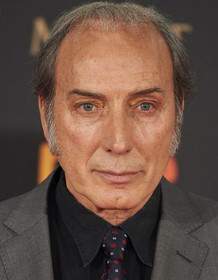
Conde La Peña Andrade
Played by Eusebio Poncela
A noble who collaborates with religious authorities, demonstrating how aristocracy can manipulate morality to advance political aims. He fears divine punishment over infertility and seeks to align sacred sanction with dynastic interests. Through his actions, the court’s power dynamics—and their personal motives—are laid bare.
- 🏰 Nobility
- 🗝️ Intrigue
- 🎭 Drama
-

Cura
Played by Ramón Barea
A religious figure representing clerical authority who discusses sin and moral order. He articulates how public virtue is tied to the realm’s stability, often steering responses to perceived transgressions. His presence highlights the tension between theology and political expediency.
- 🙏 Religion
- 🕯️ Debate
- 🗺️ Influence
-
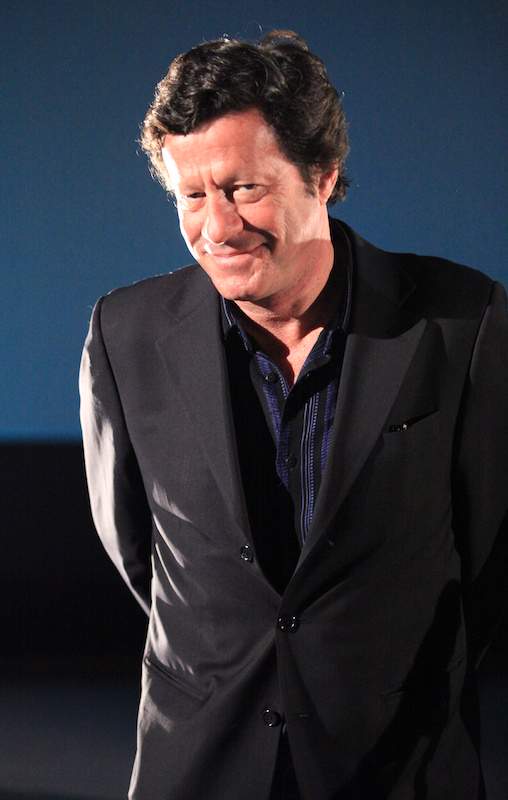
Almeida
Played by Joaquim de Almeida
A Jesuit missionary who argues that the ruler’s luck depends on virtue, framing governance as a moral enterprise. He participates in the public moral calculus that justifies political decisions as divine sanction. His stance emphasizes the practical fusion of faith and statecraft in the court.
- ⛪ Religion
- 🧭 Pragmatism
- 🎭 Drama
Where and When Is The Dumbfounded King Set?
The Dumbfounded King is set in Spanish royal court, Monastery of San Plácido and Cadiz (17th century). Here is why the time and place matter to the story.
When
17th century
The story unfolds in 17th-century Spain, a period of absolute monarchy and strong Catholic influence. Court ceremonies and religious authorities shape daily life, intertwining political decisions with personal whims. The era’s norms render private desires potentially treasonous to the realm, driving the conflict between public duty and private appetite.
Where
Spanish royal court, Monastery of San Plácido, Cadiz
Set within the 17th-century Spanish royal court and the adjacent monastery of San Plácido, the film contrasts ceremonial grandeur with religious scrutiny. The palace rooms become stages for power plays and sexual rumors, while the monastery embodies moral authority. The narrative also touches Cadiz, signaling how royal decisions ripple through religious and naval affairs, all within a climate of public spectacle and private desire.
- 👑 Royal Court
- 🏛 Sacred Spaces
- 🗝️ Intrigue
What Are the Themes of The Dumbfounded King?
3 ideas the story keeps returning to, among them Power, Morality and Sexuality.
-
01
Power
Power in The Dumbfounded King is shown as a tool to shape morality and public policy through religious and political instruments. Rulers press moral codes to secure legitimacy while indulging personal desires. The clash between authority and private appetite reveals how those in power manipulate social norms for short-term gains. The film uses satire to expose how sovereigns navigate public duty and private whims.
-
02
Morality
Religious authorities debate whether the king's lust is a sin with political consequences. Villaescusa and Almeida frame morality as a tool to control behavior and preserve order. The Count La Peña Andrade's actions show how moral rhetoric can be used to advance aristocratic interests. The conflict highlights the line between spiritual guidance and state governance.
-
03
Sexuality
Sexuality drives the plot: the king's desire to see naked bodies tests loyalty and exposes vulnerabilities. Marfisa's nude image triggers a cascade of institutional responses and public scrutiny. The monastery, choir, and private rooms become venues where private acts clash with sacred authority. The narrative implies that private pleasures carry public consequences.
What Kind of Film Is The Dumbfounded King?
Tense in tone, with steady pacing and a moderate story, going by the plot summary.
- Tone
- Tense
- Pacing
- Steady
- Story
- Moderate
- Intensity
- Medium
- Ending
- Mixed
A steadily paced and tense historical drama that immerses the viewer in the oppressive atmosphere of the Spanish court, where a king's illicit obsession creates a scandalous web of political and religious conflict.
- tense
- oppressive
- seductive
- clandestine
- anxious
- grave
- political power
- sexual obsession
- religious conflict
- royal scandal
Content notes: sexual content, religious hypocrisy, exploitation of power.
Quiz
How well do you remember The Dumbfounded King? Test yourself on the story.


