
The Boston Strangler 1968

Directed by
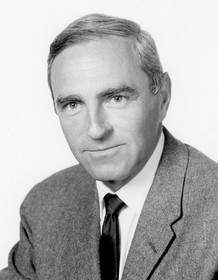
Richard Fleischer
Made by

20th Century Fox
Where to Watch The Boston Strangler
See current US streaming, rental, and purchase options for The Boston Strangler (1968) via JustWatch.






The Boston Strangler Plot Summary
Read the complete plot summary and ending explained for The Boston Strangler (1968). From turning points to emotional moments, uncover what really happened and why it matters.
After three elderly women are found murdered in Boston—strangled and penetrated with foreign objects—the police conclude they’re dealing with a serial killer known as the Boston Strangler. As the killings cross police jurisdictions, Massachusetts Attorney General Edward W. Brooke appoints John S. Bottomly [Henry Fonda] as head of a Strangler Bureau to coordinate the investigation across multiple agencies. In the face of mounting pressure, several suspects are interrogated and released, while the city watches the case unfold with a growing sense of urgency.
Desperation prompts a controversial step: Bottomly brings in a psychic, Peter Hurkos [George Voskovec], whose profile points toward Eugene T. O’Rourke [William Hickey], a man described as severely masochistic. O’Rourke is taken in for psychiatric observation for ten days, but nothing concrete links him to the murders. Yet even as he is watched, another murder occurs, which ultimately clears him of involvement and shifts the focus back to a ruthless pattern plaguing the city.
Amid national tension during the 1963 funeral of John F. Kennedy on television, Albert DeSalvo [Tony Curtis] leaves his wife Irmgard DeSalvo [Carolyn Conwell] and their children under the pretense of work. He gains entry into the apartment of Dianne Cluny [Sally Kellerman] by posing as a plumber sent by the building supervisor. Inside, DeSalvo attacks her, tying her to her bed with rags ripped from her dress. He is startled by his own reflection in a mirror as he fights to subdue Dianne; she struggles free and bites his hand, and DeSalvo flees into the night.
He then attempts entry into another apartment, but the husband is home, and DeSalvo is spotted and apprehended by a passing police patrol. Found incompetent to stand trial for attempted breaking and entering, he is committed to a hospital for psychiatric observation. By chance, Bottomly and Det. Phil DiNatale [George Kennedy] pass DeSalvo in an elevator; they had just visited Dianne, the survivor of the earlier attack, and notice the wound on DeSalvo’s hand—evidence that tightens the connection to the Boston Strangler murders.
Conventional interrogation yields little progress, because the treating physician believes DeSalvo suffers from a split personality: a “normal” identity that fabricates memories to shield the murders committed by the other, killer identity. The treating physician, Dr. Nagy [Austin Willis], thinks that the hidden personality could be forced to confront the facts, but the resulting shock risks catatonia for DeSalvo. Bottomly opines that catatonia would be the second-best outcome to a conviction, highlighting the difficult legal and ethical balance at stake.
With the defense counsel insisting that new revelations remain inadmissible in court, Bottomly is granted one final round of interviews with DeSalvo. After several sessions, Bottomly manages to reveal the hidden personality behind the façade. The shock reverberates through DeSalvo, and he slips into a catatonic state, leaving the investigation at a precarious crossroads as the true scope of the killings becomes clearer through the intertwining of psychology, evidence, and the relentless drive to bring a serial killer to justice.
The Boston Strangler Timeline
Follow the complete movie timeline of The Boston Strangler (1968) with every major event in chronological order. Great for understanding complex plots and story progression.
The Boston Strangler emerges
Three elderly women are found murdered in Boston, their deaths marked by strangulation and the insertion of foreign objects. The violence forms a serial pattern across multiple jurisdictions. Investigators begin linking the cases and racing to identify the killer before more victims appear.
Strangler Bureau formed
With the murder spree expanding, Massachusetts Attorney General Edward W. Brooke orders a coordinated response. John S. Bottomly is appointed to head a special task force called the 'Strangler Bureau' to unify detectives across jurisdictions. The move aims to speed leads, share information, and pressure suspects more effectively.
Psychic tip-off points to a suspect
Bottomly brings in a psychic, Peter Hurkos, who claims to pinpoint Eugene T. O'Rourke as fitting the killer's profile. The alleged breakthrough injects new energy into a case already stretched across borders. Detectives begin intense scrutiny of O'Rourke as they try to verify the claim.
O'Rourke placed under observation
O'Rourke is taken in for psychiatric observation for ten days, but early evaluations fail to tie him to the murders. Doctors debate whether a split personality could still be involved, complicating the path to a confession. The case remains unresolved as the investigation continues.
Another murder tests the theory
While O'Rourke is under observation, a new murder is committed, effectively clearing him of involvement. Investigators must reconsider the suspect pool and the signature methods of the killer. The pressure to solve the case grows as clues remain elusive.
JFK funeral and DeSalvo's absence
During the televised funeral of John F. Kennedy, Albert DeSalvo leaves his wife Irmgard and children under the pretext of work. This timing places him near the next attack window and underscores the killer's ongoing opportunity to act. The personal life of a suspect becomes part of the investigative shadow.
DeSalvo's first attack on Dianne Cluny
DeSalvo gains entry to Dianne Cluny's apartment by posing as a plumber. He ties her to her bed with ripped fabric and begins the attack, only to be startled by his own reflection in a mirror. Dianne fights back, biting his hand, and DeSalvo flees the scene.
DeSalvo is halted by police
On a subsequent entry attempt, DeSalvo is interrupted by a husband at home and is apprehended by a passing patrol. He is found incompetent to stand trial for attempted breaking and entering and is committed to a hospital for psychiatric observation. The authorities begin to build a case against him based on behavior and injuries sustained.
Police connect DeSalvo to the Strangler
Bottomly and Detective DiNatale visit Dianne's survivor and encounter DeSalvo in an elevator, noticing the wound on his hand. The victim's memory of biting him provides a crucial clue linking him to the Boston Strangler murders. The investigation tightens its net around him.
Dr. Nagy's split-personality theory
Interviews reveal the doctors' belief in a split personality: a 'normal' self fabricates memories to hide the murderous 'strangler' persona. Conventional interrogation yields little because the two identities are unaware of each other. The medical team acknowledges that bringing the truth to light could risk destabilizing the patient.
Bottomly's final interviews
Under defense counsel restrictions that nothing can be admitted in court, Bottomly conducts a final round of interviews with DeSalvo. After several sessions, he manages to elicit the hidden personality behind the murders. The psychological breakthrough leaves DeSalvo shaken and destabilized.
The reveal and its aftermath
The intense sessions reveal DeSalvo's hidden personality, strengthening the claim that he is responsible for the Boston Strangler murders. The shock of the revelation contributes to a catatonic state in DeSalvo. Investigators weigh how this mental break affects potential legal action.
Medical and legal tension
Doctors debate whether forcing the confrontation between personalities could push DeSalvo into catatonia, highlighting the clash between clinical insight and courtroom strategy. Bottomly contemplates the implications for achieving a conviction. The case demonstrates the friction between science and law.
Status of the Strangler case
With the hidden personality exposed but not yet legally established as a confession, the case lingers in limbo. DeSalvo remains catatonic, and the search for definitive evidence continues. The public question of guilt remains unresolved in the wake of the revelation.
The Boston Strangler Characters
Explore all characters from The Boston Strangler (1968). Get detailed profiles with their roles, arcs, and key relationships explained.
John S. Bottomly (Henry Fonda)
Massachusetts Attorney General and head of the Strangler Bureau, Bottomly coordinates the multi-jurisdictional hunt for the killer. He pushes for decisive action and uses high-pressure interviews to uncover truth, even as the legal framework complicates what can be used in court. His relentless pursuit reflects a balance between urgency and procedure as the body count rises.
Albert DeSalvo (Tony Curtis)
The central suspect whose case hinges on a possible split personality. He is subjected to psychiatric observation after an attempted break-in and a series of assaults, with his two identities complicating the path to a conviction. The plot follows investigators as they try to penetrate the layers of memory, deception, and self-perception surrounding him.
Dianne Cluny (Sally Kellerman)
A survivor of an early attack who memory of the incident—specifically a bite—provides a crucial link for investigators. Her recall is fragmentary but pivotal in tying DeSalvo to the assault, illustrating how victim testimony can shape a case even when faces remain unknown. She embodies the human cost beneath the procedural chase.
Det. Sgt. Phil Lisi (James Brolin)
A seasoned detective who works alongside Bottomly within the Strangler Bureau, helping coordinate police efforts across jurisdictions. He participates in interrogations and follow-ups, contributing a pragmatic, methodical perspective to the investigation. His role emphasizes teamwork and procedural rigor in a high-stakes case.
Peter Hurkos (George Voskovec)
A psychic hired to aid the investigation, Hurkos identifies Eugene T. O'Rourke as a suspect, introducing an unconventional dimension to police work. His involvement illustrates the era's willingness to explore alternative methods, even as his conclusions remain controversial within the formal process. The scenes rely on his perceived intuition to push the investigation toward new leads.
Eugene T. O'Rourke (William Hickey)
A man who fits the profile raised by Hurkos but who is ultimately cleared after psychiatric observation. His characterization demonstrates how the pursuit of a killer can hinge on evolving interpretations of behavior and motive. He serves as a cautionary example of misdirection in a high-pressure investigation.
Dr. Nagy (Austin Willis)
The treating physician who interprets DeSalvo’s condition as a potential split personality and weighs the risks of forcing confrontation with traumatic memories. Her assessment becomes central to debates about admissibility and mental state in legal proceedings. She embodies the medical-legal tension at the heart of the case.
The Boston Strangler Settings
Learn where and when The Boston Strangler (1968) takes place. Explore the film’s settings, era, and how they shape the narrative.
Time period
1963
The events unfold in 1963 Boston, a year marked by national moments of upheaval that frame the investigation. The Kennedy funeral, televised to a watching nation, provides a somber backdrop to a city grappling with fear and uncertainty. Forensic methods and psychological approaches of the era shape how investigators pursue leads across jurisdictions.
Location
Boston, Massachusetts
Boston serves as the urban backdrop for a high-profile serial murder investigation that spans multiple jurisdictions. The city is depicted as a dense, working-class hub where police coordination through a dedicated Strangler Bureau becomes essential. The case highlights the pressure on local institutions and the public fear that accompanies a mysterious killer haunting the streets.
The Boston Strangler Themes
Discover the main themes in The Boston Strangler (1968). Analyze the deeper meanings, emotional layers, and social commentary behind the film.
🔎
Investigation
The Boston Strangler murders drive a city-wide inquiry that crosses police boundaries. A special bureau is formed to coordinate efforts, and many suspects are interrogated before being released. The story emphasizes the challenges of building a case from limited physical evidence and the tension between thorough police work and due process. The plot tracks how investigators pursue clues, follow up on leads, and adjust strategies as new information emerges.
🧠
Dual Identity
A central thread is Albert DeSalvo's alleged split personality, as described by treating physicians. The 'normal' self fabricates memories to shield the 'strangler' persona, complicating the path to conviction. Psychiatric observation becomes a battleground where science and law clash over what can be used in court. The ultimate reveal of a hidden personality pushes the character toward a catatonic state.
🗞️
Public Context
The narrative places the murders within a media-saturated 1960s milieu, where televised events like JFK's funeral shape public perception of danger. Media coverage intensifies fear while also spurring public demand for answers. The interplay between press attention and police strategy underscores how public sentiment can influence investigative priorities. The result is a city under watchful scrutiny as rumors and testimonies swirl.
⚖️
Law & Ethics
The investigation operates under strict legal constraints, including a defense condition that nothing revealed can be admissible in court. Bottomly relies on a series of interviews to uncover truth while navigating admissibility and due process. The tension between solving the crime and protecting the defendant’s rights is a recurring theme. The final uncovering of the hidden personality tests the boundaries between justice and ethical interrogation.

Coming soon on iOS and Android
The Plot Explained Mobile App
From blockbusters to hidden gems — dive into movie stories anytime, anywhere. Save your favorites, discover plots faster, and never miss a twist again.
Sign up to be the first to know when we launch. Your email stays private — always.
Explore the mobile appThe Boston Strangler Spoiler-Free Summary
Discover the spoiler-free summary of The Boston Strangler (1968). Get a concise overview without any spoilers.
In the early 1960s, the streets of Boston pulse with an uneasy rhythm, the city’s historic charm shadowed by a growing sense of dread. A string of unsettling killings has turned ordinary neighborhoods into places of whispered fear, and the press fuels a climate of anxiety that hangs over every doorway. The atmosphere is thick with the tension of a community trying to comprehend a menace that feels both intimate and untouchable, setting the stage for a relentless hunt that is as much about restoring confidence as it is about stopping a predator.
At the heart of the response is John S. Bottomly, a seasoned investigator summoned by Attorney General Edward W. Brooke to head a newly formed Strangler Bureau. Charged with unifying police, sheriffs, and state agents, Bottomly must navigate bureaucratic friction while keeping the public’s hope alive. His leadership style mixes pragmatic seasoned realism with an unspoken urgency, making him the axis around which the sprawling investigation spins. Every decision he makes reflects the weight of coordinating scarce leads across jurisdictional lines in a city that refuses to yield.
The bureau’s team is a mosaic of contrasting personalities and methods. Veteran detective Phil DiNatale brings street‑wise persistence, while the unconventional inclusion of psychic Peter Hurkos signals a willingness to explore any angle, no matter how fringe. Parallel to this, psychiatrist Dr. Nagy proposes delving into the mind of a suspect whose fractured psyche may hold keys the police cannot reach through evidence alone. This blend of traditional police work and emerging psychological insight creates a charged dynamic, where each member’s perspective both challenges and reinforces the others’ resolve.
Against this backdrop, the film maintains a sober, almost claustrophobic tone, echoing the era’s cold‑war anxieties and the moral quandaries of pursuing a shadowy killer. The relentless pursuit is less about action and more about the grinding, methodical process of piecing together whispers, doubts, and half‑formed leads. As the investigation deepens, the audience is drawn into a world where the line between law and compassion blurs, and where the quest for truth becomes a test of both professional duty and personal conscience.
Movies with Similar Twists and Themes
Uncover films that echo the narrative beats, emotional arcs, or dramatic twists of the one you're exploring. These recommendations are handpicked based on story depth, thematic resonance, and spoiler-worthy moments — perfect for fans who crave more of the same intrigue.
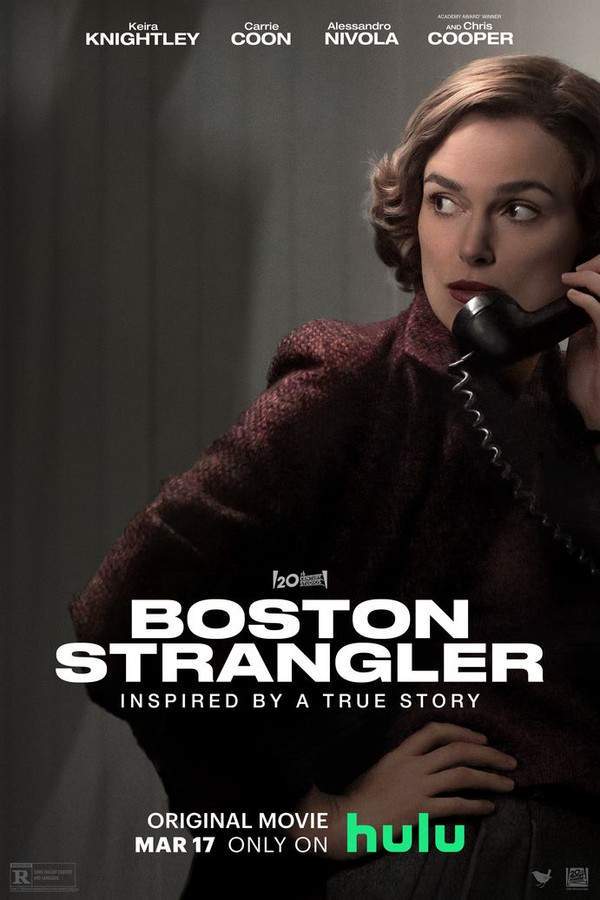
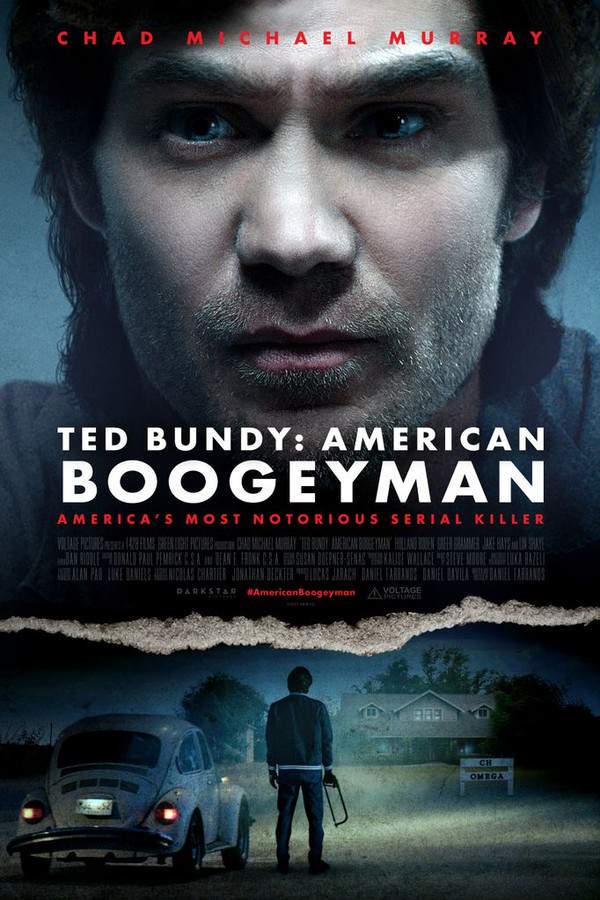


Featured on this page

What's After the Movie?
Not sure whether to stay after the credits? Find out!
Check out our other apps:

SAT Sphere
Build confidence for the Digital SAT.

Mori Atlas
Discover wild places worth protecting.

Luntero
Search smarter for a home in Amsterdam.

Plot Explained
Unravel movie endings and hidden clues.

Pokechamp
Dive into Pokémon data and battle logic.

Driving Theory
Get ready for your European theory test.

Movie Dust
Plan your next cinema trip with ease.

Musemap
Find art and culture as you travel.

Selkobase
Compare credentials before committing.

Local Manual
Turn an unfamiliar country into practical next steps.

Lernavi
Compare school systems before your next move.

GymRoam
Find a workout stop wherever your plans take you.
Explore Our Movie Platform
New Movie Releases (2026)
Famous Movie Actors
Top Film Production Studios
Movie Plot Summaries & Endings
Major Movie Awards & Winners
Best Concert Films & Music Documentaries
Movie Collections and Curated Lists
© 2026 What's After the Movie. All rights reserved.
Privacy Policy