
The Black Rose 1950

Directed by
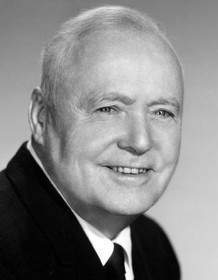
Henry Hathaway
Made by

20th Century Fox
The Black Rose Plot Summary
Read the complete plot summary and ending explained for The Black Rose (1950). From turning points to emotional moments, uncover what really happened and why it matters.
Two hundred years after the Norman Conquest, during the reign of King Edward I, the story begins with a Saxon scholar named Walter of Gurnie, played by [Orson Welles], who is the illegitimate son of the recently deceased Earl of Lessford. Upon returning from Oxford, Walter listens to the reading of his father’s will, and although he receives only a modest gift of a pair of boots, he instinctively recognizes it as a symbol of his father’s love and affection. This moment marks a poignant reminder of the complicated relationship between Saxons and Normans during this period of English history.
The earl’s Norman widow, mindful of potential unrest, takes Saxon hostages—an act that sets off a series of daring events. Walter, moved by a sense of loyalty and justice, joins a group of Saxons who successfully free the hostages but, in the process, attracts too much attention and is forced to flee England to avoid repercussions. Alongside his loyal friend, Tristram Griffen, a skilled Saxon archer and fellow adventurer, Walter embarks on a remarkable journey filled with danger and discovery.
Their quest leads them to Cathay, an ancient and mystical land in China, which at this time is under the influence of the Mongol Empire during the Pax Mongolica—an era of relative peace and stability across Eurasia. They join a caravan laden with gifts from a merchant named Anthemus to Kublai Khan, the powerful Mongol ruler preparing for an invasion of the Chinese territories. The caravan is under the protection of the formidable Mongol general Bayan, known as the Hundred Eyes, a figure who commands both fear and respect. Bayan becomes intrigued by Walter’s scholarly knowledge and Tristram’s exceptional skill with the English longbow, which impresses the Mongol leader.
The caravan’s journey is complicated by the presence of Lu Chung, the caravan’s leader, who is also the head of the expedition. Lu Chung begins to blackmail Walter into helping him secretly free Maryam, known as the “Black Rose,” who is the half-English sister of Anthemus. Maryam, portrayed by Cécile Aubry, secretly harbors feelings for Walter, but he remains distracted by his adventurous pursuits. She is being sent as one of the royal gifts from China, and her love for Walter adds emotional depth to the unfolding story. Meanwhile, Tristram grows increasingly uncomfortable with the violence and bloodshed surrounding their travels and decides it’s better to escape. He takes Maryam with him, wishing to see her safely in England.
Bayan, ever the strategic figure, sends Walter on an important diplomatic mission to meet with the Empress of the Song dynasty—a Chinese ruler steadfastly resisting Mongol control in the northern regions. Upon arriving, Walter is told he must remain in Cathay as a guest indefinitely, a twist that traps him in a strange land far from home. During this stay, he learns that Tristram and Maryam have been captured and imprisoned, heightening the stakes. Amid rising tensions, Walter realizes that he has developed genuine feelings for Maryam. The trio’s attempted escape ends tragically when Tristram dies in the effort, and Maryam, waiting in a small boat for Walter, drifts away before he can reach her. Devastated, Walter returns alone to England.
Back in England, Walter is greeted with honor by King Edward I, who recognizes the invaluable cultural and scientific knowledge, including the revolutionary concept of gunpowder, that Walter has brought back from China. Walter is knighted and granted a coat of arms, solidifying his status as a man of great importance and learning. The story concludes with the arrival of two Mongol emissaries from Bayan, who have brought Maryam, the Black Rose, now to join Walter in England—a symbol of the distant yet interconnected worlds they have traversed.
This epic tale, rooted in themes of loyalty, love, adventure, and cultural exchange, showcases the extraordinary journey of a Saxon scholar navigating a world on the brink of monumental change, ultimately bridging East and West through courage and knowledge.
The Black Rose Timeline
Follow the complete movie timeline of The Black Rose (1950) with every major event in chronological order. Great for understanding complex plots and story progression.
Walter receives his inheritance
Walter of Gurnie, the illegitimate son of the Earl of Lessford, returns from Oxford and hears the reading of his father's will. He is only given a pair of boots, which he recognizes as a token of his father's love. This event highlights his humble inheritance and sets the stage for his journey.
Walter joins Saxon rebels
Walter hears about the Norman widow taking Saxon hostages to prevent unrest. He joins a group of Saxons who attempt to free the hostages, showing his loyalty to his Saxon roots. He is eventually forced to flee England after being recognized for his involvement.
Walter begins journey to Cathay
Walter, along with his friend Tristram Griffen, a skilled Saxon archer, sets out to make his fortune in Cathay (China). Their journey occurs during the Pax Mongolica, a period of peace under Mongol rule across Eurasia, providing safe passage for travelers.
Journey with the caravan to Kublai Khan
Walter and Tristram join a merchant's caravan traveling to Kublai Khan, bearing gifts for the Mongol ruler. The caravan is protected by the Mongol general Bayan of the Hundred Eyes, and the journey is fraught with danger as they travel through hostile territories.
Recognition of talents and Bayan’s interest
Impressed by Tristram's archery skills and Walter’s scholarship, Bayan takes an interest in the Englishmen. This acknowledgment opens opportunities for Walter and Tristram within the Mongol realm, influencing their fate in Cathay.
Blackmail and capture of Maryam
Lu Chung, the head of the caravan, blackmails Walter into helping to escape Maryam, the 'Black Rose'—a half-English princess being sent as a gift. Walter's indifference to Maryam's love contrasts with his growing feelings for her as they travel.
Walter’s mission to the Song dynasty Empress
Bayan sends Walter on a mission to meet the Empress of the Song dynasty, who controls part of Cathay not yet under Mongol rule. Walter is told he must stay in Cathay as a 'guest', which marks a turning point in his adventure and his capture of new knowledge.
Imprisonment of Walter, Tristram, and Maryam
Walter finds Tristram and Maryam have also been captured and imprisoned. During this period, Walter realizes he loves Maryam. Their imprisonment leads to a plan to escape, with Tristram sacrificing himself in the process.
Tristram’s death and Walter’s escape
Tristram sacrifices his life to help Walter and Maryam escape from captivity. Maryam waits for Walter in a small boat, but it drifts away before he can reach her, leaving Walter devastated. This marks a tragic turning point in his journey.
Walter returns to England alone
After losing Maryam, Walter manages to return to England alone. His return marks a significant culmination of his journey, bringing back his accumulated knowledge and experiences from the East.
Welcomed by King Edward
Walter is warmly received by King Edward, who grants him knighthood and a coat of arms in recognition of his contributions. Walter's return is celebrated for the cultural and scientific knowledge he has brought back from Mongolia.
Mongol emissaries arrive in England
Two Mongol emissaries from Bayan arrive with the Black Rose, Maryam, who has been brought to England to be with Walter. Their arrival signifies the continuing connection between the East and West following Walter’s adventures.
The Black Rose Characters
Explore all characters from The Black Rose (1950). Get detailed profiles with their roles, arcs, and key relationships explained.
Walter of Gurnie (Orson Welles)
A Saxon scholar and illegitimate son of the Earl of Lessford. Walter is intelligent, curious, and driven by a desire for knowledge and adventure. His journey from England to China marks his transformation from a scholar to a man of action, whose love and loyalty grow amid political and cultural upheaval.
Maryam the Black Rose (Cécile Aubry)
An enigmatic and noble figure sent as a gift from Cathay, she embodies beauty, love, and resilience. Her feelings for Walter develop amid captivity, highlighting her strength and longing for freedom as she seeks her way back to England.
Bayan of the Hundred Eyes (Herbert Lom)
A Mongol general who shows both martial prowess and diplomatic interest. His fascination with Walter and his role in the Mongol Empire reflect the complex dynamics of conquest, allegiance, and cultural diplomacy during the period.
The Black Rose Settings
Learn where and when The Black Rose (1950) takes place. Explore the film’s settings, era, and how they shape the narrative.
Time period
During the reign of Edward I, early 14th century
The story is set approximately two centuries after the Norman Conquest, specifically during the early 1300s. This period was marked by political upheavals in England and the height of Mongol expansion in Eurasia, with European ventures into Asia becoming plausible through the Silk Road and other routes. It was a time of cultural exchanges and conflicts between the West and East.
Location
England, Cathay (China)
The movie switches between two significant locations: medieval England during the reign of Edward I and ancient Cathay, a historic Chinese region. England provides the backdrop for social and political tensions post-Norman Conquest, while Cathay is depicted as a vast land of intrigue, empire, and cultural richness during the Pax Mongolica era.
The Black Rose Themes
Discover the main themes in The Black Rose (1950). Analyze the deeper meanings, emotional layers, and social commentary behind the film.
🎭
Cultural Exchange
The film explores the exchange of knowledge, culture, and tradition between the West and East, exemplified by Walter’s journey to China and his subsequent return with scientific and technological insights. It highlights how cross-cultural contact can influence civilizations and personal growth.
⚔️
Adventure and Loyalty
Centered on adventure, loyalty, and sacrifice, the story follows characters risking their lives for love, freedom, and cultural preservation. Walter’s pursuit of knowledge and his loyalty to Maryam drive much of the narrative, emphasizing themes of personal dedication amidst political turmoil.

Coming soon on iOS and Android
The Plot Explained Mobile App
From blockbusters to hidden gems — dive into movie stories anytime, anywhere. Save your favorites, discover plots faster, and never miss a twist again.
Sign up to be the first to know when we launch. Your email stays private — always.
Explore the mobile appThe Black Rose Spoiler-Free Summary
Discover the spoiler-free summary of The Black Rose (1950). Get a concise overview without any spoilers.
In the thick of the 13th‑century, a world still echoing the clash of Saxon and Norman legacies, a disinherited scholar finds his heritage reduced to a simple pair of boots—yet that modest token awakens a restless drive for something greater. Walter of Gurnie carries the weight of his lineage while yearning to prove his worth beyond the borders of a kingdom that no longer recognises him. Beside him, his steadfast companion, Tristram, a bow‑wielding archer with a quiet sense of duty, shares the promise of adventure that only a distant horizon can fulfill.
Their path leads them far from the misty English coasts into the sweeping expanse of the Pax Mongolica, where cultures intermingle along caravans that stitch together continents. There they encounter the charismatic General Bayan, a commander whose reputation for both fearsome prowess and enigmatic wisdom draws the pair into a grander enterprise than any they have known. The tone of their trek balances the clatter of marching legions with the subtle intrigue of a world in motion, its vast steppes and bustling market towns humming with the promise of discovery.
Crossing into the heart of Cathay, the duo becomes enmeshed in the glittering yet precarious courts of Kublai Khan, where political currents swirl beneath silken canopies. Amid this tapestry of power, a mysterious figure known as the “Black Rose” flickers into view—a woman whose presence hints at a tender, perhaps forbidden, connection that could reshape both heart and destiny. The film’s mood drifts between the awe of foreign wonders and the intimate pull of a budding romance, inviting viewers to wonder how love might blossom amid empire and exile.
At its core, The Black Rose is a sweeping adventure of loyalty, curiosity, and cultural exchange. It paints a vivid portrait of a scholar turned explorer, a loyal friend, and the enigmatic forces that draw East and West together, all while leaving the true outcomes of their intertwined fates tantalisingly just out of reach.
Movies with Similar Twists and Themes
Uncover films that echo the narrative beats, emotional arcs, or dramatic twists of the one you're exploring. These recommendations are handpicked based on story depth, thematic resonance, and spoiler-worthy moments — perfect for fans who crave more of the same intrigue.


Featured on this page

What's After the Movie?
Not sure whether to stay after the credits? Find out!
Check out our other apps:

SAT Sphere
Build confidence for the Digital SAT.

Mori Atlas
Discover wild places worth protecting.

Luntero
Search smarter for a home in Amsterdam.

Plot Explained
Unravel movie endings and hidden clues.

Pokechamp
Dive into Pokémon data and battle logic.

Driving Theory
Get ready for your European theory test.

Movie Dust
Plan your next cinema trip with ease.

Musemap
Find art and culture as you travel.

Selkobase
Compare credentials before committing.

Local Manual
Turn an unfamiliar country into practical next steps.

Lernavi
Compare school systems before your next move.

GymRoam
Find a workout stop wherever your plans take you.
Explore Our Movie Platform
New Movie Releases (2026)
Famous Movie Actors
Top Film Production Studios
Movie Plot Summaries & Endings
Major Movie Awards & Winners
Best Concert Films & Music Documentaries
Movie Collections and Curated Lists
© 2026 What's After the Movie. All rights reserved.
Privacy Policy