


Thank You Mask Man Plot Summary
Read the complete plot summary and ending explained for Thank You Mask Man (1971). From turning points to emotional moments, uncover what really happened and why it matters.
Lenny Bruce voices The Lone Ranger and a host of characters in a tale that reimagines a frontier savior as a deeply human figure stretched between gratitude and power. The story begins in a small town that has relied on a masked hero for years, only to find that no amount of clean rescues has earned the lasting thanks he craves. Each time he saves the day, the residents mutter a quiet thanks and move on, leaving him feeling both essential and unseen. The Mask Man’s longing for appreciation becomes a defining trait, coloring every victory with a need for acknowledgment.
In the heart of the narrative, a simple moment crystallizes the dilemma. A little boy looks up at the Mask Man and says, plain and unpolished, “Thank you, mask man.” The line, small in tone but immense in weight, echoes in the hero’s mind and drives him to demand that phrase after every deed. This request grows into an obsession; gratitude becomes the fuel that powers his legend, and with that fuel comes a growing sense of expectation and entitlement. The more he hears the words, the more the Mask Man ties his own worth to the ritual of thanks, until the act of saving a town feels like a transaction rather than a gift.
As decades pass, the story leaps forward to a distant future where prophets deliver a startling message: the Messiah has arrived, and the Mask Man’s services are no longer needed. Rather than accepting this with humility, the hero’s dependence on praise spirals into a troubling arrogance. He becomes convinced that the world owes him a continual chorus of gratitude, and he vows to foment trouble if necessary just to coax that response once again. The once-noble protector now wrestles with a self-made myth about his own indispensability, turning his powers toward creating scenes that demand admiration rather than earned respect.
Back in the present timeline, the Mask Man articulates his choice to walk away rather than be pulled into a perpetual bargain. He explains that he refuses to fall into a trap where every act of good is immediately followed by a demand for something in return. In a moment of biting irony, the townspeople—still eager to show their appreciation—offer gifts. He deflects, then points to a companion who will join him on the road: an Indian guide named Tonto, and an accompanying horse. The gesture is practical, yet the response from the crowd is charged with surprise and unease, hinting at the shifting boundaries of heroism and friendship in this fractured world.
The exchange that follows is one of the most controversial and revealing moments in the tale. A townsman presses for an explanation of the Mask Man’s unusual request for both Tonto and a horse, and the hero offers a startling, unsettling answer: “To perform an unnatural act.” The revelation shocks the onlookers and exposes a clash between the Mask Man’s self-image and the town’s expectations of him. He clarifies, with a careful, provocative irony, that his interest is not in homosexuality or in any act that harms others; rather, it stems from a personal, flawed curiosity sparked by sensational magazine exposés. The scene lays bare the problematic contradictions sewn into a legend built on gratitude and danger, and it invites the audience to reckon with the ways myth can bend real-world morality.
From that moment on, the Mask Man and his enigmatic companion ride toward a horizon that seems both liberating and uncertain. The partnership with Tonto marks a new chapter, not as a guarantee of moral clarity, but as a shared journey through a world where fame, power, and affection intersect in unpredictable ways. The mask remains a symbol of a hero who once saved a town, now navigating complex temptations and ambiguous loyalties. As the sun slips behind the hills, the duo disappears into the fading light, leaving behind questions about what it means to act with true courage when the audience is never truly satisfied.
This retelling preserves the core twists of the original premise while reshaping the narration into a more reflective and expansive exploration of fame, gratitude, and the fragile line between savior and man. The interplay between the Mask Man’s longing for appreciation and his wavering moral compass creates a portrait of a myth that is as troubling as it is compelling, a modern fable about how adoration can distort even the noblest of intentions. The final image—two figures riding toward an uncertain sunset—offers a quiet, haunting closure that invites viewers and readers to confront their own ideas about heroism, responsibility, and the costs of being seen.
Thank You Mask Man Timeline
Follow the complete movie timeline of Thank You Mask Man (1971) with every major event in chronological order. Great for understanding complex plots and story progression.
Long history of saving a town but no gratitude
For years the Mask Man has saved a small town, yet the people growl that he never stays long enough to receive gratitude. He remains a mystery, moving on after every deed. The town's appreciation is always just out of reach.
The boy's phrase resonates
When pressed on why he isn't thanked, he shares a hypothetical moment where a little boy says 'Thank you, mask man' after a deed. The moment resonates with him, and he begins demanding to hear that phrase whenever he helps someone.
Far-future shift: no more thanks
In a far-future framing, no more 'thank you' greetings occur. Prophets declare that the Messiah has arrived and that the Mask Man is no longer needed.
Addiction to praise and descent into evil
The Mask Man becomes addicted to the idea of being thanked and slips toward darker impulses. He vows to create trouble so that he can fix it and hear the phrase again.
Reality check: avoiding manipulation
Back in reality, he explains that he does not want to fall into such a trap and manipulation. He rides away before accepting any gift or payment.
Gift proposal from the townspeople
The townspeople, still annoyed, insist on giving him a gift. He points to an Indian, Tonto, and asks for an accompanying horse.
The strange request and its reasoning
A townsman asks why he wants Tonto and a horse. The Mask Man replies with a crude remark about performing an unnatural act.
Clarification about the joke
He clarifies that he is not homosexual or into bestiality, but says he read an exposé and wanted to see how bad it was. He notes the irony of punishing homosexuality by locking offenders in prison with other men.
Townspeople's disgust and departure plan
The townspeople react in disgust, unsettled by his remark. The Mask Man and Tonto prepare to ride off together.
Sunset departure
The Mask Man and Tonto ride off into the sunset, leaving the town to ponder the encounter. The crowd's anger lingers as they fade from view.
Final reflection
The final image hints at the paradox of a hero who craves gratitude yet fears manipulation. His quiet departure underscores the tension between being needed and being used.
Thank You Mask Man Characters
Explore all characters from Thank You Mask Man (1971). Get detailed profiles with their roles, arcs, and key relationships explained.
The Lone Ranger (Lenny Bruce)
A masked savior who has spent years saving the town but becomes consumed by the need for perpetual thanks. His deeds seem driven by praise, and his growing craving for gratitude leads him toward moral gray areas. He ultimately rides away rather than allow gratitude to manipulate his actions, revealing a conflicted code of ethics.
Tonto
A symbolic companion who accompanies the Mask Man and stands in for Western myth. He functions as the foil to the hero’s vanity, highlighting how stereotypes and cultural gaze are used within the satire. His presence sharpens the critique of hero-worship and representation within the story.
Thank You Mask Man Settings
Learn where and when Thank You Mask Man (1971) takes place. Explore the film’s settings, era, and how they shape the narrative.
Time period
Present day and distant future
The narrative shuttles between a contemporary town where the Mask Man saves lives and demands gratitude, and a far future where prophets claim the Messiah has arrived. This contrast explores how perceptions of heroism and validation change across eras. The future sequence amplifies satire by expanding the same dynamic to mythic scale.
Location
Small Town
Set in a quiet small town where residents rely on local heroes for safety. The community is wary of the Mask Man's deeds but eager for public gratitude when he acts. The town becomes a microcosm for fame and reward, a stage where the hero's acts are measured by how much thanks he receives.
Thank You Mask Man Themes
Discover the main themes in Thank You Mask Man (1971). Analyze the deeper meanings, emotional layers, and social commentary behind the film.
🙏
Gratitude
The central engine of the story is the endless demand for 'Thank you' after every deed. The Mask Man's identity becomes tied to others' appreciation, blurring lines between savior and spectacle. His need for thanks drives risky behavior and ethical compromise. The town's insistence on public acknowledgment fuels vanity and dependence.
🗝️
Power
Gratitude evolves into power as the Mask Man uses the town's praise to influence outcomes. The looming Messiah prophecy intensifies this hunger, pushing him toward manipulative acts to provoke more gratitude. The arc exposes risks of hero-worship when reward becomes the currency of control.
🎭
Myth and Satire
The film blends Western myth with modern satire, using the Mask Man and Tonto as lenses to critique fame and religious spectacle. It questions how fantastical narratives distort moral choices and prompt audiences to demand more from icons than they can safely give. The juxtaposition of legendary archetypes with contemporary anxieties creates a self-aware critique of hero worship.

Coming soon on iOS and Android
The Plot Explained Mobile App
From blockbusters to hidden gems — dive into movie stories anytime, anywhere. Save your favorites, discover plots faster, and never miss a twist again.
Sign up to be the first to know when we launch. Your email stays private — always.
Explore the mobile appThank You Mask Man Spoiler-Free Summary
Discover the spoiler-free summary of Thank You Mask Man (1971). Get a concise overview without any spoilers.
In a spirited animated short that blends sharp satire with classic Western imagery, the legendary voice of Lenny Bruce breathes new life into a familiar frontier legend. The Lone Ranger, referred to simply as the Mask Man, is reimagined not merely as a stoic savior but as a complex figure driven by very human vulnerabilities. The film uses stylized animation to deconstruct the myth of the white-hatted hero, exploring the psychological weight of being a constant protector in a world that seems to take his good deeds for granted.
At the core of the narrative is a poignant exploration of gratitude and the expectations that come with power. For years, the Mask Man has served as the town’s guardian, performing rescues and maintaining order, yet he finds himself haunted by a lack of genuine acknowledgment. This longing transforms his heroism into a transactional quest for validation, coloring his every victory with a desperate need for the townspeople to verbalize their thanks. The animation visualizes this internal struggle, turning the vast frontier into a stage for a hero questioning the very nature of his contract with the people he saves.
The dynamic between the Mask Man and his companion, Tonto, adds another layer of intrigue to this fractured fairytale. As the story unfolds, the hero’s interaction with the town shifts from simple heroics to something far more provocative, stirring unease among the residents who thought they knew their protector best. The film deftly uses controversial humor to critique the nature of idol worship, asking audiences to consider what happens when a legend is stripped of his polite veneer. By juxtaposing Bruce’s monologue with vibrant visuals, the piece creates a tone that is both unsettling and darkly funny, leaving viewers to ponder the true price of heroism.
Movies with Similar Twists and Themes
Uncover films that echo the narrative beats, emotional arcs, or dramatic twists of the one you're exploring. These recommendations are handpicked based on story depth, thematic resonance, and spoiler-worthy moments — perfect for fans who crave more of the same intrigue.
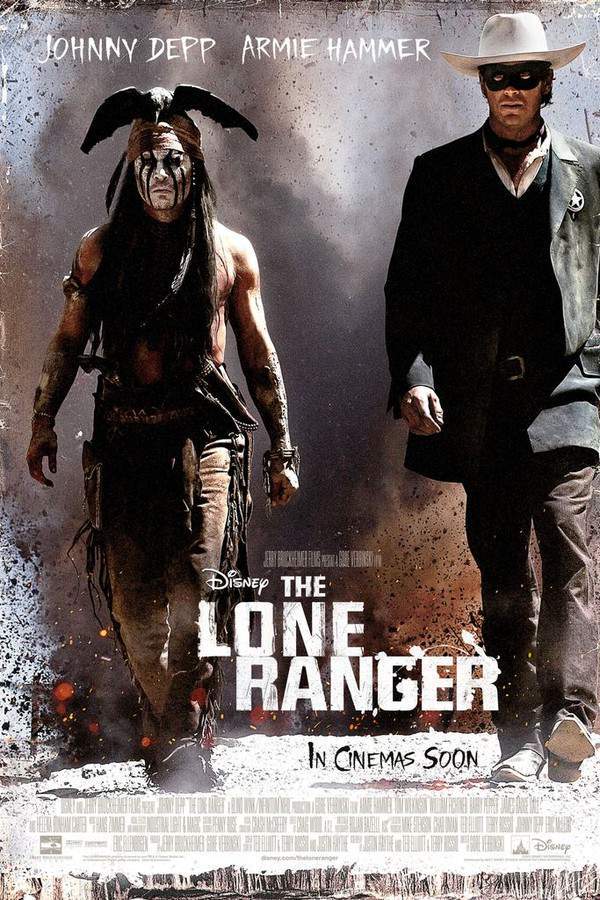


Featured on this page

What's After the Movie?
Not sure whether to stay after the credits? Find out!
Check out our other apps:

SAT Sphere
Build confidence for the Digital SAT.

Mori Atlas
Discover wild places worth protecting.

Luntero
Search smarter for a home in Amsterdam.

Plot Explained
Unravel movie endings and hidden clues.

Pokechamp
Dive into Pokémon data and battle logic.

Driving Theory
Get ready for your European theory test.

Movie Dust
Plan your next cinema trip with ease.

Musemap
Find art and culture as you travel.

Selkobase
Compare credentials before committing.

Local Manual
Turn an unfamiliar country into practical next steps.

Lernavi
Compare school systems before your next move.

GymRoam
Find a workout stop wherever your plans take you.
Explore Our Movie Platform
New Movie Releases (2026)
Famous Movie Actors
Top Film Production Studios
Movie Plot Summaries & Endings
Major Movie Awards & Winners
Best Concert Films & Music Documentaries
Movie Collections and Curated Lists
© 2026 What's After the Movie. All rights reserved.
Privacy Policy