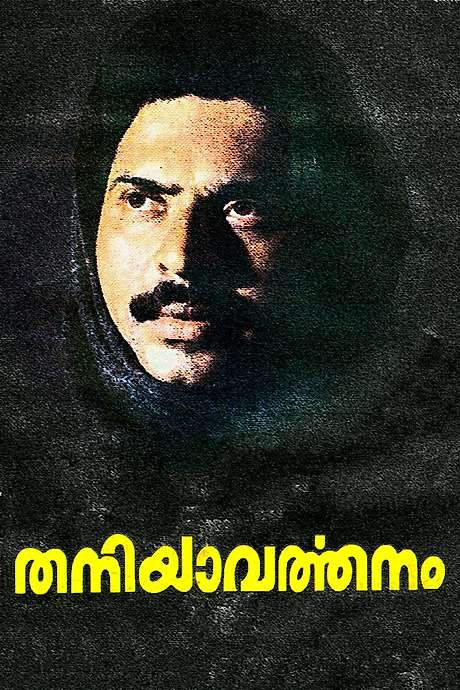
What Is Thaniyavarthanam About?
The premise of Thaniyavarthanam in 314 words, with nothing given away. The full story follows below.
In a sun‑drenched village of Kerala, life is organized around a fading joint‑family system where elders command reverence, rituals dictate daily rhythm, and superstition lingers like a quiet undercurrent. The community’s moral compass is guided by age‑old beliefs, and every generation is reminded of a whispered curse that claims one male heir to madness as a penance for an ancient transgression. This atmosphere of collective memory creates a palpable tension between tradition and the slow encroachment of modern thought.
Balan is a modest government drawing teacher whose steady routine is anchored by his responsibilities at home. He shares a crowded house with his wife, two young children, an aging mother, a supportive younger brother Gopi, a younger sister, and the ailing uncle Sreedharan, who is confined because of his mental condition. Balan’s role as caretaker for his uncle intertwines with his desire to provide a stable future for his own family, all while navigating the rigid hierarchy of the household and the ever‑present expectations of the village’s patriarchal customs.
When Sreedharan passes away, the unspoken fear that the family’s hereditary curse will now claim another surfaces with sudden intensity. Whispers ripple through the lanes, and the watchful eyes of neighbors begin to scrutinize Balan’s every gesture. The village’s suspicion, rooted more in ancient lore than in observable proof, collides with the rational world that Balan and Gopi represent—a clash that paints his home life with an uneasy, oppressive hue. The pressure from relatives, friends, and pupils creates a suffocating sense of being judged not for one’s deeds, but for an inherited destiny.
The film unfolds in a restrained, realistic style that captures the quiet desperation of a man caught between duty and dread. Its tone is steeped in solemn melancholy, dripping with the weight of communal expectation while hinting at the fragile resilience that may yet surface when belief and reality vie for dominance.
What Happens in Thaniyavarthanam?
The complete story of Thaniyavarthanam, from the first scene to the last, in 519 words (about 2 minutes). Spoilers throughout. Names in the text link to 2 cast member pages.
Spoilers ahead
Balan Master Mammootty steers a quiet, steady life in a rural Kerala village as a government school drawing teacher. He shares the home with his wife, their two children, his aging mother, and his younger brother, Gopi Mukesh, along with a younger sister. The household is steeped in a fading, but stubborn, Nair joint-family culture where tradition, ritual, and superstition hold sway. In this world, the eldest member—the karnavar—has all the say, and power tilts toward the uncle who wields influence far beyond what the father might. The family’s social order is rigid, and decisions are filtered through this intricate web of authority and expectation.
Within this clan is a troubling figure, the uncle Sreedharan, who is confined to a dark room inside the house because he is deemed mentally challenged. The family believes in a grim, almost hereditary superstition: in every generation, one male may succumb to madness after a past sin—an act as simple as throwing the goddess’s idol into a well—cursing the line and allegedly passing the malady down through generations. With the death of Sreedharan, the village wonders who, between Balan or Gopi, might be next to suffer the same fate.
One night, a terrible nightmare jolts the household awake, and the entire house trembles with fear. The elder members whisper that Balan is slipping into madness, and word travels quickly through the village. Soon, Balan’s every move is scrutinized and misread as a sign of lunacy. His vocation comes under question; he requests an extended leave and even transfers from service, while some family members and students alike doubt his sanity. The world around him grows hostile, casting him as a danger to himself and others.
In the midst of mounting suspicion, Gopi—a progressive and educated voice—urges him to seek medical counsel. A physician examines him and declares him sane, but the village and his family remain unconvinced, clinging to superstition and fear rather than diagnosis. The strain ripples through every relationship: his wife is compelled to depart with their children, and the family quietly arranges the marriage of his younger sister while concealing the fact that their elder brother has been challenged by a mental illness.
As the pressure bears down, Balan is eventually admitted to an asylum for treatment. He is released after a short period, but he is fragmented—physically exhausted and emotionally scarred—and is forced back to the darkroom that once housed his uncle. Society continues to press on him, chaining him to oppression and warning him to stay within the boundaries of social acceptance. He becomes a symbolize of a fragile humanity crushed beneath centuries of custom.
In the end, the tragedy culminates in a devastating act of love and fear: his mother, the same hand that once fed him his first bites, ends his life with poison on the day of a ritual meant to seek forgiveness from the goddess. Unable to forgive herself for this act, she takes her own life as well. The story closes on a stark note about the weight of superstition, family duty, and the price paid when a community chooses tradition over understanding.
Thaniyavarthanam Timeline: Every Key Event in Order
12 key events in the order they happen, from “Tranquil life in a Kerala joint family” to “Legacy of superstition”. 12 events name a place, across 12 locations.
- 1
Tranquil life in a Kerala joint family
Balan Master, a school drawing teacher in Government service, enjoys a serene life in a traditional Nair joint family in a rural Kerala village. He shares a home with his wife, two children, his mother, a younger brother Gopi, and a younger sister. The family is rooted in routine and mutual care, even as the elder members cling to superstition and orthodox norms.
When:pre-nightmare era Where:Balan's family home, rural Kerala
- 2
A generations-old curse and the locked uncle
The family believes that a male from each generation will go mad due to a past sin—the goddess's idol thrown into a well. Sreedharan, Balan's uncle, is locked in a dark room as he is deemed mentally challenged. The karnavar, the senior male, wields power and makes most decisions, reinforcing the family’s superstition.
When:generational past Where:Family house
- 3
Talk of who would be next
After the elder uncle dies, villagers wonder which of Balan or Gopi will be next to succumb to madness. The community scans every action for signs of the curse's return. Rumors and fear spread through the village, casting doubt on Balan’s sanity.
When:aftermath of uncle's death Where:Village
- 4
Nightmare and sudden suspicion
One night, Balan experiences a terrifying nightmare that jolts the entire household awake. Elder family members interpret the episode as a sign that Balan is turning mad. News leaks to the village, and the community begins to view his behavior through the lens of inherited lunacy.
When:night Where:Balan's home
- 5
Village judgment against Balan
The village condemns Balan as mentally ill, interpreting his movements and choices as proof of the curse's persistence. He applies for an extended medical leave and transfers from service as suspicion and stigma mount. His students and some relatives begin to label him a lunatic.
When:immediate aftermath Where:Village and school
- 6
Gopi seeks medical reassurance
Gopi, progressive and educated, urges Balan to seek a medical opinion. They consult a qualified physician who declares Balan sane. Yet the village refuses to accept this verdict and continues to doubt him.
When:shortly after leave decision Where:Clinic/physician's office
- 7
Wife and children forced to leave
With suspicion at its peak, Balan's wife is forced to leave the house with their children. The family arranges the marriage of his younger sister, hiding the fact that her elder brother is deemed mentally challenged. The secrecy deepens the stigma and isolates Balan.
When:crisis point Where:Balan's home and nearby village
- 8
Admission to the asylum
Balan is admitted to an asylum for treatment and is broken by the experience. He is released after a few days, but the damage is done—mentally and physically—before being confined once more to the darkroom where his uncle once resided. Society continues to hound him even behind closed doors.
When:during and after hospital care Where:Asylum; darkroom
- 9
Society's suppression and subjugation
Society hounds him and beats him into subjugation, pressing him to accept a diminished identity. The relentless scrutiny erodes his agency and drives further isolation. The community’s superstition effectively negates his attempts to reclaim normal life.
When:post-release Where:Village/public spaces
- 10
Murder by mother's act on ritual day
On the day of the ritual for forgiveness from the goddess, Balan's mother poisons him and ends his life. The act is a final severing of his chance at relief or redemption. She then commits suicide, unable to forgive herself.
When:day of ritual Where:Family home
- 11
Death and aftermath
Balan's death seals the tragic cycle of superstition and social control. The ritual's violence becomes a grim testament to the village’s fear and orthodoxy. The mother’s suicide compounds the sense of fatal guilt that haunts the family.
When:aftermath Where:Village; family home
- 12
Legacy of superstition
The story closes as a stark critique of how fear of curses and the obsession with controlling kin can destroy promising lives. It exposes the cruelty of traditional hierarchies in a Kerala village. Balan's fate lingers as a warning about the cost of oppressive beliefs.
When:epilogue Where:Kerala village
Who Are the Main Characters in Thaniyavarthanam?
6 characters, among them Balan Maruthempilly (Balagopalan Master) — Mammootty, Gopi and Sumithra: who each one is and the part they play in the story. 5 of them link to the actor’s page.
-

Balan Maruthempilly (Balagopalan Master) — Mammootty
Played by Mammootty
A serene school drawing teacher whose rational, gentle nature clashes with a village rooted in superstition and a family curse. His sanity is questioned after a nightmare, forcing him into exile and institutional care. He struggles to maintain dignity while the community’s gaze becomes prosecutorial.
- 🎓 Education
- 🧭 Rationality
- 🪶 Family man
- G
Gopi
Played by Mukesh
Balan's educated younger brother who champions modern ideas and opposes superstition. He pushes for medical evaluation, challenging the villagers' instinct to condemn Balan. His rational outlook and advocacy for change clash with tradition.
- 🎓 Education
- 🧭 Progressive
- 🧠 Rational
- S
Sumithra
Played by Asha Jayaram
Balan's wife who endures separation and social pressure when her husband is deemed mad. She bears the burden of leaving home with their children, highlighting gendered hardship in a judgmental community.
- 💑 Wife
- 🧭 Resilience
- 🏡 Domestic life
- M
Mother
Played by Kaviyoor Ponnamma
Balan's mother, a matriarch consumed by guilt who participates in the ritual killing of her son and later takes her own life. She is driven by fear of dishonor and a demand for forgiveness through a deadly price.
- 👵 Matriarch
- 🕯️ Guilt
- 💔 Sacrifice
- S
Sreedharan
Balan's uncle who is chained and confined in a dark room as the family believes madness runs in the bloodline. His confinement mirrors the stigma surrounding mental illness within the community.
- 🔒 Confinement
- 🕯️ Stigma
- 👤 Relative
- K
Karnavar
Played by Kothuku Nanappan
The elder patriarch who wields power in the family and dictates decisions, embodying tradition-driven authority that controls life in the household and the village.
- 👴 Patriarch
- 📜 Tradition
- 🗣️ Authority
Where and When Is Thaniyavarthanam Set?
Thaniyavarthanam is set in Kerala and India. Here is why the place matters to the story.
Where
Kerala, India
The story unfolds in a rural village in Kerala, where a traditional joint family governs daily life. Superstition and ritual beliefs shape many actions, and the elders hold decisive power in family matters. The village atmosphere is conservative, insular, and quick to judge.
- 🏡 Rural village life
- 🌾 Traditional society
What Are the Themes of Thaniyavarthanam?
3 ideas the story keeps returning to, among them Sanity, Family Honor and Tragedy.
-
01
Sanity
The film probes how a respected teacher's mental state is questioned by a village steeped in superstition. Medical evaluation may declare sanity, but the elders insist otherwise. Rumors spread through the community, turning ordinary actions into signs of illness. The tension shows how collective beliefs can override scientific assessment. The theme reveals the fragility of individual identity under communal judgment.
-
02
Family Honor
Family honor dictates every decision in the matrilineal household. The Karnavar and elders enforce rules to protect reputation, often at the expense of personal welfare. Fear of stigma drives coercive actions against those seen as threats. Tradition becomes a cage that traps love and freedom, linking individual choices to collective consequences. The theme exposes the cost of upholding appearances.
-
03
Tragedy
The narrative's tragedy emerges from ritual logic that forgives through sacrifice. A mother commits a deadly act to avert dishonor and then ends her own life, weighed down by guilt. This act reveals how ritual pressure can corrupt familial bonds and moral judgment. The film shows the wider fallout on children, spouses, and the community. It meditates on the price of hollow forgiveness in tradition-bound societies.
What Kind of Film Is Thaniyavarthanam?
Bleak in tone, with slow pacing and a straightforward story, going by the plot summary.
- Tone
- Bleak
- Pacing
- Slow
- Story
- Straightforward
- Intensity
- High
- Ending
- Bleak
A deeply melancholic and slow-paced drama that immerses the viewer in an oppressive atmosphere of superstitious dread, charting one man's tragic descent as he is crushed by the weight of family history and societal prejudice.
- oppressive
- melancholic
- claustrophobic
- anxious
- somber
- desperate
- superstition
- mental health stigma
- family duty
- social ostracism
Content notes: suicide, filicide, mental illness stigma, confinement.
Quiz
How well do you remember Thaniyavarthanam? Test yourself on the story.