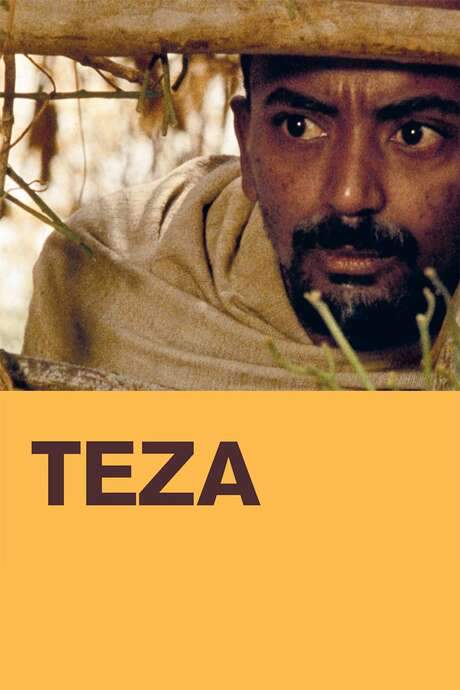
What Is Teza About?
The premise of Teza in 287 words, with nothing given away. The full story follows below.
In the wake of a tumultuous era, a young physician returns to his ancestral homeland, a country still trembling under the weight of a repressive regime that has reshaped daily life into a fragile tapestry of hope and hardship. The landscape—ranging from mist‑cloaked lakes to remote village streets—feels both timeless and haunted, its natural beauty constantly brushed with the shadows of political unrest. The film’s tone mixes lyrical realism with dream‑like reveries, inviting the viewer to linger on the scent of wood‑fire smoke, the echo of a priest’s chant, and the persistent hum of distant radios that carry fragmented histories.
Anberber, freshly equipped with a medical education earned abroad, arrives to find his community caught between reverence for tradition and an urgent yearning for modern healing. He is thrust into a world where the expectations of a village healer clash with the stark realities of a state that co‑opts science for its own agenda. The tension between his desire to mend bodies and the pervasive atmosphere of suspicion creates a compelling inner conflict that drives the narrative’s emotional core.
Around him, fellow returnees and locals embody the complex layers of this society. Tesfaye, a well‑educated compatriot marked by his own physical loss, shares the uneasy reunion with family and neighbors, his presence highlighting the generational strains of displacement and duty. Meanwhile, a young woman living with his mother, Azanu, becomes a quiet focal point for the possibilities of renewal, her story hinting at the intertwining of personal aspirations with the collective longing for stability.
Together, these figures navigate a world where superstition, memory, and the promise of education intersect, setting the stage for a meditation on identity, responsibility, and the fragile hope of rebuilding a fractured life.
What Happens in Teza?
The complete story of Teza, from the first scene to the last, in 1,022 words (about 4 minutes). Spoilers throughout. Names in the text link to 4 cast member pages.
Spoilers ahead
Anberber returns to his remote Ethiopian village after years abroad in Germany and the capital, carrying memories that don’t quite fit his present life. The opening reels pull viewers into a non-linear moodboard: a chanting priest wrapped in light fabrics, a badly injured man on a hospital stretcher, and a recurring image of a child who later emerges as a hallucination. An eerie sunrise over a cliff-side priest playing a traditional harp and a mother by a wood fire, watching the smoke, set a tone of superstition, memory, and unsettled history. The elder woman who will be revealed as his mother sits with worry as the village awaits something she can’t quite name.
In 1990, Tesfaye, a well-educated man with a prosthetic leg, returns to a village still marked by poverty and uncertainty. The reunion with his mother and brother is warm but tense; the crowd’s questions about his life abroad flood him with a dazed look. A jubilant welcome party erupts, only to be interrupted by a harsh draft of young men into national service. The scene mingles celebration with fear, hinting at the tight grip of conflict on even the most ordinary days.
As dawn unfurls over Lake Tana, the landscape becomes a lens for Anberber’s fragmented mind. He wakes from a nightmare, and his village crowds around his hut, drawn to the mystery of his missing memories and his prosthetic leg. He follows a vision of a child to a Mussolini-era statue, a visceral reminder of his father’s death in the Italian invasion. The quiet majesty of the lake and the rising mist frame a growing sense of exile in his own homeland. The village welcomes him back with ritual and expectation, yet Anberber remains trapped in a loop of visions that blur the line between trauma, memory, and belief.
To the village’s shock, the people soon discover that Anberber is no ordinary healer. They bring him patients, hoping he can restore health, but his mind refuses to settle. A church exorcism is attempted, but he argues that Western medicine might fail unless the mind accepts it. When the ritual finally splashes him with holy water, a flood of memories rushes back, catapulting us into his past.
The film then travels backward to the 1970s in Germany, where a younger Anberber studies as a graduate student. He meets Cassandra, a Black woman who challenges his views on race and love. He declares himself a socialist, motivated by a longing to ease the suffering of Ethiopians at home, and this moment anchors a long arc about allegiance, revolution, and the costs of political idealism. In those years, Anberber participates in socialist student circles, while back in Ethiopia a wave of liberation fighters presses the village into choosing sides and contending with conscription, fear, and shifting loyalties.
Back in the present, a violent raid brings a stark reminder of how fragile life remains. A young man in the cave where villagers hide is killed by soldiers, a moment that bleeds into Anberber’s night and echoes his father’s memory. The violence reframes education as both a beacon of hope and a risky, political act, a debate echoed by the village’s teacher who argues that learning can empower people even under oppression. Anberber’s memory flashes between the cave, the classroom, and Cassandra’s complicated past, including her own family history of racism and abandonment.
The narrative slides again into the 1970s, when Anberber’s circle in Germany grows closer. Cassandra becomes his partner, and his best friend Tesfaye—along with Tesfaye’s White German partner—faces the pain of an unplanned pregnancy. The film threads Cassandra’s backstory, revealing a father who was Cameroonian, a mother who struggled against racism and loss, and a child who dreams of a different future. In the present, a young woman named Azanu, who has been taken in by Anberber’s mother, returns in a sequence that intensifies the film’s emotional core. When Azanu is later revealed to be pregnant, Anberber’s feelings collide with a chorus of voices from the village, and his own memories rise with the tides of Lake Tana.
As Ethiopia’s politics shift again in the 1980s, Anberber becomes a PhD holder who returns to Addis Ababa. Soldiers scour the airport, and he joins a cohort of professionals who find themselves squeezed between revolutionary ideals and the comforts their education affords them. The new regime’s brutality shocks him, especially as he witnesses how power can hollow out the promises of egalitarianism. A close friend is murdered, and Anberber’s refusal to participate in self-criticism places him at odds with the cadre who once fought for the people. A violent confrontation in Germany later tests his sense of belonging in the diaspora; when Tesfaye’s son and wife arrive in Europe, Anberber’s reentry becomes a confrontation with racism, guilt, and the weight of unspoken truth.
Back in the village, the present day shows Anberber re-centering his life around service. After tending to a wounded conscript and receiving the community’s trust, he steps into the role of schoolteacher, symbolically taking the place of knowledge and guidance that the village has long sought. Azanu remains central to his personal future, and the memory of his past adds emotional resonance to his commitment to education and to the children who will inherit the country’s future.
Throughout the film, visions of a grain bin with holes—meant to symbolize a country whose people are dying and whose problems seem endless—linger as a warning and a test of faith in education as a path to change. A holy man, a priest, and a telltale string of voices from a radio interview with liberation fighters underscore the tension between competing versions of socialism and the real consequences of political struggle. In the final turn of the year, as the New Year song fills the air and the yellow flowers bloom, Anberber and Azanu welcome a newborn into a world full of possibilities. The film closes on a note of cautious optimism: a new generation may reject the violence of the past and help usher in a rebirth for their country, even as the memory of loss lingers like an ongoing prayer.
Teza Timeline: Every Key Event in Order
15 key events in the order they happen, from “Opening montage: memory, visions, and a child” to “New Year birth and hopeful ending”. 14 events name a place, across 10 locations.
- 1
Opening montage: memory, visions, and a child
The film opens with rapid crosscuts between a chanting priest wrapped in muslin, a severely injured man wheeled through a hospital, and a recurring image of a child who later appears as a hallucination. This sequence sets a dreamlike mood and signals traumatic memories to come. The priest's demand to wake up introduces themes of belief, memory, and possession that echo throughout the story.
- 2
Return to the village life
In 1990, Anberber returns to his impoverished village and is warmly welcomed by his mother and brother. The reunion is interrupted by the presence of dejected, handcuffed youths and a lively welcome party that is quickly overshadowed by the reality of conscription. The contrast highlights the social upheaval pressing on the community.
When:1990 Where:Ethiopian village
- 3
Memory gaps and the church exorcism
Anberber wakes up with no memory of losing his leg, and the villagers fear he is possessed. They drag him to a church for an exorcism, where he resists and the crowd demands he remove his shoes. His unsettling hallucination of the child intensifies as the ritual unfolds.
When:1990 Where:Village church
- 4
Germany, 1970s: student and activist
Flashbacks reveal Anberber as a German graduate student in the 1970s who meets Cassandra and proclaims himself a socialist motivated by alleviating Ethiopian suffering. He links his research to help his country and engages in discussions about oppression and solidarity. These memories foreshadow his later sense of dislocation between continents.
When:1970s Where:Germany
- 5
Ethiopian students in Germany
Anberber participates in socialist student meetings where imperialism and the role of educated elites in national change are debated. A radical member challenges another woman's allegiance, highlighting tensions around culture and politics. The scenes reveal the complexities of revolutionary identity abroad.
When:1970s Where:Germany
- 6
Cave hideout and a murder
Back in the village, young men hide in a cave to avoid conscription, and soldiers later kill a young man in front of the villagers. Anberber tries to intervene but cannot save him, and the murdered man merges with his hallucination of the child. The event crystallizes the brutality of the era and his mounting guilt.
When:1970s Where:Cave near village
- 7
Cassandra's pregnancy and backstory
Cassandra becomes Anberber's girlfriend, and a pregnancy complicates their relationship as past traumas surface. Cassandra's father was a Cameroonian man who left behind a challenging legacy, and her mother struggled with racism and suicide. Her backstory informs her fears about love, loyalty, and motherhood.
When:1970s-1980s Where:Germany / present-day flashbacks
- 8
1974 deposition and bar celebration
In 1974, Ethiopian students in a bar celebrate the deposition of Emperor Haile Selassie and the fall of the monarchy, joined by White Germans who cheer with them. Anberber quietly contemplates the political vacuum and wonders who might lead Ethiopia next. The moment blends collective euphoria with personal uncertainty.
When:1974 Where:Bar in Germany
- 9
Return to Ethiopia in the 1980s
In the 1980s, Anberber returns to Addis Ababa as a PhD holder, only to face military presence and a government that pressures intellectuals to support the revolution. He notes the paradox of revolutionaries living in luxury seized from others. Tensions with cadres mount as political expectations collide with personal beliefs.
When:1980s Where:Addis Ababa
- 10
Tesfaye's murder and Anberber's escape
A close friend is murdered by rival cadres, and Anberber narrowly escapes the same fate. He refuses to sign a statement that the murder was an accident, prompting the haunting image of blood morphing into a leaky faucet that follows him nightly. The brutal violence cements his desire to distance himself from politics.
When:1980s-1990s Where:Ethiopia
Show the other 5 events of Teza Hide the last 5 events
- 11
Exile to Germany and racism
Anberber is sent to Germany to meet Tesfaye's son and wife but is suspected of being a spy by the Ethiopian diaspora. He endures prejudice and is contrasted with others who perceive diaspora life as harsher than his. A racist mob later assaults him, leaving him gravely injured and missing a leg.
When:Late 1980s-1990s Where:Germany
- 12
Becoming village teacher again
Back in the present, the village is short a teacher until Anberber is chosen to fill the role. He helps dress the wound of a returning conscript and gradually embraces his duties as the community's educator. The classroom becomes a space of hope and continuity.
When:Present day Where:Ethiopian village
- 13
Azanu's pregnancy and awakening visions
Azanu becomes pregnant, and Anberber experiences a surge of voices as he contemplates the life growing inside her. His visions intensify, revealing deeper anxieties about the country and his own mind. The cycle of trauma and potential renewal circles back to him as a teacher and partner.
When:Present day Where:Village / Lake Tana
- 14
Grain bin vision and prophecy
A powerful vision shows a traditional grain bin with many holes leaking grain, symbolizing a country losing its people and resources. The priest interprets this as a sign that Anberber's education alone cannot fix Ethiopia's chronic problems without collective action. The moment reframes his sense of responsibility.
When:Present day Where:Village
- 15
New Year birth and hopeful ending
As the New Year arrives, Azanu gives birth and the village celebrates with a chorus and blooming yellow flowers. The sequence ends on a note of rebirth, suggesting the next generation may choose a different path than the violence of prior regimes. Anberber looks toward a hopeful future, renewed by the possibility of change.
When:New Year Where:Village
Who Are the Main Characters in Teza?
7 characters, among them Anberber, Cassandra (Araba E. Johnston Arthur) and Tesfaye (Abiye Tedla): who each one is and the part they play in the story. 6 of them link to the actor’s page.
- A
Anberber
A highly educated lab researcher who returns to his Ethiopian village with a fragmented memory and a clash between cosmopolitan training and rural life. He experiences recurring visions of a child and a sense of alienation, gradually moving toward a role as a community-minded teacher. His arc centers on healing, memory, and service to the village.
- 🧠 Trauma
- 🧭 Identity
- 👨🏫 Teacher
- C(
Cassandra (Araba E. Johnston Arthur)
Played by Araba E. Johnston Arthur
A Black German woman who enters Anberber's life in the 1970s. Her backstory intersects racism, diaspora dynamics, and a complex family history. Her relationship with Anberber deepens amid pregnancy pressures and cultural tensions, and her experiences echo themes of abandonment and maternal struggle.
- 🌍 Diaspora
- 💔 Romance
- 🧭 Identity
- T(
Tesfaye (Abiye Tedla)
Played by Abiye Tedla
Anberber's friend and fellow student who embraces socialist ideals and later faces personal costs within Ethiopia's political upheaval. He travels to Germany seeking change, returns with mixed outcomes, and is ultimately killed by revolutionary cadres, underscoring the personal dangers of political struggle.
- 🧭 Ideology
- 🕊️ Loss
- 👨👦 Family
- A(
Azanu (Teje Tesfahun)
Played by Teje Tesfahun
A scorned woman who becomes a central romantic figure in Anberber's life. She navigates love, betrayal, and resilience while dealing with communal judgments. Her pregnancy and presence anchor emotional stakes across both present and flashback narratives.
- 💞 Romance
- 🌊 Resilience
- 👩🦱 Woman
- A(
Ayalew (Nebiyu Baye)
Played by Nebiyu Baye
A young man drafted into military service; his mother's distress highlights the human cost of conscription under repressive regimes. His arc reflects the generational impact of political turmoil on families and communities.
- 👦 Youth
- ⚔️ War
- 🫂 Family
- A(
Abdul (Wuhib Bayu)
Played by Wuhib Bayu
A village youth who appears amid the social upheavals and conscriptions, representing the many ordinary people caught in the crossfire of changing political tides.
- 👦 Youth
- 🪖 War
- 🫂 Community
- A(
Anberber (child) (Mengistu Zelalem)
Played by Mengistu Zelalem
A younger version of Anberber seen in memories, symbolizing innocence, early life in a changing world, and the origins of his later trauma and memory.
- 🧒 Memory
- 👶 Childhood
Where and When Is Teza Set?
Teza is set in Ethiopian village near Lake Tana, Addis Ababa and Germany (1970s-1990s). Here is why the time and place matter to the story.
When
1970s-1990s
The narrative unfolds across multiple eras: flashbacks to 1970s Germany and Ethiopia, the 1974 deposition of Haile Selassie, and the 1980s Ethiopian regime, with a present-day frame around 1990. It weaves these periods into a non-linear structure, showing how past revolutions, wars, and diasporic experiences persist in the present. The film juxtaposes rural life, urban centers, and exile to trace personal and national histories through time.
Where
Ethiopian village near Lake Tana, Addis Ababa, Germany
Most of the story unfolds in a poor Ethiopian village by Lake Tana, with expansive landscapes and a small mud hut community. It also shifts to Germany where Anberber and Cassandra live as part of the diaspora, and to Addis Ababa during the later decades of conflict. The settings contrast rural memory with urban exile and the political climates shaping both realms, highlighting how place molds identity and memory.
- 🏞️ Ethiopian countryside
- 🌍 Diaspora
- 🏙️ Addis Ababa
What Are the Themes of Teza?
3 ideas the story keeps returning to, among them Memory & Identity, Political History and Community & Belonging.
-
01
Memory & Identity
Anberber's fragmented memories drive the film's emotional core. Visions of a child, hospital scenes, and landscapes from home reveal how exile reshapes self-perception. Exorcism rituals and dream sequences turn trauma into questions of belonging across borders. Memory is treated as a political act that ties personal identity to historical experience.
-
02
Political History
The film traces Ethiopia's late-20th-century upheavals—from imperial fall to socialist rule and ongoing unrest—through intimate stories. It critiques revolutionary promises that mask power struggles and violence, while showing how diaspora life exposes racism and dislocation. Through conscription, exile, and shifting allegiances, politics directly scrapes the lives of ordinary people. Personal lives become a lens on national change.
-
03
Community & Belonging
Villagers, families, and lovers form a fragile network that sustains hope amid poverty and coercion. Rituals, caregiving, and everyday acts of teaching become acts of resistance against trauma. The narrative emphasizes shared memory and responsibility to one another, suggesting that healing depends on collective support. The next generation's resilience is portrayed as rooted in communal bonds.
What Kind of Film Is Teza?
Melancholic in tone, with variable pacing and a complex story, going by the plot summary.
- Tone
- Melancholic
- Pacing
- Variable
- Story
- Complex
- Intensity
- High
- Ending
- Bittersweet
A complex and melancholic epic that weaves between past and present, using a dreamlike, non-linear structure to explore the deep trauma of political violence and exile, ultimately arriving at a fragile, bittersweet hope.
- melancholic
- haunting
- dreamlike
- oppressive
- introspective
- nostalgic
- diaspora experience
- political idealism
- post-colonialism
- exile and return
Content notes: war violence, political violence, murder, military conscription, traumatic memories.
Quiz
How well do you remember Teza? Test yourself on the story.