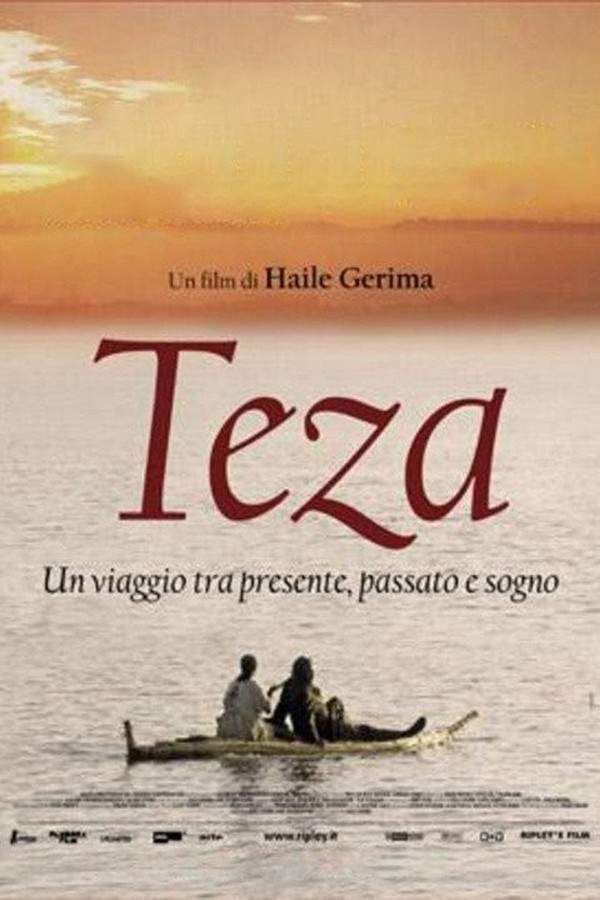
Teza 2008

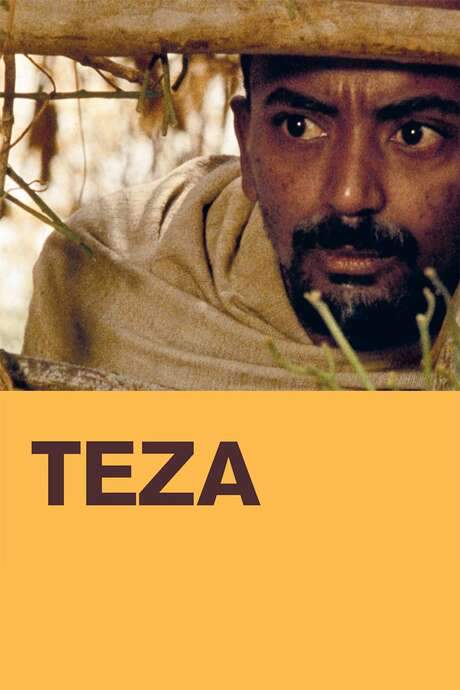
Returning to Ethiopia after studying medicine in Germany, Anberber confronts the brutal Mengistu regime that has turned his homeland into chaos. His aspirations to heal the populace are thwarted as the military junta exploits scientists for its agenda. Seeking refuge in his rural home, he faces violence and rival factions, forcing him to decide whether to endure the strain or rebuild a fractured life.


Does Teza have end credit scenes?
No!
Teza does not have end credit scenes. You can leave when the credits roll.
Meet the Full Cast and Actors of Teza
Explore the complete cast of Teza, including both lead and supporting actors. Learn who plays each character, discover their past roles and achievements, and find out what makes this ensemble cast stand out in the world of film and television.

External Links and Streaming Options
Discover where to watch Teza online, including streaming platforms, rental options, and official sources. Compare reviews, ratings, and in-depth movie information across sites like IMDb, TMDb, Wikipedia or Rotten Tomatoes.







Take the Ultimate Teza Movie Quiz
Challenge your knowledge of Teza with this fun and interactive movie quiz. Test yourself on key plot points, iconic characters, hidden details, and memorable moments to see how well you really know the film.
Teza (2008) Quiz: Test your knowledge of the film Teza with these ten varied questions covering characters, events, and symbolism.
Who is the main character that returns to his remote Ethiopian village after years abroad?
Full Plot Summary and Ending Explained for Teza
Read the complete plot summary of Teza, including all major events, twists, and the full ending explained in detail. Explore key characters, themes, hidden meanings, and everything you need to understand the story from beginning to end.
Anberber returns to his remote Ethiopian village after years abroad in Germany and the capital, carrying memories that don’t quite fit his present life. The opening reels pull viewers into a non-linear moodboard: a chanting priest wrapped in light fabrics, a badly injured man on a hospital stretcher, and a recurring image of a child who later emerges as a hallucination. An eerie sunrise over a cliff-side priest playing a traditional harp and a mother by a wood fire, watching the smoke, set a tone of superstition, memory, and unsettled history. The elder woman who will be revealed as his mother sits with worry as the village awaits something she can’t quite name.
In 1990, Tesfaye, a well-educated man with a prosthetic leg, returns to a village still marked by poverty and uncertainty. The reunion with his mother and brother is warm but tense; the crowd’s questions about his life abroad flood him with a dazed look. A jubilant welcome party erupts, only to be interrupted by a harsh draft of young men into national service. The scene mingles celebration with fear, hinting at the tight grip of conflict on even the most ordinary days.
As dawn unfurls over Lake Tana, the landscape becomes a lens for Anberber’s fragmented mind. He wakes from a nightmare, and his village crowds around his hut, drawn to the mystery of his missing memories and his prosthetic leg. He follows a vision of a child to a Mussolini-era statue, a visceral reminder of his father’s death in the Italian invasion. The quiet majesty of the lake and the rising mist frame a growing sense of exile in his own homeland. The village welcomes him back with ritual and expectation, yet Anberber remains trapped in a loop of visions that blur the line between trauma, memory, and belief.
To the village’s shock, the people soon discover that Anberber is no ordinary healer. They bring him patients, hoping he can restore health, but his mind refuses to settle. A church exorcism is attempted, but he argues that Western medicine might fail unless the mind accepts it. When the ritual finally splashes him with holy water, a flood of memories rushes back, catapulting us into his past.
The film then travels backward to the 1970s in Germany, where a younger Anberber studies as a graduate student. He meets Cassandra, a Black woman who challenges his views on race and love. He declares himself a socialist, motivated by a longing to ease the suffering of Ethiopians at home, and this moment anchors a long arc about allegiance, revolution, and the costs of political idealism. In those years, Anberber participates in socialist student circles, while back in Ethiopia a wave of liberation fighters presses the village into choosing sides and contending with conscription, fear, and shifting loyalties.
Back in the present, a violent raid brings a stark reminder of how fragile life remains. A young man in the cave where villagers hide is killed by soldiers, a moment that bleeds into Anberber’s night and echoes his father’s memory. The violence reframes education as both a beacon of hope and a risky, political act, a debate echoed by the village’s teacher who argues that learning can empower people even under oppression. Anberber’s memory flashes between the cave, the classroom, and Cassandra’s complicated past, including her own family history of racism and abandonment.
The narrative slides again into the 1970s, when Anberber’s circle in Germany grows closer. Cassandra becomes his partner, and his best friend Tesfaye—along with Tesfaye’s White German partner—faces the pain of an unplanned pregnancy. The film threads Cassandra’s backstory, revealing a father who was Cameroonian, a mother who struggled against racism and loss, and a child who dreams of a different future. In the present, a young woman named Azanu, who has been taken in by Anberber’s mother, returns in a sequence that intensifies the film’s emotional core. When Azanu is later revealed to be pregnant, Anberber’s feelings collide with a chorus of voices from the village, and his own memories rise with the tides of Lake Tana.
As Ethiopia’s politics shift again in the 1980s, Anberber becomes a PhD holder who returns to Addis Ababa. Soldiers scour the airport, and he joins a cohort of professionals who find themselves squeezed between revolutionary ideals and the comforts their education affords them. The new regime’s brutality shocks him, especially as he witnesses how power can hollow out the promises of egalitarianism. A close friend is murdered, and Anberber’s refusal to participate in self-criticism places him at odds with the cadre who once fought for the people. A violent confrontation in Germany later tests his sense of belonging in the diaspora; when Tesfaye’s son and wife arrive in Europe, Anberber’s reentry becomes a confrontation with racism, guilt, and the weight of unspoken truth.
Back in the village, the present day shows Anberber re-centering his life around service. After tending to a wounded conscript and receiving the community’s trust, he steps into the role of schoolteacher, symbolically taking the place of knowledge and guidance that the village has long sought. Azanu remains central to his personal future, and the memory of his past adds emotional resonance to his commitment to education and to the children who will inherit the country’s future.
Throughout the film, visions of a grain bin with holes—meant to symbolize a country whose people are dying and whose problems seem endless—linger as a warning and a test of faith in education as a path to change. A holy man, a priest, and a telltale string of voices from a radio interview with liberation fighters underscore the tension between competing versions of socialism and the real consequences of political struggle. In the final turn of the year, as the New Year song fills the air and the yellow flowers bloom, Anberber and Azanu welcome a newborn into a world full of possibilities. The film closes on a note of cautious optimism: a new generation may reject the violence of the past and help usher in a rebirth for their country, even as the memory of loss lingers like an ongoing prayer.

Coming soon on iOS and Android
The Plot Explained Mobile App
From blockbusters to hidden gems — dive into movie stories anytime, anywhere. Save your favorites, discover plots faster, and never miss a twist again.
Sign up to be the first to know when we launch. Your email stays private — always.
Explore the mobile appWatch Trailers, Clips & Behind-the-Scenes for Teza
Watch official trailers, exclusive clips, cast interviews, and behind-the-scenes footage from Teza. Dive deeper into the making of the film, its standout moments, and key production insights.
Teza Themes and Keywords
Discover the central themes, ideas, and keywords that define the movie’s story, tone, and message. Analyze the film’s deeper meanings, genre influences, and recurring concepts.
Teza Other Names and Titles
Explore the various alternative titles, translations, and other names used for Teza across different regions and languages. Understand how the film is marketed and recognized worldwide.
Similar Movies To Teza You Should Know About
Browse a curated list of movies similar in genre, tone, characters, or story structure. Discover new titles like the one you're watching, perfect for fans of related plots, vibes, or cinematic styles.








Quick Links: Summary, Cast, Ratings, More

What's After the Movie?
Not sure whether to stay after the credits? Find out!
Check out our other apps:

SAT Sphere
Build confidence for the Digital SAT.

Mori Atlas
Discover wild places worth protecting.

Luntero
Search smarter for a home in Amsterdam.

Plot Explained
Unravel movie endings and hidden clues.

Pokechamp
Dive into Pokémon data and battle logic.

Driving Theory
Get ready for your European theory test.

Movie Dust
Plan your next cinema trip with ease.

Musemap
Find art and culture as you travel.

Selkobase
Compare credentials before committing.

Local Manual
Turn an unfamiliar country into practical next steps.

Lernavi
Compare school systems before your next move.

GymRoam
Find a workout stop wherever your plans take you.
Explore Our Movie Platform
New Movie Releases (2026)
Famous Movie Actors
Top Film Production Studios
Movie Plot Summaries & Endings
Major Movie Awards & Winners
Best Concert Films & Music Documentaries
Movie Collections and Curated Lists
© 2026 What's After the Movie. All rights reserved.
Privacy Policy