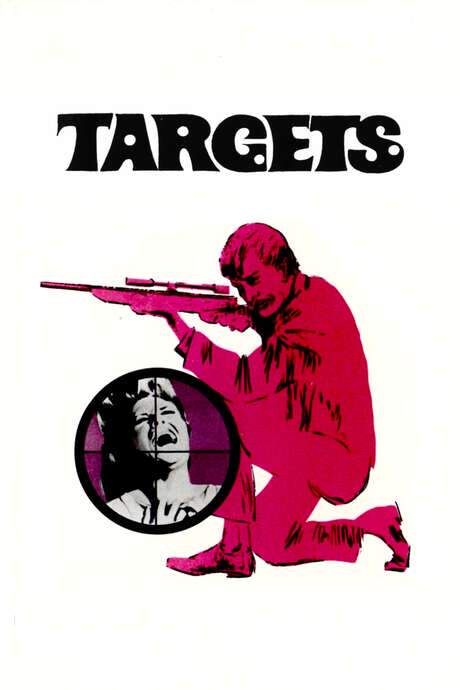
Targets 1968

Directed by
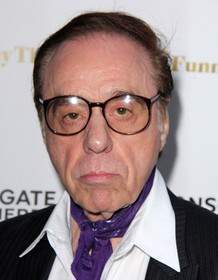
Peter Bogdanovich
Made by

Saticoy Productions
Where to Watch Targets
See current US streaming, rental, and purchase options for Targets (1968) via JustWatch.








Targets Plot Summary
Read the complete plot summary and ending explained for Targets (1968). From turning points to emotional moments, uncover what really happened and why it matters.
Byron Orlok, Boris Karloff an aging, embittered horror movie star, abruptly declares he will retire from Hollywood and return to his native England to live out his final days. He believes the old-fashioned shocks he thrives on are outdated, insisting that real-life news stories are far more terrifying than anything he ever conjured on screen. Yet, after a long stretch of convincing from a young director named Sammy Michaels, Peter Bogdanovich, Orlok consents to one last in-person promotional appearance at a Reseda drive-in before leaving Hollywood for good.
Meanwhile, Bobby Thompson, a quiet, clean-cut insurance agent living in the suburban San Fernando Valley with his wife and aging parents, harbors a dark preoccupation that goes well beyond his day job. He is an obsessive gun collector, a detail his family mostly overlooks as they go about their routines. On a morning that begins like any other, tragedy erupts: after his father heads off to work, Thompson murders his wife, his mother, and a grocery delivery boy inside their home. The violence doesn’t end there. That afternoon, Thompson continues his rampage, methodically shooting people as they ride in cars along the busy freeway, perched atop an oil storage tank that looms over the roadway. An employee who comes to investigate the gunfire is shot as well, and the killer leaves behind a disturbing trail of weapons and ammunition at the crime scene.
With the rampage still unfolding, Thompson heads toward the very drive-in where Orlok will soon appear. As dusk falls, he climbs into the tower within the screen frame, choosing the lofty perch to exact his last, terrifying act. The Orlok film is projected onto the large screen behind him, and Thompson begins firing at patrons in the parking area, turning the night into chaos. The theater’s operations are disrupted as the murder spree escalates—Thompson even shoots Orlok’s secretary, Jenny, during the chaos, injuring her and forcing a confrontation between the aging star and the killer.
Orlok, facing the immediate threat in front of him and the surreal image of his own film playing behind Thompson, steps forward with surprising composure. He confronts the gunman, and the two become locked in a strange duel where reality and cinema blur. Thompson, disoriented by the simultaneous sight of the man before him and the iconic image on the screen, finds himself deftly disarmed by Orlok’s walking cane. In a moment charged with dread and lingering fear, Orlok looks at the defeated assailant and asks, Is that what I was afraid of? The crisis culminates as police officers arrive to arrest Thompson for the murders he has committed, and as he is led away, he delivers a chilling, satisfied line about his near-perfect marksmanship: that he “hardly ever missed.”
Targets Timeline
Follow the complete movie timeline of Targets (1968) with every major event in chronological order. Great for understanding complex plots and story progression.
Orlok announces retirement from Hollywood
Byron Orlok, a veteran horror star, abruptly declares he will retire and return to England to spend his final days. He argues that audiences are no longer frightened by old-fashioned terror and that real-world news seems more shocking than his films. This decision sets the stage for one last promotional appearance before his departure.
Sammy Michaels urges a final promotional appearance
The young director Sammy Michaels pressures Orlok to do a last in-person promo, framing it as a farewell that could still draw crowds. Orlok agrees only after considering how his legacy will be remembered. The plan centers on a public appearance at a Reseda drive-in theater.
Bobby Thompson's ordinary life hides deadly urges
Bobby Thompson lives in suburban San Fernando Valley as a quiet insurance agent with a dangerous secret: he collects guns and harbors violent impulses. His calm exterior masks a growing appetite for deadly action. The tension between his normal life and his compulsions foreshadows the spree to come.
Murder at home: wife, mother, and delivery boy die
In the early morning, Thompson murders his wife, his mother, and a grocery delivery boy in their home. The brutal killings reveal his lack of remorse and set off the rampage that will soon spill into public spaces. The intimate violence contrasts with his otherwise normal routine.
Rampage along the freeway: shootings from an oil tank
By afternoon, Thompson continues his killing by firing on cars from atop an oil storage tank beside a busy freeway. The spree spreads fear through motorists and signals a widening circle of victims. This act demonstrates how his violence expands beyond a single location.
A bystander confronts the killer and is shot
An employee goes to investigate the gunshots and is shot by Thompson. The act highlights the killer's cold resolve and willingness to target anyone nearby. The incident deepens the sense of uncontainable danger surrounding the upcoming drive-in event.
Thompson heads to the drive-in where Orlok will appear
With panic rising, Thompson travels to the Reseda drive-in theater where Orlok is scheduled to perform. He chooses this venue as a final stage for his violent spectacle and to juxtapose his actions against the aging star's image. The drive-in adds a public, high-profile setting to the confrontation.
Thompson perches in the drive-in's screen tower
As sunset fades, Thompson climbs into the drive-in's screen tower, preparing for a terrifying act. He positions himself to unleash violence during Orlok's farewell screening. The audience remains unaware of the imminent danger.
The attack begins: shooting through the screen
Thompson shoots the theater's projectionist and then targets patrons through a hole in the screen. The drive-in's normal movie experience becomes a night of real terror as customers realize danger is not part of the film.
Jenny is wounded; Orlok confronts the killer
Orlok's secretary Jenny is wounded by Thompson's assault, prompting the aging star to confront the intruder. The confrontation underscores the collision of fiction and reality in this night of terror.
Orlok disarms Thompson with his cane
In a dramatic moment, Orlok appears before Thompson both in person and on the screen, disorienting the killer. Orlok uses his walking cane to disarm Thompson and take control of the crisis.
Is that what I was afraid of? and the arrest
Holding the defeated Thompson, Orlok considers the deeper fear of obsolescence. Moments later, police arrive and arrest the killer, ending the immediate threat. Thompson remarks that he hardly ever missed as he is taken away.
Orlok's departure implied as he leaves Hollywood
With the killer arrested and the drive-in episode concluded, Orlok prepares to leave Hollywood for good. The event reframes his legacy and marks a final chapter in the aging horror icon's career.
Targets Characters
Explore all characters from Targets (1968). Get detailed profiles with their roles, arcs, and key relationships explained.
Byron Orlok (Boris Karloff)
An aged, embittered horror movie star who considers himself outdated and fears audiences are no longer frightened by his old-fashioned scares. He resists the erosion of his fame but agrees to one last in-person promotional appearance at the drive-in, drawn by a sense of duty and nostalgia. His conflict centers on whether genuine fear still lives in cinema or if the era has moved on without him.
Bobby Thompson (Tim O'Kelly)
A young, quiet insurance agent who becomes a violent killer with an obsession for guns. He murders his wife, his mother, and a grocery delivery boy, then continues his spree to the drive-in theater. The character embodies the era's fears about suburban violence and the hidden dangers within ordinary lives.
Charlotte Thompson (Mary Jackson)
Bobby's wife, living in a suburban home with his family. She represents the domestic front of the Thompson household and becomes a victim of Bobby's escalating violence. Her presence underscores the fragile veneer of suburban peace that the film unsettles.
Jenny (Nancy Hsueh)
Orlok's secretary at the drive-in who is caught in the chaos of the night and is wounded by Thompson. She embodies the civilian bystander pulled into the violence surrounding the star's final appearance. Her role highlights the harm that spills from the screen into everyday life.
Sammy Michaels (Peter Bogdanovich)
A young director who persuades Orlok to make a final promotional appearance. His ambition and faith in film as a force of art drive the plot and reflect a new generation challenging the old guard. He acts as a bridge between cinema's myth and the viewers' reality.
Projectionist (Byron Betz)
The theater's projectionist who is killed early in the sequence. He represents the silent, unseen workers who enable the cinematic experience and become casualties when the line between screen and street violence blurs.
Kip Larkin (Sandy Baron)
The drive-in’s operator, navigating the business side of evening entertainment while the night spirals into danger. His role anchors the venue in the community and provides a practical counterpoint to the film's more surreal elements.
Larkin's Girl (Geraldine Baron)
A minor drive-in staff character who contributes to the everyday life around the theater. Her presence helps flesh out the backdrop of the venue as the events unfold.
Drive-In Manager (Paul Condylis)
The manager overseeing drive-in operations on a busy night, responsible for keeping the show going. He represents the organized, rule-bound world of mid-century suburban entertainment.
Robert Thompson Sr. (James Brown)
Bobby Thompson's father, a working man who leaves for work early in the day. He is part of the family dynamic that frames Bobby's domestic life and the contrast with his later violence.
Targets Settings
Learn where and when Targets (1968) takes place. Explore the film’s settings, era, and how they shape the narrative.
Time period
1960s
The events unfold in the late 1960s Los Angeles area, a era marked by social upheaval and changing attitudes toward violence and media. Drive-in culture defines the nighttime backdrop, turning films into communal experiences. The narrative threads connect cinema's influence with a real-world murder spree that erupts around the theater.
Location
Reseda drive-in theater, San Fernando Valley, California
The Reseda drive-in theater is the primary setting where Orlok makes his final promotional appearance. It sits in the sun-baked suburbs of the San Fernando Valley, a symbol of mid-century American leisure and mass entertainment. The towering screen and parking lot create a stage for a confrontation that blends fantasy with real danger.
Targets Themes
Discover the main themes in Targets (1968). Analyze the deeper meanings, emotional layers, and social commentary behind the film.
🎭
Reality vs Fiction
The film juxtaposes the fear and fantasy manufactured by horror cinema with the unpredictability of real violence. Orlok's public image as a master of fear clashes with the tangible danger that spills from the screen into the audience. This tension invites viewers to question where storytelling ends and real harm begins.
🔫
Violence
Violence is treated as both spectacle and threat, echoing late-1960s anxieties about gun culture. The killer's spree mirrors the sensationalism of media, while Orlok's fear of obsolescence suggests cinema's warnings may be obsolete. The drive-in becomes a battleground where fiction-oriented fear collides with actual crime.
🕰️
Aging
Orlok's decision to retire highlights aging and obsolescence in Hollywood. The contrast between a fading star and a new generation of filmmakers underscores a cultural shift. The film uses his reluctance and final appearance to reflect on relevance in a rapidly changing era.

Coming soon on iOS and Android
The Plot Explained Mobile App
From blockbusters to hidden gems — dive into movie stories anytime, anywhere. Save your favorites, discover plots faster, and never miss a twist again.
Sign up to be the first to know when we launch. Your email stays private — always.
Explore the mobile appTargets Spoiler-Free Summary
Discover the spoiler-free summary of Targets (1968). Get a concise overview without any spoilers.
In the neon‑lit sprawl of Los Angeles, an aging horror‑movie icon whose name once conjured dread wrestles with the quiet erosion of his fame. Byron Orlok has spent a career feeding on manufactured scares, yet now he declares that the world’s headlines are far more terrifying than any script he ever penned. Pressed by a young director to give one final public appearance, he agrees to a promotional showcase at a sprawling drive‑in theater—a setting that feels simultaneously nostalgic and foreboding, a perfect stage for his last bow before retreating to England.
Elsewhere, a seemingly ordinary young man lives a tidy suburban life that masks a deeper, unsettling preoccupation. Bobby Thompson appears as a clean‑cut insurance agent, but his fascination with firearms hints at a restless undercurrent that clashes with the ordinary rhythms of family and work. Beneath his calm exterior, an unspoken tension simmers, suggesting that the line between routine and chaos may be thinner than it appears.
When the two worlds intersect under the glow of the drive‑in screen, the atmosphere shifts from cinematic tribute to something far more disquieting. The projected horror flick behind Orlok becomes a haunting backdrop as reality threatens to overtake the performance. A strange, almost mythic duel of presence and perception unfolds, blurring the distinction between the actor’s on‑screen terror and the real‑life dread spiraling around him. Their encounter hints at a cat‑and‑mouse dynamic that forces both men to confront what truly frightens them—celebrity’s fading echo and a mind teetering on the edge.
The film balances sharp, atmospheric tension with a darkly reflective tone, using the glimmer of the drive‑in’s lights to explore themes of fame, madness, and the thin veneer that separates public spectacle from private horror. As Los Angeles hums outside, the audience is left to wonder how far the shadows of cinema can reach into the streets they illuminate.
Movies with Similar Twists and Themes
Uncover films that echo the narrative beats, emotional arcs, or dramatic twists of the one you're exploring. These recommendations are handpicked based on story depth, thematic resonance, and spoiler-worthy moments — perfect for fans who crave more of the same intrigue.



Featured on this page

What's After the Movie?
Not sure whether to stay after the credits? Find out!
Check out our other apps:

SAT Sphere
Build confidence for the Digital SAT.

Mori Atlas
Discover wild places worth protecting.

Luntero
Search smarter for a home in Amsterdam.

Plot Explained
Unravel movie endings and hidden clues.

Pokechamp
Dive into Pokémon data and battle logic.

Driving Theory
Get ready for your European theory test.

Movie Dust
Plan your next cinema trip with ease.

Musemap
Find art and culture as you travel.

Selkobase
Compare credentials before committing.

Local Manual
Turn an unfamiliar country into practical next steps.

Lernavi
Compare school systems before your next move.

GymRoam
Find a workout stop wherever your plans take you.
Explore Our Movie Platform
New Movie Releases (2026)
Famous Movie Actors
Top Film Production Studios
Movie Plot Summaries & Endings
Major Movie Awards & Winners
Best Concert Films & Music Documentaries
Movie Collections and Curated Lists
© 2026 What's After the Movie. All rights reserved.
Privacy Policy