
Simon of the Desert 1965

Directed by
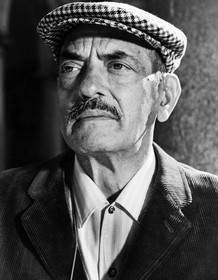
Luis Buñuel

Simon of the Desert Plot Summary
Read the complete plot summary and ending explained for Simon of the Desert (1965). From turning points to emotional moments, uncover what really happened and why it matters.
The ascetic Simón Stylites Claudio Brook has spent six years, six weeks, and six days perched on a small pillar in the middle of the Syrian desert, a stark, sun-baked stage for a life of vigil. A crowd of monks and peasants gathers below, and they urge him to accept a taller pillar raised by a wealthy family to honor him for healing one of them. As the procession moves the short distance toward the new height, his aging mother Hortensia Santoveña steps forward with a quiet plea to remain nearby until she dies. He agrees, yet he makes it clear that he will not acknowledge her presence so as not to disturb his prayers. The monks try to confer holy orders on Simón, but he rejects them, insisting that he is an unworthy sinner and not worthy of such rank.
Once atop the new pillar, Simón leads the gathered throng in the Lord’s Prayer, though the moment is broken when a woman interrupts to plead for mercy for her husband, whose hands were severed for theft. Simón prays, and miraculously the man’s hands reappear, yet the crowd’s response is tepid, and they drift away. The monks linger to pray with him, but they depart after he rebukes one for glancing at a woman who carries a jug. The day-to-day rhythm of asceticism presses in, and Simón’s voice remains a constant, even as distractions multiply.
Brother Matías, Enrique Álvarez Félix, a young monk, delivers lettuce and water to Simón, briefly interrupting his cycle of prayer. In the wake of the interruption, Simón longs for a connection with the earth—his body, a bite of food, a thirst quenched—and even for the warm embrace of his mother. Into this moment steps Satan, the tempter who has also appeared as the woman with the jug, now in the form of a young girl from a future time. Dressed in modern garb, she appears and tries to lure him with her offerings and her presence, but he resists, banishing her by calling upon Christ.
A quiet crisis erupts when, during a solemn ascent of asceticism, Brother Trifón interrupts to reveal cheese, bread, and wine hidden in Simón’s sack. Simón does not defend himself, and Trifón swears he did not plant the food, prompting the monks to invoke the Holy Ghost to reveal the truth. Trifón’s tremors and rantings about the Church culminate in an exorcism, and Satan is expelled from him. The other monks carry Trifón back to the monastery, while Simón instructs Matías to leave until he can grow a beard—an unusual penance that marks a new resolve in his solitary life.
As the years accumulate—eight, then eight more, and eight days beyond that—Satan returns, this time in the guise of God. The temptation is patient and polished: she flatters him and tempts him with the promise of earthly pleasures to draw him closer to God. He sees through the ruse, however, and refuses the invitation, deciding instead to endure a harsher form of penance by standing on one leg as a reminder of his vocation. A monk who had previously glimpsed the temptation seeks forgiveness and counsel from Simón, warning him that the Antichrist may be marching toward Rome and voicing his concern that humanity’s endless debates about ownership keep them divided. Simón blesses the monk, who departs with a fragile sense of distrust about the value of such mystic visions in a world that seems to spin beyond his reach.
Then a coffin slides across the desert toward Simón’s pillar, and Satan emerges once more, dragging him into a doorway of time. She transports him to a crowded nightclub in 1960s New York City, where a live rock band electrifies the room. The two sit at a table in modern dress, and Simón, clearly disengaged from the spectacle, asks what dance the people are performing. Satan explains they are dancing the “Radioactive Flesh.” As a man asks Satan to dance, Simón prepares to return to his ascetic vigil, yet she presses him to endure the moment, whispering with an unnerving certainty to “stick it out till the end.” In this clash of epochs—the ancient pillar against the electric pulse of a bustling city—Simón stands as a figure of unwavering devotion, even as the world around him hums with irreconcilable desires and temptations.
- Simón Stylites Claudio Brook
- The Devil/Satan Silvia Pinal
- The Mother Hortensia Santoveña
- Brother Matías Enrique Álvarez Félix
stick it out till the end
Simon of the Desert Timeline
Follow the complete movie timeline of Simon of the Desert (1965) with every major event in chronological order. Great for understanding complex plots and story progression.
Beginnings on the first pillar
The ascetic Simón Stylites spends six years, six weeks, and six days perched on a small pillar in the Syrian desert. A crowd of monks and peasants gathers around him, seeking guidance and miracles. A wealthy family erects a taller pillar nearby to honor him, prompting the move.
Move to a taller pillar
The invitation to relocate is accepted and Simón is led to a much taller pillar. His aging mother asks to stay near him until her death, and he allows it but refuses to acknowledge her so as not to distract his prayers. A quiet tension develops between filial duty and spiritual focus.
Monks seek holy orders
Monks attempt to bestow holy orders on Simón, but he rejects the ceremony, insisting he is an unworthy sinner. He declines institutional recognition in favor of personal ascetic devotion. The crowd struggles with the tension between miracle-worker status and humility.
First miracle and distraction
Simón leads the crowd in the Lord's Prayer, but a woman interrupts to ask him to heal her husband, whose hands were cut off for stealing. He prays and the hands reappear, yet the reaction is underwhelming. The monks stay to pray with him but depart after he chastises one for admiring a passing woman with a jug.
Temptation by Satan
Satan appears, disguised as a young girl from a future time, attempting to tempt Simón with earthly pleasures and jabbing him in the back. He banishes her by appealing to Christ, reaffirming his vow to resist worldly temptations. The encounter tests his isolation and resolve.
Matías interrupts with provisions
Brother Matías interrupts Simón's prayers by delivering lettuce and water. Simón grows frustrated at the distraction, realizing he has momentarily forgotten his body and now longs for the soil and his mother. The physical hunger pierces his spiritual routine.
Trifón's deception and exorcism
During a prayer on asceticism, Trifón confesses to planting cheese, bread, and wine in Simón's sack, swearing he did not place the food himself and railing against the Church. Simón exhorts the Holy Ghost to reveal truth and exorcises Satan from Trifón as the others carry him away. The monastic community is unsettled but restored for the moment.
Eight years, eight months, eight days
Satan returns, this time dressed as God, flattering Simón and trying to lure him with the promise of earthly pleasures. He resists the deception once he sees through the mask, and decides that his penance will be to stand on one leg from then on. The moment marks a new, stricter phase of his vow.
A monk's warning from the margins
The monk who once looked at the woman visits Simón to seek forgiveness and warns that the Antichrist is approaching Rome with an army. He laments humanity's endless conflicts over ownership and fears Simón has become detached from the world. Simón blesses the monk before he departs.
Coffin, Satan, and the transfer to NYC
A coffin slides across the desert toward Simón's pillar, and Satan emerges, transporting him to a crowded nightclub in 1960s New York City. They sit at a table in modern dress as a live rock band performs on stage, jolting him with a completely different reality.
Dance of the Radioactive Flesh
In the nightclub, a man asks Satan to dance while Simón watches with detached interest. Satan explains that the crowd is dancing what she calls the 'Radioactive Flesh.' When Simón contemplates leaving, she tells him he must 'stick it out till the end.' The separation between sacred vow and worldly spectacle becomes stark.
Ambiguous ending
The film closes on an unresolved note, with Simón suspended between monastic austerity and the electric immediacy of modern life. He remains physically immovable atop the pillar as history and culture surge around him, leaving the ultimate fate of his faith and vow open to interpretation.
Simon of the Desert Characters
Explore all characters from Simon of the Desert (1965). Get detailed profiles with their roles, arcs, and key relationships explained.
Simón Stylites
An ascetic monk who has spent years perched on a pillar in the Syrian desert, living through prayer and self-denial. He refuses institutional holiness, insisting he is an unworthy sinner and choosing solitary penance over worldly status. Throughout, he confronts temptations from Satan and wrestles with the balance between miracles and true faith.
The Devil
A tempter who appears to Simón in various disguises: first as a temptress in a future-era woman, later as a divine impostor. She challenges his belief with promises of earthly pleasures and ultimate power. Her presence forces him to decide whether faith can survive seduction.
The Devil (Old Witch)
An alternate disguise of the Devil, appearing as an old witch who embodies fear and superstition. This form tests the monk's detachment from fear and mortal temptation as he navigates the temptations that come from despair and doubt.
The Mother
An aging mother who longs to be near her son even from death; she is allowed to stay close while he continues his solitary vigil. Her presence underscores the human costs of extreme devotion and the pull of familial love.
Brother Matías
A young monk who interrupts Simón with news of food and water, exposing the fragility of discipline under mundane desire. He becomes entangled in suspicion but is exorcised by Simón, illustrating the fragility of communal faith under temptation.
Priest
One of the monks who attempts to bestow holy orders on Simón, challenging him to accept his vocation while respecting his ascetic stance. He participates in the spiritual debates and prayers that shape the community's fate.
Priest
Another priest who engages with Simón in the monastic cycle of prayer and admonition, echoing the tension between institutional religion and personal devotion. He contributes to the moral atmosphere of the community.
Dwarf Goatherd
A dwarf goatherd who moves through the desert scene, interacting with the monk and the surrounding crowd. His presence adds a touch of the everyday world to the austere setting.
Man in Nightclub
A figure in the modern nightclub where Simón finds himself transported, illustrating the contrast between ancient asceticism and late-20th-century nightlife. He interacts with the crowd during the 'Radioactive Flesh' dance moment.
The Mutilated One
A symbolic figure encountered in the desert, representing suffering and the corporeal costs of extremity. This presence mirrors the monk's own struggle with physical and spiritual limits.
Unnamed Crowd Member
A member of the desert crowd who witnesses the monk's miracles and prayers, reflecting the communal aspect of faith and the crowd's varied responses to miraculous events.
Simon of the Desert Settings
Learn where and when Simon of the Desert (1965) takes place. Explore the film’s settings, era, and how they shape the narrative.
Time period
Ancient Syria; 1960s New York City
The story is anchored in the desert ascetic life of a monk, spanning years of solitary prayer. It culminates in a surreal transition to a 1960s New York nightclub, illustrating a dramatic clash between ancient faith and modern worldly culture.
Location
Syrian desert, New York City
Set around a solitary pillar in the Syrian desert, the film centers on a monk who lives in extreme isolation. A surrounding monastic community and peasants seek guidance and miracles from him. The narrative later shifts to a crowded nightclub in 1960s New York, blending sacred devotion with modern spectacle.
Simon of the Desert Themes
Discover the main themes in Simon of the Desert (1965). Analyze the deeper meanings, emotional layers, and social commentary behind the film.
✨
Miracles and Faith
Miracles punctuate the narrative and test belief, as healing and other wonders invite both awe and skepticism. The crowd's reaction highlights how faith can be as much a social phenomenon as a personal conviction. The tension between divine intervention and human doubt drives the moral inquiry of the film.
🧘
Asceticism
The central figure embodies extreme self-denial and detachment from bodily needs. His vow leads him to reject institutional holiness while choosing solitary penance over worldly recognition. This ascetic path shapes his identity and isolates him from ordinary life, raising questions about the worth of such sacrifice.
😈
Temptation
Satan manifests in disguises to test the monk's resolve, first as a tempting young woman and later in other forms. The temptations probe whether true devotion can survive seductive promises of power and pleasure. The character's responses reveal the fragility and resilience of faith under pressure.
🌆
Collision of Eras
A surreal shift to a 1960s nightclub juxtaposes sacred ritual with secular spectacle and consumer culture. The anachronistic transition invites reflection on the relevance of ascetic ideals in a modern world. Through this clash, the film critiques ownership, desire, and what it means to seek transcendence today.

Coming soon on iOS and Android
The Plot Explained Mobile App
From blockbusters to hidden gems — dive into movie stories anytime, anywhere. Save your favorites, discover plots faster, and never miss a twist again.
Sign up to be the first to know when we launch. Your email stays private — always.
Explore the mobile appSimon of the Desert Spoiler-Free Summary
Discover the spoiler-free summary of Simon of the Desert (1965). Get a concise overview without any spoilers.
In the relentless heat of a sun‑blasted Syrian desert, a solitary pillar rises like a prayer against the horizon. Around its base, sparse crowds of monks and villagers move like murmurs, their reverence echoing across the dunes. The landscape is both stark and reverent, a vast stage for an ancient form of devotion where the very earth seems to pulse with a quiet, timeless yearning.
_ Simon_, a 4th‑century hermit, has spent years perched atop the column, his life reduced to a rhythm of prayer, breath, and the unyielding weight of stone beneath his feet. He seeks a proximity to the divine that can only be forged in isolation, his body a vessel stretched thin by fasting, exposure, and an unshakable resolve to detach from worldly concerns. The discipline is not merely physical; it is a relentless inner dialogue, a test of faith that hangs as tenuously as his balance on the narrow perch.
When a wealthy patron offers a taller pillar—a promise of greater ascension—the community gathers, and with them comes a subtle pressure to accept the gift, to be seen, to be honored. In the quiet of his vigil, a presence emerges, the embodiment of temptation: the Devil, who whispers promises of comfort, companionship, and the allure of ordinary life. The tempter’s voice drifts across the desert wind, offering a stark counterpoint to Simon’s austere quest and hinting at the fragile line between divine devotion and human desire.
The film unfolds with a reverent, almost meditative visual style, where long, lingering shots capture the unforgiving sun and the fragile figure against it. A tone of contemplative melancholy mingles with surreal, dream‑like moments that suggest the eternal clash between ascetic purity and the seductive pull of the material world. As the pillar stretches higher, the audience is invited to watch a silent struggle that is both intensely personal and universally resonant, leaving the question of what it truly means to “stick it out till the end.”
Movies with Similar Twists and Themes
Uncover films that echo the narrative beats, emotional arcs, or dramatic twists of the one you're exploring. These recommendations are handpicked based on story depth, thematic resonance, and spoiler-worthy moments — perfect for fans who crave more of the same intrigue.


Featured on this page

What's After the Movie?
Not sure whether to stay after the credits? Find out!
Check out our other apps:

SAT Sphere
Build confidence for the Digital SAT.

Mori Atlas
Discover wild places worth protecting.

Luntero
Search smarter for a home in Amsterdam.

Plot Explained
Unravel movie endings and hidden clues.

Pokechamp
Dive into Pokémon data and battle logic.

Driving Theory
Get ready for your European theory test.

Movie Dust
Plan your next cinema trip with ease.

Musemap
Find art and culture as you travel.

Selkobase
Compare credentials before committing.

Local Manual
Turn an unfamiliar country into practical next steps.

Lernavi
Compare school systems before your next move.

GymRoam
Find a workout stop wherever your plans take you.
Explore Our Movie Platform
New Movie Releases (2026)
Famous Movie Actors
Top Film Production Studios
Movie Plot Summaries & Endings
Major Movie Awards & Winners
Best Concert Films & Music Documentaries
Movie Collections and Curated Lists
© 2026 What's After the Movie. All rights reserved.
Privacy Policy