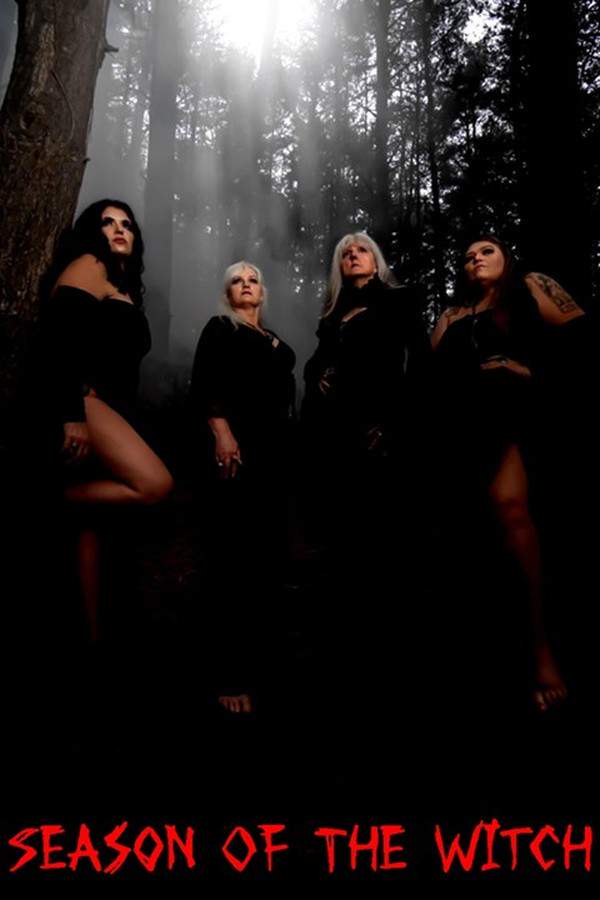
Season of the Witch 2011


Directed by

Dominic Sena
Made by

Relativity Media
Where to Watch Season of the Witch
See current US streaming, rental, and purchase options for Season of the Witch (2011) via JustWatch.

Amazon Prime Video
HD
Amazon Prime Video with Ads
HD
fuboTV
HD
Hulu
HD
Shout! Factory Amazon Channel
HD
Fawesome
HD
Kanopy
HD
Amazon Prime Video Free with Ads
HD
Fandango at Home Free
HD
Plex
HD
Plex Channel
HD
Pluto TV
SD
Shout! Factory TV
HD
The Roku Channel
HD
Tubi TV
SD
VIX
HD
Xumo Play
HD
YouTube Free
HD
Amazon Video
HD
Apple TV Store
HD Fandango At Home
HD
Google Play Movies
SD
YouTube
SD Streaming availability powered by 
Season of the Witch Plot Summary
Read the complete plot summary and ending explained for Season of the Witch (2011). From turning points to emotional moments, uncover what really happened and why it matters.
In the 13th century, three women are accused of witchcraft and meet a grim fate at the hands of a priest. One of the women claims to be a witch under the church’s persuasion, while another openly denies her innocence and curses the priest. He proceeds to hang them and commands the guards to hoist their bodies up again for a ritual aimed at ensuring they never arise from the dead; however, the guards dismiss his orders, declaring them dead enough. Terrified that they might resurrect, the priest sneaks back under the cover of night to perform the ritual himself. He completes the rite successfully for the first two bodies, but the third, who identifies herself as a herbalist, emerges with a demonic form and slays the priest.
Fast forward to the 14th century, where Teutonic Knights Behmen Von Bleibruck and Felson are deep in the trenches of a crusade, enduring numerous battles throughout the 1330s including the infamous Smyrniote crusades. After witnessing the massacre of civilians during the 1344 siege of Smyrna, they courageously decide to abandon the Order and return to Austria.
While traversing through Styria, they are confronted with the grim reality of the Black Death, which has ravaged the Holy Roman Empire. Upon reaching the medieval town of Marburg, they attempt to hide their identities as deserters. However, the crest on Behmen’s sword reveals their true status, leading to their arrest. They are brought before Cardinal D’Ambroise (played by Christopher Lee), who is also stricken by the plague.
The Cardinal tasks the knights with escorting a girl suspected of witchcraft—the alleged cause of the plague—to a distant monastery where elite monks can ascertain her true nature. If found guilty, the monks possess the knowledge of a sacred ritual capable of nullifying her powers and halting the rampant plague that threatens all of Europe. The two knights agree to the mission, provided that she receives a fair trial and that their desertion charges are rescinded, a condition the Cardinal accepts. They are joined by a priest named Debelzeq; Kay Von Wollenbarth (portrayed by Robert Sheehan), a young altar boy longing to be a knight like his late father; Eckhart (Ulrich Thomsen), whose family fell victim to the plague; and the seasoned trickster Hagamar (Stephen Graham), who guides them to the monastery in hopes of obtaining a pardon for his misdeeds. The witch, later revealed as Anna (played by Claire Foy), initially harbors animosity for Debelzeq but starts to form a bond with Behmen.
As the group sets up camp for the night, Eckhart takes the first watch over Anna. After some time, Debelzeq comes to take over. Eckhart shares tales of his daughter Mila, who bore a resemblance to Anna. However, when Anna perceives that she might be left alone with Debelzeq, her fears manifest into a violent outburst. In a desperate attempt to escape, she seizes Eckhart’s key and absconds to a nearby village.
The subsequent manhunt leads them to a mass grave where Eckhart is haunted by visions of his deceased daughter. Chasing after these disturbing apparitions, he inadvertently impales himself on Kay’s sword and dies. When the group captures Anna once more, she tearfully explains her flight was solely due to her fear of Debelzeq. Nonetheless, suspicion begins to shroud Anna’s presence within the group. During a perilous crossing of a dilapidated rope bridge, Anna showcases an unnatural strength by saving Kay from falling to his death, heightening the stakes.
As they delve deeper into the ominous forest known as Wormwood, Hagamar’s treachery emerges as he attempts to eliminate Anna, but his plan is thwarted by the others. Soon after, Anna seemingly calls forth wolves that pursue the group, leading to Hagamar’s demise. An enraged Behmen is halted by Debelzeq and Felson, who remind him that the monastery is now within their sights.
Upon their arrival, they discover the monastery’s monks have all succumbed to the plague, yet they are fortunate to find the Key of Solomon, an ancient tome filled with divine exorcism rituals to vanquish evil. Debelzeq starts a ritual against Anna, but as Anna recounts Behmen’s past Crusade actions with uncanny accuracy, Debelzeq realizes her accusations may be unfounded, leading him into a frantic exorcism instead.
Just then, the demon controlling Anna unveils itself, melting the cage’s metal bars. It easily overpowers the knights until Debelzeq douses it with holy water, compelling it to flee. In realization of the demon’s intentions—to destroy the crucial book so that it may remain unfettered—the knights race against time. They locate a chamber where monks were reproducing the book, but the demon reappears, decimating the copies and seizing the corpses of the dead monks as its combatants. A fierce battle ensues as Debelzeq continues the exorcism, but tragically loses his life in the process, followed shortly by Felson.
Kay seizes the Book and strives to conclude the ritual while Behmen remains engaged in combat with the demon. Fatally wounded, Behmen implores Kay to safeguard Anna just before he succumbs to his injuries. With a heavy heart, Kay and Anna pay their respects to their fallen comrades, with Anna requesting tales of the brave men who came to her rescue. Finally, armed with the book, they depart from the monastery, their fates forever altered.
Season of the Witch Timeline
Follow the complete movie timeline of Season of the Witch (2011) with every major event in chronological order. Great for understanding complex plots and story progression.
Accusation of Witchcraft
In the 13th century, three women are wrongly accused of witchcraft by a local priest. One woman, under pressure, claims to be a witch, while another curses the priest for condemning her.
Execution of the Women
The priest orders the hanging of the three women as punishment for their alleged crimes. Despite their pleas and curses, he dismisses their fates and commands that their bodies be hoisted for a dark ritual.
Failed Ritual
After the execution, the priest, fearing the women might resurrect, returns by night to perform the ritual himself. He successfully completes the rite for two of the women, but the third, a herbalist, rises from the dead transformed into a demon.
Crusade Begins
Fast forward to the 14th century, where Behmen Von Bleibruck and Felson, knights of the Teutonic order, are embroiled in a crusade. They witness gruesome battles, including the massacre of innocents during the siege of Smyrna in 1344.
Desertion from the Order
Traumatized by the violence and bloodshed, Behmen and Felson decide to abandon the Teutonic Order. They journey back to Austria, hoping to escape the horrors of war and reconcile their lives.
Encountering the Black Death
While traversing through Styria, the knights encounter the harrowing effects of the Black Death. The plague has devastated communities, painting a grim picture of a once-thriving land now filled with despair.
Arrest in Marburg
In the medieval town of Marburg, Behmen and Felson are caught after their identities as deserters are exposed. The crest on Behmen's sword gives them away, leading to their arrest by local authorities.
Task from Cardinal D'Ambroise
Cardinal D'Ambroise, afflicted by the plague, offers the knights a chance for redemption. They are tasked with escorting a girl accused of witchcraft to a monastery where monks can determine her true nature.
Joining Forces
The knights team up with a diverse group including a priest named Debelzeq, a young altar boy named Kay, and a trickster named Hagamar. They travel together, each with their own motives for seeking the girl's trial.
Anna's Escape
While camping, fear overtakes Anna, leading her to flee from the group at night. Her desperate attempt to escape from Debelzeq, whom she distrusts, adds complexity to her character and the group's dynamics.
Eckhart's Vision
In the wilderness, Eckhart is haunted by visions of his deceased daughter Mila. As he chases these apparitions, he accidentally impales himself on Kay's sword, leading to a tragic loss for the group.
Capturing Anna Again
After a frantic manhunt, the group captures Anna once more. She explains her actions stemmed from fear, highlighting the tension and mistrust between her and the knights.
Confrontation in Wormwood
As they traverse the ominous Wormwood forest, betrayal unfolds as Hagamar attempts to eliminate Anna. However, the group's unity prevails against his treachery, further showcasing Anna's mysterious powers.
Arrival at the Monastery
Upon reaching the monastery, the knights discover it is abandoned, ravaged by the plague. They find the Key of Solomon, a powerful tome containing exorcism rituals, heightening their urgency in confronting the demon.
Final Confrontation
A final battle ensues as hordes of demons attack the knights after the monks’ sacred book is targeted. As lives are lost, Kay ultimately seizes the book, but the cost of their mission weighs heavily as they say goodbye to their fallen comrades.
Season of the Witch Characters
Explore all characters from Season of the Witch (2011). Get detailed profiles with their roles, arcs, and key relationships explained.
Behmen Von Bleibruck (Nicolas Cage)
Behmen is a noble knight who grapples with the moral implications of his past actions during the crusades. His character embodies the struggle between duty and conscience, seeking redemption while being haunted by guilt. Behmen’s final sacrifices reveal his deep sense of honor and commitment to protecting those he cares about.
Felson (Ron Perlman)
Felson is a loyal companion of Behmen, providing a contrast to his more introspective nature with a robust sense of practicality and camaraderie. His strength and unwavering loyalty to Behmen highlight the importance of friendship amidst chaos. Felson's tragic fate serves as a reminder of the costly toll of war and their mission.
Anna (Claire Foy)
Anna is a complex character caught between fear and resilience, suspected of witchcraft but displaying depth that complicates her portrayal. As the story unfolds, she evolves from a frightened girl to a central figure capable of immense power, challenging the prejudices of her captors. Her relationship with Behmen adds an element of humanity to the darker narrative.
Season of the Witch Settings
Learn where and when Season of the Witch (2011) takes place. Explore the film’s settings, era, and how they shape the narrative.
Time period
13th-14th century
Set against the backdrop of the 13th and 14th centuries, a period marked by religious strife and superstition, the film illustrates the tension between faith and fear. The onset of the Black Death had devastating effects across Europe, leading to widespread fear of witchcraft and scapegoating of the vulnerable. This context shapes the characters' actions and decisions as they navigate a world rife with moral ambiguity and existential threats.
Location
Austria, Styria, Marburg, Holy Roman Empire, Wormwood
The movie takes place in several key locations during the medieval era, including Austria and Styria, known for their picturesque landscapes and history of conflict. Marburg serves as a pivotal town where the main characters face crucial decisions concerning justice and morality. The dark, ominous forest of Wormwood symbolizes the dangers the group faces along their journey, embodying the fears and superstitions of the time.
Season of the Witch Themes
Discover the main themes in Season of the Witch (2011). Analyze the deeper meanings, emotional layers, and social commentary behind the film.
🧙♀️
Witchcraft
The theme of witchcraft is central to the narrative, illustrating the fear and fascination that surrounded it in medieval society. The film portrays how accusations can lead to dire consequences, reflecting the hysteria of the time. Anna's transformation and the perceptions of her powers complicate the moral landscape, challenging the audience to consider the nature of good and evil.
⚖️
Justice
Justice plays a crucial role as characters grapple with the ethics of their mission. The knights seek to ensure a fair trial for Anna, contrasting their own status as deserters. This exploration questions the legitimacy of authority and the potential for corruption, emphasizing the struggle between personal beliefs and societal expectations.
💔
Loss
Loss is a poignant theme woven throughout the film as characters face the consequences of their choices. The emotional weight of having to confront their past actions during the crusade reflects deep-seated regrets and personal traumas. Behmen’s fatal sacrifices accentuate the theme, highlighting the cost of redemption and the impact of love and loyalty.

Coming soon on iOS and Android
The Plot Explained Mobile App
From blockbusters to hidden gems — dive into movie stories anytime, anywhere. Save your favorites, discover plots faster, and never miss a twist again.
Sign up to be the first to know when we launch. Your email stays private — always.
Explore the mobile appSeason of the Witch Spoiler-Free Summary
Discover the spoiler-free summary of Season of the Witch (2011). Get a concise overview without any spoilers.
In a world fractured by the relentless sweep of the Black Death, Europe’s once‑glorious banners hang tattered over a bleak landscape of plague‑scarred towns and haunted forests. The austere stone walls of monasteries loom like sentinels against a darkness that feels as old as the creed itself, while the air is heavy with superstition, fear, and the mournful echo of distant crusades. The tone is unflinching and somber, a gritty tapestry of medieval realism tinged with a lingering, uncanny chill that suggests forces beyond mortal comprehension.
Into this grim tableau moves Behmen, a battle‑worn Teutonic knight whose sword bears the weight of countless campaigns, and his steadfast companion Felson, whose loyalty is as unshakable as the iron on their shields. Both have turned their backs on the Order after witnessing horrors that no cause can justify, and now they wander the shattered provinces of the Holy Roman Empire, searching for redemption amid the ruin. Their hardened exterior is tempered by a muted yearning for purpose, a yearning that finds an uneasy anchor when they are drawn into a perilous charge by a dying Cardinal.
The assignment is stark in its simplicity: guard a young woman accused of witchcraft and escort her across a desolate wilderness to a remote monastery where the monks claim they can discern truth from superstition. That woman, Anna, carries an air of mystery that both unsettles and intrigues the weary knights; her presence hints at secrets that could either soothe or inflame the continent’s suffering. Alongside them travel a motley band—a priest named Debelzeq, an aspiring altar‑boy Kay, and others—each bearing their own scars and hopes, forming a fragile fellowship bound by duty and the promise of a cure for the spreading pestilence.
As they set out, the journey becomes more than a mere convoy; it is a pilgrimage through a land where every shadow seems to whisper of an ancient evil longing to rise again. The road ahead is fraught with uncertainty, and the very act of moving forward feels like a defiant step against a darkness that has already claimed so much. The film promises a tense, atmospheric trek where trust is fragile, faith is tested, and the line between salvation and damnation remains hauntingly blurred.
Movies with Similar Twists and Themes
Uncover films that echo the narrative beats, emotional arcs, or dramatic twists of the one you're exploring. These recommendations are handpicked based on story depth, thematic resonance, and spoiler-worthy moments — perfect for fans who crave more of the same intrigue.



Featured on this page

What's After the Movie?
Not sure whether to stay after the credits? Find out!
Check out our other apps:

SAT Sphere
Build confidence for the Digital SAT.

Mori Atlas
Discover wild places worth protecting.

Luntero
Search smarter for a home in Amsterdam.

Plot Explained
Unravel movie endings and hidden clues.

Pokechamp
Dive into Pokémon data and battle logic.

Driving Theory
Get ready for your European theory test.

Movie Dust
Plan your next cinema trip with ease.

Musemap
Find art and culture as you travel.

Selkobase
Compare credentials before committing.

Local Manual
Turn an unfamiliar country into practical next steps.

Lernavi
Compare school systems before your next move.

GymRoam
Find a workout stop wherever your plans take you.
Explore Our Movie Platform
New Movie Releases (2026)
Famous Movie Actors
Top Film Production Studios
Movie Plot Summaries & Endings
Major Movie Awards & Winners
Best Concert Films & Music Documentaries
Movie Collections and Curated Lists
© 2026 What's After the Movie. All rights reserved.
Privacy Policy