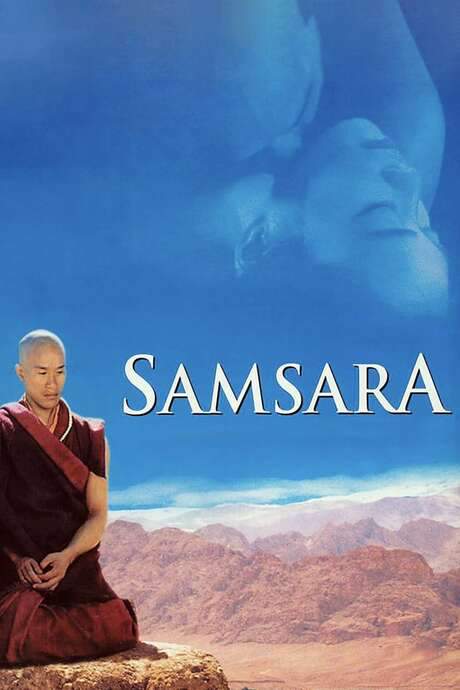
What Is Samsara About?
The premise of Samsara in 343 words, with nothing given away. The full story follows below.
In the breath‑thin valleys of the Himalayas, life moves to the rhythm of prayer bells and the low murmur of river currents that carve stone and season alike. The isolated monasteries cling to cliff faces, their ancient walls holding centuries of whispered chants, while the surrounding farms pulse with the practical cadence of planting, harvest, and the ever‑present wind that carries both scent and story across the peaks. The landscape itself feels like a character—majestic, indifferent, and endlessly reverent—setting a tone that is both contemplative and wild.
Tashi has known this world from the moment his tiny hands first lifted a rosary. Raised from childhood within the strict discipline of monastic training, he has spent decades in solitary meditation, mastering the rigorous rituals that define his identity as a khenpo. Yet the quiet of the high monastery does not silence the subtle stirrings of desire and doubt that begin to surface, hinting at an inner battle between the serene vows of the Buddha’s path and the natural pull of ordinary human experience.
When Pema enters his life, she brings the earthy warmth of the valley’s farming community, a realm where laughter is woven into labor and love is spoken in the simple gestures of daily chores. Their meeting illuminates a contrast between ascetic devotion and the tangible, fertile world of the fields, raising questions about where belonging truly lies. Alongside them moves Sujata, a fellow worker whose steady presence adds another layer to the delicate web of connections forming in this close‑knit community, while other villagers such as the stone mason and the local trader trace the age‑old patterns that shape the valley’s social fabric.
Against this backdrop of soaring mountains and humble homesteads, the film follows Tashi as he stands at a crossroads, caught between the solemn discipline of his monastic heritage and the alluring promise of a life lived among love, labor, and the ever‑changing seasons. The narrative unfolds with a meditative grace, inviting viewers to contemplate the universal tension between spiritual aspiration and the simple, powerful draw of human connection.
What Happens in Samsara?
The complete story of Samsara, from the first scene to the last, in 334 words (about 1 minute). Spoilers throughout. Names in the text link to 6 cast member pages.
Spoilers ahead
From childhood, Tashi is drawn to the monastic path, beginning his training as a Buddhist monk at the age of five. Two decades pass before he emerges from a demanding three-year solitary meditation, earning the degree of khenpo from his rinpoche. Yet a private test follows as he begins to have wet dreams, and these experiences strain the relationships within the temple, challenging the routines and expectations of monastic life.
During an official visit, he stays with a farmer and meets Pema, the farmer’s daughter. This encounter becomes a turning point: Tashi leaves the monastic life behind, returns to the farm, and joins the migrant workers who gather for the harvest. After a subsequent meeting with Pema, the two marry, forming a new family that will later include a son named Karma.
As the ex-lama grows into a farmer and landowner, he finds financial success by bringing the harvest to the city rather than selling it to the local merchant Dawa, a man who has historically cheated the valley’s farmers. This shift provokes tension with Jamayang, Pema’s former fiancé and the valley’s stone mason, who resents Tashi for disrupting the long-standing ties between the community and Dawa.
Amid these tensions, Tashi grapples with his sexuality and an attraction to Sujata, a migrant worker who returns to the farm year after year. As Pema travels to the city to sell their harvest, Tashi and Sujata begin a sexual relationship, an arrangement Sujata says has long been discussed between Sujata and Pema. This revelation adds another layer of complexity to the couple’s dynamic and to Tashi’s sense of loyalty and desire.
A visit from a friend from his lama days brings news of Apo’s death, a loss that deepens Tashi’s sense of guilt over his infidelity and the mentor’s passing. Overwhelmed by these conflicting loyalties and the weight of his choices, Tashi ultimately leaves the farm and returns to the monastery, seeking solace, forgiveness, and a path to reconcile the different paths his life has taken.
Samsara Timeline: Every Key Event in Order
13 key events in the order they happen, from “Childhood monastic training begins” to “Return to the monastery”. 13 events name a place, across 6 locations.
- 1
Childhood monastic training begins
Tashi begins his Buddhist monk training at age five. He learns discipline, study, and meditation within the temple. This period sets the foundation for his spiritual path.
When:Age 5 Where:Temple
- 2
Three-year retreat and khenpo
Twenty years of training culminate in a three-year solitary meditation. On completion, the rinpoche awards Tashi the degree of khenpo. This achievement cements his standing in the monastic community.
When:Age 25 Where:Temple
- 3
Temple tensions emerge
Tashi begins experiencing wet dreams, which strains his relationships at the temple. The moral and emotional strains threaten his focus and create tension with fellow monks.
When:Early adulthood Where:Temple
- 4
Official visit introduces Pema
During an official visit, Tashi stays with a farmer and meets Pema, the farmer's daughter. The encounter plants the seeds for a life outside the monastery. He starts to question the path he is on.
When:During official visit Where:Farmer's house
- 5
Leaves monastic life to return to the farm
He leaves monastic life and returns to the farm, joining migrant workers for the harvest. He seeks a life aligned with the land and the valley's people. The decision marks a radical shift from monk to lay laborer.
When:After official visit Where:Farm
- 6
Marriage to Pema
After another encounter with Pema, they marry and settle on the farm. Their union blends spiritual history with pastoral life. This marriage establishes a pivotal family bond in the valley.
When:Shortly after leaving monastery Where:Farm
- 7
Birth of Karma
Tashi and Pema have a son named Karma, anchoring their family. The boy represents a new generation in the valley and a personal milestone for Tashi. Family life deepens his ties to the land and community.
When:Some years after marriage Where:Farm
- 8
Ex-lama rises as farmer and landowner
Tashi grows into a successful farmer and landowner, bringing harvests to the city instead of selling to the local merchant Dawa who cheats farmers. His business success shifts the valley's power dynamics. This move puts him at odds with those loyal to the old order.
When:After settling as farmer Where:Valley and City
- 9
Conflict with Jamayang
Jamayang, Pema's former fiancé and a local stonemason, resents Tashi for disrupting the valley's traditional connection with Dawa. Tensions rise as power and money flow away from the old networks. The conflict foreshadows broader social tremors in the community.
When:After Tashi's success Where:Valley
- 10
Tashi's attraction to Sujata
Tashi grapples with his sexuality and forms an attraction to Sujata, a migrant worker who returns to the farm each year. He struggles with his sexuality in the face of village expectations. The lure of companionship outside Pema becomes hard to ignore.
When:Years after marriage Where:Farm
Show the other 3 events of Samsara Hide the last 3 events
- 11
Affair with Sujata while Pema is away
While Pema goes to the city to sell their harvest, Tashi and Sujata have sex. She tells him that this has been something Sujata and Pema have talked about for years. The revelation deepens the sense of betrayal and guilt.
When:When Pema is away Where:Farm
- 12
Apo's death and a visit from a former lama
A friend from Tashi's lama days visits and informs him that Apo, their mentor, has died. The news triggers guilt and reflection about his infidelity and his past vows. It marks a turning point toward withdrawal.
When:After affair Where:Farm
- 13
Return to the monastery
Overwhelmed by guilt over his infidelity and Apo's death, Tashi leaves the farm to return to the monastery. He seeks forgiveness and a chance to reorient his life.
When:Soon after Apo's death Where:Monastery
Who Are the Main Characters in Samsara?
8 characters, among them Tashi (Shawn Ku), Pema (Christy Chung Lai-Tai) and Sujata (Neelesha Barthel): who each one is and the part they play in the story. 7 of them link to the actor’s page.
- T(
Tashi (Shawn Ku)
Played by Shawn Ku
Former Buddhist monk who emerges from a lengthy solitary retreat to become a farmer. He grapples with guilt, a complicated sexuality, and the weight of Apo’s death. His choices oscillate between spiritual heritage and tangible family responsibilities as he navigates love, fidelity, and community expectations.
- 🕊️ Ex-lama
- 🧭 Conflicted
- 🧑🌾 Farmer
- P(
Pema (Christy Chung Lai-Tai)
Played by Christy Chung Lai-Tai
Farmer's daughter who becomes Tashi's wife after a poignant encounter. She anchors the family in the valley and later participates in selling the harvest in the city. She embodies resilience, traditional devotion, and a quiet strength in balancing love and responsibility.
- 🕊️ Lover
- 🧭 Bridge between valley and city
- 🧑🌾 Farmer's daughter
- S(
Sujata (Neelesha Barthel)
Played by Neelesha Barthel
A migrant worker who returns annually to the farm and becomes a romantic partner to Tashi. Her relationship exposes the complexities of desire across social and economic divides. She embodies longing and resilience within a transient life.
- 🧭 Migrant
- 💔 Complex love
- 🧑🌾 Worker
- D(
Dawa (Lhakpa Tsering)
Played by Lhakpa Tsering
Local merchant who profits by exploiting farmers, opposing Tashi’s move to favor the harvest’s delivery to the city. He embodies the traditional antagonistic force that challenges the farmers' autonomy and the valley's balance with the market.
- 💰 Merchant
- ⚖️ Opponent
- 🧑🌾 Farmer foe
- K(
Karma (Tenzin Tashi)
Played by Tenzin Tashi
Tashi and Pema's son, the next generation in the valley. His existence marks the continuation of family lines and the stakes of the community’s choices. He represents hope and the responsibilities of stewardship.
- 👶 Son
- 🧭 Future
- 🧑👦 Family
- S(
Sonam (Jamayang Jinpa)
Played by Jamayang Jinpa
Pema's former fiancé and local stonemason who resents Tashi for disrupting the valley’s established dynamics. He embodies resentment and tradition clashing with new farmers' influence.
- 🕯️ Former fiancé
- 🧭 Resentful
- 🪨 Stonemason
- WS
Wedding Singer (Jampa Kalsang Tamang)
Played by Jampa Kalsang Tamang
A performer who participates in the wedding scene, adding cultural texture to the community's rituals. The presence hints at the social fabric around marriage and celebration in the valley.
- 🎤 Performer
- 🕊️ Community ritual
- 🧑🎤 Wedding
- A
Apo
Mentor from Tashi's lama days, whose death profoundly affects Tashi and triggers his guilt-driven choices.
- 🧭 Mentor
- 🕊️ Spiritual guide
- 🫶 Influence
Where and When Is Samsara Set?
Samsara is set in The Valley and City. Here is why the place matters to the story.
Where
The Valley, City
The setting centers on a lush valley where farming families harvest crops and small monasteries guide spiritual life. The valley is a crossroads between tradition and modern commerce, with harvests flowing toward the city market. The local community negotiates between land, labor, and faith as tensions with a merchant rise.
- 🏞️ Rural valley
- 🏙️ City market
- 🕍 Monastic setting
What Are the Themes of Samsara?
3 ideas the story keeps returning to, among them Tradition vs Change, Love & Infidelity and Economy & Exploitation.
-
01
Tradition vs Change
Tashi’s arc moves from lifelong monk to farmer, highlighting the pull between spiritual duties and earthly attachments. The story contrasts ancient monastic discipline with pragmatic farming and city commerce in the valley. This tension drives decisions that ripple through family and community.
-
02
Love & Infidelity
Tashi’s attraction to Sujata and his marriage to Pema create a web of desire and guilt. The relationships test loyalty within the valley, challenging social norms and provoking consequences. Guilt over Apo’s death compounds the emotional stakes.
-
03
Economy & Exploitation
Dawa’s cheating of farmers reveals a corrupt economic system that pressures villagers to outsource harvests to distant buyers. Tashi’s decision to bring harvest to the city empowers the farmers but also puts him at odds with long-standing ties. The struggle frames the clash between local power and market forces.
What Kind of Film Is Samsara?
Melancholic in tone, with slow pacing and a moderate story, going by the plot summary.
- Tone
- Melancholic
- Pacing
- Slow
- Story
- Moderate
- Intensity
- Medium
- Ending
- Sad
A meditative and melancholic journey through the Himalayas, exploring a monk's profound struggle between spiritual devotion and earthly desires, culminating in a somber ending of guilt and return.
- contemplative
- spiritual
- struggling
- austere
- regretful
- serene
- spiritual crisis
- faith vs desire
- infidelity
- cultural traditions
Content notes: infidelity, corporal punishment.