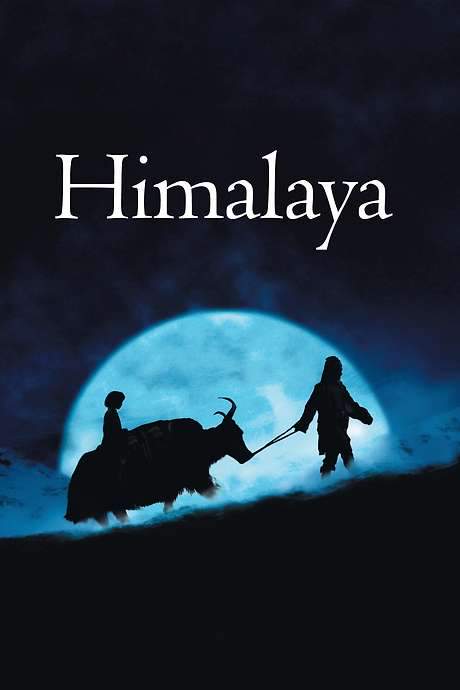
Himalaya 1999

Directed by

Eric Valli
Made by

Galatée Films
Where to Watch Himalaya
See current US streaming, rental, and purchase options for Himalaya (1999) via JustWatch.

Streaming availability powered by 
Himalaya Plot Summary
Read the complete plot summary and ending explained for Himalaya (1999). From turning points to emotional moments, uncover what really happened and why it matters.
High in the Dolpa region of the Nepalese Himalayas, Himalaya follows a caravan of yaks carrying rock salt from the high plateau down to the lowlands, a lifeline that sustains the village through the cold, unforgiving winter. The journey is not just a trade route but a reaffirmation of tradition, tested by the brutal beauty of the mountains and the quiet tension that grows between generations as they interpret duty, honor, and survival.
At the start, Lhakpa, the heir to the chieftainship, is revealed to have died in a botched attempt to navigate a shortcut, a tragedy that unsettles the tribe’s sense of order and foreshadows the perilous choices to come.
An annual caravan provides the grain the villagers depend on, and the narrative centers on a rivalry born from misunderstanding and distrust between the aging chief, Tinle, Thilen Lhondup, and the young, bold herdsman Karma, Gurgon Kyap, who is both a friend and a rival to the chief’s family as they vie for leadership of the caravan.
Karma, eager to prove himself, departs a few days before the scheduled departure, leaving behind only the youngest and oldest members of the tribe. The elders gather to decide who should lead, and Tinle chooses to mobilize the remainder of the community in a caravan with the leftover salt, recruiting his monastic son, Norbou, Karma Tensing, to join on the original departure day.
Tinle soon catches up with Karma’s caravan, despite Karma having taken a shortcut and arriving days earlier. Tinle asserts his leadership, and Karma becomes a model for Tinle’s grandson, Tserin, even as the two men confront the storm to come.
When a snowstorm hits, Tinle grows weary and exhausted but remains determined to keep the caravan intact. Karma arrives, having realized his mistake, and carries Tinle to the front of the caravan. The journey survives the blizzard and reaches a landmark, but Tinle collapses there, asking to be left to die. The leaders of the caravan decide that Tinle, master of the mountains, should be allowed to die peacefully in the mountains rather than in the flatlands.
The film closes with Tinle’s monastic son, Norbou, honoring his father’s legacy by painting a monastery wall with scenes from the caravan’s adventures.
Himalaya Timeline
Follow the complete movie timeline of Himalaya (1999) with every major event in chronological order. Great for understanding complex plots and story progression.
Lhakpa’s death triggers leadership vacuum
At the film's outset, Lhakpa, the heir to the chieftainship, dies in a botched attempt to navigate a shortcut. His death unsettles the tribe and opens a struggle for who will lead the caravan. The community realizes that the annual salt trade is at stake as winter approaches.
The annual salt caravan is prepared for winter
The caravan carries rock salt from the high plateau down to the lowlands in exchange for grain. The elders enforce the tradition that keeps the villagers fed through the winter. The success of this journey hinges on capable leadership and trust among the tribe.
Rivalry forms between Tinle and Karma
Tension grows between the aging chief Tinle and the young herdsman Karma, who is both a friend and a rival to Tinle’s family. The issue is who should lead the caravan in Lhakpa's absence. The elders sense a test of strength and wisdom between generations.
Elders decree Karma should lead in Lhakpa's absence
The elders decide that Karma should take the lead in the absence of Lhakpa, underscoring a shift in authority. Tinle objects, arguing that leadership should be earned or chosen by tradition. The dispute sets the stage for a dramatic race to leadership across the mountains.
Karma leaves early with a shortcut
Karma departs a few days before the scheduled departure, taking a shortcut and leaving behind only the youngest and oldest members. His relatives plead with him not to go, warning that the departure would be seen as deceitful. The act foreshadows the challenges ahead on the treacherous route.
Tinle organizes a salt caravan with Norbou
With the rest of the salt still available, Tinle decides to lead the caravan on the original departure day. He recruits his monastic son, Norbou, to join the effort, solidifying his claim to lead. The caravan begins its trek while Karma starts his own course ahead.
Tinle catches up to Karma's caravan
Tinle's caravan catches up to Karma's earlier improvised route, illustrating a clash of plans and leadership styles. Karma had left days earlier via a shortcut, yet Tinle pushes to keep pace and assert control. The two leaders’ approaches test the unity of the group.
Karma inspires Tinle’s grandson, Tserin
Karma acts as a role model for Tinle's grandson, Tserin, demonstrating courage and skill in the mountains. The younger generation learns leadership through Karma’s example. The moment hints at reconciliation between rival lines of authority.
Tinle foresees a snowstorm and orders depart
Tinle predicts an oncoming snowstorm and orders the caravan to depart immediately. Karma counters that the sky is clear, arguing for patience. The disagreement highlights the split between experience and caution.
Karma stays behind as Tinle leaves
Karma chooses to stay behind rather than hold up the caravan, acknowledging his misjudgment. The caravan departs under Tinle's leadership with Norbou and the rest of the group. Karma’s sacrifice underscores the bond between rival factions.
Snowstorm hits; Tinle saves by Karma arrives
As the storm bears down, Tinle grows weary and collapses in the snow. Karma arrives having realized his earlier mistake and carries Tinle to the front of the caravan. Together the caravan endures the blizzard and presses onward.
The caravan reaches a landmark; Tinle asks to die in the mountains
The caravan reaches a landmark and survives the snowstorm, but Tinle collapses again and asks to be left to die in the mountains. The leaders honor the ancient code of the mountains and allow him to pass away there. The moment marks a quiet acceptance of the harsh life the mountains demand.
Caravan leaders honor Tinle’s wish
The caravan leaders choose to honour Tinle's wish to die in the mountains rather than be carried to the flatlands, accepting the traditional mercy of the mountains. The decision reflects the tribe’s deep respect for the cycle of life and the land. Karma’s earlier actions become a bridge between generations.
Norbou paints the monastery wall, ending the tale
Norbou, Tinle’s monastic son, honors his father by painting a monastery wall with the caravan’s adventures. The mural preserves the memory of the journey and the leadership struggle. The film closes on a note of reverence for the mountains and their people.
Himalaya Characters
Explore all characters from Himalaya (1999). Get detailed profiles with their roles, arcs, and key relationships explained.
Tinle
An aging tribal chief who guards tradition and the caravan's ancient routes. He weighs experience against ambition and remains a steady, authoritative presence even as fatigue tests his resolve. His leadership is marked by resilience in the mountains and a quiet insistence on honor, even when he is challenged by younger ambitions. He inspires loyalty and respect through years of guiding his people through peril.
Karma
A bold young herdsman determined to prove himself worthy of leadership. He chooses a shortcut and leaves early to test his limits, risking trust and unity. His actions drive the central rivalry with Tinle and reveal a capacity for courage that earns him mixed admiration. He becomes a role model for Tinle’s grandson, embodying initiative and risk-taking.
Norbou
Tinle’s monastic son, a measured voice who carries spiritual and practical duties. He joins the caravan and acts as a bridge between ritual obligation and real-world problem solving. He respects tradition while supporting his father and Karma’s efforts, and he honors the caravan's legacy with quiet leadership. At the end, he honors Tinle by painting a monastery wall with the journey’s memories.
Pema
The tribe’s heir to chieftainship who dies early in the journey after a botched shortcut attempt. His death triggers a leadership scramble and forces the caravan to adapt without a clear successor. His absence underscores the fragility of traditional succession and the need for communal agreement. His memory continues to influence decisions and the caravan’s cohesion.
Tserin
Tinle’s grandson who witnesses the caravan’s struggles and learns from Karma’s courage and Tinle’s restraint. He represents the next generation watching the mountains test maturity. The events shape his understanding of duty, loyalty, and the costs of leadership.
Himalaya Settings
Learn where and when Himalaya (1999) takes place. Explore the film’s settings, era, and how they shape the narrative.
Location
Dolpa, Nepal
Set in the Dolpa region of the Nepalese Himalayas at an altitude of about five thousand meters, the area is a remote mountainous landscape. It is known for its harsh winters and an annual rock-salt caravan that sustains village life. The landscape shapes daily life, survival strategies, and enduring traditions.
Himalaya Themes
Discover the main themes in Himalaya (1999). Analyze the deeper meanings, emotional layers, and social commentary behind the film.
🧭
Leadership
Two leaders emerge in tension: Tinle, the aging chief who embodies tradition, and Karma, the daring herdsman eager to prove himself. The caravan becomes a test ground for authority, trust, and responsibility. Their rivalry drives difficult decisions about who deserves to lead and how to keep the community safe. The film examines how experience and courage influence leadership under pressure.
❄️
Survival
Nature is an unpredictable antagonist to human plans. The looming snowstorm exposes the fragility of schedules, routes, and lives in the mountains. Tinle and Karma must navigate weather, time, and terrain to keep the caravan intact. The storm becomes a moral and physical challenge that forces sacrifice and teamwork.
🕊️
Tradition
Traditional loyalties and lineage shape who may lead the caravan when Lhakpa is gone. Karma’s bold moves clash with communal consent, testing the balance between innovation and ceremony. Norbou, the monastic son, embodies a bridge between ritual duty and practical action. The ending honors Tinle’s legacy while leaving room for renewal.

Coming soon on iOS and Android
The Plot Explained Mobile App
From blockbusters to hidden gems — dive into movie stories anytime, anywhere. Save your favorites, discover plots faster, and never miss a twist again.
Sign up to be the first to know when we launch. Your email stays private — always.
Explore the mobile appHimalaya Spoiler-Free Summary
Discover the spoiler-free summary of Himalaya (1999). Get a concise overview without any spoilers.
In the stark, wind‑scoured heights of the Dolpa region, a remote Tibetan settlement clings to a rhythm as ancient as the mountains themselves. Each year the villagers set out on a perilous caravan, laden with rock salt harvested from the plateau, to trade for the grain that sustains them through the long, icy winter. The journey is more than a simple exchange; it is a rite that knits the community together, a moving tapestry of prayer, perseverance, and the ever‑present awe of the Himalayas.
At the heart of this ritual stands the aging chief, Tinle, whose authority is rooted in generations of custom and the quiet reverence the peaks command. He embodies the weight of tradition, guiding his people with a steady hand while feeling the pull of an inevitable change that the world outside the valley hints at. Opposite him, the fire‑bright herdsman Karma bursts onto the scene, his ambition and restless spirit challenging the accepted order. Their clash of wills mirrors the broader tension between reverence for the past and the restless energy of youth, each convinced that his path is the one that will safeguard their home.
Around them, the village pulses with a blend of monastic solemnity and everyday survival. Elders speak in measured tones, younger faces reflect a mix of optimism and uncertainty, and the landscape itself seems to listen, its towering cliffs and deep valleys shaping every decision. The atmosphere is one of hushed grandeur, where the relentless wind carries both the promise of continuity and the whisper of inevitable change.
As the caravan prepares to depart, the community finds itself perched on the edge of an unspoken crossroads. The looming trek will test loyalty, courage, and the fragile balance between the weight of heritage and the daring of new ideas, leaving the audience to wonder how these forces will shape the lives bound to the mountains.
Movies with Similar Twists and Themes
Uncover films that echo the narrative beats, emotional arcs, or dramatic twists of the one you're exploring. These recommendations are handpicked based on story depth, thematic resonance, and spoiler-worthy moments — perfect for fans who crave more of the same intrigue.




Featured on this page

What's After the Movie?
Not sure whether to stay after the credits? Find out!
Check out our other apps:

SAT Sphere
Build confidence for the Digital SAT.

Mori Atlas
Discover wild places worth protecting.

Luntero
Search smarter for a home in Amsterdam.

Plot Explained
Unravel movie endings and hidden clues.

Pokechamp
Dive into Pokémon data and battle logic.

Driving Theory
Get ready for your European theory test.

Movie Dust
Plan your next cinema trip with ease.

Musemap
Find art and culture as you travel.

Selkobase
Compare credentials before committing.

Local Manual
Turn an unfamiliar country into practical next steps.

Lernavi
Compare school systems before your next move.

GymRoam
Find a workout stop wherever your plans take you.
Explore Our Movie Platform
New Movie Releases (2026)
Famous Movie Actors
Top Film Production Studios
Movie Plot Summaries & Endings
Major Movie Awards & Winners
Best Concert Films & Music Documentaries
Movie Collections and Curated Lists
© 2026 What's After the Movie. All rights reserved.
Privacy Policy