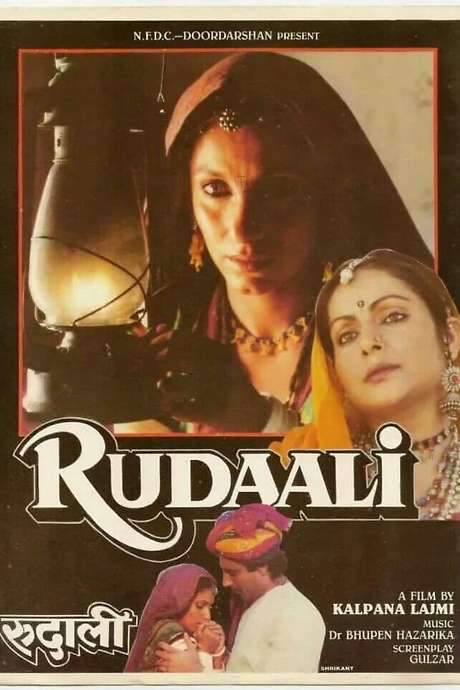
Rudaali 1993

Directed by

Kalpana Lajmi

Rudaali Plot Summary
Read the complete plot summary and ending explained for Rudaali (1993). From turning points to emotional moments, uncover what really happened and why it matters.
Thakur Ramavtar Singh, the zamindar (transl. landlord) of Barna, on his death bed, bemoans that none of his relatives would shed tears for him. He calls for a famous rudaali to mourn him after his death. Bhikni, the renowned rudaali Rakhee Gulzar, arrives and stays with the widow Shanichari Dimple Kapadia, who lives in the Thakur’s village. As their friendship grows, Shanichari tells Bhikni her life’s story, which unfolds in a sequence of vivid flashbacks.
Shanichari was born on a Shanichar (Saturday), named after the planet Shani (Saturn), considered inauspicious in Hindu astrology. She is blamed by the villagers for every misfortune around her—from her father’s death to her mother Peewli’s running off to join a theatre troupe. While still young, Shanichari is married off to Ganju, a drunkard. Her son, Budhua, whom she loves deeply, roams freely, mirroring the fate of Peewli.
Meanwhile, Lakshman Singh, the Thakur’s son, declares his affection for her and hires her as a maid to his wife. In his haveli, Lakshman presses Shanichari to challenge social norms and even encourages her to “look up” into his eyes when she speaks. One night, after she sings at the haveli, he bestows upon her a house of her own and two acres of land.
Ganju dies from cholera at a village fair. After curses and threats from the village pundit for failing to observe prescribed customs, Shanichari borrows 50 rupees to perform the rituals from Ramavatar Singh [Ravi Jhankal], and becomes a bonded labourer under him.
Some years later, a grown Budhua brings home Mungri, a prostitute, as his wife. Shanichari tries to throw her out but relents when she learns that Mungri is pregnant with Budhua’s child. Yet the snide remarks of the village pundit and shop-owners fuel tension between the two women, and in a fit of rage after a confrontation, Mungri aborts the child. Budhua leaves home. Shanichari confides to Bhikni that none of these bereavements ever moved her to tears.
One night, Bhikni is summoned to a neighboring village by a man named Bhishamdata. Ramavatar Singh dies a few hours later. Shanichari goes to bid farewell to Lakshman Singh, who intends to leave the village. A messenger arrives with the news of Bhikni’s death from the plague and reveals to Shanichari that Bhikni was her mother, Peewli. Overcome, Shanichari begins to weep uncontrollably and then steps into Bhikni’s worn shoes, becoming the new rudaali herself, crying at the Thakur’s funeral.
Rudaali Timeline
Follow the complete movie timeline of Rudaali (1993) with every major event in chronological order. Great for understanding complex plots and story progression.
Thakur's deathbed plea for Bhikni
On his deathbed, Thakur Ramavtar Singh laments that none of his relatives will shed tears for him. He secretly desires Bhikni, a famous rudaali, to mourn him after his death. He calls for Bhikni to come to the village to perform the mourning ritual.
Bhikni joins Shanichari and a bond forms
Bhikni travels to the Thakur's village and stays with the widow Shanichari. The two women form an unexpected bond as Shanichari begins sharing her life story. Her memories unfold through flashbacks during their growing friendship.
Shanichari's birth and superstition
Shanichari was born on a Shanichar, a Saturday named after Shani, and villagers consider her inauspicious. Her father's death and her mother Peewli's departure to join a theatre troupe are attributed to her by the villagers. These beliefs shape her early life.
Shanichari's arranged marriage to Ganju
While still young, Shanichari is married off to Ganju, a drunkard. Her life with him is marked by hardship and neglect.
Budhua, Shanichari's son
Shanichari has a son, Budhua, whom she loves very much and who roams around. Budhua's restless nature foreshadows the later disruptions in Shanichari's life.
Lakshman Singh hires Shanichari as a maid
Lakshman Singh tells Shanichari he likes her and hires her as a maid to his wife. She moves into Lakshman's haveli as part of the household.
Gift of a house and land
One night after Shanichari sings at the haveli, Lakshman gifts her a house and two acres of land. The gift marks a shift in her status and independence within the village.
Ganju's death at the village fair
Ganju dies from cholera at a village fair. Shanichari grieves the loss while navigating social expectations and rituals.
Bonded labour under Ramavatar Singh
Curses from the village pundit threaten her for not observing prescribed customs. To perform the required rituals, she borrows 50 rupees from Ramavatar Singh and becomes a bonded labourer.
Budhua returns with Mungri
Years later, Budhua returns with Mungri, a prostitute, whom he has married. Shanichari faces the tension between two generations of women in her household.
Conflict surrounding Mungri's pregnancy
Shanichari tries to eject Mungri, but relents when she learns Mungri is pregnant. Snide remarks from the village pundit and shop-owners fuel conflict, and Mungri aborts the child while Budhua leaves home.
Bhikni summoned; Ramavatar Singh dies
One night, Bhikni is summoned to a neighboring village by Bhishamdata. Ramavatar Singh dies a few hours after the summons.
Revelation of Bhikni's true identity
A messenger arrives with news that Bhikni has died of plague and reveals that Bhikni is actually Shanichari's mother, Peewli. Shanichari processes the revelation and begins to grasp her mother's hidden role in her life.
Shanichari becomes the new rudaali
Overwhelmed, Shanichari weeps and takes over as the village's new rudaali, mourning at the Thakur's funeral. With Bhikni gone, she fulfills the duty she was destined to perform.
Rudaali Characters
Explore all characters from Rudaali (1993). Get detailed profiles with their roles, arcs, and key relationships explained.
Shanichari (Dimple Kapadia)
Shanichari is a woman unfairly blamed by villagers for every misfortune. Born on a Shanichar day, she endures a brutal path from arranged marriage to Ganju, a drunkard, and later a debt-bondage under Ramavatar Singh. She loves her son Budhua and seeks dignity within a rigid society, gradually discovering that tears can wield power as she confronts her circumstances. As Bhikni's tale unfolds, she moves toward her own moment of release as the new rudaali.
Bhikni (Rakhee Gulzar)
Bhikni is the village's renowned rudaali, whose crying ritual is sought to honor the dead. She travels with the sorrow of many families and embodies the delicate balance between public mourning and private pain. The plague claim and her death reveal a poignant twist: Bhikni was Shanichari's mother, Peewli. Her passing catalyzes Shanichari's awakening as a mourner.
Budhua (Raghubir Yadav)
Budhua is Shanichari's restless son who drifts through the village. He brings Mungri home as his wife, triggering a frictive dynamic at home and within the community. After a fight and Mungri's abortion, he abandons the family, underscoring the fragility of familial ties under economic and social pressure.
Lakshman Singh (the Thakur's son)
Lakshman Singh is the Thakur's son who notices Shanichari and encourages her to challenge the village's customs. He offers a rare sign of support, gifting her a house and land and signaling a potential opening for female agency within the rigid power structure. His actions reveal the complexities of desire and benevolence in a hierarchical society.
Thakur Ramavtar Singh (Raj Babbar)
Ramavtar Singh, the desert zamindar, embodies the social and economic power that governs Barna. His death sets off the final mourning ritual and exposes the fragility of status in a village where lineage and land determine worth. He relies on Bhikni's service, illustrating how ritual and authority intersect with personal fortunes.
Mungri (Sushmita Mukherjee)
Mungri is Budhua's wife, a pregnant woman who becomes part of the village's tense social fabric. Her pregnancy triggers jealousy and judgment from neighbours, and a forced abortion intensifies conflict with Shanichari. Her presence stirs the tension between two women and exposes the vulnerability of women who lack protection.
Ganju
Ganju is Shanichari's husband who succumbs to cholera at a village fair, a catalyst for Shanichari's descent into debt and later bondage. His death amplifies the instability of Shanichari's already precarious life.
Rudaali Settings
Learn where and when Rudaali (1993) takes place. Explore the film’s settings, era, and how they shape the narrative.
Location
Barna
Barna is a remote desert village where social codes govern daily life. The zamindar's haveli looms over the town, symbolizing rigid hierarchies and entrenched customs that define women's roles. The harsh landscape and close-knit community frame the drama of grief, loyalty, and survival within a patriarchal system.
Rudaali Themes
Discover the main themes in Rudaali (1993). Analyze the deeper meanings, emotional layers, and social commentary behind the film.
🎭
Gender oppression
In Barna, Shanichari endures blame and shaming simply for existing within patriarchal norms. The film traces how traditional rules constrain her choices, from marriage to agency over her own life. Bhikni's profession as a mourner exposes how women's grief is managed and commodified in a society that values appearances over humanity. The narrative links personal sorrow to collective judgment, highlighting the costs of conformity.
💔
Loss and mourning
Mourning is a social ritual that drives the plot, where tears become a currency of legitimacy in the eyes of the village. Bhikni's fame as a rudaali contrasts with the personal losses that haunt Shanichari, Ganju, and Budhua. The plague and the deaths ripple through families, revealing how grief sustains and unsettles community bonds. The transition of Shanichari into the new rudaali underscores the resilience found in shared pain.
🌿
Resilience
Against a backdrop of caste, debt, and land, Shanichari finds small victories that challenge social constraints. Lakshman Singh's rare acts of kindness hint at fragile openings for agency within an oppressive system. The story emphasizes perseverance—through love for her son, through mother-daughter lineage, and through the transforming moment when Shanichari cries at the funeral and assumes the rudaali role.

Coming soon on iOS and Android
The Plot Explained Mobile App
From blockbusters to hidden gems — dive into movie stories anytime, anywhere. Save your favorites, discover plots faster, and never miss a twist again.
Sign up to be the first to know when we launch. Your email stays private — always.
Explore the mobile appRudaali Spoiler-Free Summary
Discover the spoiler-free summary of Rudaali (1993). Get a concise overview without any spoilers.
In the sun‑baked villages of Rajasthan, a centuries‑old custom shapes the way grief is expressed: aristocratic families hire professional mourners, known as rudaalis, to weep aloud for their departed males, because the women of the household are forbidden to show such emotion. The film immerses the viewer in this stark, ritual‑laden world, where caste, poverty and tradition intersect on dusty lanes and cramped courtyards, creating a landscape that feels both intimate and unforgiving.
Shanichari arrives as a member of an oppressed caste, burdened from birth by ill‑omened superstitions and a relentless series of misfortunes. Married to a drunken husband and raising a young son, she navigates a life marked by scarcity and social scorn, yet clings to a quiet resilience that steadies her daily existence. Her world is one of whispered judgments, endless chores, and the ever‑present hope of a better future for her child, even as the weight of the village’s expectations presses down.
When the ailing Thakur of the region summons a famed rudaali, Bhikni steps into the picture, bringing with her a reputation for moving even the most stoic hearts. Her arrival at Shanichari’s modest home sets the stage for an unlikely companionship, as the two women—one bound by duty, the other by circumstance—share moments that reveal the hidden depths of sorrow and solidarity among those the caste system marginalizes. Their interactions are rendered with a measured tenderness that underscores the film’s observational tone.
The narrative unfolds through a series of reflective vignettes, each rendered in a muted palette that captures the heat of the desert and the coolness of hidden interiors. Gentle, almost lyrical cinematography pairs with an economy of dialogue, allowing the audience to feel the unspoken pain that lingers in the air. Through this evocative tableau, the story probes the quiet endurance of women who, despite being denied the right to mourn openly, carry the weight of collective grief on their shoulders.
Movies with Similar Twists and Themes
Uncover films that echo the narrative beats, emotional arcs, or dramatic twists of the one you're exploring. These recommendations are handpicked based on story depth, thematic resonance, and spoiler-worthy moments — perfect for fans who crave more of the same intrigue.



Featured on this page

What's After the Movie?
Not sure whether to stay after the credits? Find out!
Check out our other apps:

SAT Sphere
Build confidence for the Digital SAT.

Mori Atlas
Discover wild places worth protecting.

Luntero
Search smarter for a home in Amsterdam.

Plot Explained
Unravel movie endings and hidden clues.

Pokechamp
Dive into Pokémon data and battle logic.

Driving Theory
Get ready for your European theory test.

Movie Dust
Plan your next cinema trip with ease.

Musemap
Find art and culture as you travel.

Selkobase
Compare credentials before committing.

Local Manual
Turn an unfamiliar country into practical next steps.

Lernavi
Compare school systems before your next move.

GymRoam
Find a workout stop wherever your plans take you.
Explore Our Movie Platform
New Movie Releases (2026)
Famous Movie Actors
Top Film Production Studios
Movie Plot Summaries & Endings
Major Movie Awards & Winners
Best Concert Films & Music Documentaries
Movie Collections and Curated Lists
© 2026 What's After the Movie. All rights reserved.
Privacy Policy