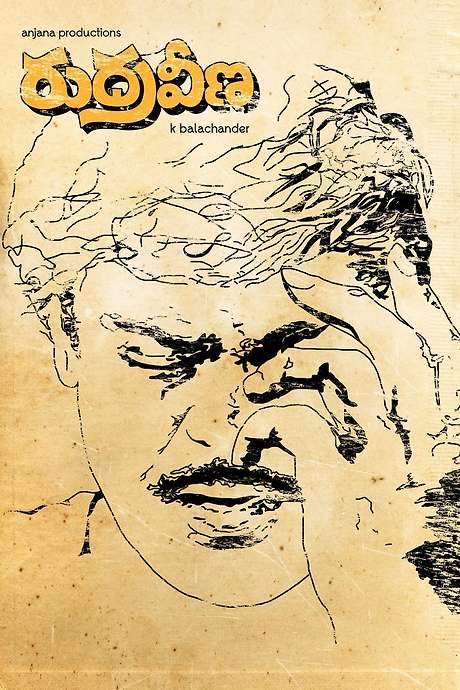
What Is Rudraveena About?
The premise of Rudraveena in 355 words, with nothing given away. The full story follows below.
In the tranquil yet evolving village of Ramapuram, tradition and progress sit side by side like the notes of a raga. An aging parliamentarian, Satyanarayana, arrives to uncover why this remote hamlet has become a model of development, only to discover that its heartbeat is driven by a single, unconventional force. The atmosphere buzzes with the cadence of folk songs, the scent of incense, and the ever‑present tension between age‑old customs and the stirrings of change, creating a canvas where music feels as potent as any manifesto.
At the centre of this rhythm is Suryanarayana “Suryam” Sastry, the charismatic son of a famed Carnatic maestro. Raised in a household where the Bilahari raga is revered, Suryam inherits a deep reverence for melody but channels it toward a bold social vision: that music can reshape hearts, break caste barriers, and uplift the community. His father, Bilahari Ganapati Sastry, embodies the older generation’s pride and rigid adherence to hierarchy, judging worth through lineage and ritual. Their daily exchanges crackle with both affection and ideological clash, setting the stage for a generational struggle that reverberates throughout the village.
A chance meeting near the local temple introduces Suryam to Lalitha Sivajyoti, a talented classical dancer whose talent is eclipsed by the constraints of her lower‑caste background. Her father, Varalayya, a compassionate lawyer and social activist, stands as a quiet pillar of justice in the town. Drawn together by shared ideals, Suryam and Lalitha’s bond hints at a partnership where art and advocacy could meld, challenging entrenched prejudices while nurturing a tender romance that feels both hopeful and precarious.
Against this richly textured backdrop, the story unfolds as a lyrical meditation on the power of creativity to confront complacency. With the village’s winding lanes echoing both ancient chants and the whispered promise of reform, Suryam must decide whether to remain within the safety of his lineage or step into the wider world, using his music as a catalyst for the transformation he envisions. The tone remains earnest and uplifting, inviting the audience to wonder how far a single melody can travel when it carries the weight of a community’s dreams.
What Happens in Rudraveena?
The complete story of Rudraveena, from the first scene to the last, in 835 words (about 4 minutes). Spoilers throughout. Names in the text link to 7 cast member pages.
Spoilers ahead
Satyanarayana, Satyanarayana, a seasoned and aging MP, arrives in Ramapuram to understand what has made this village a model of development and civility. After speaking with locals, he learns that Ramapuram’s progress is largely attributed to a single driving force: Suryanarayana “Suryam” Sastry. Curious, Satyanarayana invites Suryam to recount the village’s story for the parliament, and Suryam agrees, ready to share the experiences that shaped the town.
Suryanarayana “Suryam” Sastry is the son of a renowned carnatic music maestro, Bilahari Ganapati Sastry. The elder Sastry is respected for his musical genius but has a short temper and carries a habit of judging people by caste. Suryam has an elder brother, Udayam, who is mute yet adept at playing the nadaswaram, and a younger sister, Sandhya, who plays the tambura. Their mother figure in the family, Gayathri, married to Udayam, often acts as a mediator between siblings and their father, helping to ease tensions that arise from Sastry’s rigidity. Gayathri becomes a steady, calming influence and a bridge between the generations.
On a chance encounter near a temple, Suryam meets a dancer and learns her story: she is Lalitha Sivajyoti, a classical dancer from a lower caste who is denied entry to the temple. Her father, Varalayya, is a lawyer and social worker, portrayed as a person who strives for justice in his community; he is introduced as a figure of importance in this social drama. Varalayya plays a pivotal role in influencing Suryam’s decisions. Meanwhile, an amateur singer named Charukesa follows Sandhya and becomes a friend of the family’s circle; his character addition helps connect music and social reform within Ramapuram.
Encouraged by Gayathri, Suryam proposes to Lalitha, and the couple’s plan moves forward with hope and shared ideals. On his way back from a concert, Suryam stops to assist victims of a factory fire, an act that earns him both praise and pressure back home. Sastry’s anger and pride flare up in response to his son’s acts of mercy, creating a rift between father and son. When Sastry discovers Suryam and Lalitha together, the tension between tradition and reform intensifies, leaving Gayathri anxious and Udayam unfazed.
During another trip to a concert, Sastry refuses to aid an injured lineman named Narayana, a decision that further unsettles Suryam. The moral conflict deepens as Suryam argues that uplifting society should take precedence over ritual worship, which leads Sastry to declare Charukesa his successor as a musician—a decision that hardens the rift between generations and beliefs. Suryam challenges Sastry’s stance and eventually leaves home to pursue a path rooted in social service rather than music alone.
Suryam finds refuge with Varalayya and learns of Narayana’s widow, who laments the government’s denial of compensation because his drinking had occurred on the job. He also visits the family of Kishtappa, a survivor of the fire whose life has been deeply affected by alcohol. Observing these harsh realities, Suryam is moved to vow an ambitious mission: to abolish liquor in Ramapuram. He and Lalitha begin a concerted effort to persuade working-class men to abandon alcohol, and while they gain some early triumphs, the campaign faces significant backlash and obstacles.
Back at home, Sastry uncovers Charukesa’s relationship with Sandhya and responds with scorn and humiliation. The couple’s marriage is eventually arranged, but the cost is high, as Charukesa requests Sastry to renounce the Bilahari raga he has long championed as a professional duty. Sastry agrees only halfway, and Suryam attends the wedding, delivering a performance that is met with broad approval and renewed respect for his ideals.
With Varalayya’s plan to wed Suryam to Lalitha in motion, Sastry trims back his own expectations and is involved in the wedding’s broader social implications. A group of drunkards creates a disturbance, and they challenge Suryam to walk away from the marriage in exchange for their vow to stop drinking. Lalitha consents to Suryam’s decision, and he steps back, earning immense respect from the villagers for his selfless sacrifice. The spectacle ends with the realization that a life dedicated to the community can trump personal desire.
The couple’s ongoing project, the rural development movement named Lalitha Grameena Sveeyasikshana Udyamam, begins to show tangible results across Ramapuram, turning the tide toward sustainable change. Satyanarayana is delighted to see twenty-eight villages adopt Suryam’s methods, and he himself renounces alcohol as a sign of solidarity with the cause. The movement garners national attention, and the prime minister announces a felicitation in Ramapuram, recognizing the efforts of Suryam and his supporters.
All family members, including Charukesa, attend the ceremony, though Sastry arrives late and chooses to introduce himself not as a renowned musician but as Suryam’s father, signaling a shift in his own identity. He finally gives his blessing to Suryam’s marriage to Lalitha, much to the happiness of the villagers who have watched the transformation unfold. The narrative closes with the image of a village that has learned to balance culture, compassion, and community service, a testament to the enduring power of social change over personal pride.
Rudraveena Timeline: Every Key Event in Order
13 key events in the order they happen, from “Satyanarayana visits Ramapuram and learns its development” to “Final felicitation and reconciliation”. 13 events name a place, across 8 locations.
- 1
Satyanarayana visits Ramapuram and learns its development
Satyanarayana travels to Ramapuram and talks with locals who describe how the village has transformed. He discovers that the improvements are driven by Suryam's efforts rather than tradition alone. Suryam agrees to tell the village's story in Parliament when asked.
When:beginning Where:Ramapuram
- 2
Suryam meets Lalitha and is drawn to her
While observing a dancer on a cliff away from the temple, Suryam encounters Lalitha Sivajyothi, a lower-caste dancer. He learns of her caste and the social barriers she faces. Their encounter plants the seeds for a future alliance based on shared ideals.
When:early Where:Cliff near Ramapuram temple
- 3
Suryam proposes to Lalitha and wins her consent
Encouraged by Gayathri, Suryam proposes to Lalitha and she accepts. Their relationship challenges local norms and widens the rift with Suryam's family. The couple commits to pursuing a path that serves the needy over tradition.
When:shortly after meeting Where:Ramapuram
- 4
Suryam helps fire victims; Sastry confronts him
On the way back from a concert, Suryam helps victims of an accidental fire in Ramapuram. Sastry becomes furious at his absence from the family and questions his priorities. The incident marks a turning point in their strained relationship.
When:during the fire incident Where:Ramapuram
- 5
Sastry learns of Suryam and Lalitha as a couple
Sastry discovers that Suryam and Lalitha are dating, widening the family and caste tensions. Gayathri remains wary while Udayam stays mostly unaffected. The revelation deepens the rift and pushes Suryam toward a more public, service-driven life.
When:after the relationship becomes known Where:Sastry's residence
- 6
Narayana's injury and the fight over compensation
When an injured lineman Narayana is denied government compensation because he was drunk at work, Suryam condemns the neglect and demands accountability. The incident exemplifies the social neglect Suryam aims to reform. Sastry's stance hardens in response to Suryam's critique.
When:around Narayana's injury Where:Ramapuram
- 7
Suryam leaves home to pursue his calling
Frustrated by Sastry's opposition, Suryam confronts him and walks out, choosing to live with Varalayya and continue helping the needy. His departure marks a decisive break from his family's musical lineage. He commits to a life dedicated to social reform.
When:soon after Where:From Sastry's home to Varalayya's house
- 8
Suryam vows to abolish liquor and aids the needy
Suryam learns of Narayana's widow and other families affected by alcohol abuse, including Kishtappa. He vows to abolish liquor in Ramapuram and mobilizes volunteers to support the working class. The initial drive galvanizes some villagers but faces resistance as well.
When:after leaving home Where:Ramapuram
- 9
Lalitha Grameena Sveeyasikshana Udyamam begins
Suryam and Lalitha launch a rural development movement named after Lalitha. The effort initially yields positive results as villagers adopt new practices, though the program also encounters misunderstandings and backlash. The movement marks a shift from protest to organized development.
When:early phase Where:Ramapuram villages
- 10
Charukesa and Sandhya's relationship and the wedding
Sastry humiliates Charukesa over his relationship with Sandhya, who eventually marries him. At the wedding, Charukesa asks Sastry to abandon the Bilahari raga, testing the musician's ego. Suryam attends and performs, receiving a positive reception from the crowd.
When:around the wedding Where:Ramapuram
Show the other 3 events of Rudraveena Hide the last 3 events
- 11
Suryam sacrifices his own marriage to Lalitha
Varalayya plans Suryam's marriage to Lalitha but Sastry incites drunkards to disrupt the event. With Lalitha's consent, Suryam calls off the wedding to avoid violence, a selfless act that earns the villagers' respect. The couple's commitment to the cause remains intact.
When:wedding day Where:Wedding venue
- 12
The movement takes hold and gains national attention
The Lalitha-led rural development effort grows, with twenty-eight villages adopting Suryam's methods. Satyanarayana is pleased by the progress, and he even quits drinking as a result. Suryam earns national recognition and is slated for a felicitation in Ramapuram.
When:after the initial successes Where:Ramapuram; nationwide reach
- 13
Final felicitation and reconciliation
At the national felicitation, Satyanarayana and the villagers celebrate Suryam's achievements. Sastry arrives late and publicly adopts a paternal role, introducing himself as Suryam's father rather than a famed musician. He approves Lalitha's marriage, bringing the villagers’ hopes to a joyful close.
When:finale Where:Ramapuram felicitation ceremony
Who Are the Main Characters in Rudraveena?
11 characters, among them Suryanarayana 'Suryam' Sastry (Chiranjeevi), Lalitha Sivajyoti (Shobana) and Gayathri (Sumithra): who each one is and the part they play in the story. 10 of them link to the actor’s page.
- S'
Suryanarayana 'Suryam' Sastry (Chiranjeevi)
Played by Chiranjeevi
An ardent reformer and the son of a renowned Carnatic maestro, Suryam champions the welfare of Ramapuram's working class. He stands against caste prejudice and prioritizes social development over pure musical pursuits. His sacrifices—balancing family expectations and public needs—drive the village toward greener development and earns national recognition.
- 💪 Courageous
- 🌱 Progressive
- 🤝 Social welfare
- 🎶 Music-heritage
- LS
Lalitha Sivajyoti (Shobana)
Played by Shobana
A classical dancer from a lower caste who faces temple-entry exclusion and social stigma. She becomes Suryam's partner and a symbol of resilience, bridging art and social justice. Her relationship with Suryam and her own ambitions propel the village toward reform.
- 💃 Dancer
- 🚫 Caste barriers
- 🎨 Art & culture
- G(
Gayathri (Sumithra)
Played by Sumithra
Udayam's wife and a mediator who helps navigate family tensions between Suryam and Sastry. Her support anchors the reform movement and strengthens bonds within the family. She embodies diplomacy and steadiness in a community facing rapid change.
- 🤝 Mediator
- 🌱 Supportive
- 💪 Strength
- V(
Varalayya (P. L. Narayana)
Played by P. L. Narayana
A lawyer and social worker who provides legal and moral backing to Suryam's initiatives. He represents the professional class's backing for reform and helps connect village issues to governance. His involvement lends legitimacy and strategic clarity to the movement.
- ⚖️ Lawyer
- 🌱 Social advocate
- 🏛️ Community liaison
- BG
Bilahari Ganapati Sastry (Gemini Ganesan)
Played by Gemini Ganesan
Suryam's father, a famed Carnatic maestro, embodies artistic prestige and caste bias. His short temper and pride complicate family and social reforms, but he ultimately acknowledges Suryam's work. The conflict between tradition and progress is explored through their dynamic.
- 🎶 Maestro
- 🔥 Short-tempered
- 🏛️ Tradition
- 👨👦 Family
- C(
Charukesa (Ramesh Aravind)
Played by Ramesh Aravind
An amateur singer who follows Sandhya and becomes part of the new musical context in Ramapuram. He supports Suryam's movement and forms a link between Sandhya and the family. His presence adds a personal dimension to the reform narrative.
- 🎤 Singer
- 💞 Romance
- 🌱 Integration
- S(
Sandhya (Devilalitha)
Played by Devilalitha
The tambura player and Charukesa's partner, and Suryam's younger sister. Her rebellious stance influences family dynamics until Sastry arranges the marriage. She embodies the personal toll and social tension surrounding reform.
- 🎼 Musician
- 🚫 Caste barriers
- 👩 Sister
- N
Narayana
A lineman whose accident leads to government denial of compensation because he was drunk at work. His case highlights social injustice and the vulnerability of workers in the face of bureaucratic neglect. The story uses his situation to motivate calls for accountability and welfare.
- 👷 Lineman
- 💔 Injustice
- 🛡️ Welfare
-
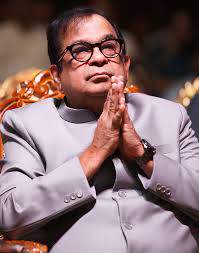
Kishtappa (Brahmanandam)
Played by Brahmanandam
A drunkard and survivor of the earlier fire, Kishtappa represents the vulnerable working-class struggle with alcoholism and tragedy. His arc intersects with Suryam's reforms as the village seeks to reduce drinking and its consequences. He embodies the human cost behind social issues.
- 🥃 Drunkard
- 🔥 Survivor
- 🌱 Change-maker
- S(
Satyanarayana (Kaikala Satyanarayana)
Played by Kaikala Satyanarayana
An elderly MP who visits Ramapuram and is impressed by Suryam's work. His cameo helps bring the movement into a wider political context, culminating in public felicitation for Suryam. His presence anchors the film's socio-political dimension.
- 🗳️ Politician
- 🎭 Cameo
- 🌟 Support
- U(
Udayam (Prasad Babu)
Played by Prasad Babu
Suryam's elder brother, born mute, a skilled nadaswaram player. He remains a family anchor while the reform movement unfolds, and ultimately leaves Sastry's house with Gayathri after learning of deception. He represents loyalty and the human complexities within a reforming clan.
- 🎶 Musician
- 🕊️ Family loyalty
- 🧭 Change
Where and When Is Rudraveena Set?
Rudraveena is set in Ramapuram. Here is why the place matters to the story.
Where
Ramapuram
Ramapuram is depicted as a developing village at the center of the story, with close-knit communities and traditional social norms. It becomes the proving ground for Suryam's welfare initiatives, illustrating how grassroots actions can drive change. The setting highlights caste dynamics, communal ties, and the potential for reform through collective effort.
- 🏞️ Ramapuram
- 🧭 Social reform
- 🕌 Culture
What Are the Themes of Rudraveena?
3 ideas the story keeps returning to, among them Social reform, Caste & tradition and Art & welfare.
-
01
Social reform
The film centers on social reform as Suryam addresses poverty, addiction, and neglect in the village. His movement mobilizes locals to adopt practical, welfare-oriented solutions rather than relying on ritual alone. Sacrifice and perseverance show that genuine reform requires confronting entrenched norms and earning communal trust.
-
02
Caste & tradition
Lalitha's lower-caste background and temple-entry barriers reveal the persistence of caste hierarchies in Ramapuram. Suryam challenges these divisions, risking familial and social fallout to push for equality. The story examines how tradition can impede progress while also offering paths to reform through principled action.
-
03
Art & welfare
Art and cultural heritage are shown as valuable, but the film argues they must serve society rather than stand apart from it. Suryam's prioritization of welfare over pure performance creates tension with Bilahari Sastry's musical authority. Ultimately, culture and development reinforce each other as the village embraces change.
What Kind of Film Is Rudraveena?
Hopeful in tone, with steady pacing and a moderate story, going by the plot summary.
- Tone
- Hopeful
- Pacing
- Steady
- Story
- Moderate
- Intensity
- Medium
- Ending
- Happy
An uplifting and idealistic social drama that follows a musician's determined quest for reform, marked by family conflict, societal challenges, and ultimately a hopeful victory for community over tradition.
- uplifting
- idealistic
- dramatic
- heartfelt
- confrontational
- optimistic
- social reform
- family conflict
- generational clash
- art as activism
Content notes: alcoholism, caste discrimination.
Quiz
How well do you remember Rudraveena? Test yourself on the story.
Where to Watch Rudraveena
. US availability and prices from JustWatch.
Streaming availability in the US, powered by