R.P.M. 1970

Directed by
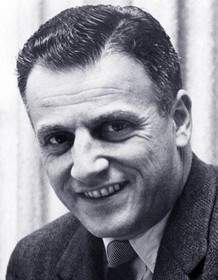
Stanley Kramer
Made by

Stanley Kramer Productions
Where to Watch R.P.M.
See current US streaming, rental, and purchase options for R.P.M. (1970) via JustWatch.






R.P.M. Plot Summary
Read the complete plot summary and ending explained for R.P.M. (1970). From turning points to emotional moments, uncover what really happened and why it matters.
Set against the political tremors of the 1960s, radical student activists occupy a university’s administration building with a list of 12 demands, setting off a tense showdown that tests loyalties, law, and the very idea of leadership. With President Tyler resigning under pressure, the Board of Trustees turns to a student-made shortlist of professors to take over the presidency, ultimately choosing Professor F.W.J. “Paco” Perez, Anthony Quinn, a scholar with a deep, almost familial history with the student body.
Late at night, Perez—joined by his sociology graduate student girlfriend, Ann-Margret as Rhoda—is awakened by a call from Don Keefer as Dean George Cooper, requesting a meeting. The next morning, Perez arrives on campus by motorcycle and begins the delicate task of negotiating with the activists. The 12 demands span a wide set of reforms: 20 inner-city scholarships, a reinvestment program for the college, a prohibition on military research on campus, and a push for an African American on the all-white Board of Trustees. Perez signals a willingness to deliver on the first nine, but he refuses the three he deems incompatible with his own authority—most notably the students’ right to hire and fire the faculty.
A tense clash between the movement’s leader and one of the most vocal activists sets the tone for the negotiations. The disagreement over the eighth demand reshapes it into the hiring of a black admissions officer, a concession Perez can make without surrendering institutional control. In a pivotal moment, Perez nominates Steve Dempsey, Paul Winfield, for the admissions post, and the activist accepts, seeing a path forward within the framework of the college’s governance.
Across the campus, Perez serves as a mediator between a resolute faculty and the steadfast student body while the other three demands remain unresolved. Back home, Rhoda challenges Perez’s stance, accusing him of hypocrisy and pressing him to walk the talk.
As pressure mounts, Perez informs the faculty of an audio-recorded threat: Rossiter would destroy the school’s computer hardware if the demands aren’t met. With all other options exhausted, Perez calls in law enforcement. A police squad led by Police Chief Henry J. Thatcher, Graham Jarvis, arrives and orders an evacuation within three minutes. When the activists refuse, officers breach the building, deploy tear gas, and arrest several students, marking a sharp turn toward a forceful resolution.
At the police station, Perez discovers that Rhoda has also been arrested, adding a personal sting to the political crisis. He returns to the administration building, which is now momentarily under faculty control, and signs a bail grantee, publicly defending the outcome of the rebellion. As he steps out into the street, Perez moves through the crowd only to be met with loud boos from the very activists who sparked the upheaval, a stark reminder of the complicated line between reform and consequence.
R.P.M. Timeline
Follow the complete movie timeline of R.P.M. (1970) with every major event in chronological order. Great for understanding complex plots and story progression.
Protest occupies administration building and triggers resignation
Radical students seize the administration building and present a list of 12 demands. The tense standoff unfolds against the backdrop of the 1960s political turmoil. Unable to resolve the crisis, President Tyler resigns, forcing the Board of Trustees to consider a replacement.
Board shortlists Pérez and selects Paco Perez as leader
The board considers a student-made shortlist of suggested professors to lead the university. They ultimately select Professor F. W. J. 'Paco' Perez, despite his radical beliefs, noting his close past ties with students. The choice signals a willingness to bridge student activism with leadership.
Midnight call; Pérez is named acting president
After midnight, Dean George Cooper calls Pérez and Rhoda, requesting an immediate meeting. Pérez is tapped as the acting president of the college. The call sets the stage for his temporary leadership role.
Pérez arrives on campus to take charge
The next morning, Pérez arrives on campus aboard a motorcycle to assert his presence. Students and faculty watch as the new acting president steps into the crisis. His arrival marks the formal beginning of his handling of the negotiations.
Negotiations begin; disagreements over demands
Pérez attempts to negotiate, reading the activists' 12 demands aloud. He reveals his stance by disagreeing with three demands, notably the students' right to hire and fire faculty. The negotiation sets the frame for which demands he will grant.
Pérez commits to delivering on the first nine demands
Pérez declares he will fulfill the first nine demands. The moment clarifies which goals are within reach and which require compromise. The standoff continues as the three remaining demands are left unresolved.
Conflict alters the eighth demand: black admissions officer
A brief clash between Rossiter and Steve Dempsey culminates in altering the eighth demand to hire a black admissions officer. The change reframes the path toward integrating the administration's leadership. Pérez navigates the implications as the talks proceed.
Pérez nominates Dempsey for admissions officer
Pérez nominates Steve Dempsey for the position of admissions officer, and the young Black activist accepts. This move addresses a core demand while keeping Pérez as mediator. The nomination symbolizes progress amid the tension.
Pérez mediates; Rhoda's critique at home
Pérez serves as a mediator between the faculty and the unyielding student body, attempting to bridge perspectives. Back home, Rhoda berates him for hypocrisy, highlighting personal strains created by the crisis. The tension both on campus and at home underscores the stress of leadership.
Threat to destroy campus hardware revealed
Pérez informs the faculty of an audio-recorded message indicating Rossiter will destroy the school's computer hardware if the demands aren’t met. The threat escalates the imperative to act. The faculty weighs the risk as the crisis grows more perilous.
Police intervention and mass arrests
With no options left, Pérez authorizes a police intervention led by Police Chief Thatcher. The officers storm the building, deploy tear gas, and arrest several activists. Rhoda is among the detainees, highlighting the personal cost of the confrontation.
Pérez signs bail grant and restores a fragile control
After the raid, Pérez meets with the faculty in the now under-control administration building and signs a bail grant defending the outcome. His leadership is framed as stabilization after the eruption. The outcome remains controversial among activists.
Pérez exits to a hostile crowd
Leaving the building, Pérez walks through the crowd and is loudly booed by the activists. The scene captures the mixed reception of his compromise and the tumult of the rebellion. The campus atmosphere is left unsettled as the crisis seems temporarily resolved.
R.P.M. Characters
Explore all characters from R.P.M. (1970). Get detailed profiles with their roles, arcs, and key relationships explained.
Professor F.W.J. 'Paco' Perez (Mauritz Hugo)
A respected professor with radical beliefs who is chosen to be acting president due to his close rapport with students. He attempts to negotiate with the activists and agrees to satisfy many of their demands, acting as the primary mediator between faculty and students. His leadership is tempered by personal contradictions, including his relationship with Rhoda, which adds tension to his decisions. He ultimately authorizes a police intervention when negotiations fail.
Rhoda (Ann-Margret)
A sociology graduate student and Perez's girlfriend who sits at the center of his personal life and professional choices. She challenges Perez on his actions and hypocrisy, highlighting the personal cost of political leadership. Her arrest alongside Perez underscores the risks faced by those within the activist milieu.
Rossiter (Gary Lockwood)
The leader of the student activists, pushy and uncompromising in pushing a list of demands. He drives the conflict and influences decisions, including the controversial move to hire a black admissions officer. His confrontational stance makes him a central antagonist in Pérez's mediation efforts.
Steve Dempsey (Paul Winfield)
A young black activist who becomes a pivotal figure in the negotiation process, ultimately accepting the role of black admissions officer as part of the compromise. His willingness to engage in institutional reform marks a hopeful turn in the campus politics depicted. He embodies the push for representation within the university system.
Dean George Cooper (Don Keefer)
A university administrator who initiates contact with Perez and represents the administrative response to the occupation. His role helps catalyze the sequence of events leading to Perez's appointment and the eventual decision to deploy police intervention. He embodies the procedural perspective of the crisis.
Police Chief Henry J. Thatcher (Graham Jarvis)
The police chief who orders the invasion of the occupied building and the use of tear gas, representing the hard line taken by authorities. His leadership style emphasizes decisive action and control in the face of civil unrest. The intervention sheers the line between negotiation and force.
Tyler (John Zaremba)
The university president who resigns, setting the crisis in motion as the Board contemplates a new leadership. Tyler's departure creates a vacancy that catalyzes Perez's rise and the boardroom negotiations that follow. He represents the old guard and institutional upheaval.
Perry Howard (Donald Moffat)
A campus figure whose exact role in the crisis is not detailed in the summary, but who participates in the unfolding events as part of the college community. His presence signals the broader administrative engagement in the student uprising.
Glenn Dixon (Trustee)
A member of the Board of Trustees who participates in the governance response to the occupation and the consideration of Perez as acting president. His stance reflects the institutional perspective on reform and authority.
George Denormand (Trustee)
Another trustee involved in the deliberations surrounding the leadership transition. Denormand's presence illustrates the board’s centripetal force in shaping the university's response to student demands.
R.P.M. Settings
Learn where and when R.P.M. (1970) takes place. Explore the film’s settings, era, and how they shape the narrative.
Time period
Late 1960s
The story is set during a period of intense student activism and broader social upheaval in the 1960s. It captures the mood of political turmoil, demands for reforms, and debates over authority and change on college campuses. The era's tensions drive the actions of students, administrators, and security forces alike.
Location
University campus, Administration Building
The events unfold on a university campus centered around the administration building, a focal point for student protest and negotiation. The campus environment is depicted as a pressure cooker where academic ideals collide with political demands. The administration's rooms and corridors become stages for dialogue, confrontation, and strategic power plays.
R.P.M. Themes
Discover the main themes in R.P.M. (1970). Analyze the deeper meanings, emotional layers, and social commentary behind the film.
🧭
Leadership
Professor Perez is thrust into acting presidency amid crisis, forcing him to balance radical ideals with institutional duty. His leadership is tested by conflicting demands from students and faculty, revealing how charisma can carry responsibility yet also invite scrutiny. The narrative explores what it means to lead in a time of upheaval, and how personal beliefs shape public decisions.
🗣️
Negotiation
Much of the plot centers on bargaining and dialogue between the administration and student activists. Perez mediates between factions, navigating demands such as scholarships and representation while trying to avert escalation. The film examines the limits of negotiation when core demands threaten the status quo, and the cost of compromise.
🔥
Protest and Repression
Student activists occupy the administration building, signaling a power struggle that pits idealism against law enforcement. The occupation leads to tear gas, arrests, and a police-led intervention, illustrating how protest can provoke a heavy-handed response. The clash mirrors 1960s campus unrest and the broader debate over authority and civil disobedience.

Coming soon on iOS and Android
The Plot Explained Mobile App
From blockbusters to hidden gems — dive into movie stories anytime, anywhere. Save your favorites, discover plots faster, and never miss a twist again.
Sign up to be the first to know when we launch. Your email stays private — always.
Explore the mobile appR.P.M. Spoiler-Free Summary
Discover the spoiler-free summary of R.P.M. (1970). Get a concise overview without any spoilers.
In the fevered atmosphere of a West‑coast university during the late 1960s, the campus pulses with the era’s restless energy. Student activists have taken the administration building, their demands a shorthand for the broader cultural and political battles raging across the nation—scholarships for inner‑city youth, a halt to military research, and a call for greater racial representation. The university, a microcosm of a society on the brink, balances on a razor‑thin line between scholarly tradition and the explosive momentum of a new generation demanding change.
Professor F.W.J. “Paco” Perez—a charismatic liberal scholar whose reputation for championing student causes has made him both beloved and respected—finds himself thrust into an unexpected role when the incumbent president resigns under pressure. Suddenly, the very institution he has taught within expects him to steer the ship through stormy waters. Beside him stands his graduate‑student partner Rhoda, whose own convictions and relationship with Perez add a personal layer to the mounting public drama, hinting at the inevitable clash between idealism and the burdens of authority.
The film immerses viewers in a world where lecture halls echo with protest slogans and faculty offices feel like command centers. Its tone blends the intellectual gravity of academia with the raw, kinetic spirit of a revolutionary moment, creating a charged backdrop for a story about leadership, compromise, and the cost of principle. As Perez navigates the tangled web of faculty expectations, student fervor, and looming external pressures, the narrative teases a pivotal choice: to impose order and preserve the campus’s stability, or to let the revolutionary fervor run its course, risking chaos for the sake of transformation. This tension—both personal and political—sets the stage for a compelling exploration of power, responsibility, and the volatile promise of change.
Movies with Similar Twists and Themes
Uncover films that echo the narrative beats, emotional arcs, or dramatic twists of the one you're exploring. These recommendations are handpicked based on story depth, thematic resonance, and spoiler-worthy moments — perfect for fans who crave more of the same intrigue.



Featured on this page

What's After the Movie?
Not sure whether to stay after the credits? Find out!
Check out our other apps:

SAT Sphere
Build confidence for the Digital SAT.

Mori Atlas
Discover wild places worth protecting.

Luntero
Search smarter for a home in Amsterdam.

Plot Explained
Unravel movie endings and hidden clues.

Pokechamp
Dive into Pokémon data and battle logic.

Driving Theory
Get ready for your European theory test.

Movie Dust
Plan your next cinema trip with ease.

Musemap
Find art and culture as you travel.

Selkobase
Compare credentials before committing.

Local Manual
Turn an unfamiliar country into practical next steps.

Lernavi
Compare school systems before your next move.

GymRoam
Find a workout stop wherever your plans take you.
Explore Our Movie Platform
New Movie Releases (2026)
Famous Movie Actors
Top Film Production Studios
Movie Plot Summaries & Endings
Major Movie Awards & Winners
Best Concert Films & Music Documentaries
Movie Collections and Curated Lists
© 2026 What's After the Movie. All rights reserved.
Privacy Policy