
Rasputin and the Empress 1932

Directed by

Richard Boleslawski
Made by

Metro-Goldwyn-Mayer
Where to Watch Rasputin and the Empress
See current US streaming, rental, and purchase options for Rasputin and the Empress (1932) via JustWatch.






Rasputin and the Empress Plot Summary
Read the complete plot summary and ending explained for Rasputin and the Empress (1932). From turning points to emotional moments, uncover what really happened and why it matters.
In a largely fictionalized portrait of the fading days of the Russian Empire, the film centers on the court around Czar Nicholas II and Czarina Alexandra as unrest and reformist pressure loom over the throne. At the heart of the drama stands Prince Paul Chegodieff, a reform-minded royal who distrusts the suffering of the common people and senses that a revolution could be near. His growing concern for the country’s future collides with the charisma and menace of a mysterious healer who soon enters the palace.
When the royal heir, Alexei, battles a life-threatening bleed caused by hemophilia, the imperial physician Dr. Remezov struggles to keep the boy alive. Alexandra’s confidante and Paul’s fiancée, Princess Natasha, brings forth Rasputin as a healer, and the enigmatic figure swiftly convinces the Empress that he has been sent by God to cure the child. Rasputin’s bedside presence is more than relief for the family: it marks the beginning of his growing influence. With the boy’s pain eased, the monk’s hold on the parents deepens, and he begins shaping the court to suit his own aims.
As Rasputin’s power widens, he orchestrates a subtle reshuffling of loyalties, aided by the head of the secret police, a man who fears for his own job and increasingly leans on the mystic’s protection. With access to police dossiers and a talent for blackmail, Rasputin accelerates his rise, weaving himself into the fabric of state decisions and undermining Paul’s authority. The atmosphere intensifies as the Crown’s inner circle becomes divided between those who fear Rasputin’s sway and others who still cling to Natasha’s faith in him.
The tension peaks when Paul, deeply alarmed by Rasputin’s growing control, attempts to neutralize the threat. He confronts Rasputin with desperate boldness, aided by his ally Dr. Remezov, but Rasputin proves nearly untouchable—he wears a hidden metal breastplate that foils the assassination. After the failed bid, Nicholas is compelled to resign Paul’s position, exposing the precarious balance of power within the monarchy.
The political crisis widens as Germany issues an ultimatum on Russia’s mobilization, and Rasputin persuades Nicholas to reject it, tipping the country toward war. The looming catastrophe of a broader conflict looms over the empire, and Rasputin’s influence becomes a proximate force in history. Meanwhile, Rasputin begins testing his control over Alexandra’s family, setting his sights on Maria, Alexandra’s daughter, in a move that further unsettles Natasha, who fears for her place at court.
A dramatic confrontation unfolds at a grand party where Rasputin is the guest of honor. The room tightens with suspicion as a servant who once served Paul returns, and a house raid uncovers Paul and Dr. Remezov. Rasputin makes his move to silence Paul personally. Paul taunts him, claiming the Tobolsk cakes meant for Rasputin were laced with poison, and a brutal struggle follows. Rasputin, bloodied but unbroken, rises to challenge Paul with a chilling assertion: “If he dies, Russia will die.” The struggle ends with Paul dragged into the snow and cast into a river, a stark turning point in the court’s fate. Natasha witnesses the brutal exchange, and Alexei is freed from the hypnotic trance, returning to his mother’s side.
With Paul exiled and Rasputin’s minions still lurking in key positions, the empire’s fate seems sealed. Rasputin’s ominous prophecy shadows the court as the Czar’s regime buckles under pressure, and the end comes in a fashion that mirrors the chaos of the era: the Czar and his family are executed by the Bolsheviks, their deaths marking the collapse of the old order. A final, stark image lingers—the light behind a cross and the Russian National Anthem swell—yet the choir shifts to a different ordinal: an English hymn that closes with a plea for peace, “Give Us Peace in Our Time, Oh Lord.”
The film traverses a complex web of loyalties, seduction, and political maneuvering, all while keeping a firm, if dramatic, focus on the human costs of power. The characters are drawn with a blend of reverence and critical distance, presenting Rasputin not merely as a villain or savior, but as a magnet for power who thrives on fear, faith, and ambition. The performances—anchored by Rasputin and Czar Nicholas II—lend the narrative a sense of historical fever, even as the plot insists on staying rooted in the emotional stakes of a family under siege.
Overall, the story remains a sweeping, emotionally charged panorama of a doomed dynasty, where the lines between piety and manipulation blur, and where one man’s influence can tilt an entire nation toward catastrophe. The ending leaves viewers with a haunting meditation on the cost of power, the fragility of a collapsing empire, and the enduring human desire for peace in tumultuous times.
Rasputin and the Empress Timeline
Follow the complete movie timeline of Rasputin and the Empress (1932) with every major event in chronological order. Great for understanding complex plots and story progression.
Prince Paul senses brewing revolution
In the waning years of Czar Nicholas II's reign, Prince Paul grows increasingly worried about the plight of the common people and the likelihood of a coming revolution. He voices concern to reform-minded colleagues and tries to read the growing unrest behind the palace walls. The imperial court begins to feel the pressure of a society on edge.
Alexei's hemophilia threatens the throne
Crown Prince Alexei suffers from a dangerous hemophilia, and a seemingly minor fall could be life threatening. The royal doctors admit their limits, leaving the Empress and court desperate for a miracle. The fate of the dynasty hinges on Alexei's fragile health.
Natasha recommends Rasputin; Rasputin calms Alexei
Natasha, Alexandra's lady-in-waiting and Paul's fiancée, suggests Rasputin as a healer for the ailing prince. Rasputin convinces the frantic Empress that he has been sent by God to cure Alexei. Alone with the boy, he hypnotizes him and eases his pain, gaining a dangerous psychological hold.
Rasputin expands his influence at court
With the prince's relief, Rasputin begins replacing loyalists with his own men, tightening his grip on the family's inner circle. He leverages the Empress's trust to push his allies into power. The imperial administration becomes increasingly dependent on him.
The secret police ally with Rasputin
The new ally, the head of the secret police, fears about his job and seeks Rasputin's protection. Using police dossiers, Rasputin starts blackmailing rivals and expanding his influence. The security apparatus effectively serves his aims.
Paul shoots Rasputin; Rasputin survives
Paul confronts Rasputin and shoots him after Natasha warns of an assassination attempt. Rasputin survives due to a hidden metal breastplate, leaving the killer and the court stunned. The attempted murder exposes the depth of Rasputin's immunity within the palace.
Paul resigns under imperial pressure
Nicholas forces Paul to resign after admitting the attempt on Rasputin's life. The resignation marks a shift in power, but Rasputin's influence remains intact. Natasha's loyalty to Rasputin complicates the political balance further.
Germany's ultimatum and Russia's path to war
On the brink of a broader war, Germany issues an ultimatum demanding Russia stop mobilization. The Tsar's advisers are divided, and Rasputin sways Nicholas to reject the ultimatum. The decision propels Russia toward World War I.
Rasputin pursues Maria; Natasha confronts him
Rasputin begins making subtle advances on Grand Duchess Maria, Alexandra's daughter, inflaming Natasha's fury. Natasha accuses him, but Rasputin's hold on Alexandra's faith deepens. Alexandra's late entrance interrupts Natasha's outburst, allowing the truth to surface.
Rasputin's boast and the Empress' resolve
Rasputin boasts that he now wields de facto power, alarming the Empress and the court. Desperate, she sends for Paul, who swears he knows what to do. The palace atmosphere thickens with fear as Rasputin's grip appears unbreakable.
The grand party and the discovery
At a lavish party where Rasputin is honored, the palace is searched for enemies. They discover Paul and Dr. Remezov hiding within the house. The atmosphere is tense as the circle narrows around Rasputin's foes.
The cellar confrontation and murder attempt
Rasputin is taken to the cellar to be killed by Paul, who taunts him with the idea that poisoned cakes hid the truth. Rasputin refuses to die, proclaiming that if he dies, Russia will die. The struggle ends with Paul forcibly dragging Rasputin toward the river, beginning the final downfall.
Paul exiled; Alexei freed; Rasputin's minions endure
After Rasputin's near-murder, Alexei is freed from the trance and clings to his mother. Nicholas orders Paul into exile as Rasputin's faction remains powerful at court. The old order survives in the shadows while the reformist threads fray.
The empire falls; the royal family is killed
Rasputin's prophecies appear fulfilled as the empire collapses and the czar's family is shot by the Bolsheviks. The revolution redounds through Russia, ending the dynasty's rule. The final tragedy echoes the doomed prophecy of the old charlatan.
Closing image: cross, anthem, and peace
In the closing moments, a light blazes behind a cross as the Russian anthem rises. The choir's English hymn at the end casts a somber note, lingering on the desire for peace amid ruin. The film closes on a note of tragic memory rather than triumph.
Rasputin and the Empress Characters
Explore all characters from Rasputin and the Empress (1932). Get detailed profiles with their roles, arcs, and key relationships explained.
Rasputin (Lionel Barrymore)
A charismatic healer who manipulates the royal family and ascends to a de facto power behind the throne. Through hypnotic influence, blackmail, and strategic alliances, he reshapes court loyalties and undermines official channels. His presence provokes fear, fascination, and a dangerous concentration of influence at the imperial center.
Princess Natasha (Diana Wynyard)
Alexandra's lady-in-waiting and Paul’s fiancée, she believes in Rasputin’s beneficence for the heir and the empire. Natasha warns Paul of Rasputin's growing power, illustrating the divisions within the royal circle. She reacts with fury when Rasputin's advances threaten her own family’s standing and sequence of loyalties.
Prince Paul Chegodieff (John Barrymore)
A reform-minded noble uneasy with Rasputin’s interference, he becomes a central antagonist to Rasputin’s influence. He schemes to remove Rasputin, culminating in an assassination attempt that triggers a dangerous power struggle. His actions force critical political choices that contribute to the monarchy’s unraveling.
Czar Nicholas II (Ralph Morgan)
The autocratic ruler torn between reformist pressures and Rasputin's growing hold over the court. He is portrayed as being pulled by rival factions and unable to fully control the palace intrigue, which accelerates the empire’s decline. His decisions, and the pressures around him, set the stage for the looming catastrophe.
Czarina Alexandra (Ethel Barrymore)
The Empress who trusts Natasha and Rasputin, remaining loyal to her confidants despite mounting evidence of manipulation. Her faith in Natasha’s account of Rasputin's influence reinforces the palace’s internal divide. She navigates the crisis with a mix of devotion and political peril, ultimately becoming a conduit for Rasputin’s continued reach.
Princess Maria (Jean Parker)
Alexandra's daughter who becomes a focal point in Rasputin’s calculated advances. Rasputin’s attention toward Maria signals the deeper entanglement of personal desires with political power at the court. Natasha’s reaction to these developments underscores the tension between personal loyalty and political allegiance.
Rasputin and the Empress Settings
Learn where and when Rasputin and the Empress (1932) takes place. Explore the film’s settings, era, and how they shape the narrative.
Time period
Early 20th century, pre-World War I
The events unfold during the final years of Nicholas II's reign, a period of mounting unrest and ceremonial constraint. Rasputin's influence grows as the empire faces internal reform pressures and external tensions. The plot escalates toward World War I, culminating in revolutionary upheaval and the collapse of the imperial order.
Location
Russian Empire, Imperial Court (St. Petersburg)
Set in the Russian Empire, the story centers on the royal court and its opulent palaces. The imperial capital and its ceremonial life provide the backdrop for a palace drama driven by loyalties, power, and secrecy. Intrigue at court and the Emperor's entourage set the stage for a regime teetering on the brink of collapse.
Rasputin and the Empress Themes
Discover the main themes in Rasputin and the Empress (1932). Analyze the deeper meanings, emotional layers, and social commentary behind the film.
👑
Power
Rasputin's rise demonstrates how charisma and access to political dossiers can tilt the balance of power at court. He leverages hypnosis, blackmail, and loyalists to consolidate influence over the Emperor and Empress. The monarchy's institutions falter as personal power supplants official authority. The narrative links personal dominance to looming national crisis.
🔮
Fate
Rasputin is framed as a quasi-prophetic figure who claims divine guidance and shapes events to his will. Natasha's faith in him contrasts with Paul’s determination to curb his reach, highlighting opposing loyalties within the palace. The story traverses near-death experiences and a sense that fate and catastrophe are intertwined. The outcome suggests that prophecy and political ruin are inseparable.
⚔️
Revolution
Internal power struggles destabilize the monarchy as reformist factions clash with entrenched autocracy. Attempts to remove Rasputin intensify factionalism, exposing the fragility of the imperial system. The tension culminates in war and revolution, ending with the Bolshevik takeover and the execution of the ruling family.

Coming soon on iOS and Android
The Plot Explained Mobile App
From blockbusters to hidden gems — dive into movie stories anytime, anywhere. Save your favorites, discover plots faster, and never miss a twist again.
Sign up to be the first to know when we launch. Your email stays private — always.
Explore the mobile appRasputin and the Empress Spoiler-Free Summary
Discover the spoiler-free summary of Rasputin and the Empress (1932). Get a concise overview without any spoilers.
In the waning twilight of the Russian Empire, the opulent yet uneasy world of the Romanov court is suffused with a palpable sense of impending change. Snow‑capped palaces stand against a backdrop of restless streets, where whispers of reform and revolution mingle with the lingering perfume of incense and candlelight. The film’s visual palette is rich in deep reds and cold blues, creating a mood that is both decadent and foreboding, as the grandeur of imperial ceremony is constantly shadowed by the tightening grip of uncertainty.
Grigori Rasputin arrives as a magnetic presence, a mystic healer whose penetrating charisma both comforts and unsettles those around him. Prince Paul Chegodieff embodies a younger, reform‑driven strand of royalty, uneasy with the suffering of the masses and wary of the court’s inertia. At the throne sit Czar Nicholas II and his devout wife Czarina Alexandra, whose faith in the enigmatic healer deepens the court’s internal tension. Their son, Alexei, lives under the specter of a fragile health condition, while his sister Maria remains a quiet focal point of familial affection. Princess Natasha, Paul’s fiancée and close confidante of the Empress, stands at the crossroads of loyalty and doubt, and Dr. Remezov, the imperial physician, provides a rational counterpoint to the spiritual allure that pervades the palace corridors.
The narrative weaves these figures together through a tapestry of intrigue, where personal ambition, religious fervor, and political maneuvering intersect. The atmosphere is one of whispered conspiracies and careful glances, each character navigating the fine line between duty and desire. As alliances shift and the allure of Rasputin’s promises grows, the court becomes a pressure cooker of hidden motives, setting the stage for a drama that balances lavish historical spectacle with the intimate, human cost of power.
Movies with Similar Twists and Themes
Uncover films that echo the narrative beats, emotional arcs, or dramatic twists of the one you're exploring. These recommendations are handpicked based on story depth, thematic resonance, and spoiler-worthy moments — perfect for fans who crave more of the same intrigue.
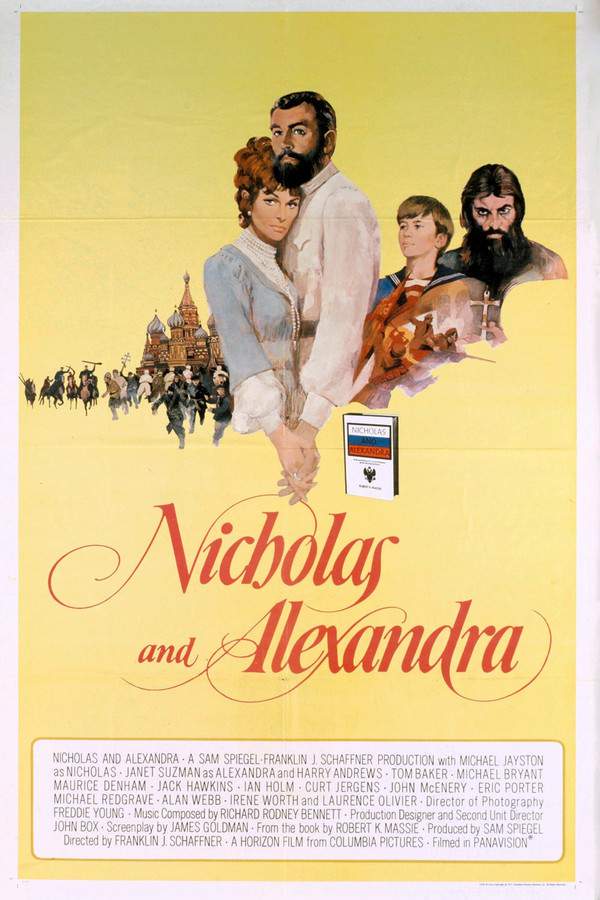


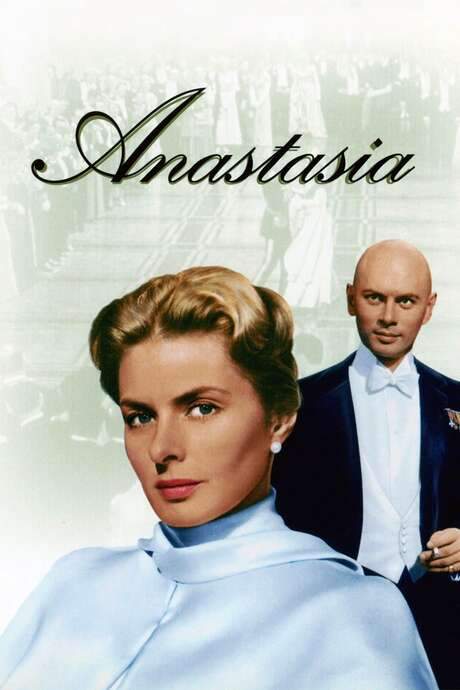
Featured on this page

What's After the Movie?
Not sure whether to stay after the credits? Find out!
Check out our other apps:

SAT Sphere
Build confidence for the Digital SAT.

Mori Atlas
Discover wild places worth protecting.

Luntero
Search smarter for a home in Amsterdam.

Plot Explained
Unravel movie endings and hidden clues.

Pokechamp
Dive into Pokémon data and battle logic.

Driving Theory
Get ready for your European theory test.

Movie Dust
Plan your next cinema trip with ease.

Musemap
Find art and culture as you travel.

Selkobase
Compare credentials before committing.

Local Manual
Turn an unfamiliar country into practical next steps.

Lernavi
Compare school systems before your next move.

GymRoam
Find a workout stop wherever your plans take you.
Explore Our Movie Platform
New Movie Releases (2026)
Famous Movie Actors
Top Film Production Studios
Movie Plot Summaries & Endings
Major Movie Awards & Winners
Best Concert Films & Music Documentaries
Movie Collections and Curated Lists
© 2026 What's After the Movie. All rights reserved.
Privacy Policy