What Is Polar Bear About?
The premise of Polar Bear in 309 words, with nothing given away. The full story follows below.
In the stark, ever‑shifting landscape of the Arctic, the ice that once stretched endlessly beneath a crisp blue sky is giving way to open water and fragile floes. The documentary captures this quiet transformation with a poetic eye, pairing sweeping aerial shots of a frozen world in retreat with intimate close‑ups of its most iconic resident. Through a measured, lyrical narration, the film invites viewers to feel the cold air, hear the crack of shifting ice, and sense the weight of a climate that is changing faster than any creature can adapt.
At the heart of the story is the mother, a seasoned polar bear whose life is defined by instinct, resilience, and an unyielding devotion to her young. Her daily rhythm—searching for food, guarding against unseen threats, and teaching survival skills—mirrors the larger struggle of her species. Beside her moves the cub, a curious and eager learner whose eyes reflect both the wonder of a boundless wilderness and the uncertainty that comes with a world reshaped by rising temperatures.
The film’s tone balances stark realism with quiet optimism, offering moments of tender connection amid the harsh Arctic backdrop. As the pair navigate shifting sea ice, occasional encounters with other bears hint at the complex social web that underlies the predator‑prey balance, while the sparse and beautiful soundscape underscores both isolation and the subtle interdependence of life in this extreme environment. The audience is drawn into the subtle choreography of survival, feeling the tension between ancient survival tactics and the new challenges imposed by a warming planet.
Through its immersive cinematography and respectful storytelling, the documentary shines a light on the enduring spirit of these majestic animals. It leaves viewers contemplating the fragile beauty of the Arctic and the responsibility we share to protect a habitat that, while imperiled, still holds the promise of continuity for generations to come.
What Happens in Polar Bear?
The complete story of Polar Bear, from the first scene to the last, in 468 words (about 2 minutes). Spoilers throughout. Names in the text link to 1 cast member page.
Spoilers ahead
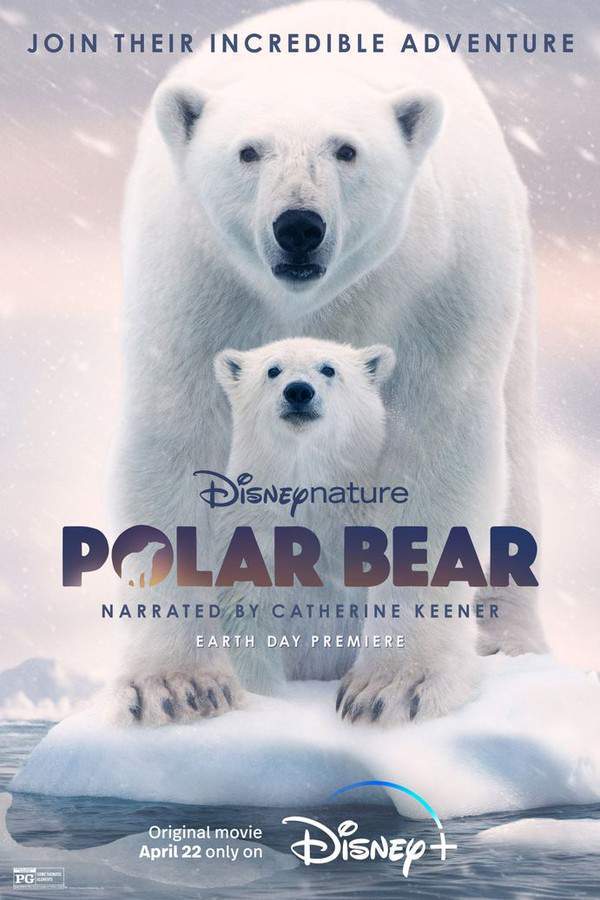
Through a patient, almost meditative lens, this film traces a mother polar bear and her cub as they swim through waters that were once solid Arctic ice, following the bear’s story from her youth to the moment she becomes a mother herself. The tale unfolds with the calm cadence of nature observing itself, narrated by the Catherine Keener in a voice that feels as ancient as the ice it describes.
From early days, the cub grows up under the protective shadow of her mother, learning the rhythms of life in a world where every hunt and every risk matters. She recalls the glow and danger of the hunt as the family moves through a landscape where seals are pursued and guarded by the watchful mother. Along the way, they encounter a dead whale, a stark reminder of the feast-or-famine cycle that sustains many residents of the Arctic, and they, along with other bears, partake in the rich, fleeting bounty it offers.
Tragedy shapes her childhood when the twin brother dies, leaving just the daughter and her mother to carry on. In the wake of loss, the cub proves herself capable, even when foreshadowed by scarcity; she successfully hunts a baby walrus abandoned by a panicked mother, a moment that underscores her growing independence. After this, the mother acknowledges that it’s time to stand on her own once more and departs, pushing the cub to face the increasingly hostile and changing environment on her own.
Years drift by with little sign of another ice bear in sight, until a new encounter changes the course of their lives. The young bear meets a male of similar age, and they share a day of playful companionship. As the moment ends, she senses she is being watched by a larger male. What she initially fears as a threat reveals itself to be a courtship, a reminder that risk and romance can coexist even in the harsh Arctic. After the encounter, the two go their separate ways, and the polar bear soon becomes a mother herself, giving birth to a single cub.
In the present day, the mother and daughter navigate the rapidly shrinking Arctic, their survival a quiet testament to resilience. The mother looks ahead with a hopeful yet cautious eye, hoping her daughter will grow into a strong ice bear and wondering what kind of world her cub will call home as ice gives way to open water and changing seasons.
The film closes with a stark, urgent message about the future of the Arctic: the ice could vanish by the summer of 2040, and the choices we make today can positively shape the fate of polar bears.
The Arctic could be ice-free by the summer of 2040, the actions we take today can positively change the future of polar bears.
Polar Bear Timeline: Every Key Event in Order
12 key events in the order they happen, from “Life with the cubs begins” to “Closing message about the Arctic”. 12 events name a place, across 12 locations.
- 1
Life with the cubs begins
She and her cub swim across waters that used to be solid ice, navigating a landscape in flux. The mother keeps a watchful eye on her vulnerable offspring while teaching them how to hunt and stay safe. They share moments of play and struggle, with the threat of male polar bears looming.
When:early youth Where:Arctic Tundra - ice edge
- 2
Loss of the brother
One day the polar bear's brother dies, leaving the young cub and her mother to face a harsher reality. The loss tests their bond as they must rely on each other to survive. The mother remains protective, guiding the survivor through the dangers of the shrinking ice.
When:early childhood Where:Arctic coast
- 3
Feast around a dead whale
The two bears, along with many others, feast on a stranded whale, a moment of abundance in a world of scarcity. The feast showcases the communal aspect of survival and the seasonal rhythms of the Arctic. They learn to read the signs of food sources.
When:shortly after death Where:Dead whale site, Arctic waters
- 4
A successful hunt of a baby walrus
The mother uses her skills to hunt a baby walrus abandoned by its panicked mother. They feed and strengthen themselves as the Arctic food chain continues to function. The event foreshadows the mother’s independence in the years ahead.
When:after whale feast Where:Walrus haul-out
- 5
Departure to fend for herself
The mother recognizes it’s time to fend for herself again and departs, leaving the cub to grow and adapt on her own. This moment marks a turning point in the cub's life as she learns to rely on her wits.
When:after early youth Where:Arctic ice edge
- 6
Years pass without another ice bear
The cub grows and spends years without seeing another polar bear, navigating a world where the ice is thinning. She learns to survive through seasons of scarcity, always keeping the memory of her mother as guidance. The isolation underscores the long-term effects of a changing Arctic.
When:years later Where:Open Arctic waters, shrinking ice
- 7
A chance meeting with a male his age
Eventually she meets another male roughly her age and they spend a day playing together. Their encounter hints at companionship and the possibility of offspring in a world of uncertainty.
When:some time later in youth Where:Ice pack territory
- 8
The chase becomes courtship
As the big male lingers after play, the cub realizes he isn't there to threaten but to court. The two separate amicably, and the female senses a new chance for family.
When:after the encounter Where:Arctic waters
- 9
Becoming a mother
The polar bear becomes a mother to one cub, marking a new family unit. She forms a strong bond with her cub, guided by lessons learned in hardship. The presence of a partner hints at shared responsibilities as they prepare to survive together.
When:post-encounter Where:Den site, Arctic
- 10
Present-day survival
In the present day, mother and daughter continue to survive in a rapidly disappearing Arctic. They face ongoing threats from shrinking habitat and climate change as they navigate each season.
When:present day Where:Arctic region
- 11
Concern for the daughter's future home
The mother worries about what kind of world her daughter will call home as the ice recedes and ecosystems shift. She imparts lessons of resilience and adaptability even as uncertainty grows.
When:present day Where:Arctic shorelines
- 12
Closing message about the Arctic
The film closes with a stark message about the Arctic potentially being ice-free by 2040, underscoring that actions taken today can positively change the future of polar bears.
When:finale Where:Screen text
Who Are the Main Characters in Polar Bear?
4 characters, among them Narrator (Catherine Keener), Mother polar bear and Cub: who each one is and the part they play in the story. 1 of them link to the actor’s page.
-

Narrator (Catherine Keener)
Played by Catherine Keener
The Narrator guides viewers through the bear family's journey, offering reflections on life, loss, and resilience in the Arctic. Her calm narration links intimate moments of motherhood and survival to broader ecological themes. Through her voice, the audience gains perspective on the fragility of the ice and the costs of a warming world.
- 🐾 Narration
- 🌍 Environmental perspective
- 🎭 Reflective
- MP
Mother polar bear
A protective and resourceful matriarch who navigates threats and scarcity to keep her cub alive. She uses hunting skills and careful decisions to safeguard their future. Her strength and tenderness frame the emotional core of the film.
- 🐻 Protective
- 🧭 Wise
- 🧊 Arctic survivor
- C
Cub
An inquisitive young polar bear learning to survive, whose life is shaped by early loss—the death of its twin brother—and by the mother’s guidance. The cub’s curiosity drives exploration and risk, yet it shows resilience in the face of hardship.
- 🐾 Learner
- 🐻 Curious
- 🧭 Resilient
- MP
Male polar bear
A larger male initially appears as a threat, but later enters a moment of courtship, revealing the polar bear’s mating dynamics. His presence introduces tension and suggests cycles of life that continue beyond immediate danger.
- 🐻 Threat
- 💞 Courtship
- 🧭 Dominant
Where and When Is Polar Bear Set?
Polar Bear is set in Arctic Tundra and Arctic waters (21st century, present day to near-future (2040 projection)). Here is why the time and place matter to the story.
When
21st century, present day to near-future (2040 projection)
The story tracks the cub's youth into present times, placing the events in the modern era with a looming near-future. It highlights a warming Arctic where sea ice is retreating and traditional hunting grounds shift. The narrative draws a line between intimate family moments and large-scale environmental change. The film ends with a message that the Arctic could be ice-free by the summer of 2040, urging viewers to consider the impact of today’s actions on polar bears' future.
Where
Arctic Tundra, Arctic waters
Set against the cold, expansive Arctic tundra and the surrounding icy seas, the film follows mother polar bears as they navigate shifting floes and hunting grounds. The environment is characterized by bleak beauty, with ice that can crack under pressure and seas that open and close with the seasons. The setting underscores a fragile habitat increasingly affected by warming temperatures and thinning sea ice.
- ❄️ Arctic
- 🐻 Wildlife
- 🌊 Climate change
What Are the Themes of Polar Bear?
3 ideas the story keeps returning to, among them Family & Motherhood, Climate Change and Survival & Adaptation.
-
01
Family & Motherhood
Central to the story is the bond between the mother and her cub. The mother protects, teaches, and sacrifices to keep the cub safe from threats and scarcity. The loss of the cub's twin brother deepens the emotional stakes and highlights the fragility of life on the ice. The theme explores how kinship and nurture shape resilience in a brutal environment.
-
02
Climate Change
Melting ice, shrinking habitats, and shifting prey drive the characters' choices and risks. The Arctic setting serves as a stark reminder of the broader environmental crisis affecting wildlife. The film links intimate moments to the larger context, showing how climate change presses on survival. The closing note reinforces urgency: the ice could disappear in the near future.
-
03
Survival & Adaptation
Facing thinning ice and new hunting challenges, the mother and cub adapt their strategies to find food and shelter. They encounter both dangers and opportunities in a world of shifting seasons. The cub learns essential survival skills, from stalking prey to reading ice conditions. The narrative emphasizes resilience and the need to adapt to a changing landscape.
What Kind of Film Is Polar Bear?
Bittersweet in tone, with steady pacing and a straightforward story, going by the plot summary.
- Tone
- Bittersweet
- Pacing
- Steady
- Story
- Straightforward
- Intensity
- Medium
- Ending
- Bittersweet
A steady-paced, bittersweet nature documentary that inspires awe for polar bear resilience while delivering a melancholic warning about the fragility of their habitat.
- contemplative
- awe-inspiring
- melancholic
- resilient
- somber
- hopeful
- motherhood
- survival
- climate change
- nature documentary
Content notes: animal death, child endangerment.
Quiz
How well do you remember Polar Bear? Test yourself on the story.