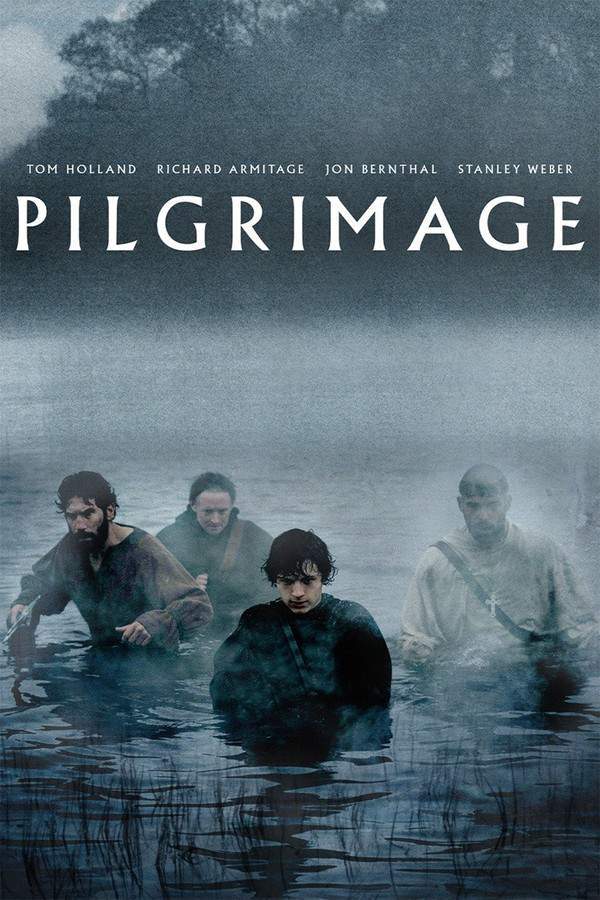
Pilgrimage 2017


Directed by

Brendan Muldowney
Made by

RLJ Entertainment
Where to Watch Pilgrimage
See current US streaming, rental, and purchase options for Pilgrimage (2017) via JustWatch.

AMC Plus Apple TV channel
HD
AMC+ Amazon Channel
HD
Philo
HD
Sundance Now
HD
Hoopla
SD
Pluto TV
SD
The Roku Channel
HD
Amazon Video
SD
Apple TV Store
HD
Fandango At Home
SD
Google Play Movies
SD
YouTube
SD Streaming availability powered by 
Pilgrimage Plot Summary
Read the complete plot summary and ending explained for Pilgrimage (2017). From turning points to emotional moments, uncover what really happened and why it matters.
In AD 55 Cappadocia, Saint Matthias is dragged in chains by a crowd to be stoned to death, and just as the last stone is about to fly, a crack of lightning shatters the moment, hinting at a power beyond the ordinary.
Fast forward to 1209, in storm-wattered Ireland, where a French Cistercian monk named Frère Geraldus arrives at a remote monastery with a papal charter. The goal is stark and dangerous: to embark on a pilgrimage that will transport their holiest relic to Rome, in the hope that it will bolster the upcoming Fifth Crusade. The monks reluctantly agree, clinging to legend that the relic’s holy power will purge those who lack purity. Among the small band are a multilingual Brother Ciarán and a novice named Diarmuid, joined by a mute laborer. A rainstorm erupts as they travel, and the golden reliquary is struck by lightning but remains unscathed, reinforcing in their eyes the sanctity and power of what they carry.
The Irish landscape is volatile: Norman forces sweep through Gaelic lands, and Geraldus bears the burden of protecting the pilgrims. They reach a Norman encampment led by Baron de Merville, who believes aiding the pilgrims could grant him absolution for cruel acts committed as a crusader. The monks are unsettled by the violence surrounding the Baron’s camp, especially by the Baron’s son, Raymond de Merville. Geraldus argues that a measure of protection, though harsh, is a necessary evil for their sacred mission. Hidden within the convoy is the shocking truth: the reliquary does not contain the remains of Matthias, but the very stone used to martyr him; the pope imagines its power will fuel a crusade.
A larger caravan, now under Raymond’s command, escorts the monks toward a waiting boat in Waterford. The languages of the group are discordant—Raymond speaks French and the mute labourer seems to be known only to those who speak his tongue—while Brother Ciarán alone communicates in French, leaving the others in the dark about some of the tensions beneath the surface. A brutal setback arises when a bridge is found burned and its guards dead, prompting Raymond to chase after the attackers, leaving a slim guard to watch over the monks.
Ambush follows ambush as Gaelic warriors strike, slaughtering soldiers and monks. The Mute cries out a protective instinct as a sling stone strikes and knocks him unconscious, but he later reawakens with a fallen sword in hand, slaying Gaels and even killing their chieftain. Geraldus interprets this brutal, violent defense as holy wrath on the Gaels for desecrating the relic, and the two young monks, Diarmuid and Cathal, witness a transformation of their journey into something grimmer and more perilous. They choose to pursue the relic, reasoning that it is too dangerous to wait for Raymond’s men to rescue them.
The Mute tracks the stolen cart and the missing reliquary, silently eliminating a Gaelic scout and locating the Irish camp, where Brother Ciarán is bound hostage to a tree. Diarmuid pleads to rescue Ciarán, but Geraldus insists their sacred duty lies with the relic itself, arguing that Ciarán would likely say the same if the positions were reversed. Diarmuid volunteers to slip into the camp after nightfall to reclaim the relic, even if it means leaving the ornate reliquary behind with the Gaels.
As the plan unfolds, Raymond and his lieutenants descend on the camp for the relic, revealing their true motive: they have hired the Gaels to slay the pilgrims so that King John of England can seize the relic instead of the Pope. In a quiet moment of truth, Ciarán reveals that he threw the reliquary from the cart before he and the cart were captured, urging Diarmuid to find the relic and leave him to his fate. Devastated, Diarmuid leaves his mentor to face the consequences.
The monks manage to escape as Raymond discovers the reliquary’s emptiness. Ciarán refuses to reveal its location, and Raymond kills him brutally with a grim, multi-pronged barb after Ciarán calls on Jesus. The relic’s disappearance deepens the peril, but the monks recover the empty reliquary’s hollow home and press on. Dawn breaks as horns sound in the distance, and a fog-shrouded river appears as a possible lifeline. Geraldus proclaims that the divine sign must be read as permission to continue, and the monks race toward the water, praying for deliverance.
At the river, the ferrymen bring a glimmer of hope. Geraldus proposes that the Mute should murder the ferrymen to clear a path, but Brother Cathal negotiates with the pearls he recovered from the reliquary, trading them to secure a crossing. The boat carries them toward the coast, yet the tide is too shallow to pass. Raymond and his men close in from behind, and the ferrymen, fearing their own danger, cast cargo overboard and push the boat through the shallows. Geraldus, speaking French, convinces the Mute to stall the pursuers and buy the pilgrims time to escape, arguing that God will forgive the Crusader’s sins, no matter how great.
In a brutal confrontation, the Mute fights Raymond and his soldiers. He defeats some but is ultimately overwhelmed as Raymond stabs him with a barbed prong, asking where he comes from. The Mute’s reply is stark and singular: “Hell.” He then bites Raymond’s throat, severing an artery, and advances on the remaining enemy troops with grim resolve. On the boat, Cathal reveals he was struck by the last arrow and collapses. The sound of swords clashing on the shore echoes as Geraldus explains that the relic’s power would inspire thousands to wield holy violence. Disturbed, Diarmuid hesitates at the edge of the vessel and contemplates discarding the relic. Geraldus resists, and in a final struggle, he plunges overboard with the relic as Diarmuid watches in horror.
The ferryman’s question—“Where to now?”—lingers as the survivors drift away. The camera lingers on the boat, and a supernatural light bathes the vessel, suggesting that God’s will has been fulfilled even as the fate of the relic remains ambiguous. The film closes on the quiet, unsettled note that the sacred power once believed to save may have already changed everything in unexpected, irreversible ways.
Pilgrimage Timeline
Follow the complete movie timeline of Pilgrimage (2017) with every major event in chronological order. Great for understanding complex plots and story progression.
Matthias' martyrdom interrupted by lightning
In AD 55 Cappadocia, Matthias is dragged in chains by a mob to be stoned. As the final stone is raised, lightning crackles overhead, hinting at divine intervention and setting the martyr's fate in a supernatural frame.
Frère Geraldus arrives with papal charter
In 1209, Frère Geraldus arrives at a remote Irish monastery bearing a charter from Pope Innocent III to transport the relic to Rome. The monks reluctantly accept the pilgrimage, fearing the relic's rumored power and the looming crusade.
Pilgrims depart amid storm and mystique
The group begins their trek with multilingual Brother Ciarán, novice Diarmuid, and a mute labourer. A rainstorm strikes, and the golden reliquary is struck by lightning but shows no damage, reinforcing its legendary power.
Revelation about the reliquary's content
The monks learn that the reliquary contains not Matthias' remains but the stone used to martyr him, while the Pope believes its power could benefit the crusade. This revelation intensifies the tension between sacred duty and political manipulation.
Ambush and the theft of the reliquary
A larger caravan is ambushed by Gaelic warriors as they escort the pilgrims toward a waiting boat. The Mute fights fiercely, killing several Gaels and their chieftain, and the Gaels flee with the cart bearing the reliquary.
Ciarán captured; plans to retrieve the relic
The Mute and Diarmuid pursue the stolen cart and find Brother Ciarán bound to a tree. Geraldus insists their holy duty is to the relic, not their comrade, prompting Diarmuid to consider a dangerous night operation to recover the relic.
Diarmuid volunteers to infiltrate the Gael camp
As night falls, Diarmuid volunteers to sneak into the camp to steal back the relic, choosing danger over abandonment. The mission hinges on quiet stealth and the hope of rescuing their stolen burden.
Ciarán reveals the relic's fate
Ciarán tells Diarmuid that he threw the relic from the cart before capture and urges him to find it and leave him to his fate. This shifts the goal from saving a comrade to recovering the relic itself.
Raymond's treachery and Ciarán's death
Raymond reveals a plan to obtain the relic for King John by using the Gaels to murder the pilgrims. Ciarán refuses to betray his brothers and is killed in the confrontation.
Relic goes missing and is later found
The monks escape and discover the reliquary is missing. They later locate the relic near the spot where Ciarán had thrown it, reigniting their resolve to keep it safe.
Dawn at the fogged river
Dawn breaks over a fog-shrouded river, signaling both a barrier and a possible escape route. Geraldus interprets the moment as divine sign and urges renewed effort to reach safety.
The ferry crossing and last-minute gambits
The ferrymen are asked to help push the boat through the shallow estuary as they near the coast. Pearls and barter create a brief pause in the chase, buying time for the pilgrims to secure passage.
Murderous final confrontation on land
On the shore, the Mute fights Raymond's soldiers and kills several in a brutal exchange. The archer is felled, and the Mute finally overpowers the attackers, signaling the collapse of their pursuers' plan.
Geraldus sacrifices the relic; the boat sails on
In the climactic struggle, Geraldus battles Diarmuid over the relic and goes overboard with it. The relic sinks to the ocean floor, leaving the remaining pilgrims to drift toward an uncertain future.
Divine will and uncertain fate
With the boat still adrift, Diarmuid is left without a clear destination as the ferryman asks 'Where to now?' A supernatural light descends, implying that God has willed the outcome regardless of human plans.
Pilgrimage Characters
Explore all characters from Pilgrimage (2017). Get detailed profiles with their roles, arcs, and key relationships explained.
Brother Diarmuid (Tom Holland)
A cautious and compassionate novice who grapples with fear, faith, and duty. He is torn between Geraldus's zeal and Ciarán's pragmatic counsel, gradually finding strength in moments of peril. His growth comes as the relic’s power tests his humanity and his willingness to act.
Raymond de Merville (Jon Bernthal)
A ruthless Norman commander who uses force to secure the relic’s fate. He believes violence is a necessary tool to achieve political and religious ends, masking a readiness to betray allies for power. His brutality catalyzes the film’s central conflicts and tests the pilgrims’ resolve.
Frère Geraldus (John Lynch)
A fervent monk who cloaks warlike acts in sanctimony, insisting that holy duty justifies harsh means. He manipulates others and rationalizes the crew’s violent choices as divine will. His zeal drives the pilgrimage forward, even as it erodes trust among the group.
Brother Ciarán (Hugh O'Conor)
The multilingual elder among the monks, a voice of tempered pragmatism in the midst of chaos. He shows loyalty and insight, often mediating between fanaticism and mercy. His presence anchors the group’s humanity as violence escalates around them.
The Mute (Stanley Weber)
Silent and deadly, the Mute embodies fierce protective instinct for the relic and the group. His actions punctuate the film’s brutal moments, revealing a force unleashed by fervent belief. He becomes the catalyst for several pivotal cliffhangers.
Cathal (Rúaidhrí Conroy)
A timid monk who unexpectedly reveals resourcefulness under pressure. He carries pearls recovered from the relic’s setting, signaling a quiet resilience amid danger. His small acts of courage contribute to the group’s fragile cohesion.
Pilgrimage Settings
Learn where and when Pilgrimage (2017) takes place. Explore the film’s settings, era, and how they shape the narrative.
Time period
1209 CE
The core narrative takes place in the early 13th century, during a period of Norman influence in Ireland and widespread religious conflict. Monastic communities navigate a dangerous landscape shaped by war, crusade politics, and shifting loyalties. A prologue set in 55 AD Cappadocia frames the relic’s mythic origins, underscoring the clash between faith and violence across eras.
Location
Cappadocia, Ireland, Waterford
The film opens in Cappadocia (AD 55) before shifting to medieval Ireland, where the main journey unfolds. Most action centers on a remote Irish monastery, a Norman encampment, and the Waterford estuary, where a relic is ferried toward Rome. The rugged Irish landscape—marshes, forests, and ferries—serves as a perilous backdrop that heightens the relic’s sacred versus deadly power.
Pilgrimage Themes
Discover the main themes in Pilgrimage (2017). Analyze the deeper meanings, emotional layers, and social commentary behind the film.
🕊️
Religious Violence
The relic’s sacred aura becomes a catalyst for brutal acts, turning faith into a justification for violence. The Mute’s ferocious actions are presented as holy wrath, blurring the line between devotion and slaughter. Geraldus repeatedly frames violent measures as divinely sanctioned, confronting the monks with a chilling moral contradiction.
⚖️
Moral Dilemma
The pilgrims must choose between preserving the relic and rescuing a comrade, testing the limits of duty and loyalty. The idea of holy mission clashes with personal bonds, forcing difficult compromises. Diarmuid’s quiet resolve and the group’s internal conflicts highlight the cost of placing sacred objects above human life.
⚔️
Violent Pilgrimage
The pilgrimage is defined by confrontation, ambush, and battle rather than sanctified travel. The relic’s power draws out brutal responses from allies and foes alike, suggesting that holy aims can unleash unholy violence. The ending implies that faith, when entangled with power, may produce a cycle of bloodshed that outlives the travelers.

Coming soon on iOS and Android
The Plot Explained Mobile App
From blockbusters to hidden gems — dive into movie stories anytime, anywhere. Save your favorites, discover plots faster, and never miss a twist again.
Sign up to be the first to know when we launch. Your email stays private — always.
Explore the mobile appPilgrimage Spoiler-Free Summary
Discover the spoiler-free summary of Pilgrimage (2017). Get a concise overview without any spoilers.
In a bleak, storm‑swept corner of 13th‑century Ireland, a handful of monks set out on a pilgrimage that could shape the fate of a continent. Their charge is simple in wording yet monumental in consequence: transport a sacred relic across battle‑scarred lands to the gates of the Vatican, hoping its presence will bolster a crusade that looms on the horizon. The world they navigate is one of crumbling stone forts, restless armies, and ever‑present danger, where every road can become a gauntlet and the sky itself seems to echo the land’s turmoil.
At the heart of this rag‑tag company is Frère Geraldus, a French Cistercian whose solemn determination anchors the group. Beside him, Brother Ciarán serves as the linguistic bridge, translating the myriad tongues that ripple through the war‑torn countryside and keeping the monks’ purpose in focus. The youngest of the band, Diarmuid, arrives as a novice eager to prove his worth, his wide‑eyed wonder tempered by the harsh realities they confront. A mute laborer moves among them in quiet strength, his silence speaking volumes in a world that often values words over deeds.
The tone of the film is unflinching, blending the gritty realism of medieval conflict with an undercurrent of mystical reverence. The landscape itself becomes a character, its muddy rivers and wind‑howled hills reflecting the inner storms of the travelers. Faith is both shield and compass, guiding the monks through moments of doubt and testing the limits of their brotherhood. The interplay of personal conviction and collective duty creates a palpable tension, inviting viewers to wonder whether devotion can truly triumph over the relentless harshness of the age.
As the procession moves forward, the quest feels less a simple delivery and more a crucible where belief, resilience, and the fragile ties that bind the monks together are constantly reshaped by the world around them. The journey promises both external peril and an intimate, spiritual odyssey, leaving the audience poised on the edge of a path where every footfall may echo through history.
Movies with Similar Twists and Themes
Uncover films that echo the narrative beats, emotional arcs, or dramatic twists of the one you're exploring. These recommendations are handpicked based on story depth, thematic resonance, and spoiler-worthy moments — perfect for fans who crave more of the same intrigue.

Featured on this page

What's After the Movie?
Not sure whether to stay after the credits? Find out!
Check out our other apps:

SAT Sphere
Build confidence for the Digital SAT.

Mori Atlas
Discover wild places worth protecting.

Luntero
Search smarter for a home in Amsterdam.

Plot Explained
Unravel movie endings and hidden clues.

Pokechamp
Dive into Pokémon data and battle logic.

Driving Theory
Get ready for your European theory test.

Movie Dust
Plan your next cinema trip with ease.

Musemap
Find art and culture as you travel.

Selkobase
Compare credentials before committing.

Local Manual
Turn an unfamiliar country into practical next steps.

Lernavi
Compare school systems before your next move.

GymRoam
Find a workout stop wherever your plans take you.
Explore Our Movie Platform
New Movie Releases (2026)
Famous Movie Actors
Top Film Production Studios
Movie Plot Summaries & Endings
Major Movie Awards & Winners
Best Concert Films & Music Documentaries
Movie Collections and Curated Lists
© 2026 What's After the Movie. All rights reserved.
Privacy Policy