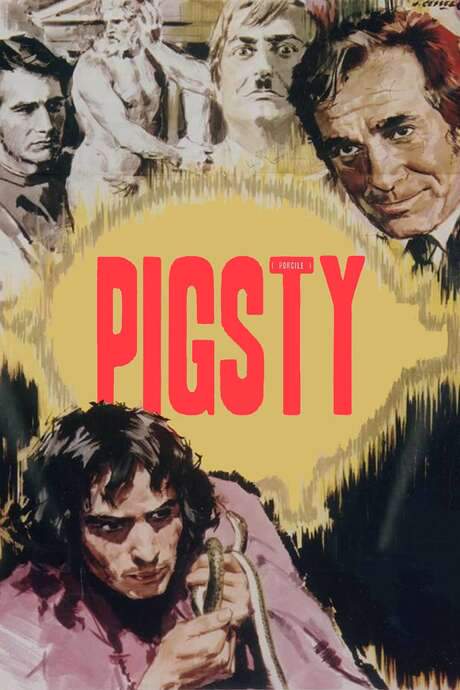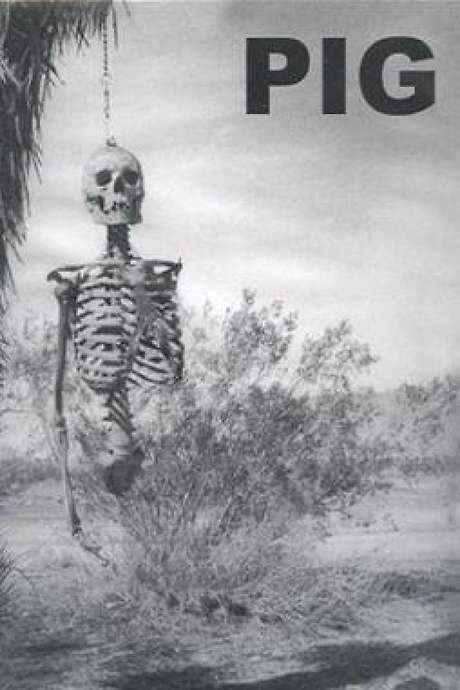
What Is Pig About?
The premise of Pig in 321 words, with nothing given away. The full story follows below.
In the stark, sun‑scorched expanse of a seemingly endless desert, the young man embarks on a solitary trek that feels both physical and existential. The barren landscape stretches beneath a relentless sky, its muted horizons hinting at isolation and the weight of unanswered questions. The film’s visual palette is dominated by washed‑out ochres and deep shadows, creating a mood that oscillates between oppressive silence and an almost reverent stillness, as if the desert itself is a silent witness to the journey ahead.
His solitary passage is abruptly shattered when the masked captor—a figure cloaked in darkness and distinguished only by a grotesque pig mask—emerges from the wasteland. The encounter is unsettling not merely for its cruelty but for the way it forces the young traveler to confront a stark contrast between the external harshness of the desert and an internal world that begins to fracture under pressure. The captor’s presence injects an eerie, ritualistic undertone, turning the open road into a claustrophobic stage where power dynamics unfold in silent, unsettling choreography.
As the tension between them intensifies, the narrative slips into the realm of imagination. The young man’s mind becomes a refuge—a kaleidoscope of vivid fantasies that clash with the brutal reality of his predicament. These mental wanderings are rendered with a surreal visual language, blending dream‑like sequences with the harsh desert light, suggesting that the line between what is real and what is imagined is deliberately blurred. This interplay adds a psychological depth that elevates the film beyond a simple survival story, inviting the audience to linger in the ambiguity of perception.
The overall tone is one of relentless unease, punctuated by moments of fragile beauty. The desert’s emptiness magnifies every breath, every whispered thought, while the masked figure’s inscrutable motives loom like a dark horizon. Together, they set the stage for a haunting exploration of fear, control, and the thin veil that separates reality from the mind’s desperate creations.
What Happens in Pig?
The complete story of Pig, from the first scene to the last, in 585 words (about 3 minutes). Spoilers throughout. Names in the text link to 1 cast member page.
Spoilers ahead
Pig opens on a tense, ceremonial quiet as a black-garbed killer Rozz Williams prepares to leave a small house. He methodically stuffs a briefcase with a curious assortment: a deck of cards, a notebook, and a copy of the children’s book Mr. Pig and Sonny Too — a real 1977 publication by Lillian Hoban. The moment he closes the case, the camera reveals a bleeding, half-naked corpse on the floor. The living man kicks the body aside and climbs into a black car, driving away along a vacant road that stretches into a harsh desert.
The journey unfolds beneath endless power lines, the road flanked by barren landscape. A rocky outcrop bears an inscription that seems to read either “ELLE” or “ELLIE,” and a nearby sign proclaims Dead Man’s Point, though much of it is hard to read. The film shifts to a second figure, an unidentified man cloaked in white bandages, who wanders the desert until he reaches a lone telephone pole and sits cross-legged, as if waiting for something.
The driver’s car stops, and the masked figure climbs into the passenger seat. They head toward a dilapidated house, where the killer leads the masked captive by a rope while carrying his briefcase. The doorway is a grim tableau of bones arranged around the number 1334, surrounded by dominoes, a crucifix, caution tape, a glove, a knife, and photographs of bound arms and heads. As the camera closes in, the captive’s arms are bound with gauze tape, and a door frame reveals a box of dominoes that hides a keyhole. Through that keyhole, a pig mask peeks through a broken wall, and the killer, now clearly wearing the mask, paces the room.
The scene moves to a corridor in the house where the word Look is spray-painted on the wall. The captive is hoisted by a rope to the ceiling, and the two men move outside to a cellar. There, the killer empties the entire briefcase: a deck of pornographic cards, a large metal key, a wig, a black die with a chaosphere, a bondage mask, gloves, a chain, a bowie knife and other blades, pliers, scissors, papers, a plastic funnel with a feeding tube, and, most notably, a book entitled Why God Permits Evil among the other items.
The killer rests a hand on the bound man’s head and peels away part of the bandage from his eye, exposing a darting gaze and palpable fear. Across the room, a jumble of tools—pliers, knives, syringes, and more—lurk just out of reach. In the next moment, the killer browses pages from Why God Permits Evil, discovering strange, graphic art and religious quotes, while the victim, still bound and with the feeding tube in his mouth, endures the terror of the moment.
The tension heightens as the camera cuts back and forth between the man’s frightened eyes and the killer’s calm, methodical ritual. The book’s pages seem to guide the killer’s disturbing actions, and the feeding tube becomes a conduit for a grisly, ritualized act: the killer pours what appears to be blood through the funnel into the victim’s mouth. The result is a harrowing sequence in which the victim gags and spits the crimson liquid onto his naked torso, a stark and unsettling image that lingers as the scene pulses with ritualistic dread.
The film lingers on the stark contrasts—the calm, almost scholarly ritual of the killer and the vulnerable, shrinking fear of the bound captive—creating a stark, unsettling meditation on control, belief, and pain.
Pig Timeline: Every Key Event in Order
12 key events in the order they happen, from “Killer packs briefcase and departs” to “Final image hints at a larger mystery”. 12 events name a place, across 7 locations.
- 1
Killer packs briefcase and departs
A black-garbed killer finishes packing a briefcase, tucking in a deck of cards, a notebook, and a copy of Mr. Pig and Sonny Too. He steps over the bleeding, half-naked body on the floor, then kicks the corpse aside and heads downstairs. He loads the case into a black car and drives off along a deserted road.
Where:small house
- 2
Desert journey and ominous signs
From the car, the killer continues through the empty desert, power lines running along the road. He passes a rock outcrop with an inscrutable inscription that looks like ELLE or ELLIE. A nearby sign reads Dead Man's Point, heightening the sense of danger on the silhouette-filled road.
Where:desert road
- 3
Hollan appears in bandaged anonymity
An unidentified man named Hollan, his head wrapped in white bandages, wanders the desert and sits cross-legged by a telephone pole. The driver's car pulls up, and the masked Hollan climbs into the passenger seat. They drive toward a house, the briefcase still in hand.
Where:desert by a telephone pole
- 4
Arriving at the house with a tied captive
The car stops at a dilapidated house. The killer leads the masked man by a rope while carrying the briefcase, and they approach the doorway marked with bones and dominoes. Inside, the killer, wearing a pig mask, paces as the captive is brought in.
Where:dilapidated house exterior
- 5
Doorway hints at a ritualistic setting
The camera closes in on the doorway marked 1334, surrounded by dominoes, a crucifix, caution tape, a glove, a knife, and various photographs. Through a broken wall, a pig mask peers from a keyhole in a box of dominoes. The killer, still masked, orchestrates the captivity with cold precision.
Where:1334 house entrance
- 6
Victim bound and moved to the cellar
The bound victim is hoisted and tied to a rope from the ceiling, then dragged into a cellar. The killer empties the entire briefcase, laying out tools and odd items—pornographic cards, a large metal key, a wig, a chaos-die, a bondage mask, gloves, a chain, a bowie knife, and more. A book titled Why God Permits Evil sits among the belongings, hinting at the killer's motives.
Where:cellar
- 7
Bandage removal reveals fear
The killer places a hand on the victim's head and pulls away part of the bandage from the eye, exposing a darting gaze and obvious fear. Surrounding the scene lie pliers, knives, scissors, syringes, and other instruments. The camera lingers on the array of implements as the ritual begins to unfold.
Where:cellar
- 8
Why God Permits Evil is examined
Cuts show the killer turning the pages of Why God Permits Evil, revealing graphic art and religious quotes. The victim remains bound to the ceiling, his head still gauzed, while the killer studies the disturbing passages. The stark juxtaposition of sacred text and brutal acts deepens the sense of a larger design.
Where:cellar
- 9
Liquid punishment begins
The killer pours what appears to be blood through a funnel into the victim's mouth via a feeding tube. The victim gags and chokes as liquid slides down, spattering onto his naked torso. The scene emphasizes the ritualistic and grotesque nature of the act.
Where:cellar
- 10
The ritual continues with motif and tools
The killer maintains a calm, methodical rhythm as he manipulates the tools and surroundings. The pig mask remains a constant motif, reinforcing the ritual's eerie symbolism. The camera lingers on the doorway bones, the dominoes, and other symbols as the acts proceed.
Where:cellar
- 11
Tension builds as the act persists
The film cuts between the victim's struggle and the killer's composed ritual, suggesting a larger, chilling design behind the violence. Everyday objects—the deck of cards, the Why God Permits Evil book, and a key—take on symbolic meaning. The sequence remains intentionally unresolved, leaving the viewer with a sense of impending doom.
Where:cellar
- 12
Final image hints at a larger mystery
The final images center on the pig mask and the cryptic signs—Dead Man's Point and the bone-marked doorway—hinting at connections between the killer's acts and the surrounding landscape. The desert, the house, and the briefcase are presented as parts of a cold, calculated ritual. The scene ends with an ominous note of what lies beneath the violence.
Where:1334 house / surrounding surroundings
Who Are the Main Characters in Pig?
2 characters, among them Killer slug and Opfer slug: who each one is and the part they play in the story. Every profile links to the actor’s page.
- KS
Killer slug
Played by Rozz Williams
A black-garbed, methodical killer who moves with clinical precision, packing a briefcase with a disturbing array of tools and returning to the scene after discarding a dead man. He orchestrates the capture and confinement of his victim, binding him with rope and manipulating the environment to heighten control. He spends time with a book, Why God Permits Evil, implying a philosophical undertone to his brutality and wearing a pig mask during the acts. His calm demeanor contrasts with the severity of his actions, underscoring a ritualistic approach to cruelty.
- 🗡️ Violent
- 🧰 Methodical
- 🎭 Psychopathic
- OS
Opfer slug
Played by James Hollan
An unidentified man wrapped in white bandages who becomes the killer’s captive, first bound at the wrists and later led into a cellar. He endures meticulous confinement and escalating torment, with his fear evident in his eyes as the killer unfolds the prepared ritual. The victim is gagged and fed through a tube, emblematic of the dehumanizing control exerted over him. His role is to reveal the cruelty of the ritual and to heighten the sense of peril for the audience.
- 🩸 Victim
- 🔒 Bound
- 🔎 Mystery
Where and When Is Pig Set?
Pig is set in Desert road, Dead Man's Point and Secluded house at 1334. Here is why the place matters to the story.
Where
Desert road, Dead Man's Point, Secluded house at 1334
The action unfolds along a desolate desert road lined with power lines, leading to a secluded, dilapidated house. A Dead Man’s Point sign and a rock outcrop with faint inscriptions set a foreboding mood as the killer retreats from the scene. Inside the house at 1334, the doorway is decorated with bones, dominoes, a crucifix, caution tape, and a grim assortment of items, turning the location into a claustrophobic trap. The setting emphasizes isolation and ritual, with the landscape itself heightening the tension.
- 🏜️ Desert
- 🏚️ Abandoned
- 🗺️ Isolated
What Are the Themes of Pig?
3 ideas the story keeps returning to, among them Violence, Control and Isolation.
-
01
Violence
The film centers on meticulously staged brutality, where a briefcase full of tools and a sequence of bindings frame acts of torture. Violence is presented with cold, almost clinical precision, highlighting the killer’s control over each scene. The repeated use of blood, feeding tubes, and cutting instruments underscores the physical cost of the killer’s dominion. The motif is less about gore for shock and more about the ritualized mechanics of harm.
-
02
Control
Control is exerted through containment: ropes, bonds, a captive’s tethered movements, and the deliberate arrangement of the killer’s tools. The killer’s calm, methodical behavior contrasts with the victim’s fear, emphasizing domination as a psychological tactic. The import of Why God Permits Evil suggests a chilling attempt to rationalize power over another’s fate. The pig mask and calculated setup reinforce the ritualistic nature of the oppression.
-
03
Isolation
The desert setting creates a palpable sense of separation from the outside world, amplifying the danger of the moment. The remote road, the bone-marked doorway, and the unseen consequences outside the house contribute to a claustrophobic feeling despite vast emptiness. Isolation intensifies the tension of each interaction, leaving little room for escape or outside intervention. The environment itself becomes an accomplice to the filmed acts.
What Kind of Film Is Pig?
Dark in tone, with slow pacing and a moderate story, going by the plot summary.
- Tone
- Dark
- Pacing
- Slow
- Story
- Moderate
- Intensity
- High
- Ending
- Bleak
An intensely bleak and oppressive viewing experience characterized by methodically paced scenes of ritualistic torture within a desolate setting, creating a feeling of inescapable dread and psychological horror.
- oppressive
- claustrophobic
- bleak
- ritualistic
- anxious
- desolate
- torture
- captivity
- psychological horror
- nihilism
Content notes: torture, sexual torture, sexual assault, murder, psychological abuse, bondage.
Quiz
How well do you remember Pig? Test yourself on the story.