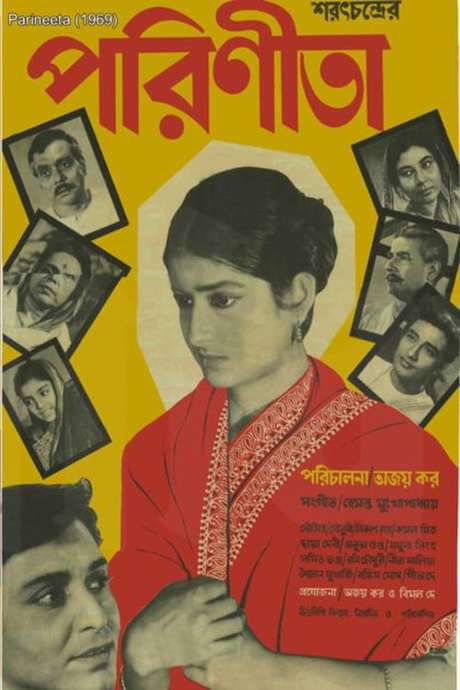


Parineeta Plot Summary
Read the complete plot summary and ending explained for Parineeta (1969). From turning points to emotional moments, uncover what really happened and why it matters.
Lalita, Moushumi Chatterjee, is a poor thirteen-year-old orphan who grows up under the care of her uncle Gurucharan and his bustling extended family. The clan is large, with Gurucharan’s five daughters, and the needs of arranging weddings push the family toward financial strain. To keep the family afloat, Gurucharan is forced to borrow money from his neighbor, Nabin Roy, by mortgaging a plot of land that sits at the edge of their two households. The two families share a warm, neighboring bond, even as Nabin Roy secretly covets the land Gurucharan has mortgaged.
Nabin Roy’s wife, Bhubaneswari Devi, Chhaya Devi, showers Lalita with affection and treats her like a favored daughter, even going so far as to let Lalita call her “maa.” The dynamic between Lalita and Bhubaneswari Devi is tender and protective, and Lalita reciprocates with a deep trust that blurs the lines between kin and guardian. Into this delicate balance enters Shekhar, a young attorney who is also Bhubaneswari Devi’s ward and confidant. He is a wry, teasing presence to Lalita, and their relationship borders on possessive, feeding Lalita’s gentle devotion toward him.
Into Lalita’s world steps Girin, a compassionate and practical ally who has his eye on the family’s welfare. Samit Bhanja brings a steady, supportive energy to the story, helping mend Gurucharan’s finances and advising on a match for Lalita. His influence begins to shift the dynamic in surprising ways, stirring a quiet jealousy in Shekhar as Lalita’s life becomes entwined with Girin’s steady hand and intent to secure their future.
Before long, the tension between affection, obligation, and social proprieties comes to a head. In a moment of bold defiance, Lalita and Shekhar quietly seal their bond with a garlanded ceremony, symbolizing a marriage that must now contend with the world outside. The veil of spinsterhood that was meant to protect Lalita becomes a shield herself from the looming judgment of Hindu social norms, while Gurucharan, inspired by Girin’s influence, embraces a path of Brahmo faith that further unsettles the family’s standing in the eyes of their neighbors.
As word travels, society surrounding Gurucharan recoils. The couple faces estrangement as wealth gaps and religious differences complicate what should be a straightforward union. Lalita’s heart aches as her surroundings abandon them, and Shekhar, returning from his own travels, must confront the reality that his own possessiveness and the era’s conventions stand in his way. To heal an inherited wound of isolation, Lalita and her family travel to Munger, where Girin stands by their side and Gurucharan’s lingering hopes find new expression in the form of a fateful arrangement.
Years pass, and Gurucharan and Nabin Roy both pass away, leaving Lalita eighteen and returning to the scene of her early life to sell Gurucharan’s house to Nabin Roy’s heirs, if only to honor her uncle’s lasting wishes. Shekhar’s own life has its course, with a forthcoming marriage moving closer, yet Lalita’s sudden arrival forces him to confront what his real desires are. He hesitates, aware of Girin’s promise to Lalita, and the rumor of a long-ago arrangement lingers in the air.
Girin visits Shekhar with the legal documents surrounding Gurucharan’s plot and shocks him with a revelation: Girin has indeed become Gurucharan’s son-in-law, but not through a marriage to Lalita. Instead, Girin married Lalita’s cousin Annakali, as Lalita had claimed to be already wed. The truth unsettles Shekhar, yet it also clarifies the path forward. In the wake of this revelation, Shekhar gathers his courage, confesses his enduring love for Lalita, and seeks his mother’s blessing to unite with her.
The ending unfolds with a quiet but firm consent: Shekhar and Lalita are offered the chance to marry, and their union is affirmed as the story closes. The tale remains a detailed study of duty, desire, and the way rigid social norms collide with the resilience of two devoted hearts that refuse to be kept apart.
Parineeta Timeline
Follow the complete movie timeline of Parineeta (1969) with every major event in chronological order. Great for understanding complex plots and story progression.
Lalita's fragile beginnings
We are introduced to Lalita, a poor thirteen-year-old orphan living with her uncle Gurucharan's family. The household is strained by poverty and the expenses of weddings for Gurucharan's daughters. Lalita's desire for security and belonging shapes her early world.
Debt to secure the daughters' weddings
Gurucharan borrows money from their neighbour Nabin Roy by mortgaging a plot of land. The loan relieves immediate pressure but binds the family to Roy's terms. The two families maintain cordial relations even as Roy covets the mortgaged land.
Bhuvaneshwari's motherly affection
Nabin Roy's wife Bhuvaneshwari dotes on Lalita and treats her like a daughter. Lalita reciprocates with warmth, even calling Bhuvaneshwari 'maa.' This bond complicates the social web around Lalita as alliances form.
Shekhar's protective yet possessive stance
Shekhar, Gurucharan's younger son and a recently successful attorney, forms a bantering but possessive relationship with Lalita. His attitude oscillates between mentorship and jealousy as his feelings deepen. Lalita trusts him and accepts his guidance.
Girin's supportive entrance and growing tension
Girin becomes a supportive presence in Lalita's life, aiding Gurucharan's finances and helping with arrangements. His involvement stirs jealousy in Shekhar, who resents the shifting influence on Lalita. Lalita welcomes Girin's help and friendship.
Secret marriage by garland
Before Shekhar's tour to the west, Lalita and Shekhar secretly marry in a garland exchange. Their act defies the norms surrounding age, wealth, and propriety. The couple begins married life under secrecy.
Lalita hides and Gurucharan embraces Brahmoism
After the marriage, Lalita must conceal herself as a spinster due to social and legal pressures. Gurucharan renounces traditional norms and embraces Brahmoism, inspired by Girin's words. The family becomes socially ostracized as a consequence.
Societal abandonment and Shekhar's return
Society rejects the couple, and Shekhar's own behavior becomes harsher, shaped by covetousness over Girin's influence. Lalita endures emotional turmoil as she and the family navigate ostracism. Shekhar's actions reflect the strain between love, wealth, and social expectations.
Move to Munger and Gurucharan's dying wish
Lalita accompanies her family on a journey to Munger to seek healing after the turmoil. During this period, Gurucharan dies, and Girin holds to his dying wish that Lalita marry him, promising to take care of her future. Girin accepts the arrangement, even as events later unfold differently.
Girin's formal involvement and marriage to Annakali
Years pass after Gurucharan's and Nabin Roy's deaths; Lalita is now eighteen and revisits her old place to sell Gurucharan's house to Nabin Roy's heirs. Shekhar's forthcoming marriage to someone is arranged, but Lalita's presence raises questions about his real desires. Girin becomes Gurucharan's son-in-law via the promised arrangement, but he marries Annakali, Lalita's cousin, instead.
Shekhar's revelation and renewed love
Girin visits Shekhar with legal documents for Gurucharan's plot and reveals that he did become Gurucharan's son-in-law as promised but did not marry Lalita; he married Annakali instead. Shocked yet pleased by this turn, Shekhar regains his composure and confesses his own marriage to Lalita to his mother. He renews his love for Lalita and seeks her family's blessing.
Consent and the union of Lalita and Shekhar
With the truth laid bare, the family grants consent for the union of Shekhar and Lalita. The story ends on a note of reconciliation and hopeful marriage, as love triumphs over social barriers. The couple looks forward to a life together supported by those who remained loyal.
Parineeta Characters
Explore all characters from Parineeta (1969). Get detailed profiles with their roles, arcs, and key relationships explained.
Lalita (Moushumi Chatterjee)
An impoverished thirteen-year-old orphan living with her uncle’s large family. She wins affection from Bhuvaneshwari and forms a trusting bond with Shekhar, whom she views as mentor and guardian. Her tender heart, resilience, and evolving love for Shekhar drive much of the plot and its conflicts.
Shekhar (Soumitra Chatterjee)
A 25-26-year-old attorney with a bantering, possessive streak toward Lalita. He embodies privilege and ambition, yet his love for Lalita forces him to confront social expectations and his own arrogance. His jealousy and struggle to reconcile desire with duty propel the central romance.
Girin (Samit Bhanja)
A steadfast friend who helps Gurucharan with finances and supports Lalita’s family. His actions and generosity have a significant influence on the family’s fortunes and on the romance’s trajectory. He ultimately becomes Gurucharan’s son-in-law, complicating Lalita’s prospects.
Bhubaneswari Devi (Chhaya Devi)
Nabin Roy’s wife who dotes on Lalita, treating her with warmth akin to a mother. Her affection provides Lalita with emotional support amid financial and social pressures. She represents a nurturing bridge between two generations with differing expectations.
Mamima (Gita Dey)
A warm elder figure within the family circle who embodies domestic stability and care. She supports Lalita and the wider family through trying times, offering guidance and comfort. Her presence underscores the importance of familial bonds in navigating hardship.
Parineeta Settings
Learn where and when Parineeta (1969) takes place. Explore the film’s settings, era, and how they shape the narrative.
Time period
Late 19th century
The era is marked by rigid social norms, evolving reformist ideas, and the prominence of arranged marriages in Bengal. Brahmoism and other reform currents challenge orthodox practices, creating tension between tradition and modern values. Land, wealth, and family honor drive decisions that affect personal relationships and mobility.
Location
Calcutta, Munger
The story unfolds across a Calcutta urban neighborhood and a nearby family home, with a later sojourn to Munger. The settings contrast a close-knit, money-strapped household with a wealthy neighbor’s estate, highlighting social divides. The landscape mirrors late 19th-century Bengal, where reputation and arranged weddings shape daily life.
Parineeta Themes
Discover the main themes in Parineeta (1969). Analyze the deeper meanings, emotional layers, and social commentary behind the film.
❤️
Love vs Society
Lalita and Shekhar’s secret union embodies a pure affection that clashes with social expectations. Their bond is tested by jealousy, class differences, and the fear of public stigma. Girin’s involvement adds complexity as personal loyalties intertwine with family welfare. The narrative ultimately centers on whether love can triumph over communal judgment.
🧭
Societal Pressure
The characters grapple with the weight of caste, religion, and age norms that dictate marriage and behavior. The attempt to navigate these pressures leads to concealment, sacrifice, and difficult choices. The Brahmoism shift and family secrets underscore how society polices intimate relationships. The tension between individual desires and communal approval drives the drama.
🏛️
Wealth and Power
A mortgage and land dispute reveal how money and property define opportunities and threats for the families involved. Nabin Roy’s wealth looms over Gurucharan’s finances, fueling tension and strategic marriages. Class differences shape who can pursue love openly and who must contend with social obstruction. The plot uses property as a tangible stake in the protagonists’ futures.
🕊️
Promises and Loyalty
Girin’s influence and promised marriage to Lalita’s family reflect themes of loyalty and obligation. The twist where Girin marries Annakali tests notions of duty and true affection. Shekhar’s evolving feelings compel him to confront his own vanity and bravely claim Lalita. The resolution centers on the restoration of trust and a legitimate union.

Coming soon on iOS and Android
The Plot Explained Mobile App
From blockbusters to hidden gems — dive into movie stories anytime, anywhere. Save your favorites, discover plots faster, and never miss a twist again.
Sign up to be the first to know when we launch. Your email stays private — always.
Explore the mobile appParineeta Spoiler-Free Summary
Discover the spoiler-free summary of Parineeta (1969). Get a concise overview without any spoilers.
In the waning days of British‑era Bengal, a sprawling household teeters between tradition and the pressures of modernity. Lalita, a bright thirteen‑year‑old orphan, has been taken in by her uncle Gurucharan and his numerous daughters, who scramble to arrange marriages while the family’s finances dwindle. A modest plot of land, mortgaged to their neighbor Nabin Roy, becomes the quiet fulcrum of both hope and tension, reflecting the precarious balance between duty and survival that defines everyday life in the close‑knit neighbourhood.
The world of the film is suffused with a gentle yet palpable melancholy, where the rhythms of domestic chores and whispered prayers sit alongside the soft rustle of emerging ideas. Bhubaneswari Devi, Nabin Roy’s compassionate wife, treats Lalita as her own child, offering a sanctuary that blurs the lines between kinship and guardianship. Into this tender tableau arrives Shekhar, a young attorney and ward of Bhubaneswari Devi, whose playful teasing masks a deeper, possessive devotion toward the shy girl. Their interactions are a study in restrained longing, hinting at a connection that both comforts and unsettles the fragile household equilibrium.
Amid the swirl of obligations, Girin appears as a steady, practical presence, offering counsel that could reshape the family’s fortunes. His supportive role introduces a quiet counterpoint to the romantic undercurrents, suggesting that love and responsibility may travel parallel paths. Together, these characters navigate a world where social conventions, financial strain, and evolving personal desires intertwine, creating a richly textured portrait of hope, restraint, and the subtle forces that draw hearts together in a time of change.
Movies with Similar Twists and Themes
Uncover films that echo the narrative beats, emotional arcs, or dramatic twists of the one you're exploring. These recommendations are handpicked based on story depth, thematic resonance, and spoiler-worthy moments — perfect for fans who crave more of the same intrigue.







Featured on this page

What's After the Movie?
Not sure whether to stay after the credits? Find out!
Check out our other apps:

SAT Sphere
Build confidence for the Digital SAT.

Mori Atlas
Discover wild places worth protecting.

Luntero
Search smarter for a home in Amsterdam.

Plot Explained
Unravel movie endings and hidden clues.

Pokechamp
Dive into Pokémon data and battle logic.

Driving Theory
Get ready for your European theory test.

Movie Dust
Plan your next cinema trip with ease.

Musemap
Find art and culture as you travel.

Selkobase
Compare credentials before committing.

Local Manual
Turn an unfamiliar country into practical next steps.

Lernavi
Compare school systems before your next move.

GymRoam
Find a workout stop wherever your plans take you.
Explore Our Movie Platform
New Movie Releases (2026)
Famous Movie Actors
Top Film Production Studios
Movie Plot Summaries & Endings
Major Movie Awards & Winners
Best Concert Films & Music Documentaries
Movie Collections and Curated Lists
© 2026 What's After the Movie. All rights reserved.
Privacy Policy