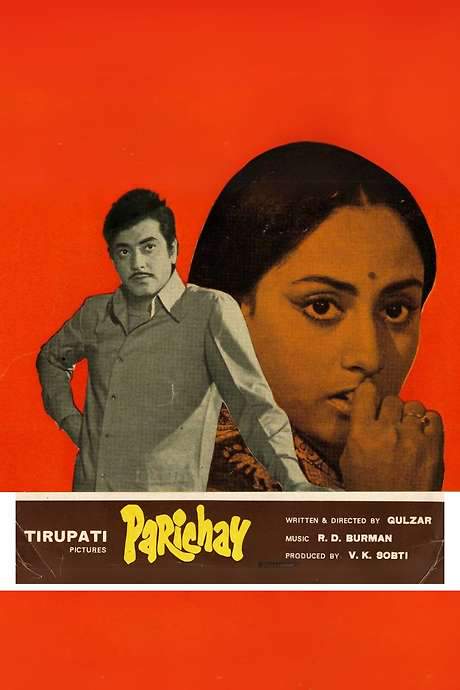


Where to Watch Parichay
See current US streaming, rental, and purchase options for Parichay (1972) via JustWatch.

Streaming availability powered by 
Parichay Plot Summary
Read the complete plot summary and ending explained for Parichay (1972). From turning points to emotional moments, uncover what really happened and why it matters.
Rai Sahab, Col. A. P. Roy, is a retired officer who lives in a sprawling family mansion with his five grandchildren. The children are distant and wary of him, convinced that he is somehow responsible for their father, Nilesh Roy’s death. Rai Sahab is a strict, disciplined man who has grown cold and stern after the loss, and his hard rules leave little room for warmth or laughter in the house. The once-close family bonds have frayed, and the grandchildren keep their distance, resisting every attempt at guidance or authority.
The tension intensifies after Nilesh’s death. When Nilesh left home to pursue music against Rai Sahab’s wishes, it set off a chain of events that hardened Rai Sahab’s heart. He brings the children to live with him after their father’s death, hoping to impose order and responsibility. Yet the grandchildren refuse to obey, challenging every rule and defying every attempt at discipline. The house becomes a battleground of pranks, retorts, and grudges, and Rai Sahab struggles to find a lasting tutor who can transform these “savage” youngsters into well-behaved youths.
Enter Ravi, a job-seeking caretaker who answers a letter from Rai Sahab about a tutoring position. He does not warm to Rai Sahab’s cold demeanor at first, but he accepts the role more out of necessity than conviction. Rai Sahab is frank about his expectation: he believes Ravi can bring his grandchildren to heel. Ravi agrees to try, even though he knows the road ahead will be challenging.
From the start, the children test Ravi’s limits. They tease, scare, and resist him just as they did with previous tutors. Yet Ravi refuses to play into their games. He treats their mischief with humor rather than anger and begins to earn their trust. He soon discovers the house has rigid bans on singing, laughter, and even outdoor play. Undeterred, Ravi starts by reconnecting with the children on their own terms: he opens up Nilesh Roy’s old room and starts playing his sitar, a small gesture that helps break the ice. The sitar music unlocks memories and feelings, and slowly the walls start to come down.
With Ravi’s gentleness and perseverance, the children begin to change. He takes them on picnics, plays games with them, and tells them stories that spark curiosity and imagination. The classroom becomes a space of learning and discovery, and the children gradually start studying with Ravi. The changes are visible: they become more respectful toward elders, more cooperative, and more willing to engage with the world around them. Among these evolving dynamics, a quiet bond grows between the oldest sister Rama and [Ravi], adding a soft undercurrent of romance to the tale. Their growing feelings coexist with the evolving family ties, creating a delicate balance between affection and responsibility.
Rama initially resents Rai Sahab, feeling he never supported them when they were destitute after their father’s death. She believes he neglected them, arriving late and empty-handed. Ravi gently unsettles this belief by recounting what happened when Rai Sahab learned of the family’s troubles. He explains that Rai Sahab received the letter about their plight late because he was away on business, and by the time he read it, he left with barely anything other than the clothes on his back. This realization gradually softens Rama’s stance, and she begins to see her grandfather in a new light.
When Rai Sahab returns home, he finds the grandchildren quietly studying and greeting him with warmth for the first time. He is surprised and touched by their transformation, and he notices Rama’s presence in the house with a quiet sense of gratitude. The sight of his family united, and Ravi’s influence acknowledged, fills Rai Sahab with a new sense of joy. He even laughs and plays with the children again, a sign that his heart has begun to soften after years of rigidity, largely due to Ravi’s nurturing approach.
Meanwhile, in the city, Ravi misses Rama. A letter from Rama reaches him, stirring his longing and prompting him to consider asking Rai Sahab for her hand in marriage. His close friend Amit encourages him to pursue his feelings and to seek a future that could bring happiness to all of them. With this encouragement, Ravi travels back to the village with a sense of purpose.
What unfolds next is a test of intentions and love. Ravi learns that Rai Sahab intends to arrange Rama’s marriage to a family friend’s grandson—an arrangement rooted in Rai Sahab’s unfulfilled wish to see Rama with someone who could carry the family forward. Distressed by this revelation, Ravi leaves without meeting the kids or Rama, feeling the sting of what could have been. However, Rai Sahab’s own revelation soon follows. He looks at Rama’s face and perceives the truth—that Rama’s heart belongs to Ravi, not to a distant match.
In a poignant and cinematic moment, Rai Sahab brings Rama to the railway station just as the train carrying Ravi begins to pull away. Ravi stands in the doorway, his heart racing, and Rai Sahab’s presence beside Rama signals a new alignment of loyalties and love. In a final act of faith and hope, Ravi leaps from the moving train to reach them, reuniting the two lovers in a living affirmation of the changes Ravi sparked and Rai Sahab embraced. The film closes with a hopeful invitation to their wedding, suggesting a future built on forgiveness, understanding, and the enduring bond of family.
Throughout this story, the transformation is guided by a nurse-like patience, a subtle rebellion against cynicism, and a belief in the power of connection to soften even the hardest hearts. The ensemble, anchored by the quiet authority of Rai Sahab and the devoted care of Ravi, who is supported by the compassion of Rama, paints a portrait of how love, when paired with discipline and empathy, can heal old wounds and bridge the gaps between generations.
Parichay Timeline
Follow the complete movie timeline of Parichay (1972) with every major event in chronological order. Great for understanding complex plots and story progression.
Rai Sahab’s austere, grieving household
Rai Sahab is a retired colonel who lives in a large family mansion with his five grandchildren. The children resent him, blaming him for their father Nilesh Roy’s death, and he has grown cold after Nilesh left to pursue music and died. The house is governed by rigid rules and a distant, disciplinary manner that isolates the family.
Ravi accepts the tutor job
Ravi, a job-seeker in the city, receives a letter about a tutoring position at Rai Sahab's house in his village. He is initially put off by Rai Sahab’s cold demeanor, but the need for work drives him to take the job. He hopes to gain experience and perhaps win over the resistant grandchildren.
First meeting and a clash of temperaments
In their first encounter, Rai Sahab’s stern authority clashes with Ravi’s easygoing approach. The grandchildren try to scare him away using the same tricks that defeated previous teachers, but Ravi refuses to quit, choosing to laugh at their pranks and attempt friendship.
The rules against singing and outdoor play
Ravi discovers that singing and laughing are banned in the house, and the children aren’t even allowed to play outside. He begins to see how deeply Rai Sahab’s control shapes their lives and realizes the need for careful, gradual change.
Nilesh’s room and the return of music
During Rai Sahab’s absence, Ravi enters Nilesh’s old room and starts playing his sitar, rekindling a link to the past. The music loosens the children’s defenses and they begin to open up to Ravi. His melodies become a bridge between Rai Sahab and the grandchildren.
Bonding, outings, and study
Ravi takes the children out on picnics, tells them stories, and begins regular lessons. Gradually their behavior changes, and they become more respectful and attentive toward elders. Ravi and Rama, the eldest sister, also start to develop feelings for each other.
Rama’s grievance and the truth about the letter
Rama resents Rai Sahab for not supporting their family after their father’s death. Ravi reveals that Rai Sahab did send a letter, but it arrived late because he was away on business, and he left promptly on reading it. Rama realizes she had misjudged her grandfather.
Rai Sahab returns to find visible changes
Rai Sahab returns to discover the children studying peacefully with Rama and seeing his late son’s framed photo in the foyer. He is initially upset, but the sight of their quiet respect and Ravi’s influence fills him with pride and gratitude.
Ravi’s city departure and Rama’s letter
Back in the city, Ravi misses Rama and receives a letter from her. Encouraged by his friend Amit, he resolves to return and ask Rai Sahab for Rama’s hand in marriage. He soon learns that Rai Sahab intends Rama to marry a family friend’s grandson.
A tense pause before the reunion
Ravi departs for the city, leaving without meeting the kids and Rama, while Rai Sahab asks Rama whether she met him. Rama is surprised by the question; Rai Sahab begins to realize there is more to their story than he thought.
Train reunion and the confession
At the station, Rai Sahab brings Rama to the platform as the train pulls away with Ravi at the doorway. Ravi leaps from the moving train to join them, and the trio’s reunion culminates in their commitment to a wedding. The moment seals a new, hopeful future for the family.
A hopeful future: wedding invitation
The ending scene invites audiences to celebrate Rama and Ravi’s wedding, symbolizing Rai Sahab’s softened heart and the newly united family. The film closes on a note of reconciliation and family harmony.
Parichay Characters
Explore all characters from Parichay (1972). Get detailed profiles with their roles, arcs, and key relationships explained.
Rai Sahab A. P. Roy
Retired colonel and stern patriarch who wields strict discipline after his son Nilesh's death. He longs for orderly grandchildren but struggles with grief and pride, creating distance between him and the family. His rigid rules about music and laughter set the stage for Ravi's reformative influence.
Ravi
A warm, observant tutor who wins the children over with humor and empathy. He discovers the real roots of the boys’ and girls’ defiance and uses music, stories, and shared outings to connect with them. Through patient persistence, he becomes the bridge between Rai Sahab and his grandchildren.
Rama
Oldest among the grandchildren, initially resentful of Rai Sahab for past neglect. She tests Ravi’s approach but gradually accepts the changes in the household and even considers a future with him. Her evolving understanding helps soften the family’s rigidity.
Nilesh Roy
The father who pursued music against Rai Sahab’s wishes and died, leaving unresolved tensions. His death fuels the sense of abandonment the grandchildren feel toward Rai Sahab and drives the family’s early conflict.
Sanju
One of the grandchildren, whose mischief masks deeper fears and longing for belonging. He gradually opens up as Ravi earns his trust and the family’s bonds strengthen.
Ajay
A younger grandchild who initially resists but slowly participates in Ravi's reform efforts, symbolizing the broader family transformation.
Sujata
One of the sisters who contributes to the family dynamics and eventually aligns with Ravi’s approach, helping to mend old wounds.
Meeta
The youngest grandchild who participates in the changes within the household, bringing light and playfulness to the reform process.
Vijay
Another grandchild who becomes more cooperative and respectful as Ravi’s influence grows in the home.
Satidevi
A family elder who contributes to the household’s dynamics, adding to the sense of tradition and care within the home.
Amit
Ravi’s friend who encourages him to pursue his own happiness and supports his relationship prospects, including Rama and Ravi’s future together.
Narayan
A village confidant connected to Rai Sahab, offering guidance and support within the community sphere.
Panditji (Astrologer)
The astrologer of the household who reflects traditional beliefs and influences perceptions within the family.
Ravi's Aunt
A relative who participates in the family network, adding to the domestic backdrop of Rai Sahab’s household.
Ravi's Uncle
A family elder who contributes to the domestic dynamics and offers veteran perspective within the story.
Diwanji
A household figure who serves within Rai Sahab’s mansion, contributing to the daily life of the family.
Parichay Settings
Learn where and when Parichay (1972) takes place. Explore the film’s settings, era, and how they shape the narrative.
Location
Rai Sahab's village mansion
The story centers on a grand family mansion in a quiet village. This imposing house represents Rai Sahab's strict authority and tradition, while also sheltering the children who crave warmth and connection. Its rooms witness both harsh discipline and the gradual unfolding of trust between generations.
Parichay Themes
Discover the main themes in Parichay (1972). Analyze the deeper meanings, emotional layers, and social commentary behind the film.
🤝
Family Reconciliation
Trust heals old wounds as Ravi patiently engages the grandchildren and bridges the gap with Rai Sahab. The narrative shows how empathy and consistent care can soften even the most entrenched grudges. Forgiveness and second chances become the heart of the family’s renewal.
🎶
Music Healing
Music serves as a universal language that transcends age and pride. Ravi’s sitar and stories open the children’s hearts, allowing them to share grief and joy. Melodies become the catalyst for emotional release and bonding across generations.
🌱
Guidance & Growth
Mentorship through Ravi shows how firm yet compassionate guidance can unlock potential. The children grow from mischief into responsibility as they learn respect for elders. The arc highlights personal and familial growth driven by thoughtful leadership.

Coming soon on iOS and Android
The Plot Explained Mobile App
From blockbusters to hidden gems — dive into movie stories anytime, anywhere. Save your favorites, discover plots faster, and never miss a twist again.
Sign up to be the first to know when we launch. Your email stays private — always.
Explore the mobile appParichay Spoiler-Free Summary
Discover the spoiler-free summary of Parichay (1972). Get a concise overview without any spoilers.
In a sprawling ancestral home perched on the outskirts of a quiet village, Rai Sahab—a retired colonel whose life has been hardened by loss—holds court over his five grandchildren. The mansion, once filled with laughter, now echoes with strict rules, silent corridors, and a palpable distance between the stern patriarch and the young heirs who blame him for their father’s absence. Their daily lives are a battle of wills, marked by pranks, defiance, and an acute lack of warmth, setting a tone that is both austere and yearning for the warmth that once defined the family.
Enter Ravi, an unemployed young man searching for purpose when a modest advertisement promises a tutoring position in the household. Although initially skeptical of the colonel’s rigid expectations, he accepts the job out of necessity, carrying with him a quiet optimism and a willingness to confront the entrenched coldness of the home. His arrival is met with the usual resistance from the grandchildren, who test his patience and resolve at every turn.
The children’s rebellion is matched by the house’s own bans on music, laughter, and simple pleasures, creating an atmosphere thick with unspoken grief. Ravi approaches this challenge with humor and patience, seeking to connect on the grandchildren’s terms—whether through a revived sitar melody that stirs forgotten memories or by inviting them into small, unexpected moments of play. Among them, the eldest granddaughter Rama watches his efforts with a mix of suspicion and intrigue, hinting at a subtle undercurrent of affection that adds a gentle layer of romantic possibility to the unfolding dynamics.
The film’s mood balances the rigidity of tradition with the tender hope of transformation. Its tone is warm‑hearted yet grounded, inviting the audience to wonder how compassion and steadfastness can slowly dissolve barriers, and whether a single kind-hearted stranger can coax a hardened heart back to joy.
Movies with Similar Twists and Themes
Uncover films that echo the narrative beats, emotional arcs, or dramatic twists of the one you're exploring. These recommendations are handpicked based on story depth, thematic resonance, and spoiler-worthy moments — perfect for fans who crave more of the same intrigue.








Featured on this page

What's After the Movie?
Not sure whether to stay after the credits? Find out!
Check out our other apps:

SAT Sphere
Build confidence for the Digital SAT.

Mori Atlas
Discover wild places worth protecting.

Luntero
Search smarter for a home in Amsterdam.

Plot Explained
Unravel movie endings and hidden clues.

Pokechamp
Dive into Pokémon data and battle logic.

Driving Theory
Get ready for your European theory test.

Movie Dust
Plan your next cinema trip with ease.

Musemap
Find art and culture as you travel.

Selkobase
Compare credentials before committing.

Local Manual
Turn an unfamiliar country into practical next steps.

Lernavi
Compare school systems before your next move.

GymRoam
Find a workout stop wherever your plans take you.
Explore Our Movie Platform
New Movie Releases (2026)
Famous Movie Actors
Top Film Production Studios
Movie Plot Summaries & Endings
Major Movie Awards & Winners
Best Concert Films & Music Documentaries
Movie Collections and Curated Lists
© 2026 What's After the Movie. All rights reserved.
Privacy Policy