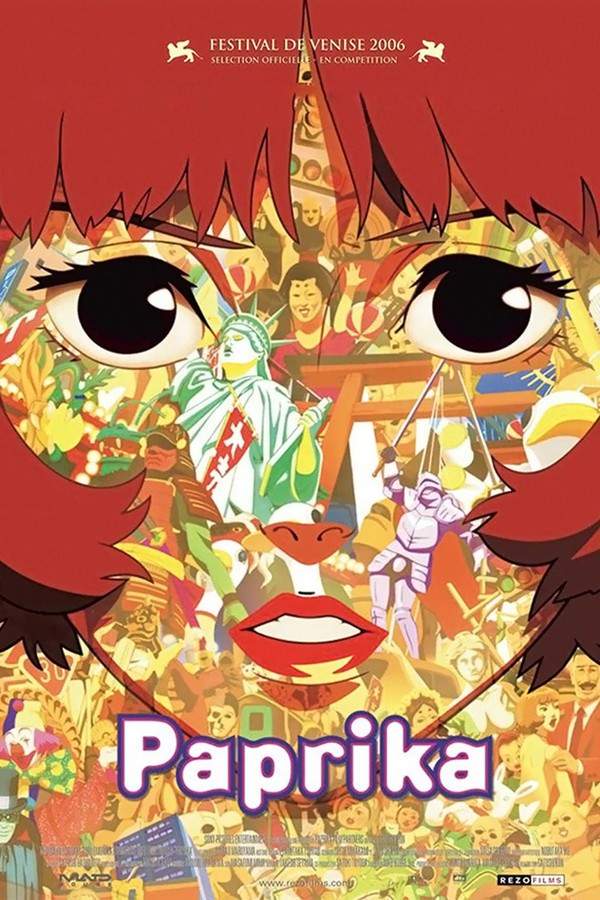
What Is Paprika About?
The premise of Paprika in 327 words, with nothing given away. The full story follows below.
In a near‑future world where a breakthrough invention can make the hidden terrain of the subconscious visible, a brilliant scientist, Dr. Atsuko Chiba, leads a double life as the dream detective known as Paprika. By slipping into the minds of patients with the aid of the device, she navigates surreal landscapes that blur the line between inner fantasy and external reality. The technology’s promise of therapeutic wonder is tempered by the unsettling possibility that an intrusion into dreams could ripple outward, and when the experimental device is stolen, the fragile barrier between waking life and the night‑time psyche begins to fray.
Atsuko’s daring approach is anchored by a close‑knit team. Dr. Toratarō Shima, the department head, provides a steady, if occasionally eccentric, institutional backbone, while Dr. Kōsaku Tokita, the inventive mind behind the machine, supplies the technical brilliance that makes the dream‑hopping possible. Their collaboration creates a laboratory atmosphere that feels both rigorously scientific and whimsically chaotic, reflecting the film’s signature blend of high‑tech intrigue and vivid, almost painterly imagination.
Enter Detective Toshimi Konakawa, a weary investigator haunted by a recurring, unresolved case that seeps into his sleep. His encounters with Paprika are charged with a quiet curiosity; she offers cryptic guidance that mirrors the way the internet reflects hidden desires, fears, and motivations. Their partnership hints at a deeper symbiosis between the rational world of policing and the fluid, symbolic language of dreams, setting the stage for a quest that is as much about inner revelation as external resolution.
The tone throughout is a kaleidoscopic dance of color, sound, and shifting perspective, where ordinary city streets can melt into boundless subconscious vistas. The mood balances playful wonder with an undercurrent of tension, inviting the audience to wonder how far the subconscious can stretch before it reshapes the waking world. As the line between dream and reality blurs, the story promises a tantalizing exploration of imagination’s power to heal, threaten, and ultimately illuminate the paths we choose.
What Happens in Paprika?
The complete story of Paprika, from the first scene to the last, in 869 words (about 4 minutes). Spoilers throughout.
Spoilers ahead
In the near future, a newly created device called the DC Mini lets people peek into other people’s dreams, opening a doorway between inner worlds and the waking world. Dr. Atsuko Chiba begins using the machine illegally to help psychiatric patients outside the research facility, slipping into a dream-identity as a fearless detective known as Paprika. Her closest allies are Dr. Toratarō Shima, the department’s head, and Dr. Kōsaku Tokita, the inventor behind the DC Mini, who stand by her as the stakes grow higher and the line between dream and reality blurs.
Paprika is drawn into the life of a troubled detective, Toshimi Konakawa, who is haunted by a recurring dream about a former colleague and a homicide case he’s chasing. She leaves him a clue—a card bearing a website link—that Midflight leads him to a bar where he encounters Paprika in person. There, Paprika explains in a haunting, almost casual way that the Internet mirrors dreams: a maze of desires, fears, and hidden motives. The encounter plants the seeds of a deeper conspiracy and sets Toshimi on a collision course with the dream-worlds leaking into his own.
During a tense meeting with the company chairman, Dr. Seijirō Inui, who oversees the project and the use of the DC Mini, a critical theft unfolds: three prototype devices vanish. Shima delivers a wild, almost delirious tirade and even vaults through a window, nearly killing himself, a moment that becomes a clue in the investigation of the missing equipment. When the team scrutinizes Shima’s dream—a parade of random objects—Tokita realizes the pattern points to his assistant, Kei Himuro, confirming their suspicion that the crime is an inside job. The discovery raises the stakes: someone inside their own circles is exploiting the dream-technology for personal gain.
As investigators close in on Himuro’s home, Atsuko ignores Paprika’s warnings and slips into a dream space herself. The dream-space, a byproduct of her heavy use of the DC Mini, begins to affect her waking life more aggressively. She narrowly avoids disaster, narrowly surviving with the help of her colleagues who pull her back from danger. The incident escalates when two other scientists fall victim to the DC Mini, prompting Seijirō to ban the device. But the dream-parade inside Himuro’s dream continues to march forward, now threatening Kōsaku himself. Paprika and Shima uncover a chilling truth: Himuro is nothing more than an empty shell, and the true mastermind is Seijirō, who believes he must shield dreams from humanity’s influence through a radical form of dream therapy, aided by Dr. Morio Osanai.
As Toshimi investigates the deaths of the scientists, he meets with Atsuko, Shima, and Tokita. The meeting triggers an anxiety attack, exposing the depth of his internal fears. In a crisis session with Paprika, it’s revealed that the scenes in his dreams are not random but organized into certain movie genres, a revelation that reframes his understanding of his own memory and guilt. When the dream-parade crashes into Toshimi’s psyche, Paprika abandons the session momentarily to help Tokita penetrate Himuro’s dream, a dangerous rescue mission that teeters on the edge of collapse.
Paprika is eventually captured by Seijirō and Morio, who confess an obsessive love for Atsuko. Morio theatrically peels away Paprika’s skin to reveal Atsuko beneath, an act that shatters the boundary between dream character and scientist. Seijirō, in a burst of megalomaniacal rage, demands they finish Atsuko off. Meanwhile, in the bar-turned-dreamscape, Toshimi’s unraveling anxieties recede as he confronts the illness and death of a childhood colleague who inspired his aspiration to be a filmmaker. Resolving these inner storms, he finds a way to invade Himuro’s dream and escape back into his own, dragging Atsuko with him. Morio gives chase, and Toshimi shoots him, severing the threat to the real world—though the cost is high, as Morio dies in reality.
From that point, the boundaries between dream and waking life begin to crumble. The parade of dreams spills into the city, and reality itself starts to unravel under the weight of the subconscious. Shima is nearly crushed by a towering doll, but Paprika appears to intervene, now revealed as a distinct presence separate from Atsuko. In the chaos, Tokita appears in the form of a colossal robot that swallows Atsuko and threatens Paprika with the same fate. Seijirō returns in a nightmarish, towering form, intent on darkening the world with his fantasies. In a final, surreal turn, Paprika merges with Tokita’s colossal form, a newborn-like entity emerges from the robotic shell, and she devours Seijirō as the nightmare ends, leaving behind a sense that a deeper balance between dream and reality has been forged.
In the quiet aftermath, Atsuko sits by Tokita’s bedside as he wakes, the world restored to something recognizably real. Toshimi later receives a message from Paprika via the card, inviting him to a new cinematic experience—the film Dreaming Kids—further blurring the lines between dream, memory, and the stories we tell ourselves. He steps into a cinema, tickets in hand, ready to confront a dream in a way that only a person who has faced his own fears could.
Dreams and reality have begun to blend, leaving a world where imagination can heal, threaten, or illuminate the path forward.
Paprika Timeline: Every Key Event in Order
15 key events in the order they happen, from “DC Mini launches Paprika and opens dream-world therapy” to “Paprika's invitation and Toshimi's cinema plan”. 15 events name a place, across 14 locations.
- 1
DC Mini launches Paprika and opens dream-world therapy
In the near future, the DC Mini lets people view dreams. Atsuko Chiba secretly uses it to help patients, becoming Paprika, a dream-detective who operates outside the research facility. The line between therapy and intrusion begins to blur as her actions leak into the waking world.
Where:DC Mini lab
- 2
Paprika counsels detective Toshimi Konakawa
Paprika assists Toshimi Konakawa, a detective haunted by a recurring dream and a murder case. She gives him a card with a website that leads him to a bar where she appears in person. Their first encounter marks the crossover between dream and reality that drives the investigation.
Where:Bar
- 3
Chairman Inui's meeting and Toratarō's jump
During a meeting with company chairman Seijirō Inui, Toratarō Shima launches into a nonsensical tirade and jumps through a window, nearly killing himself. The incident heightens concerns about the DC Mini's danger and hints at an inside job. The team grows suspicious of internal betrayal behind the prototypes' theft.
Where:Inui's office
- 4
Dream analysis exposes an inside job
Toratarō's dream becomes a parade of random objects, and Kōsaku Tokita identifies Himuro as the likely inside man. The dream-interpretation confirms the theft was not accidental but planned within the facility. The implication shifts suspicion onto Himuro and the inner circle.
Where:Dream-analysis room
- 5
Atsuko slips into a dream space
Atsuko ignores Paprika's warnings and slips into a dream space created by frequent DC Mini use. The dream nearly consumes her life, and she is rescued by her co-investigators before she is lost. The episode demonstrates how fragile the dream-reality boundary has become.
Where:DC Mini lab
- 6
DC Mini ban and the dream-parade advances
After two more scientists fall victim to the DC Mini, Seijirō bans the device. The ban does not stop the increasingly malevolent dream-parade from invading the minds of the team, especially Himuro. The investigation presses on despite the restriction.
Where:Research facility
- 7
Himuro's dream becomes the parade's battleground
The dream-parade invades Himuro's dream, seemingly targeting Kōsaku. Paprika and Toratarō realize Himuro is an empty shell, a front for a deeper conspiracy. The real mastermind appears to be Seijirō with Morio Osanai pulling strings.
Where:Himuro's dream
- 8
Seijirō and Morio revealed as the masterminds
Investigating the demise of the scientists, Toshimi learns that Seijirō intends to shield dreams from human influence through dream therapy, aided by Morio Osanai. The theft now reads as a calculated plan to seize control of the dream-realm. The team moves to confront the conspiracy.
Where:Company offices
- 9
Toshimi's anxiety and the genre reveal
During an emergency Paprika session, Toshimi discovers that his recurring dreams mirror movie genres, revealing how his childhood trauma drives his anxiety about illness and death. The insight pushes him to face his fears and push into Himuro's dream.
Where:Meeting room
- 10
The parade invades Toshimi's dream
The dream-parade bursts into Toshimi's own dream, signaling the collapse of boundaries between dream and reality. Paprika steps away to aid Kōsaku inside Himuro's dream, deepening the central conflict. The line between two worlds becomes dangerously thin.
Where:Toshimi's dream
Show the other 5 events of Paprika Hide the last 5 events
- 11
Paprika captured; skin peeled away to reveal Atsuko
Seijirō and Morio capture Paprika in the dream world, Morio confesses his obsessive love for Atsuko, and tears Paprika's skin away to reveal Atsuko underneath. Seijirō interrupts and intensifies the plan to annihilate the dream-world threat. The personal and professional collide in the dream.
Where:Dream space
- 12
Toshimi confronts Morio in the real world
The chase leads Toshimi into the dream where he shoots Morio, killing Morio's body in the real world. The act marks a critical shift as dream actions have real-world consequences. The team braces for the consequences of their merged realities.
Where:City / street
- 13
Dreams and reality merge into chaos
Dreams and reality bleed together as a city-wide nightmare unfolds. Kōsaku, in giant robot form, swallows Atsuko and threatens Paprika, who then merges with the robot. A baby emerges from the hybrid form, ages into a grown Atsuko-Paprika and consumes Seijirō, ending the nightmare.
Where:City / dreamscape
- 14
Atsuko wakes by Kōsaku's bedside
In the real world, Atsuko sits at Kōsaku's bedside as he wakes from the ordeal, the room quiet after the storm of dreams. The dream-realm has been conquered, but the lines between dream and reality remain blurred in their lives. The team reflects on what they have learned.
Where:Hospital
- 15
Paprika's invitation and Toshimi's cinema plan
Toshimi visits the Paprika website and receives a message from Paprika, hinting at the film Dreaming Kids. He purchases a cinema ticket, stepping toward a future where dreams and films intertwine, and the audience becomes part of the dream-therapy conversation.
Where:Cinema / website
Who Are the Main Characters in Paprika?
7 characters, among them Atsuko Chiba / Paprika, Toratarō Shima and Kōsaku Tokita: who each one is and the part they play in the story. 3 of them link to the actor’s page.
-

Atsuko Chiba / Paprika
Played by Megumi Hayashibara
A brilliant psychiatrist who leads the DC Mini project, Atsuko adopts her dream-world alter-ego Paprika to counsel patients outside the clinic. Paprika operates as a separate persona within dreams, capable of taking agency and influencing events in the waking world. She is compassionate and determined, yet her willingness to push boundaries drags her into dangerous confrontations with dream intruders.
- 🧠 Therapist
- 🌀 Dual Identity
- 🔎 Investigator
-
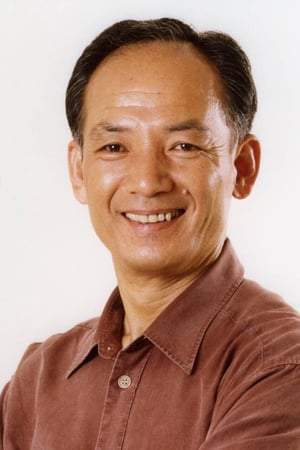
Toratarō Shima
Played by Katsunosuke Hori
The chief of the department and Atsuko's ally, Shima provides leadership and a voice of caution as dream therapy expands. He navigates the pressures of funding, safety, and internal politics while supporting his colleagues' dangerous experiments.
- 🧭 Leader
- 🧪 Scientist
-

Kōsaku Tokita
Played by Toru Emori
The inventor of the DC Mini, Tokita is a brilliant engineer whose creation drives the plot. His invention brings therapeutic potential but also fuels the drive for power and profit among others.
- 🧠 Inventor
- 🧰 Engineer
- TK
Toshimi Konakawa
A detective haunted by a recurring dream about a former colleague and a homicide investigation. His anxiety sessions with Paprika reveal how dream imagery maps to his deepest fears and regrets.
- 🕵️ Detective
- 🧠 Psychology
- SI
Seijirō Inui
Chairman of the company and primary antagonist; believes dream therapy must be protected from humankind's interference, driving a conspiratorial plot to control dream access.
- 🏛 Corporate
- 🧠 Genius
- MO
Morio Osanai
A scientist who partners with Inui, pursuing a radical agenda to shield dreams from manipulation, complicating the fight over the ethics of dream technology.
- 🧪 Scientist
- KH
Kei Himuro
A key figure whose involvement suggests an inside job in the DC Mini theft, representing how inside access can threaten the security of dream technology.
- 🗝 Insider
- 🧑💼 Employee
Where and When Is Paprika Set?
Paprika is set in Tokyo and Japan (Near future). Here is why the time and place matter to the story.
When
Near future
The story unfolds in a near-future era where a device called the DC Mini enables dream exploration while awake. Rapid advances in dream therapy spark ethical debates as dream-space intrudes into reality. This period emphasizes rapid technological progress, corporate power, and the fragile boundary between mind and machine.
Where
Tokyo, Japan
Tokyo serves as the bustling near-future backdrop where dream-sharing technology is developed in corporate labs. The city blends neon-lit streets with high-tech research facilities, where the line between waking life and dreamspace begins to blur. The urban landscape mirrors the film's blend of clinical science and fantasy, with the DC Mini network expanding from clinics into everyday life.
- 🗼 Urban
- 🚀 Futuristic
- 🧠 Tech-forward
What Are the Themes of Paprika?
3 ideas the story keeps returning to, among them Dream Tech, Identity and Power.
-
01
Dream Tech
Dream technology in Paprika allows therapeutic access to the subconscious, but also exposes the fragility of personal boundaries. When dreams can be shared and manipulated, memories and desires become actionable material in the waking world. The film cautions that powerful tools require strict safeguards to prevent abuse and control. The merging of dream and reality tests the limits of consent and autonomy.
-
02
Identity
Atsuko Chiba's persona Paprika becomes more than a disguise, challenging the notion of a singular self. The dream alter-ego can act independently, creating tension between creator and creation. The story uses dual identities to explore how memory, emotion, and role-playing shape what we consider our true self.
-
03
Power
The quest to control dreams becomes a struggle over governance, surveillance, and the ethics of influence. Seijirō Inui and Morio Osanai advocate guarding dreams from humanity, placing them in direct opposition to those seeking healing and protection. The narrative warns against centralized power that can override individual autonomy and distort reality.
What Kind of Film Is Paprika?
Tense in tone, with fast pacing and a very complex story, going by the plot summary.
- Tone
- Tense
- Pacing
- Fast
- Story
- Very complex
- Intensity
- High
- Ending
- Bittersweet
A deliriously fast-paced and intellectually dense psychological thriller that plunges the viewer into a surreal, collapsing dreamscape where reality itself feels fragile and the constant threat of psychological destruction creates an intensely anxious viewing experience.
- surreal
- anxious
- dreamlike
- paranoid
- unsettling
- feverish
- dreams and reality
- consciousness
- psychological investigation
- technological hubris
Content notes: psychological trauma, dementia, suicide attempt, character death, body horror, nudity.
Quiz
How well do you remember Paprika? Test yourself on the story.