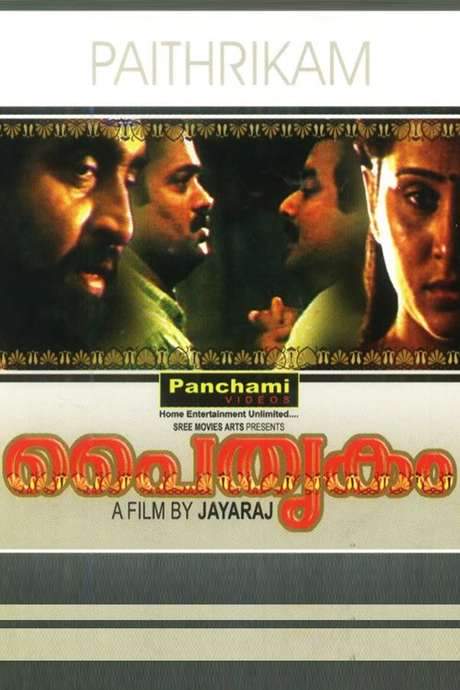
What Is Paithrukam About?
The premise of Paithrukam in 283 words, with nothing given away. The full story follows below.
In a quiet village that clings to centuries‑old customs, a revered Vedic scholar known as Devadathan Chemmathiripadu presides over the rhythms of ritual and family life. His reputation as a learned priest anchors the community, and his home is a sanctuary of tradition, where the ancient hymns and ceremonies shape daily existence. The setting breathes a solemn atmosphere, its temples and hearths echoing the weight of lineage, while the surrounding landscape mirrors the steadiness of the rituals that define it.
The story’s heart lies in the divergent paths of Somadathan, the elder son, and his younger brother Chithrabhanu. Educated in the bustling capital, Somadathan returns with a mind sharpened by doubt, drawn toward ideas that challenge the very foundations of his upbringing. Chithrabhanu, by contrast, remains more closely aligned with the familial expectations, embodying the tension between reverence and rebellion. Adding another layer to the familial tapestry, Gayathri arrives as a partner whose own convictions clash with the world of Vedic doctrine, while Bhanu Namboothiri, the village’s chief priest, carries the weight of his own secret aspirations. Their relationships are marked by love, loyalty, and an uneasy questioning of the rituals that have long governed their lives.
Against this backdrop of sacred fire and scholarly discourse, the film weaves a contemplative mood that oscillates between the serenity of ritual and the restless curiosity of modern thought. The tone is both reverent and probing, inviting viewers to feel the pull of heritage while sensing the undercurrents of change. As the characters navigate their intertwined destinies, the narrative hints at a larger dialogue about faith, identity, and the price of challenging deeply entrenched beliefs—setting the stage for a compelling exploration of tradition versus individual conviction.
What Happens in Paithrukam?
The complete story of Paithrukam, from the first scene to the last, in 703 words (about 3 minutes). Spoilers throughout. Names in the text link to 3 cast member pages.
Spoilers ahead
Devadathan Chemmathiripadu, a Vedic scholar, is widely respected by everyone, played by Narendra Prasad. He has earned the title Somayajippadu after completing Somayagam and leads a simple life, deeply anchored in family and ritual. He has two sons: Somadathan Suresh Gopi and Chithrabhanu Jayaram. Bhanu Namboothiri serves as the chief priest in the nearby temple, a steady figure in the village’s spiritual rhythms.
During his Delhi days, Somadathan drifted toward atheism, aligning himself with radical groups that questioned the authority of the Vedas. When he returns to the village, the rituals that once bound his family begin to irritate him, and he openly denounces the Vedas as superstition, trying to recruit others into his skeptical fold and challenging the comforting routines that define village life.
Somayaji, the family patriarch, initially brushes off his son’s rebellion, but as the dissent grows, the tension becomes unbearable. He urges Dathan to return to a Brahmin’s life, to which Dathan butts back that he is no longer a Brahmin and had long since abandoned his Yajnopavitam. The clash fractures the old order and pushes Dathan to step away from the house he grew up in.
Dathan marries Gayathri [Geetha], an atheist and his lover, and together with fellow radicals, they move into an old haunted house. The couple, determined to defy superstition, cleans up the place and takes a hammer to the idols of Nagas and the small shrine that once anchored the community’s ritual life. Their actions are a defining act of rebellion, a bid to prove that belief can be toppled by collective will and rational critique.
Meanwhile, Bhanu Namboothiri falls in love with a girl in a neighboring village, Gouri, and asks his mother to speak to Somayaji on his behalf. But Somayaji reveals that Bhanu’s horoscope is not favorable—danger looming at the age of 27—an insight that crushes him and leads to his suicide that very night. The tragedy seeds a growing anger in Somadathan and deepens the rift with his father.
Gayathri becomes pregnant twice, but both pregnancies end in miscarriage, a fate villagers attribute to Sarpadosha. She dreams of serpents and begins to believe their act of destroying the idols of Nagas was the reason for the miscarriages, a superstition that gnaws at her sense of reason and safety.
One evening, Somadathan returns home to find Gayathri lighting a lamp for the idols at a shrine that has been cleansed of superstition. She tries to justify her actions and asks him to accept her perspective, but he remains adamant: to stay with him, she must follow his principles. The tension between love and belief grows sharper, pushing their relationship toward a breaking point.
Gayathri seeks refuge at Somayaji’s house, where Somadathan’s mother welcomes her and performs special pujas for her because she is pregnant for the third time. She gives birth to a boy, a moment that raises questions about lineage and tradition. Somadathan argues that the child should not be raised as a Brahmin and that no Vedic rituals should be conducted for him, signaling a generational rift in how the family views inheritance and religion.
As the village gathers for Athirathram, the highest form of yaga meant to please Lord Indra and summon rain, a group of atheists led by Somadathan rises to oppose the ceremony. They challenge Somayaji, pressing him to defend the value of rituals against a world increasingly skeptical of ancient rites. Somayaji lays down a provocative test: if heavy rain comes without the Vedas, will he abandon the ritual life? He poses a parallel question to Dathan as well, asking whether rain would force him to choose the old path again, and Dathan nods in reluctant agreement.
On the last day of Athirathram, the skies open in a torrent of rain. The test and its rhetoric collide with reality: Somayaji triumphs in his final vow, sacrificing his life in the fire of the inner altar. In that moment, Somadathan chooses his father’s way, stepping into the role of the family’s next priest and reaffirming the cycle of tradition, even as the younger generation questions its relevance. The story closes on a note that honors endurance, lineage, and the cost of choosing between belief and rebellion.
Paithrukam Timeline: Every Key Event in Order
14 key events in the order they happen, from “Somayaji's esteemed status and family” to “Final sacrifice and succession”. 14 events name a place, across 12 locations.
- 1
Somayaji's esteemed status and family
Devadathan Chemmathiripadu, a renowned Vedic scholar, has completed Somayagam and earned the title Somayajippadu. He leads a simple, almost cloistered life away from chaos. He raises two sons, Somadathan and Chithrabhanu; Bhanu Namboothiri is the village's chief priest.
When:Pre-Delhi Where:Village home
- 2
Somadathan seeks a modern path in Delhi
Somadathan leaves for Delhi to become a journalist and becomes associated with radical groups. His exposure to modern ideas makes him doubt tradition.
When:During Delhi days Where:Delhi
- 3
Return and push toward atheism
Somadathan returns to the village and finds the daily rituals irritating. He denounces the Vedas as superstition and begins promoting atheism among the villagers.
When:Return from Delhi Where:Village home
- 4
Somayaji confronts his son
Somayaji confronts his son about his new beliefs and tells him to stay away from the house. Dathan retorts that he is no longer a Brahmin and has abandoned his Yajnopavitam.
When:After return Where:Somayaji's home
- 5
Dathan and Gayathri settle in a haunted house
Dathan leaves home, marries Gayathri, and they move to an old haunted house. They join fellow radicals and decide to challenge the village's superstition.
When:Soon after marriage Where:Old haunted house
- 6
Destruction of Nagas idols
The couple and their allies clean the haunted place and destroy the idols of Nagas. This act marks their attempt to exert control over fear and ritual in the community.
When:Following the destruction Where:Haunted house and shrine
- 7
Bhanu Namboothiri's doomed love
Bhanu Namboothiri falls in love with a girl from the neighboring village, Gouri. Somayaji warns of dangerous horoscope; at 27 his life seems at risk; he ultimately commits suicide.
When:Before Bhanu's death Where:Nearby village
- 8
Family rift deepens
Somadathan accuses his father of causing his brother Bhanu's death, and anger fuels a growing rift between them.
When:After Bhanu's suicide Where:Somayaji's home
- 9
Gayathri's pregnancies and misfortunes
Gayathri becomes pregnant twice but both pregnancies miscarry. People attribute the misfortune to Sarpadosha, and she dreams of serpents, blaming the destruction of Nagas for the losses.
When:Between miscarriages Where:Gayathri's home
- 10
A third pregnancy and a new life
One evening Gayathri lights a lamp for the idols at the cleaned shrine, hoping to prove her beliefs. She becomes pregnant for a third time and eventually gives birth to a boy.
When:Around third pregnancy Where:Cleaned shrine / Home
Show the other 4 events of Paithrukam Hide the last 4 events
- 11
Raising the child and rejecting Brahmin rites
Somadathan argues the child should not be brought up as a Brahmin, and that no Vedic rituals should be conducted for him. He declares the boy's upbringing must break from the old Brahmin rites.
When:Post-birth Where:Home
- 12
Athirathram preparations and opposition
A group of people arrives to perform Athirathram, the grand yaga meant to please Lord Indra and bring rain. Somadathan leads the opposition, arguing the ritual's meaninglessness, while Somayaji asks Dathan if rainfall would prove him wrong.
When:Athirathram preparations Where:Athirathram site / Somayaji's house
- 13
Rain proves the ritual's power and a turning point
On the last day of Athirathram, heavy rains arrive, and Dathan concedes that his father's path has the upper hand. Somayaji returns home and resumes meditation at the inner altar.
When:Last day of Athirathram Where:Athirathram site / Home
- 14
Final sacrifice and succession
Somayaji sacrifices his life by offering himself to the fire, ending his earthly duties as priest. Somadathan chooses to follow his father's path and becomes the next priest of the family.
When:End Where:Inner altar of the home
Who Are the Main Characters in Paithrukam?
6 characters, among them Chithrabhanu (Jayaram), Somadathan (Suresh Gopi) and Gayathri (Geetha): who each one is and the part they play in the story. 5 of them link to the actor’s page.
- C(
Chithrabhanu (Jayaram)
Played by Jayaram
Somayaji's younger son who stays to assist his father and uphold the family legacy. He embodies a balance between tradition and practical support, navigating the pressures of his father's expectations and his brother's radicalism.
- 👨👦 Family
- 🕰️ Tradition
- ⚖️ Duty
- S(
Somadathan (Suresh Gopi)
Played by Suresh Gopi
The elder son who abandons Brahmin life to become an atheist and a Delhi journalist. He challenges ritual authority and leads radical ideas, creating a deep rift with his father and testing the community's beliefs.
- 🧭 Ideology
- ⚔️ Rebellion
- 🧠 Rationalism
- G(
Gayathri (Geetha)
Played by Geetha
Dathan's wife and a pregnant chief ally in the couple's quest to oppose superstition. Her pregnancies and miscarriages fuel the belief that their acts against idols bring misfortune, shaping the emotional core of her arc.
- 💑 Love
- 🤰 Pregnancy
- 🕯️ Faith
- BN
Bhanu Namboothiri
The temple's chief priest whose horoscope warns of danger to his life. His heartbreak over love and subsequent demise reveals the fragility of traditional authority and the personal costs of fate.
- 🕍 Priesthood
- 💔 Heartbreak
- 🏁 Fate
- DC
Devadathan Chemmathiripadu (Narendra Prasad)
Played by Narendra Prasad
A respected Vedic scholar and patriarch who embodies tradition yet faces his son's atheistic challenge. His life and philosophy frame the central debate between faith and doubt, culminating in a sacrificial act.
- 🧭 Faith
- 🧬 Tradition
- 🕉️ Vedas
- DM
Devadathan's mother (Nanditha Bose)
Played by Nanditha Bose
A stabilizing maternal figure who navigates ritual demands and familial loyalties. She welcomes Gayathri during her trials and participates in the pujas, representing continuity and nurture within the conflict.
- 🫂 Family
- 🙏 Rituals
- 🧭 Guidance
Where and When Is Paithrukam Set?
Paithrukam is set in Kerala village and Delhi. Here is why the place matters to the story.
When
The narrative sits at a crossroads of tradition and modernity, with ancestral rituals coexisting alongside newer ideas. A major urban-replacement moment is Somadathan's move to Delhi to pursue journalism, highlighting a tension between the old and the new in a rural-urban context.
Where
Kerala village, Delhi
The story unfolds in a Kerala Brahmin village centered around a family home and a nearby temple. Key locations include a haunted house the radicals occupy and a shrine where traditional rites are performed. The Delhi trip of Somadathan provides a contrast to village life and its ritual core.
- 🌴 Kerala village
- 🕌 Temple
- 🏞️ Rural life
- 🪔 Rituals
What Are the Themes of Paithrukam?
4 ideas the story keeps returning to, among them Tradition vs Modernity, Family & Loyalty and Sacrifice & Faith.
-
01
Tradition vs Modernity
The film juxtaposes ancient Vedic practices with modern skepticism, questioning whether age-old rituals are meaningful in a changing world. The Athirathram rite and the villagers' dependence on ritual outcomes clash with Somadathan's secular views. The tension drives the central conflict and prompts characters to redefine loyalty and belief.
-
02
Family & Loyalty
Family ties constrain and propel the characters, especially between Somayaji and his sons. Chithrabhanu remains loyal to his father, while Somadathan rebels, creating a rift that tests kinship. The narrative uses these dynamics to explore duty, honor, and the consequences of divergent paths.
-
03
Sacrifice & Faith
Somayaji sacrifices his life in the inner altar, embodying centuries of devotion and ritual authority. The film probes how faith can demand personal cost, even as the younger generation questions its validity. The act links tradition to a dramatic moment of personal and communal reckoning.
-
04
Freedom of Thought
The story champions the right to dissent within a tightly knit community, illustrated by Somadathan's atheism and his challenge to the established order. This theme examines the limits of reform within a tradition-bound society and the price of intellectual autonomy.
What Kind of Film Is Paithrukam?
Dark in tone, with steady pacing and a moderate story, going by the plot summary.
- Tone
- Dark
- Pacing
- Steady
- Story
- Moderate
- Intensity
- High
- Ending
- Bittersweet
A steadily paced, emotionally heavy family drama that generates high tension through a profound ideological clash between faith and atheism, set against a backdrop of tragedy and deep personal loss.
- somber
- tense
- conflicted
- tragic
- oppressive
- atmospheric
- religious conflict
- family drama
- tradition vs modernity
- grief and loss
Content notes: suicide, miscarriage, self sacrifice.
Quiz
How well do you remember Paithrukam? Test yourself on the story.
Where to Watch Paithrukam
Stream it on Eros Now Select. US availability and prices from JustWatch.
Stream 1
 Eros Now Select Apple TV channel
 Streaming availability in the US, powered by