What Is Open Your Eyes About?
The premise of Open Your Eyes in 312 words, with nothing given away. The full story follows below.
In a city that feels both familiar and unsettlingly empty, a strikingly handsome young man named César awakens each day to a disorienting voice urging him to open his eyes. The world he moves through is a blend of contemporary streets and a faint, almost futuristic undercurrent, where technology promises to blur the line between reality and dream. From the moment he meets the magnetic Sofía at a buzzing birthday gathering, the film settles into a seductive, noir‑tinged rhythm, echoing the tension between desire and danger that lingers beneath every conversation.
César’s circle includes his loyal best friend Pelayo, whose presence adds a steady contrast to the electric chemistry between César and Sofía, and the enigmatic former lover Nuria, who reappears with a mix of familiarity and threat. Their interactions hint at deeper currents of memory and longing, while the city’s muted neon and shadowed interiors amplify a sense of disquiet that keeps the audience guessing what is genuine and what might be a constructed illusion.
A sudden, catastrophic accident leaves César’s face severely disfigured, forcing him into a stark confrontation with his own identity. The need for reconstructive surgery and the introduction of an enigmatic corporation—Life Extension—that offers advanced memory‑shaping technologies deepen the film’s exploration of how beauty, trauma, and technology can reshape perception. The tone remains hypnotic and introspective, inviting viewers to question how much of what we see and remember is truly ours.
Through its stylish visuals and layered performances, the story sets up a compelling mystery: as César navigates a world where his reflections are as fragmented as the city’s glass façades, he must grapple with the fragile boundary between who he was, who he appears to be, and who he might become. The atmosphere swirls with intrigue, promising a journey that probes love, self‑recognition, and the unsettling possibility that reality itself may be a carefully crafted dream.
What Happens in Open Your Eyes?
The complete story of Open Your Eyes, from the first scene to the last, in 1,149 words (about 5 minutes). Spoilers throughout. Names in the text link to 5 cast member pages.
Spoilers ahead
César, Eduardo Noriega, is a handsome young man whose day begins with a disorienting voice commanding him to open his eyes. He drives through an eerily empty city and then wakes again to find a woman in his bed. The line between reality and fantasy blurs as he begs her not to leave messages on his alarm clock, a small and telling detail that hints at the fragility of his grasp on the present. What follows is a vertiginous narrative that keeps the viewer shifting between memory, illusion, and the creeping dread of what may be hiding behind the face he presents to the world.
At a birthday gathering that doubles as a social arena where desire and danger mingle, César catches the eye of Sofía, Penélope Cruz, a magnetic presence who becomes the focal point of his attention. He flirts with her during the evening, and though the moment seems light, it quickly grows complicated. Sofía is not just a passing crush; she is entangled with César’s best friend Pelayo, Fele Martínez, who accompanies her as a date. The party atmosphere, infused with flirtation and risk, foreshadows the troubling entanglements to come. When César takes Sofía home that night, their connection seems intimate but incomplete, and they do not sleep together. The next morning, however, the morning-after mood unsettles César: an ex-lover, Nuria, Najwa Nimri, appears with an offer of a ride and, quite perversely, of sex. The encounter drives the plot into a dangerous terrain where desire and danger fuse.
The tension escalates dramatically when Nuria orchestrates a car ride that ends in a crash, seemingly with the intention to kill both César and Sofía. César survives, but the accident leaves him horribly disfigured, his face altered beyond any possibility of cosmetic repair. The drastic change forces him to cover his face with a mask, and Sofía recoils from the sight of him. The transformation fractures their relationship, and Sofía withdraws emotionally, unable to bear the sight of César’s new visage. The disfigurement becomes a defining afterimage that haunts César and redefines his sense of self.
As César struggles to navigate this new reality, he experiences a cascade of disorienting episodes. One night, while intoxicated, he falls asleep on the street and awakens into a chaining of memories and deceptions: Sofía abruptly claims to love him, yet his appearance has changed again, as if reality itself were being rewritten. The surgeons heal his face, restoring the look that once made him desirable, and for a moment it seems that normal life might resume. But the dreamlike logic persists: during an intimate moment with Sofía, she abruptly shifts into Nuria. The revelation shatters César, who reacts with a desperate act of murder, smothering Sofía with a pillow. To everyone around them, the dead woman is Sofía, while César is blamed for Nuria’s murder, leaving him imprisoned and isolated within a system that refuses to see his truth.
Within the confines of his prison cell, fragments of his past begin to return in lucid, dreamlike spurts. It becomes clear that César’s life has already been complicated by a secret contract with Life Extension, a company specializing in cryonics. The agreement promises preservation and the chance to relive experiences through intensely realistic virtual dreams. Returning to Life Extension’s facility under the watchful eyes of prison guards, César learns that the company’s concept of “artificial perception” involves constructing a past-based fantasy for clients who are effectively reborn in a future world. The revelation reframes his entire life, suggesting that the memories he has been living are manufactured, spliced into his timeline, and substituting for the truth of his earlier days. The man who woke up in a street and who described his love for Sofía may not have been living his real life at all.
The narrative then pivots to a startling temporal jolt: the era César awakens into is not the present, but a future roughly 150 years ahead. The man who believed he was waking into his real life discovers that his experiences since the drunken night in the street are, in fact, a prearranged dream. The Life Extension representative, Duvernois, Gérard Barray, explains that César’s memories have been retroactively inserted to create a seamless but illusory identity. The future world is meticulously engineered, and César’s yearning for authentic connection—his longing to wake up to a life that makes sense—turns into a question about the value and reliability of memory itself. The dream is not a mere flashback but a deliberate reconstruction of his existence.
In this new frame, César confronted with the possibility that his entire lifetime since the night on the street has been a manufactured experience. The question becomes whether waking up to “reality” means embracing a painful but true past, or continuing to live within a carefully crafted illusion. The film builds toward a stark, audacious finale: César chooses to end the dream by choosing to die, leaping from the roof of Life Extension’s sleek headquarters in a final, fatal act intended to awaken him to a different, possibly more genuine reality. The screen cuts to black, and a voice—soft and intimate—tells him to open his eyes, leaving the ending deliberately ambiguous and open to interpretation about the nature of consciousness, memory, and the human need for authentic experience.
Throughout this hypnotic, noir-tinged journey, the performances anchor the shifting terrains of identity and perception. The film dives into questions about how beauty, love, and trauma can distort memory and how technological interventions might blur the line between recollection and fabrication. The romance between César and Sofía remains a central emotional thread, even as Nuria’s appearance, Pelayo’s presence, and the unseen hands of corporate power complicate the ethical landscape of memory and autonomy. The script’s careful deconstruction of time, memory, and desire invites viewers to interrogate not only what they remember, but how they remember it, and what they would be willing to sacrifice to reclaim a life that feels truly their own.
Key performances thread through the narrative with a quiet intensity: César’s journey from confident charm to disfigured vulnerability, Sofía’s magnetism and evasive vulnerability, Nuria’s dangerous allure, Pelayo’s steadfast presence, and Dr. Antonio’s measured, professional veneer as the psychiatrist who becomes a window into César’s fractured psyche. The revelation of Life Extension’s true project reframes the entire experience, casting doubt on the very nature of reality and memory and introducing a provocative meditation on whether a dream or a memory, once implanted, can ever be disentangled from the self.
If you’re drawn to films that blend visual spectacle with philosophical questions about memory, identity, and the ethics of technology, this story offers a bold, immersive experience. The ending’s deliberate ambiguity invites reflection and discussion, encouraging viewers to consider what it means to wake up, and what it means to live a life that may not be real, but still feels achingly personal and true.
Open Your Eyes Timeline: Every Key Event in Order
12 key events in the order they happen, from “Awakening to a guiding voice in an empty city” to “Ambiguous ending: wake or dream”. 12 events name a place, across 12 locations.
- 1
Awakening to a guiding voice in an empty city
A handsome man wakes to a female voice telling him to open his eyes. He drives through desolate city streets, searching for a sense of normalcy. He then awakens again, this time in bed with a woman, and he warns her not to leave messages on his alarm clock.
When:early morning Where:Empty city streets; bedroom
- 2
César tells his story from a Madrid prison
From a prison cell in Madrid, César recounts his tale to psychiatrist Antonio while wearing a prosthetic mask. The scene frames the narrative in the present and masks his true identity. His confessional sets up the mystery of what really happened.
When:present Where:Madrid prison
- 3
Birthday party and Sofía’s allure
Flashbacks show César as a good-looking, charming man who flirts with Sofía at Pelayo’s birthday party. He accompanies her to her home afterward, but they do not sleep together. The encounter plants seeds of desire and danger.
When:the night of the party Where:Pelayo’s party; Sofía’s flat
- 4
Nuria’s crash and César’s disfigurement
Nuria, César’s obsessive ex-lover, arrives and asks for a ride. On the way to her house, she crashes the car with the intent to kill them both. César survives but is horribly disfigured, deciding to wear a mask to conceal his face.
When:immediately after the party Where:Car ride to Nuria’s house; crash site
- 5
Sofía withdraws after the accident
Sofía cannot bear to see César’s new face and begins to distance herself from him. The relationship strains under the weight of his disfigurement. He becomes increasingly isolated as a result.
When:after the crash Where:Sofía’s vicinity
- 6
Disorientation and attempted normalcy
César experiences disorienting lapses, including drinking and sleeping in the street. When he wakes, Sofía seems to love him again and surgeons restore his lost looks. The recovery teeters between dreamlike confusion and reality.
When:after the crash Where:Street; clinic
- 7
Love turns violent and a murder is blamed on Nuria
During an intimate moment with Sofía, she suddenly changes into Nuria. Horrified, César smothers her to death with a pillow. Everyone else believes Nuria is Sofía, and César is imprisoned for her murder.
When:the night of the attempted reconciliation Where:Sofía/Nuria’s bed
- 8
Fragments of the past resurface in prison
In prison, fragments of César’s past return like dream fragments. He begins to glimpse that his memories may be manipulated, not entirely his own. The doubt about his identity deepens.
When:present imprisonment Where:Prison cell
- 9
The Life Extension contract and cryogenic dreaming
It’s revealed that César signed a contract with Life Extension to be cryogenically preserved and to experience lucid, lifelike dreams. The contract promises a future rebirth through artificial perception.
When:before the events described in the prison sequence Where:Life Extension offices
- 10
The future twist: dreams of a distant era
Back at the company, a representative explains the company’s 'artificial perception' technology: dreams built from the past are used to reborn clients in a distant future. He reveals the era is 150 years ahead, and César’s waking life since the street was a dream spliced into his actual life.
When:twist moment Where:Life Extension HQ
- 11
Suicide and cryogenic suspension
Convinced his life has been a nightmare, César decides to wake by destroying his current existence. He commits suicide at home shortly after signing the contract and is placed into cryonic suspension.
When:immediately after contract signing Where:César’s home; cryonics facility
- 12
Ambiguous ending: wake or dream
In the final moment, César leaps from the roof of the Life Extension building to wake into a new reality. The screen goes black as a woman tells him to open his eyes, leaving his fate and the nature of reality unresolved.
When:end Where:Life Extension HQ rooftop
Who Are the Main Characters in Open Your Eyes?
6 characters, among them César – Eduardo Noriega, Sofía – Penélope Cruz and Nuria – Najwa Nimri: who each one is and the part they play in the story. Every profile links to the actor’s page.
-
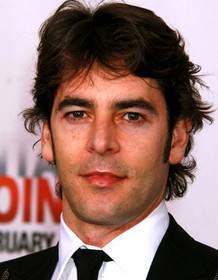
César – Eduardo Noriega
Played by Eduardo Noriega
A handsome, socially adept man whose life is upended by a catastrophic disfigurement. He becomes increasingly driven by a need to control how others perceive him, and by the mystery of his own memories. His arc follows a descent into paranoia as reality and fantasy collide.
- 💫 Charismatic
- 🗝️ Masked
- 🌀 Obsessive
- 💭 Memory-driven
-

Sofía – Penélope Cruz
Played by Penélope Cruz
César’s love interest who initially appears as the woman he loves but is later revealed to be interchangeable with Nuria in his altered perceptions. She embodies allure, vulnerability, and shifting loyalties.
- 💖 Alluring
- 🧭 Complex
- 🔀 Dual identity
-

Nuria – Najwa Nimri
Played by Najwa Nimri
César’s obsessive ex-lover whose presence triggers a deadly chain of events. She embodies jealousy and manipulation, complicating César’s attempts to distinguish love from danger.
- 💔 Jealous
- 🎭 Manipulative
- 🗝️ Hidden motives
- A–
Antonio – Chete Lera
Played by Chete Lera
The prison psychiatrist who presents César’s story through clinical eyes. He anchors the narrative frame and hints at the manipulation behind César’s experiences.
- 🧠 Analytical
- 🏥 Medical
- 🎭 Detached
- D–
Duvernois – Gérard Barray
Played by Gérard Barray
A Life Extension representative who explains the dream-like, future-punctuated reality. He embodies the corporate interests behind the memory-creation technology.
- 🧬 Scientific
- 💼 Corporate
- 🗝️ Mysterious agendas
- P–
Pelayo – Fele Martínez
Played by Fele Martínez
César’s best friend, a date at his party who remains close but is largely a supporting presence. He offers a counterpoint to César’s obsessive behavior.
- 🤝 Loyal
- 🎭 Cheerful
- 🕊️ Honest
Where and When Is Open Your Eyes Set?
Open Your Eyes is set in Madrid and Spain (Contemporary with a future twist). Here is why the time and place matter to the story.
When
Contemporary with a future twist
The action unfolds in present-day Madrid and then reveals a future era glimpsed through Life Extension’s technology, about 150 years ahead. This juxtaposition blurs the boundary between the actual timeline and engineered memories. The time shift is essential to the plot’s exploration of memory, identity, and what it means to wake up.
Where
Madrid, Spain
Madrid serves as the film’s modern, sunlit city backdrop where César’s life shifts from a party scene to a prison cell. The city’s streets, apartments, and public spaces—like Sofía’s flat and the corporate high-rise—frame the characters’ changing perceptions. The claustrophobic interior spaces contrast with the bustling urban exterior, highlighting the tension between reality and illusion.
- 🏙️ Urban
- 🌃 Nightlife
What Are the Themes of Open Your Eyes?
3 ideas the story keeps returning to, among them Identity, Reality and Control.
-
01
Identity
The film interrogates what defines a person—the body, memories, or the story one believes. César’s disfigurement and the insertion of altered memories challenge the notion of a fixed self. The twist that memories can be manufactured questions ownership of one’s life. The goal becomes whether identity can be recovered when memory is rewritten.
-
02
Reality
Perception dominates the narrative as César cannot trust what he experiences. Dream-like sequences, altered memories, and misattributions of love blur the line between real life and illusion. Life Extension’s technology makes the viewer question: what is waking life and what is a fabricated dream?
-
03
Control
A corporate, profit-driven cryonics company wields power over time, memory, and autonomy. People become vessels for manufactured experiences rather than individuals with agency. The film critiques commodification of life and the ethical boundaries of technological progress.
What Kind of Film Is Open Your Eyes?
Dark in tone, with variable pacing and a very complex story, going by the plot summary.
- Tone
- Dark
- Pacing
- Variable
- Story
- Very complex
- Intensity
- High
- Ending
- Ambiguous
A disorienting and paranoid psychological thriller that fractures reality through dream logic, trapping the viewer in a melancholic spiral of identity, memory, and a desperate search for truth amidst profound loss.
- disorienting
- dreamlike
- anxious
- paranoid
- melancholic
- claustrophobic
- memory and identity
- reality vs illusion
- psychological trauma
- disfigurement
Content notes: car accident, disfigurement, murder, suicide, psychological trauma.
Quiz
How well do you remember Open Your Eyes? Test yourself on the story.
Where to Watch Open Your Eyes
Stream it on Amazon MX Player and Amazon Prime Video. US availability and prices from JustWatch.
 Amazon MX Player
  Amazon Prime Video
  Amazon Prime Video Free with Ads
  Amazon Prime Video with Ads
  BFI Player Amazon Channel
  HBO Max
  HBO Max Amazon Channel
  Kanopy
  Lionsgate+ Amazon Channel
  Plex
Plex  Plex Channel
  Tubi TV
  VIX
VIX Streaming availability in the US, powered by