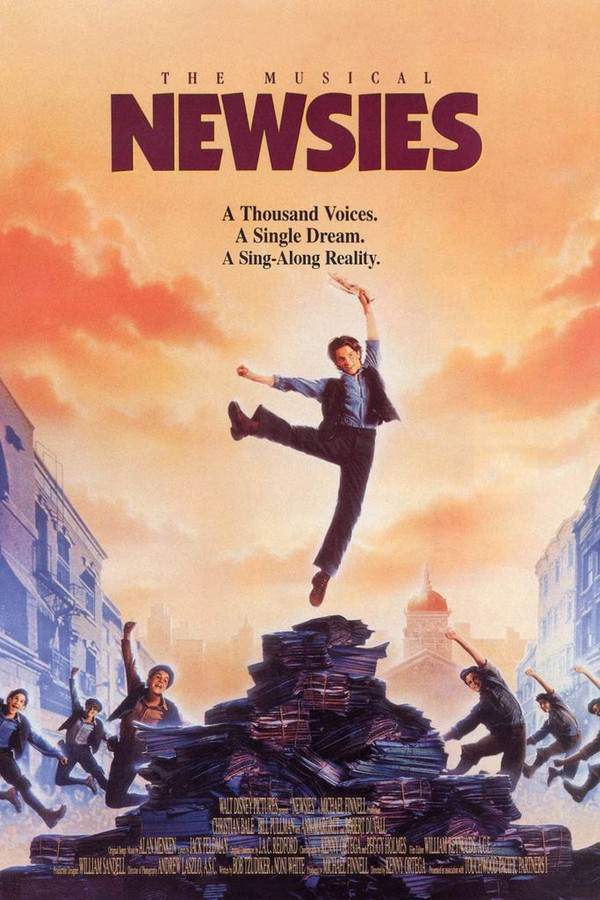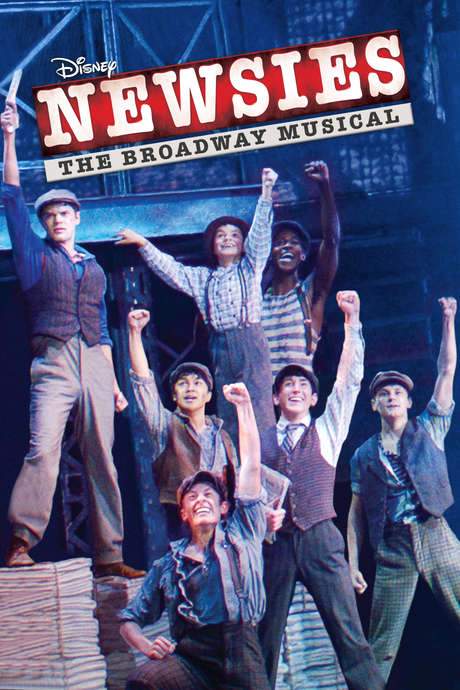
What Is Newsies About?
The premise of Newsies in 305 words, with nothing given away. The full story follows below.
In the bustling streets of turn‑of‑the‑century New York, a chorus of voices rises from the corners, the rooftops, and the newspaper stands. Young sellers, known as newsies, dart through the city’s maze of steam‑filled avenues, their lives intertwined with the clatter of type and the promise of a day’s earnings. The era’s gritty optimism blends with the harsh realities of child labor, creating a world where ambition is as common as the paper they hawk, and every headline feels like a personal battle.
At the heart of this restless tide is Jack “Cowboy” Kelly, a seventeen‑year‑old whose quick wit and daring swagger make him a natural leader among his peers. He lives among the rooftops and alleyways, dreaming of a wider horizon while grappling with the loneliness of a life untethered to family. His charisma draws others in, but beneath his bravado lies a yearning for belonging and a restless spirit that longs for adventure beyond the city’s confines.
Joining Jack’s circle are David Jacobs, an unusually sharp‑eyed newcomer who balances street smarts with a fierce sense of responsibility, and his younger brother Les, whose youthful charm adds a softer edge to the group’s dynamic. Their sister Sarah offers a glimpse of home and hope, anchoring the brothers’ resolve. Overseeing the relentless hustle is Joseph Pulitzer, the powerful publisher whose decisions ripple through the lives of every newsie, shaping the very stakes of their daily grind.
Together, this ragtag crew navigates a world of shouted headlines and relentless pressure, their camaraderie sparking a shared desire for dignity and fairness. The streets pulse with the electric energy of youthful defiance, hinting at a collective stand that could reshape their futures. The mood is both gritty and vibrant, a blend of street‑level grit and soaring optimism that promises an unforgettable fight for what they believe is right.
What Happens in Newsies?
The complete story of Newsies, from the first scene to the last, in 820 words (about 4 minutes). Spoilers throughout. Names in the text link to 5 cast member pages.
Spoilers ahead
In 1899, 17-year-old Jack [Jeremy Jordan] Kelly lives amid a tight-knit crew of New York City newsies, hustling bundles of the New York World on crowded Manhattan streets in a rough-but-resilient world they call the life of a paper hawker. When David Jacobs and his younger brother [Les](/actor/ethan Steiner) join the group, Jack notices David’s intelligence and Les’s easy charm, and he takes them under his wing as if they were family he’s been missing. Invitations to the Jacobs’ home for dinner deepen his longing for a real clan of his own, and he finds himself drawn to their sister Sarah as he fantasizes about leaving the city behind for something brighter, perhaps a chance at Santa Fe, a distant dream of freedom. The mood is bittersweet, a blend of camaraderie and longing that threads through their every day.
When publisher Steve Blanchard Joseph Pulitzer raises the price newsies must pay to buy papers, and grabs credit for the move with the help of his sharp-shouldered right-hand man Bill Bateman Bunsen, Jack and David rally the others to strike The World Will Know. The strike begins to spread as newsies in the city’s other boroughs are alerted, while Jack and Les confront Pulitzer’s power and push back against the system that keeps them underfed and underpaid. The Brooklyn crew, led by Tommy Bracco as Spot Conlon, is reluctantly drawn into the fight, and together they rally a chorus of young workers to stand up for their dignity. The strike is tempered by moments of resolve and song, from the rousing call of Seize the Day to the defiant unity of the group as they defend one another against the forces that would keep them silent and unseen.
Crises mount when the Delancey brothers, enforcers for Pulitzer, capture disabled newsie Crutchie, sending him to the Refuge—a grim orphanage where a corrupt warden allows the city to siphon money meant for care. The boys’ mission to resist becomes personal as they face the cruelty of the system, and the city’s mood begins to tilt in their favor as reporters like Denton bring the story into the light. The newsies improvise a frontline defense, and their unity grows even as the odds tighten around them.
The strike doubles down on courage as the newsies stage a bold response to the crackdown. They publish a makeshift Newsie Banner using an old printing press from Pulitzer’s own facilities, sealing their message with a bold claim that the country’s future depends on their labor and their voices. The action catches the eye of Governor Kevin Carolan Theodore Roosevelt, and the public’s sympathy begins to shift toward the strikers as the truth about the Refuge surfaces. The front page becomes a symbol of solidarity, a beacon that invites others to join the cause and to see that these children deserve more than the cages and cages of greed that have kept them in place. As public opinion shifts, the city’s leaders and citizens alike begin to question the authority that has long upheld this imbalance, and the striking newsies feel the heat of real change inching closer.
In a pivotal confrontation, Pulitzer contemplates offering Jack a path back into paid work if he abandons the strike, but the newsies refuse to retreat. Instead, they press on, knowing that the system cannot endure a united chorus of voices from the streets. Roosevelt acts, the Refuge is dismantled, and the children are freed, with Snyder’s grip on the youth finally loosened and the path to a more just arrangement opening up before them. Jack’s courage becomes a catalyst for the city to reexamine how it treats its youngest workers, and the newsies’ rallying cry—gleaned from their shared experience and their songs—resonates far beyond the streets they know.
As the dust settles, Jack faces a personal choice about where he belongs. He returns with a renewed sense of purpose, welcomed back into the fabric of New York rather than shipped off to distant Santa Fe. The city celebrates the victory as Sarah watches with pride, and the two share a quiet kiss that seals a new chapter for them both. Spot Conlon’s Brooklyn alliance is restored and reinforced, completing a circle of solidarity that proves the power of courage, community, and the belief that every voice can shift a city’s future.
The story is a heartfelt, hopeful portrait of resilience and brotherhood, told with warmth and scope. Its characters move through a dynamic tapestry of friendship, love, and political awakening, all underscored by a memorable soundtrack that keeps the spirit of the newsies alive: a chorus that refuses to stay silent, a city that learns to listen, and a young cast who discovers that the hardest battles can lead to the brightest dawns. The journey from street corners to a city-wide chorus is long, but it ends with a promise that, when people stand together, they can rewrite their own headlines.
Newsies Timeline: Every Key Event in Order
12 key events in the order they happen, from “Life as Newsies in New York City” to “Roosevelt's Intervention and Jack's Return”. 12 events name a place, across 12 locations.
- 1
Life as Newsies in New York City
In 1899, 17-year-old Jack 'Cowboy' Kelly lives with other struggling newsies on the streets of Manhattan, selling copies of The New York World. They endure cold mornings, hot afternoons, and constant hustle as they carry the banners of their trade. Jack dreams of something bigger beyond the pavement of New York.
When:1899 Where:Manhattan, New York City
- 2
Jacobs Family Dinner and Sarah
David Jacobs and his younger brother Les join the newsies, and Jack quickly sees David's intelligence and Les's marketable charm. The brothers are invited to dinner at the Jacobs' home, where Jack meets their sister Sarah. He confesses a longing to reach Santa Fe and a sense of belonging his own family never gave him.
When:early 1899 Where:Jacobs' home
- 3
The World Price Increase and the Strike Begins
Pulitzer raises the price of newspapers for the newsies, triggering outrage among the troupe. Jack and David galvanize the other Manhattan newsies to walk off the job and strike together, chanting a new resolve to tell their side of the story. The strike's spark is lit as 'The World Will Know' becomes their rallying cry.
When:early 1899 Where:Pulitzer's offices / distribution centers, Manhattan
- 4
Confrontation with Pulitzer and Expulsion
Jack and Les confront Joseph Pulitzer at his office, and Pulitzer ejects them from the premises. Bryan Denton, a reporter for The Sun, takes an interest in the boys' story and follows the strike's developments. The confrontation signals the newsies' first real clash with the power behind the newspapers.
When:early 1899 Where:Pulitzer's office
- 5
Brooklyn Newsies Join the Fight
David informs the Brooklyn newsies about the strike, and their leader Spot Conlon reluctantly opposes the walkout. Despite initial resistance, Brooklyn crews begin to rally behind Manhattan, expanding the strike citywide. The movement gains momentum as new voices are drawn in.
When:early 1899 Where:Brooklyn
- 6
Crutchie Captured and the Refuge
Delancey brothers capture Crutchie, a disabled newsie, and he is sent to the Refuge, a grim orphanage and juvenile detention center. Warden Snyder neglects the orphans while embezzling funds meant for their care. The imprisonment of Crutchie underscores the human cost of the conflict.
When:mid-1899 Where:The Refuge
- 7
Trap and Temporary Defiance
The newsies' attempts to deter strikebreakers are revealed as a trap orchestrated by the Delancey brothers. Spot arrives with the Brooklyn newsies, and the two groups manage to repel the mob. Denton reports the clash on The Sun, keeping the public informed of the escalating conflict.
When:mid-1899 Where:City streets / distribution centers
- 8
Publicity Spurs a Citywide Rally
Denton's front-page reporting on The Sun raises public awareness and injects ambition into the movement. The newsies imagine the potential fame of their cause and begin planning a citywide rally to pressure the publishers.
When:mid-1899 Where:The Sun / citywide
- 9
Arrest, Trial, and the Seed of Despair
Snyder informs Pulitzer that Jack is an escapee, leading to Jack's arrest. He is sentenced to four years in the Refuge, while Denton is reassigned as a war correspondent. Pulitzer offers to waive Jack's sentence if he works despite the strike, threatening harsher consequences otherwise.
When:mid- to late-1899 Where:Refuge
- 10
Breakfast, Dreams, and a Bowery Rally
During breakfast atop the Jacobs' apartment building, Jack confesses his dream of fleeing to Santa Fe. Later, Medda Larkson's Bowery performance rallies the gathered newsies to stand together for their cause. The morale boost helps sustain the fight.
When:late 1899 Where:Jacobs' apartment building; Medda's Bowery
- 11
Newsie Banner and Government Pressure
Using an old press from Pulitzer, the kids publish a 'Newsie Banner' that spreads to child laborers citywide, drawing attention to the Refuge abuses. Denton shares the paper with Governor Theodore Roosevelt, exposing the mistreatment of the children. Public sympathy begins to tilt toward the newsies and their cause.
When:late 1899 Where:Pulitzer's press; Governor Roosevelt's office
- 12
Roosevelt's Intervention and Jack's Return
Roosevelt has Snyder arrested, releases the children from the Refuge, and thanks Jack for alerting him to the situation. He offers Jack a ride, but Jack is persuaded to stay in New York after Roosevelt's intervention. The city celebrates as Sarah and Jack kiss and Spot is returned to Brooklyn.
When:late 1899 Where:Governor Roosevelt's office; Brooklyn
Who Are the Main Characters in Newsies?
9 characters, among them Jack Kelly (Jeremy Jordan), David Jacobs (Andrew Wilson) and Les Jacobs (Andrew Keenan Bolger): who each one is and the part they play in the story. Every profile links to the actor’s page.
- JK
Jack Kelly (Jeremy Jordan)
Played by Jeremy Jordan
Charismatic leader of the newsies, Jack mobilizes peers and rallies them against exploitation. He longs for independence and a family, balancing risk with loyalty to friends. His drive to improve conditions for all newsies collides with his personal dream of leaving for Santa Fe.
- 🎯 Leader
- 💪 Determined
- 🗽 Idealist
-

David Jacobs (Andrew Wilson)
Played by Andrew Wilson
Intelligent and resourceful, David works to support his family and helps organize the strike. His strategic thinking and courage make him a key ally to Jack and the newsies. He embodies a pragmatic optimism that sustains the group.
- 🤝 Ally
- 💡 Smart
- 🧭 Pragmatic
- LJ
Les Jacobs (Andrew Keenan Bolger)
Played by Andrew Keenan Bolger
The younger brother who brings a mix of charm and practicality to the cause. His presence helps keep morale up and broadens the movement’s appeal among peers. He supports the plan while maintaining a hopeful outlook.
- 👦 Young
- 🤝 Supportive
- C(
Crutchie (Andrew Keenan Bolger)
Played by Andrew Keenan Bolger
A resilient newsie who uses crutches, Crutchie embodies perseverance amid hardship. His friendship with Jack anchors the group during the toughest moments, including the Refuge ordeal. His optimism and loyalty energize the troupe.
- ♿ Resilient
- 💙 Loyal
- SC
Spot Conlon (Tommy Bracco)
Played by Tommy Bracco
Leader of the Brooklyn newsies, Spot adds breadth to the city-wide effort. He places strategic constraints on the strike while bringing in wider support from other boroughs. His street-smart leadership is vital to uniting the movement.
- 🗽 Rebel
- 🧭 Strategist
- K(
Katherine (Kara Lindsay)
Played by Kara Lindsay
Sister of the Jacobs family, Katherine offers emotional support and resilience. She stands with the newsies, providing care and a voice of compassion within the community. Her presence deepens the connections between families and the movement.
- 💖 Love Interest
- 🎭 Supportive
- ML
Medda Larkin (Aisha de Haas)
Played by Aisha de Haas
Bowery performer and ally, Medda uses her stage presence to rally crowds and lift spirits. She anchors the newsies with music and encouragement, turning public gatherings into moments of solidarity.
- 🎶 Entertainer
- 🕯️ Mentor
- GR
Governor Roosevelt (Kevin Carolan)
Played by Kevin Carolan
A reform-minded political figure who becomes a catalyst for change. Roosevelt’s involvement helps push for accountability and the eventual release of the children from the Refuge. He embodies the possibility of state-led reform.
- 🏛️ Reformer
- 🗳️ Politician
- JP
Joseph Pulitzer (Steve Blanchard)
Played by Steve Blanchard
Publisher of The World and a symbol of the press aristocracy, Pulitzer uses influence and pressure to suppress the strike. He represents the entrenched power structures that profit from the status quo and resist upheaval.
- 📰 Publisher
- 💼 Power
Where and When Is Newsies Set?
Newsies is set in New York City, Manhattan, Bowery and The Refuge (1899). Here is why the time and place matter to the story.
When
1899
Set in 1899, the narrative sits squarely in the Gilded Age of New York, a period of rapid industrial growth and stark urban inequality. The city’s newspaper wars and child labor practices form the backdrop for the drama. Social reform and public opinion play crucial roles as events unfold.
Where
New York City, Manhattan, Bowery, The Refuge
The story unfolds in late 19th-century New York City, centered on the Manhattan streets where newsies hawk The World. The Bowery serves as a hub for performers and struggles, reflecting the era’s rough-edged culture. The Refuge, a city-run orphanage and detention center, highlights the harsh realities facing vulnerable youths of that time.
- 🗽 Historical NYC
- 🏙️ Urban Life
- 👥 Immigrant & Labor
What Are the Themes of Newsies?
3 ideas the story keeps returning to, among them Solidarity, Justice and Reform.
-
01
Solidarity
A core force in the film is the union of disparate newsies who band together to demand fair treatment and better working conditions. Their collective action demonstrates how shared grievances can unite a precarious group into a powerful chorus. The strike becomes more than a fight over wages; it’s a statement of dignity and belonging.
-
02
Justice
The story frames a struggle against exploited labor and institutional neglect, particularly the Refuge system. Journalists, reform-minded leaders, and community figures push for accountability and humane treatment of children. The narrative suggests that justice requires courage, public pressure, and a willingness to challenge those in power.
-
03
Reform
Reform appears as both policy change and social awakening, driven by voices like Governor Roosevelt and investigative journalism. The characters catalyze public awareness that leads to action, such as releasing detained kids and exposing mismanagement. The arc emphasizes that lasting change comes from collective effort and civic engagement.
What Kind of Film Is Newsies?
Hopeful in tone, with steady pacing and a straightforward story, going by the plot summary.
- Tone
- Hopeful
- Pacing
- Steady
- Story
- Straightforward
- Intensity
- Medium
- Ending
- Happy
A rousing and heartfelt musical that follows a group of young strikers fighting for justice, balancing moments of struggle with an uplifting spirit of camaraderie and triumphant hope.
- uplifting
- rousing
- heartfelt
- hopeful
- resilient
- brotherly
- labor strike
- found family
- social justice
- coming of age
Content notes: child exploitation, child endangerment, corrupt institutions.
Quiz
How well do you remember Newsies? Test yourself on the story.