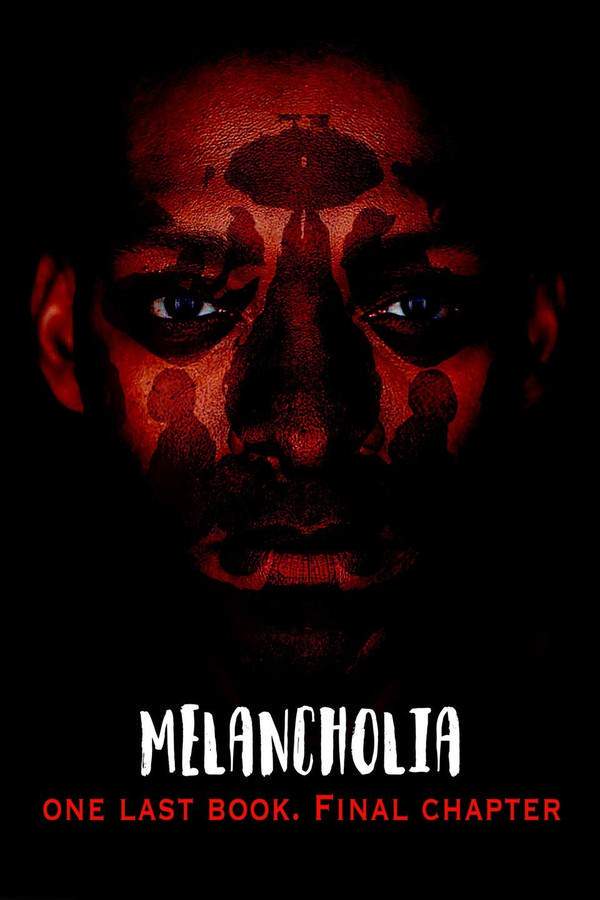
What Is Melancholia About?
The premise of Melancholia in 279 words, with nothing given away. The full story follows below.
In the shadowed, restless corners of a city steeped in unspoken sorrow, a young woman named Alberta drifts through life wearing borrowed identities, her days haunted by a grief she cannot name. She is not alone in her quiet anguish; a woman disguised as a nun, Rina, walks a parallel path, her own burdens pressing just as heavily. Both women carry wounds tied to violence and loss, the invisible scars of a world that has taken more than it has given.
Their lives intersect under the guidance of Julian Tomas, an enigmatic figure who presides over an unorthodox treatment known simply as MELANCHOLIA. Rather than offering traditional counsel, Julian employs a method built on role-play, casting his patients into strange, symbolic scenarios meant to confront the agonies they have long avoided. The therapy blurs the line between performance and reality, demanding that Alberta, Rina, and even Julian himself inhabit personas that both conceal and reveal their deepest truths. A pimp, a prostitute’s client, a live sex show — each becomes a stage for unraveling what lies beneath.
The atmosphere is thick with melancholy and a kind of raw, theatrical despair. Streets, alleys, and modest rooms become the setting for quiet confrontations between past and present, where every interaction carries the weight of memory. Threads of rebellion and political violence linger in the background, hinting at a nation scarred by conflict and at characters whose histories are intertwined with forces larger than themselves.
As the therapy sessions deepen, the boundaries between the roles and the real selves begin to erode, raising unsettling questions about identity, healing, and whether the mind can ever truly escape the gravity of its own sorrow.
What Happens in Melancholia?
The complete story of Melancholia, from the first scene to the last, in 766 words (about 3 minutes). Spoilers throughout.
Spoilers ahead
The film unfolds in three distinct segments followed by an epilogue, although these divisions are not explicitly labeled, allowing the viewer to engage more deeply with the narrative. It opens with a young woman dressing in revealing clothes associated with the sex trade, as she makes her way along a long road leading from her apartment. On her journey, she encounters a nun who is soliciting alms; the woman generously donates some money, showcasing a moment of compassion. However, as the nun continues her path, she meets a pimp who confronts her with disdain, deeming her charitable actions as “useless.”
The young woman, who is a prostitute, forges a friendship with a woman who operates a small convenience store. Later, while returning home, she has an unsettling encounter with the same pimp, who attempts to entice her into his services. She firmly declines, lamenting that she struggles to care for herself. In a café, she faces distress when a large man repeatedly pesters her, calling her “Alberta,” which seems to trigger deep emotions within her. Later, as she prepares to entertain an American client, she is overwhelmed and ends the interaction before it begins, leaving him frustrated and confused.
Continuing her day, the nun persists in her quest for donations, while the prostitute is once again met by the persistent pimp. As events unfold, he orchestrates a “live sex show” to entertain some Japanese clients. The large man reappears, continues to refer to her as “Alberta,” and eventually pays her for her company. However, his request is simple: he asks her to undress and turn around several times, ultimately determining that she is not the “Alberta,” he seeks. He shares a poignant tale of his childhood friend Renato Munoz, who fell in love with a wealthy girl named Alberta, leading him to join the Communist rebellion in the Philippines. This revelation portrays a deep-rooted resentment toward Alberta, who the man believes was solely responsible for his friend’s disappearance.
As the night progresses, the nun, Rina Abad, appears visibly troubled as she undresses in her room, and soon finds herself next door with the prostitute. They reveal to each other the struggles they face due to their involvement in an unconventional therapy led by Julian Tomas. This therapy, aptly named MELANCHOLIA, is designed to help both women cope with their haunting pasts. However, Rina begins to show signs of deeper despair, causing Alberta to grow concerned for her well-being.
Alberta desperately attempts to reach out to Julian, only to be met with vehement denial as he insists, “I am not Julian,” while furthering his commitment to the therapy in unsettling ways. The tension escalates during the live sex show, highlighting their unease with Julian’s escalating commitment to his role. Following this, Rina mysteriously vanishes, leaving Alberta worried about her friend’s health.
Julian’s performance art therapy becomes increasingly surreal and disturbing, where he is seen pacing about, engulfed in the absurdity of his methods. Alberta, concerned for both Rina’s welfare and Julian’s obsession with his therapy, confronts Julian, stating that his methods are neglectful and detrimental to Rina, who has succumed to despair. In an attempt to assist, Alberta rescues Rina’s abandoned daughter, Hannah, from a life of prostitution, bringing her home. As Alberta recounts her and Rina’s childhood friendship, a tragic end looms closer.
Rina’s untimely death leads to a sobering funeral, where Julian is confronted by Rina’s mother, who unequivocally blames him for her daughter’s demise. Gripped by sorrow, Julian retreats into his own depression, wrestling with thoughts of potential suicide. Meanwhile, Alberta comes across Julian’s book titled Melancholia in a bookstore, and is overwhelmed with emotion after reading it.
The film then shifts focus to Renato and the Communist rebels, who navigate the perilous Philippine jungles while grappling with their mental stability. As they fight to maintain hope, the toll of their situation leads one soldier to despair, ultimately resulting in tragedy. Renato, left alone, writes letters to Alberta, chronicling his unyielding sorrow and the inescapable nature of loss, hinting at a tragic fate for himself as well.
Finally, we find Julian in a somber reflection by the river as Alberta confronts one of his earlier performers, expressing doubts about Julian’s therapeutic methods, yet feeling lost in the belief that Julian holds a divine role. Struggling with her own understanding of Julian, Alberta resolutely declares that his therapies are ineffective and to move past the grief of his wife while he continues to cling to his denial, repeating, “I am not Julian” wordlessly emphasizing the profound impact of identity and personal tragedy in their lives.
Melancholia Timeline: Every Key Event in Order
15 key events in the order they happen, from “Introduction of the Prostitute” to “Final Reflection”. 2 events name a place, across 2 locations.
- 1
Introduction of the Prostitute
The film opens with a young woman dressing in provocative clothing to venture out into the streets. Her first steps are marked by a sense of purpose as she walks up a long road from her apartment, indicating her complex relationship with her surroundings.
- 2
Encounter with the Nun
As the prostitute walks, she crosses paths with a nun who is soliciting donations. Demonstrating a moment of compassion, the prostitute gives her some money, showcasing a flicker of humanity amidst her challenging life.
- 3
Pimp's Confrontation
The nun continues her journey but is soon confronted by a pimp who derides her charitable work, proclaiming it to be 'useless.' This incident highlights the stark contrast between compassion and exploitation in their world.
- 4
Friendship at the Convenience Shack
The prostitute finds a fleeting moment of connection with a woman working at a small convenience shack. Their bond offers a glimpse into the everyday struggles and small joys that intertwine their lives in a difficult environment.
- 5
Dinner at the Cafe
While having dinner at a small cafe, the protagonist is persistently harassed by a large man who recognizes her and calls her 'Alberta'. This unsettling encounter showcases her troubled past and hints at deeper connections.
Where:Cafe
- 6
Failed Encounter with an American Client
The prostitute attempts to meet an American client but breaks down in tears, unable to proceed with the encounter. This incident not only frustrates the client but also underscores her emotional turmoil and struggles with her identity.
- 7
Pimp's Further Advances
The following day, the nun continues her charitable efforts, while the pimp once again tries to persuade the prostitute to join his business. His relentless pursuit symbolizes the unfortunate choices faced by women in her position.
- 8
The Man's Story of Renato
After accepting payment from the large man, Alberta learns about his childhood friend, Renato Munoz, who joined a Communist rebellion. This story intertwines her past with the larger social struggles, linking her personal loss to a broader narrative.
- 9
Revelation of Therapy Sessions
As the narrative unfolds, it is revealed that the prostitute, Alberta, and the nun, Rina, are patients in a role-playing therapy led by Julian Tomas. The therapy, aimed at helping them cope with their personal tragedies, shows signs of a darker undertone.
- 10
Deterioration of Rina's Health
Concerned about Rina's mental state, Alberta tries to reach out to Julian to halt the therapy sessions. However, Julian's refusal to break character highlights his own flaws as a therapist and the potential danger of his methods.
Show the other 5 events of Melancholia Hide the last 5 events
- 11
Rina's Mysterious Disappearance
After a particularly troubling live sex show that disturbs both women, Rina goes missing. This escalates the tension and hints that something catastrophic has occurred within their psychological journey.
- 12
Tragic News of Rina's Death
Eventually, Rina's body is discovered, marking a significant turning point in the narrative. Her funeral prompts a confrontation between Julian and Rina's mother, who holds him responsible for her daughter's demise.
- 13
Renato's Fate
In a parallel story, Renato and his comrades endure harrowing conditions in the forest, ultimately leading to a tragic end. The toll of the rebellion on his psyche further echoes the film's theme of despair and loss.
Where:Philippine forest
- 14
Alberta's Confrontation with Julian
Alberta meets with Julian, accusing him of being a fraud and imploring him to acknowledge the failure of his therapy. Despite her pleas, Julian's repeated denial prevents any resolution and deepens the rift between them.
- 15
Final Reflection
The film concludes as Alberta grapples with the impact of Julian’s therapy and her friends' fates. Their intertwined lives illustrate the profound effects of trauma, leaving audiences reflecting on the fragility of human connections.
Who Are the Main Characters in Melancholia?
4 characters, among them Julian Tomas, Alberta Munoz and Rina Abad: who each one is and the part they play in the story. Every profile links to the actor’s page.
-

Julian Tomas
Played by Perry Dizon
Julian is a complex character who struggles with his role as a therapist. He becomes increasingly consumed by his own failures and the consequences of his methods, leading him down a path of despair. His inability to confront his own past and the loss of his wife affects his judgment.
- 🧠 Therapy
- 😞 Despair
-

Alberta Munoz
Played by Angeli Bayani
Alberta is a resilient yet tormented character, navigating her identity amidst societal expectations and past traumas. Her journey reveals her struggle between self-acceptance and the pressure to conform to the roles imposed on her. She seeks to save others while wrestling with her own heartbreak.
- 👩🎤 Resistance
- 💔 Loss
- RA
Rina Abad
Played by Malaya
Rina is seen battling her own demons through the therapy process. Her development showcases the effects of untreated mental illness, leading to tragic consequences. As a nun, she embodies the juxtaposition of faith and despair.
- 🙏 Faith
- 😔 Tragedy
- RM
Renato Munoz
Played by Roeder Camanag
Renato is portrayed as a committed revolutionary whose love for Alberta pushes him to fight against oppression. His character arc depicts the emotional toll of conflict and the burden of unfulfilled love, culminating in a tragic ending.
- ✊ Activism
- 💔 Heartbreak
Where and When Is Melancholia Set?
Melancholia is set in Philippines. Here is why the place matters to the story.
When
The movie does not specify a particular time period but addresses contemporary issues faced by individuals in a modern societal context. The backdrop of a rebellion suggests a historical tension with social and political implications that resonate with Philippine history.
Where
Philippines
The film takes place in the Philippines, providing a backdrop that reflects both urban and rural struggles. It is known for its vibrant culture, marked by contrasts between poverty and a rich tradition, particularly in relation to the struggles faced by marginalized individuals.
- 🏝️ Location
- 🌆 Urban
What Are the Themes of Melancholia?
3 ideas the story keeps returning to, among them Mental Health, Rebellion and Role-play Therapy.
-
01
Mental Health
The film encapsulates the struggles with mental health and the effects of past traumas on individuals' lives. Through the characters of Alberta and Rina, it explores the intense challenges faced while navigating recovery and the weight of loss and depression.
-
02
Rebellion
The theme of rebellion is woven throughout the narrative, particularly through the backstory of Renato and his socialist fight. It highlights the personal costs of political conflicts, emphasizing the relationships that are strained in the name of ideology.
-
03
Role-play Therapy
Julian's immersion into role-playing therapy represents an exploration of identity and the human condition. This theme raises questions about the nature of reality, touching upon how deeply our past experiences shape our present selves.
What Kind of Film Is Melancholia?
Melancholic in tone, with slow pacing and a complex story, going by the plot summary.
- Tone
- Melancholic
- Pacing
- Slow
- Story
- Complex
- Intensity
- High
- Ending
- Bleak
A slow, oppressive meditation on grief and madness that layers a bizarre role-playing therapy over stories of war trauma, where every scene drips with quiet devastation and characters spiral toward inescapable sorrow.
- melancholic
- oppressive
- slow burn
- somber
- contemplative
- haunting
- grief and loss
- role-playing therapy
- trauma recovery
- political violence
Content notes: suicide, death, sex work, war violence, self harm, disturbing therapy.
Quiz
How well do you remember Melancholia? Test yourself on the story.