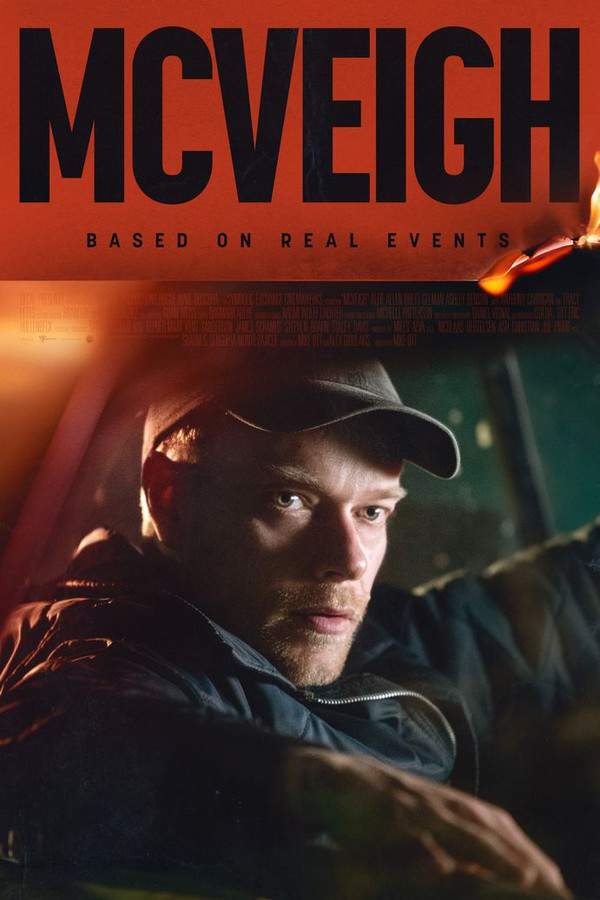
McVeigh 2025


Directed by

Mike Ott
Made by

CinemaWerks
Where to Watch McVeigh
See current US streaming, rental, and purchase options for McVeigh (2025) via JustWatch.

Philo
HD
Starz
HD
Starz Amazon Channel
HD
Starz Apple TV channel
HD
Starz Roku Premium Channel
HD
Kanopy
HD
Amazon Video
4K
Apple TV Store
4K
Fandango At Home
4K
Google Play Movies
SD
YouTube
SD Streaming availability powered by 
McVeigh Plot Summary
Read the complete plot summary and ending explained for McVeigh (2025). From turning points to emotional moments, uncover what really happened and why it matters.
Timothy McVeigh, Alfie Allen, is a quiet, solitary former army veteran who sells anti-government stickers at roadside fairs in Kansas and Oklahoma. He watches the news with growing outrage as the Waco siege becomes a flashpoint in a heated national debate, with President Clinton and Attorney General Janet Reno placing the Branch Davidians at the center of government action. The bombardment of headlines and televised panels feeds a belief that the government is overstepping its constitutional bounds, pushing McVeigh toward a drastic idea that he must act to protest what he sees as a corrupt system. The film paints a portrait of a man whose sense of grievance is shaped by selective information, a feeling of being unheard, and a belief that violence might force the state to change course.
McVeigh’s path to violence becomes more concrete after he meets Richard Wayne Snell, Tracy Letts, a white supremacist and convicted murderer whose execution is scheduled for April 19, 1995. Those conversations, set against windowed glimpses of a harsh, tense America, pull McVeigh deeper into a world where extremism seems to offer clarity and purpose. After several visits to Tucker Unit in Arkansas, McVeigh becomes convinced that he must do something to oppose the government, and he reaches out to Terry Nichols, Brett Gelman, a fellow Army veteran who agrees to help gather the means for a bomb, including fertilisers and nitrate. The bond between their plans and the networks they touch begins to form a dangerous, accelerating momentum, one that moves from conspiracy to concrete preparation.
Into this orbit enters Frédéric, a French Canadian who lives in Elohim City and knows of McVeigh’s ties to Snell, played by Anthony Carrigan. Frédéric’s presence introduces a layer of suspicion and uncertainty, and the relationship between McVeigh and this new figure quickly becomes entangled with questions of loyalty and trust. After a visit to Elohim City, McVeigh grows wary of Frédéric and abruptly cuts the interaction short, but the pause only sharpens his determination to move forward with his plan. The tension is intensified by McVeigh’s personal life, as he meets Cindy, a waitress at a roadside gas station, Ashley Benson, and the two form a rapid, intimate bond. The relationship offers a brief respite from his fixation, yet it also exposes him to the possibility of exposure and betrayal, gnawing away at his paranoia. When Cindy stays at McVeigh’s home, fear takes over—he becomes convinced that she could uncover his intentions, and that fear drives a further rift in their fragile connection.
After the relationship dissolves, McVeigh doubles down on the plan. He rents a truck and enlists Nichols to help load the explosives, moving from calculation to action with a chilling sense of inevitability. The day itself unfolds with a sense of randomness and peril: McVeigh goes to Nichols’s home only to find him gone, then calls an unknown person from a public phone and invites this anonymous party to join the mission. The face of that companion remains hidden, a constant reminder of the danger that emerges when ordinary lives tip into violence. The film slowly builds the sense of a moment that will reverberate for decades, focusing not only on the mechanics of the plot but on the psyche that drives it—an often chilling study in grievance, isolation, and misinterpretation of constitutional fear.
As dawn breaks on April 19, 1995, McVeigh and his unnamed accomplice ride toward downtown Oklahoma City, a cityscape about to be shattered by an act that would redefine a nation’s sense of security. The narrative then shifts to the quiet, almost documentary-like portrayal of Richard Wayne Snell’s own seclusion at Cummins Unit, a counterpoint that underscores the coincidences and convergences within a web of extremism. The film does not sensationalize its subject; instead, it juxtaposes the escalating violence with real-world consequences and people left to bear the immediate and long-term impact of the attack. In the closing stretch, the film interweaves archival footage from news coverage and family interviews with clips from a 60 Minutes interview, offering a stark, unvarnished look at the human cost of McVeigh’s actions. The result is a sobering meditation on how a single, misinformed impulse can unleash consequences that ripple through communities, families, and the national memory for years to come.
McVeigh Timeline
Follow the complete movie timeline of McVeigh (2025) with every major event in chronological order. Great for understanding complex plots and story progression.
McVeigh's quiet life and anti-government stance
Timothy McVeigh is depicted as a quiet, solitary army veteran who sells anti-government stickers at roadside fairs in Kansas and Oklahoma. The film establishes his disenchantment with the government and his willingness to act if pushed.
Outrage over Waco siege and media coverage
McVeigh watches news coverage of the Waco siege and government responses, fueling his sense of grievance. He absorbs claims that the Branch Davidians provoked the FBI, pushing him toward violence.
Visits to Richard Snell at Tucker Unit
He makes several visits to Richard Wayne Snell, a white supremacist and convicted murderer, who has an execution date set for April 19, 1995. The meetings further radicalize McVeigh's belief that he must act against the government.
Decision to act and recruiting Nichols
After his visits, McVeigh becomes convinced he has to challenge the government and recruits fellow veteran Terry Nichols. Together they begin gathering materials to build a bomb, including fertilizers and nitrate.
Frédéric's arrival and Elohim City connection
Frédéric, a French Canadian living in Elohim City, approaches McVeigh and learns of his network. The encounter widens McVeigh's circle but also raises suspicions that cause him to reassess his plan.
Suspicion and accelerated plans
After visiting Elohim City, McVeigh grows suspicious of Frédéric and leaves abruptly. The encounter accelerates his resolve to act sooner rather than later.
Romantic encounter with Cindy
McVeigh meets Cindy, a waitress at a roadside gas station, and they quickly form a sexual connection. The relationship becomes entangled with his secret plans as his paranoia grows.
Cindy stays at his home and raises suspicion
Cindy stays at McVeigh's home, and he becomes paranoid that she might uncover his plan. This fear strains the relationship and pushes him toward completing the mission.
Breakup with Cindy and full commitment to the bombing
After their relationship ends, McVeigh fully commits to the bombing. He rents a truck and enlists Nichols to help load the explosives.
Day of the attack: plan comes together with a mysterious accomplice
On the morning of the attack, McVeigh goes to Nichols's home only to find he has left. He then calls an unknown person from a public phone and brings this accomplice to Oklahoma City. The face of the accomplice is never shown.
Drive to downtown Oklahoma City to carry out the bombing
McVeigh and the unknown companion drive toward downtown Oklahoma City to execute their plan. The movie interleaves footage of the unfolding catastrophe with moments that emphasize the scale of the attack.
Richard Snell's execution waiting at Cummins Unit
As the city plans its attack, Richard Snell sits in seclusion at Cummins Unit, awaiting his own execution. The parallel timelines heighten the sense that acts of violence are part of a broader, doomed cycle.
Aftermath: news clips and 60 Minutes interview
The film ends with real-life news clips showing victims' families and the devastation of the bombing. An archive interview from 60 Minutes features McVeigh justifying his actions.
McVeigh Characters
Explore all characters from McVeigh (2025). Get detailed profiles with their roles, arcs, and key relationships explained.
Timothy McVeigh (Alfie Allen)
A quiet, solitary army veteran who sells anti-government stickers at roadside fairs in Kansas and Oklahoma. Outraged by the Waco siege, he becomes fixated on taking action against the government. He recruits fellow army veteran Terry Nichols to help gather materials to build a bomb, and his paranoia about others discovering his plan grows. His relationships, including a brief bond with Cindy, are overshadowed by his escalating secrecy.
Terry Nichols (Brett Gelman)
A fellow army veteran who aids Tim in collecting fertilisers and nitrate for the bombing. He remains loyal and pragmatic, helping to move the plot forward despite the danger. His role is crucial in turning Tim's plan into a concrete operation, while wrestling with the moral implications of their actions.
Frédéric (Anthony Carrigan)
A French Canadian living in Elohim City who knows of McVeigh's connections with Snell. He approaches Tim and becomes a catalyst for suspicion and caution, eventually leaving when Tim's paranoia grows. His presence in the story highlights the suspicion and networking that surround radical plans.
Cindy (Ashley Benson)
A waitress at a roadside gas station who shares a quick sexual bond with Tim, offering a momentary human connection. As Tim becomes more paranoid about exposure, their relationship suffers and ultimately ends, underscoring Tim's isolation and single-minded focus on the plan.
Richard Wayne Snell (Tracy Letts)
A white supremacist and convicted murderer whose execution date looms during the film. He is depicted as part of the radical milieu that frames Tim's actions, with the Cummins Unit awaiting his execution serving as a grim counterpoint. The film uses archival footage and interviews to juxtapose Snell's ideology with Tim's plan and its consequences.
McVeigh Settings
Learn where and when McVeigh (2025) takes place. Explore the film’s settings, era, and how they shape the narrative.
Time period
1995
The story unfolds in 1995, against the backdrop of post-Waco fed into rising anti-government sentiment. It traces the months leading up to the Oklahoma City bombing, culminating in the attack on April 19, 1995. News clips of victims and survivors anchor the period, underscoring the era's gravity.
Location
Kansas, Oklahoma, Tucker Unit (Arkansas), Elohim City, Oklahoma City
Set in the rural Midwest and urban Oklahoma City, the film showcases the contrast between small-town life and the scale of a planned attack. It follows McVeigh through roadside fairs in Kansas and Oklahoma to the more insular communities of Elohim City and the Arkansas Tucker Unit, before culminating in Oklahoma City's downtown. The landscapes and settings emphasize the film's themes of isolation, violence, and national consequences.
McVeigh Themes
Discover the main themes in McVeigh (2025). Analyze the deeper meanings, emotional layers, and social commentary behind the film.
🪖
Radicalization
The narrative traces how a quiet, solitary veteran becomes convinced that action against the government is necessary. It shows the pull of extremist networks and the ease with which personal grievances can escalate into violent plans. The film examines manipulation, loyalty, and the lure of cause-driven identity. It also highlights how ordinary lives are redirected into catastrophic violence.
💥
Consequences
The film foregrounds the human cost of Tim McVeigh's actions, using real news clips and victim families to frame the devastation. It juxtaposes intimate moments with the cold logic of the plot to show moral ambiguity and the aftermath of violence. The narrative makes clear the wide-reaching impact of domestic terrorism on communities, families, and the country.
🔒
Secrecy
Secrecy drives the story, with Tim hiding his plan and a mysterious unknown accomplice entering the scene. Paranoia colors Tim's relationships, from his bond with Cindy to his mistrust of Frédéric. The film relies on suppressed information and unseen faces to heighten tension and explore how concealment enables catastrophe.

Coming soon on iOS and Android
The Plot Explained Mobile App
From blockbusters to hidden gems — dive into movie stories anytime, anywhere. Save your favorites, discover plots faster, and never miss a twist again.
Sign up to be the first to know when we launch. Your email stays private — always.
Explore the mobile appMcVeigh Ending Explained
Unravel the ending of McVeigh (2025) with our detailed explanation. Understand the final scenes, character fates, and unresolved questions.
The film “McVeigh” culminates with Timothy McVeigh driving alone into Oklahoma City, heading toward his planned attack, after his accomplice Terry Nichols backs out at the last minute. The narrative reveals McVeigh’s deep anger at government injustices, especially the Waco siege of 1993, which he viewed as a brutal, fatal assault on American freedoms and innocent lives. The Waco incident left a lasting impression on him, fueling his beliefs that the government was oppressive and corrupt. McVeigh’s support for the radical Zionist and white supremacist views is also evident earlier in the film, where he visits a fellow racist in prison, Richard Snell, who was scheduled for execution on the same day as the Oklahoma City bombing. Snell’s belief that the government was behind the Mount Carmel fire and his own hatred for the authorities strongly influence McVeigh’s decision to target the Alfred P. Murrah Federal Building, choosing the anniversary of the Waco massacre for his attack, as a symbolic act of defiance.
Throughout the film, McVeigh’s disdain for authority is palpable—shown when he points his gun at the image of Janet Reno on TV and expresses his wish to kill her, symbolizing his feelings of anger and revenge. His visits to Snell in prison highlight his alignment with racist and anti-government ideologies, which underpin his own motivations for radical violence. The film concludes with McVeigh arriving in Oklahoma City, intending to carry out his plan, while Nichols, earlier shown to have helped with the bomb ingredients, has already fled, illustrating that McVeigh acts on his own. The story ends with the infamous explosion that devastated the federal building, resulting in 168 deaths and hundreds of injuries, a tragic culmination of McVeigh’s extremist beliefs and motives rooted in government hostility.
After the attack, McVeigh is quickly arrested and later sentenced to death, executed in 2001, while Nichols is captured and remains in prison. The film emphasizes the tragic consequences of a radicalized mindset and how events like Waco and Ruby Ridge can push individuals like McVeigh toward violence. In the aftermath, the narrative underscores the lasting scars of that day and the dangerous ideology that fueled it, leaving viewers with a somber reflection on the destructive power of hatred, extremism, and perceived injustice. The ending thus ties together McVeigh’s personal motivations with the broader political and psychological currents that led to one of the most devastating acts of domestic terrorism in U.S. history.
McVeigh Spoiler-Free Summary
Discover the spoiler-free summary of McVeigh (2025). Get a concise overview without any spoilers.
In the roadside towns of the American heartland, Timothy McVeigh drifts through a solitary life as a former army veteran, selling anti-government stickers at dusty fairs in Kansas and Oklahoma. The world around him hums with a quiet unease, shaped by televised debates and headlines that frame a nation in conflict with itself. McVeigh is a man of few words, watching and absorbing, his silence masking a growing sense of being unheard in a country he feels has drifted from its founding principles.
The simmering tension reaches a breaking point as the Waco siege becomes a national flashpoint, with government action dominating the news cycle and deepening his conviction that the state has overstepped its constitutional bounds. What emerges is less a portrait of a villain than a chilling study of a psyche shaped by selective information, isolation, and an unshakable belief that violence might be the only language a deaf government will heed. The film captures the slow, unsettling drift from grievance to ideology, painting a portrait of a man who sees himself not as an aggressor, but as a reluctant actor in a drama of national consequence.
As McVeigh’s world contracts around his sense of purpose, the film adopts a somber, almost documentary-like restraint, refusing to sensationalize as it delves into the architecture of a mind primed for catastrophe. Tensions simmer in every encounter, every whispered conversation, every glance at the world beyond his modest existence. The tone is one of mounting dread, a steady accumulation of small, fatal choices that hint at something far larger than any single life.
Rather than dramatizing what comes next, the film lingers in the spaces between—anonymous phone calls, brief connections that threaten to expose hidden intentions, and a nation whose televised anxieties provide both fuel and justification. It is a meditation on how isolation and conviction can intertwine, and how a single misinformed impulse can quietly gather the weight of history.
Movies with Similar Twists and Themes
Uncover films that echo the narrative beats, emotional arcs, or dramatic twists of the one you're exploring. These recommendations are handpicked based on story depth, thematic resonance, and spoiler-worthy moments — perfect for fans who crave more of the same intrigue.

Featured on this page

What's After the Movie?
Not sure whether to stay after the credits? Find out!
Check out our other apps:

SAT Sphere
Build confidence for the Digital SAT.

Mori Atlas
Discover wild places worth protecting.

Luntero
Search smarter for a home in Amsterdam.

Plot Explained
Unravel movie endings and hidden clues.

Pokechamp
Dive into Pokémon data and battle logic.

Driving Theory
Get ready for your European theory test.

Movie Dust
Plan your next cinema trip with ease.

Musemap
Find art and culture as you travel.

Selkobase
Compare credentials before committing.

Local Manual
Turn an unfamiliar country into practical next steps.

Lernavi
Compare school systems before your next move.

GymRoam
Find a workout stop wherever your plans take you.
Explore Our Movie Platform
New Movie Releases (2026)
Famous Movie Actors
Top Film Production Studios
Movie Plot Summaries & Endings
Major Movie Awards & Winners
Best Concert Films & Music Documentaries
Movie Collections and Curated Lists
© 2026 What's After the Movie. All rights reserved.
Privacy Policy