
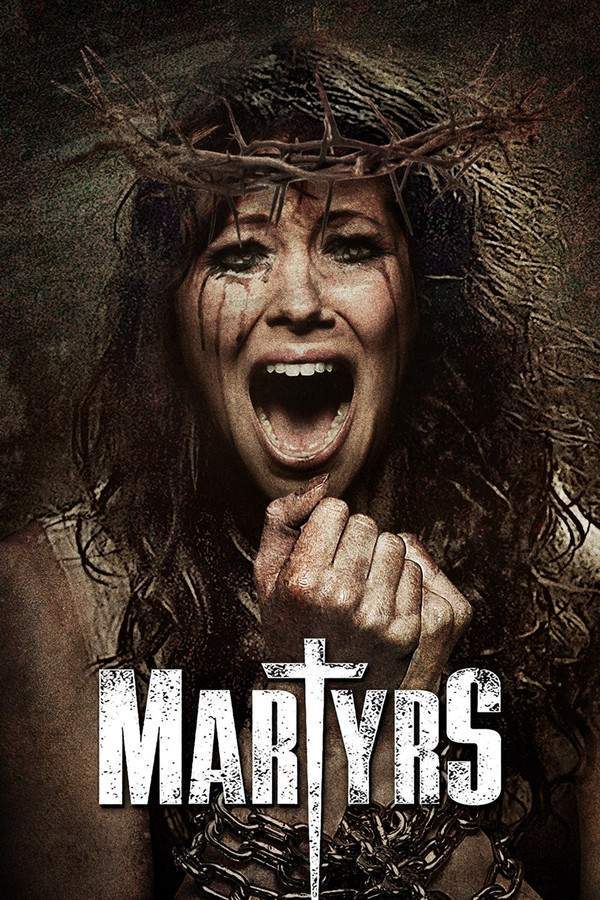
What Is Martyrs About?
The premise of Martyrs in 308 words, with nothing given away. The full story follows below.
In a bleak landscape scarred by memory, Lucie lives haunted by the echo of a childhood she barely escaped. The walls of an orphanage become both sanctuary and prison, its corridors filled with restless shadows that stalk her in waking hours and in the nightmarish visions that refuse to fade. Her isolation is broken by a singular bond with Anna, a fellow resident whose quiet strength offers a fragile lifeline in a world that has stripped both of safety and hope.
When the years finally stretch thin enough for Lucie to act, the two women are drawn together by a shared resolve to confront the unseen forces that have shaped their pain. Their partnership is forged in a tense mixture of vengeance and yearning for answers, setting them on a path that leads beyond the familiar walls of the orphanage and into a terrain where reality feels as fragile as a whispered secret. The atmosphere remains claustrophobic and oppressive, punctuated by an ever-present sense that something far larger—and far darker—lurks behind ordinary façades.
Their investigation uncovers a clandestine collective obsessed with the mysteries of what lies beyond death. This secretive group pursues an unsettling doctrine, testing the limits of human endurance in the belief that extreme suffering may grant a fleeting glimpse of an otherworldly truth. The tone grows increasingly harrowing, balancing stark physical peril with profound psychological dread, as the protagonists are forced to grapple not only with external threats but also with the torment that has long defined their lives.
Through moody, relentless storytelling, the film paints a world where trauma becomes a catalyst for a desperate search for meaning. The bond between Lucie and Anna drives the narrative forward, inviting viewers into a tense, unsettling journey where every hidden corner could hold the revelation—or the ruin—every promise of escape teeters on the edge of sacrifice.
What Happens in Martyrs?
The complete story of Martyrs, from the first scene to the last, in 523 words (about 2 minutes). Spoilers throughout.
Spoilers ahead
As a child, Lucie Jurin escapes from a building where she has been held captive and tortured. She spends the rest of her childhood at St. Mary’s Orphanage, where she is haunted by visions of a strange-looking creature that seems to attack her at every turn. Over time, she grows extremely close to Anna Assaoui, a fellow resident and Lucie’s only friend.
Ten years later, Lucie travels to the countryside home of the Patterson family with a shotgun and executes all four members, convinced they are connected to her childhood torment. She calls Anna, who fears the family may not be responsible for Lucie’s torture. Anna is horrified by the scene when she arrives and calls 9-1-1 while Lucie sleeps, but she hangs up. She discovers Mrs. Patterson is still alive and tries to help her escape. Lucie suddenly tackles Mrs. Patterson outside and stabs her to death. While cleaning the crime scene, Anna finds a secret panel in a closet that leads to a hidden basement. There, she discovers a little girl named Sam and rescues her. The three girls regroup and safely make their exit from the basement, but trucks arrive with Eleanor, Fenton, and several other people who give chase; after a tense pursuit, all three girls are captured and taken into custody.
Later, Anna is interrogated by Eleanor, who explains that her group is a collective dedicated to discovering what waits in the afterlife. By torturing women and young girls to their breaking points, they believe they can create Martyrs with the ability to glimpse briefly into “the other side.” Anna is thanked for bringing Lucie back and learns that Lucie is considered a rare find—someone capable of enduring great pain without dying. As an example, Eleanor has Anna watch from an overhead room as a captive woman is burned at the stake. After the woman dies, the priest overseeing the ordeal looks toward Eleanor and shakes his head. Lucie is taken for surgery, and the doctor performs a procedure that cuts and peels a piece of flesh from her back as part of the final preparations for martyrdom.
Meanwhile, Anna is buried alive outside for being Lucie’s accomplice, but she digs her way into a drainage ditch and escapes. She fights her way back into the underground facility, killing several cabal members. She frees Sam and tells her to run for help. While she searches for Lucie, she is attacked by Fenton and shot in the shoulder but ultimately kills him with the help of another captive woman. Anna is stabbed in the side by one of the cabal members before shooting him.
Anna finds and interrupts an assembly gathered to watch Lucie die on a cross. Lucie conveys a whispered truth to Anna, who insists that Lucie be freed. Lucie reveals what she saw in that moment, and Eleanor demands to know what was said; the priest, hearing the whispers, kills himself. Anna shoots Eleanor, and the remaining cabal members flee. Anna embraces Lucie as they lie dying on the floor. With the police on their way, both women’s eyes glaze over with the look of martyrdom.
Martyrs Timeline: Every Key Event in Order
13 key events in the order they happen, from “Lucie escapes her captivity” to “Climactic end: Eleanor falls and martyrdom looms”. 13 events name a place, across 11 locations.
- 1
Lucie escapes her captivity
As a child, Lucie escapes from the building where she has been held and tortured. She flees into the outside world but is haunted by what she endured, setting the tone for her fragile psyche. The escape marks the first moment that drives her toward further violence later in life.
When:childhood Where:Captivity building
- 2
Lucie finds refuge at St. Mary's Orphanage
Lucie spends her early years at St. Mary's Orphanage, where she is plagued by frightening visions. The hauntings involve a strange creature that seems to threaten her at every turn. The orphanage becomes a fragile home where trauma persists as a daily presence.
When:childhood Where:St. Mary's Orphanage
- 3
Lucie befriends Anna Assaoui
Over time, Lucie grows extremely close to Anna, who becomes her only real friend at the orphanage. Anna provides companionship and a sense of safety amid the dark memories. Their bond becomes a central thread that ties their fates together.
When:childhood Where:St. Mary's Orphanage
- 4
Ten years later: Lucie travels to the Patterson home
Ten years after her past trauma, Lucie travels to the Patterson countryside home armed with a shotgun. She executes all four family members, convinced they are linked to her torture. The brutal killings propel the plot into a new and dangerous phase.
When:ten years later Where:Patterson countryside home
- 5
Anna arrives and a deadly confrontation unfolds
Anna arrives at the Patterson house and is horrified by what she finds. She discovers that Mrs. Patterson is alive and attempts to help her escape, while Lucie suddenly attacks outside and kills Mrs. Patterson. Anna witnesses the violence and calls for help as danger looms.
When:present Where:Patterson countryside home
- 6
Hidden basement revealed
While cleaning the crime scene, Anna finds a secret panel in a closet that leads to a hidden basement. There she discovers a little girl named Sam and decides to rescue her. The basement reveals the darker side of the cabal and its conspiratorial operations.
When:same night Where:Hidden basement behind a closet
- 7
Escape turns to pursuit by the cabal
The trio regroups and escapes the basement, but trucks arrive with Eleanor, Fenton, and other cabal members who pursue them. A violent chase ensues, and the three girls are ultimately captured and taken under custody. The pursuit tightens the sense that the cabal will stop at nothing to maintain control.
When:same night Where:Patterson countryside area and underground facility
- 8
Interrogation reveals the cabal's beliefs
Anna is interrogated by Eleanor, who explains that the cabal tortures women to create martyrs with the aim of glimpsing the other side. Eleanor praises Anna for bringing Lucie back and reveals the brutal ritualistic mindset of their group. The scene exposes the dangerous ideology at the heart of the conspiracy.
When:post-capture Where:Interrogation room
- 9
Lucie is prepared for martyrdom
Lucie is taken for surgery as part of the final preparations for martyrdom. A doctor performs a brutal procedure by cutting and peeling flesh from her back. The scene underscores the extreme measures the cabal uses to induce a powerful ritual crossing.
When:post-capture Where:Underground facility surgical room
- 10
Anna is buried alive and fights her way out
Anna is buried alive outside the facility for being Lucie’s accomplice. She digs through a drainage ditch and escapes, then fights her way back inside to continue the fight. Her escape becomes a crucial turning point in the struggle against the cabal.
When:same night Where:Pit outside the facility
Show the other 3 events of Martyrs Hide the last 3 events
- 11
Sam is freed and the rescue escalates
Anna frees Sam and urges her to run for help while she battles cabal members inside the facility. She endures injuries but is aided by another captive woman in continuing the fight. The rescue effort intensifies as their chances of survival hinge on precision and courage.
When:during escape Where:Underground facility
- 12
Confrontation at the cross and the whispers
Anna interrupts an assembly gathered to witness Lucie die on a cross. Lucie whispers something to Anna, a revelation that unsettles the cabal. The priest who hears the whispers then kills himself, signaling the violence and ritual are unraveling.
When:final moments Where:Assembly room with a cross
- 13
Climactic end: Eleanor falls and martyrdom looms
Anna shoots Eleanor and the remaining cabal members scatter in the ensuing chaos. Anna and Lucie lie dying as police approach, both with a look of martyrdom in their eyes. The pursuit ends with the collapse of the cabal and a grim, equivocal peace.
When:final moments Where:Main confrontation area
Who Are the Main Characters in Martyrs?
7 characters, among them Lucie Jurin, Anna Assaoui and Sam: who each one is and the part they play in the story.
- LJ
Lucie Jurin
A survivor of childhood torture who becomes the central figure in the group's deadly obsession with martyrdom. She endures extreme pain during the cabal's attempts to extract or confirm her alleged connection to the afterlife, haunted by visions of a strange creature. Her resilience and the severity of her trauma drive much of the plot and moral tension. Lucie's arc questions whether survival can ever be separated from complicity in violence.
- 🩸 Trauma
- 👁️ Hallucinations
- 🧭 Survival
- AA
Anna Assaoui
Lucie's friend from the orphanage who becomes a crucial ally in the fight against the cabal. She coordinates with others to rescue Sam and confront the group, showing courage and resourcefulness under extreme duress. Anna's loyalty and determination anchor the film’s most hopeful moments, even as she faces grave danger. Her actions test the limits of friendship and justice.
- 🧭 Courage
- 👯 Friendship
- S
Sam
A little girl found in the hidden basement who represents innocence amid brutality. Her rescue is the catalyst for the protagonists' efforts to dismantle the cabal, and she embodies the stakes of the struggle. Sam's presence emphasizes the impact of violence on children and the possibility of saving them through brave intervention. She serves as a quiet, vulnerable symbol within the chaos.
- 👶 Child
- 🛡️ Innocence
- E
Eleanor
The leader of the cabal, orchestrating torture and ritualized cruelty to push the limits of control and belief. She values Lucie as a rare asset capable of sustaining the group's violent experiments and public demonstrations. Eleanor's management of the operation reveals a calculating, manipulative antagonist who embodies ideological extremism. Her authority is challenged as the protagonists fight back.
- 🕯️ Cult Leader
- 🧭 Control
- F
Fenton
A member of the cabal who enforces the group's brutal agenda, pursuing the protagonists with relentless violence. He embodies the physical threat and moral derision at the heart of the cult's power. His confrontations with Anna and the others escalate the film's action and danger. Fenton's role underscores the brutal reality of organized cruelty.
- 🗡️ Violence
- 🏃♀️ Pursuit
- TP
The Priest
A religious figure overseeing the cabal's rituals, whose authority legitimizes the torture and sacrifice. His demise—driven by a failed tacit approval and a gun in his mouth—signals the collapse of the cabal's moral justification. The priest embodies the perversion of faith used to justify cruelty. His presence reveals the intersection of religion and power in the story.
- ⛪ Religious Figure
- ☠️ Death
- MP
Mrs. Patterson
The Patterson family matriarch who becomes involved in Lucie's violent rage at the countryside home. She survives the initial onslaught only to fall victim to Lucie's attack, illustrating the indiscriminate and devastating reach of the trauma inflicting on the family. Her character marks a pivotal moment of violence that intensifies the pursuit and moral stakes for Anna and Lucie. Mrs. Patterson's fate underscores the film's themes of vengeance and loss.
- 👩👧👦 Family
- 🩸 Violence
Where and When Is Martyrs Set?
Martyrs is set in St. Mary's Orphanage, Patterson family countryside home and Underground cabal… (Contemporary). Here is why the time and place matter to the story.
When
Contemporary
Set in contemporary times, the events move between modern institutional spaces and a hidden facility, suggesting a recent past or present context. The setting implies the use of current-era means of transport, medical procedures, and concealment for the cabal's activities. The present-day milieu underscores how trauma from the past can persist and clash with attempts at resistance in the here and now.
Where
St. Mary's Orphanage, Patterson family countryside home, Underground cabal facility
The story unfolds across an isolated orphanage where Lucie spends her childhood, a remote countryside home where a brutal massacre unfolds, and a hidden underground facility used by a secret cabal. These locations create a tense maze of confinement, pursuit, and ritual that drives the film's horror. The contrast between quiet rural spaces and brutal acts amplifies the sense of vulnerability and control at the core of the narrative.
- 🏚️ Orphanage
- 🏡 Countryside
- 🕳️ Underground Facility
What Are the Themes of Martyrs?
4 ideas the story keeps returning to, among them Martyrdom, Trauma and Resistance.
-
01
Martyrdom
The cabal seeks to forge martyrs by torturing women to glimpse the afterlife, turning suffering into a ritualized spectacle. Lucie becomes the focal point of these rites, her endurance framed as a gateway to supernatural revelation. The film stages public demonstrations—like a council watching a torment—highlighting the perverse glamour of martyrdom. The clash between spiritual longing and human cruelty drives the emotional weight of the story.
-
02
Trauma
Childhood abuse and the hauntings at the orphanage reveal a deep-seated trauma that shapes every character’s choices. The narrative shows how trauma distorts perception, fueling obsession and violence while also provoking moments of resilience. The presence of Anna and Sam offers a counterbalance to the horror, hinting at healing through solidarity. The film examines how trauma can linger across time, shaping fate and morality.
-
03
Resistance
Amid the cabal's brutality, resistance arises from courage and determination: Anna's defiance, Sam's quiet strength, and Lucie's survival instincts. The escape from the underground facility and the fight to expose the truth symbolize a bid for freedom against oppressive power. The climactic confrontation reorders loyalties and demonstrates that agency can emerge even in dire circumstances. The theme emphasizes acting against cruelty to protect the vulnerable.
-
04
Afterlife
The cabal's operations hinge on glimpses into the afterlife, using ritual to tempt and test belief in what lies beyond. Lucie's whispered vision hints at a broader metaphysical yearning underlying the violence. The film treats the afterlife as both lure and peril, complicating moral judgments about suffering. The ending suggests that the nature of what waits beyond remains ambiguous and contested.
What Kind of Film Is Martyrs?
Dark in tone, with fast pacing and a moderate story, going by the plot summary.
- Tone
- Dark
- Pacing
- Fast
- Story
- Moderate
- Intensity
- High
- Ending
- Bleak
A relentlessly brutal and unflinching horror film that follows two women confronting a nightmarish cult, creating a deeply oppressive and desperate viewing experience defined by extreme violence and psychological torment.
- brutal
- oppressive
- desperate
- claustrophobic
- anxious
- grim
- revenge
- trauma and survival
- religious cult
- torture
Content notes: torture, child abuse, confinement, graphic violence, cult activity, psychological trauma.
Quiz
How well do you remember Martyrs? Test yourself on the story.
