What Is Marshmallow About?
The premise of Marshmallow in 314 words, with nothing given away. The full story and the ending follow below.
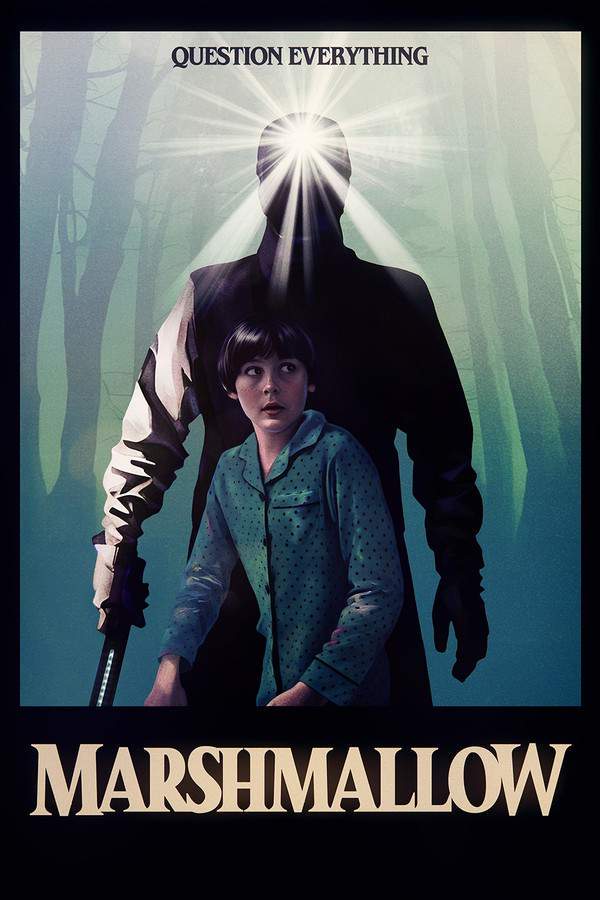
In the heat‑splashed woods of a secluded summer camp, a shy, introverted twelve‑year‑old named Morgan arrives seeking refuge from a recent family tragedy. His nights are haunted by recurring nightmares of water and drowning, a lingering echo of the trauma that pushed him away from home. Adjusting to camp life proves difficult, yet the promise of fresh routines and new faces offers a fragile hope that perhaps the summer could be a turning point.
The camp itself feels caught between the carefree rituals of childhood and the whisper of something older, darker. Around glowing campfires, counselors recount a chilling legend about a doctor who prowls the night, taking wayward children to a hidden basement for unspeakable experiments. The story settles uneasily over the cabins, and the very woods seem to pulse with hidden eyes. When a mysterious figure appears on the perimeter one evening, the legend shifts from campfire tale to something that may have a basis in reality, setting the stage for an uneasy adventure.
Pilar, a fellow camper with a keen sense of curiosity, quickly becomes Morgan’s ally, sharing his discomfort and offering a steadying presence amid the growing unease. Their budding friendship is tested by the presence of CJ, a more aggressive peer whose teasing hints at the social hierarchies that can emerge even in idyllic settings. As the days unfold, the group of friends finds themselves drawn into a secretive quest, compelled to uncover what lurks behind the camp’s cheerful façade.
The atmosphere balances the bright, sun‑drenched days of typical camp activities with a persistent undercurrent of dread. Shadows lengthen around the cabins, and the ever‑present folklore suggests that not all stories are meant to stay told. In this liminal space between innocence and the unknown, Morgan and his companions must navigate fear, curiosity, and the unsettling sense that the camp holds a secret far deeper than any campfire legend.
What Happens in Marshmallow?
The complete story of Marshmallow, from the first scene to the last, in 495 words (about 2 minutes). Spoilers throughout. Names in the text link to 3 cast member pages.
Spoilers ahead
A boy named Morgan, played by Kue Lawrence, is sent to a summer camp after a traumatic incident involving his grandfather. Plagued by nightmares about water and drowning, he struggles to settle in, makes a few new friends, and endures bullying from CJ, played by Sutton Johnston. He also meets a girl named Pilar, played by Kai Cech, who shares his uneasy suspicions about the camp.
Around the campfire, the staff tell a spooky story about a doctor who takes children who don’t stay in their bunks at night and performs horrific operations in the basement of his building. The tale sits uneasily with Morgan as he starts noticing strange flashes from a building nearby, and soon he ventures out at night to explore what might be lurking in the shadows.
Morgan discovers a basement where the tale appears to be more than fiction. He sees the doctor and tries to convince his friends that the legend is real. As fear spreads, the doctor stalks the children and uses an electrically-powered wand to zap them unconscious. In the ensuing chaos, a staff member steps in and provides the security code to the main camp building, hoping to buy time and safety for the kids.
In a tense turn, one child manages to escape to the main road and flag down a police car. The car returns to the camp, but the officer ends up handing the child over to be zapped, underscoring the danger and the consequences of the camp’s dark secret.
Back in the main building, a staggering truth comes to light: Morgan and the other kids at the camp had died in various circumstances and were being “recreated” using a new technology for families who had lost them. The camps across the country were being used to “grow” the kids and to “program” them before returning them to their families. The staff wipe the kids’ memories of the night, but a sympathetic staff member offers Morgan and Pilar the option to remember what happened, a choice that could change everything.
The next day, everything seems almost normal again, aside from visible injuries to some staff members that are oddly explained to the curious campers. Yet the quiet surface hides a troubling pattern: the bullying that Morgan endured from CJ appears to be an early sign that the created children are starting to malfunction at the camps, suggesting something is seriously wrong with the programming and the carefully constructed facade of safety.
As the story unfolds, the lingering question remains about what truly acts as a safeguard for Morgan and Pilar, and whether the memory of what happened might eventually break through the layers of control that the camp’s creators have placed around them. The glimmer of doubt in the adult world around them hints at a larger, unsettling truth behind these recreated lives, and it leaves readers with a haunting sense of what it means to be truly alive—and who gets to decide.
Marshmallow Timeline: Every Key Event in Order
11 key events in the order they happen, from “Morgan arrives at summer camp after trauma” to “Foreshadowing of systemic malfunctions”. 11 events name a place, across 10 locations.
- 1
Morgan arrives at summer camp after trauma
Morgan is sent to a summer camp following a traumatic experience with his grandfather. He is plagued by nightmares and a deep fear of water and drowning. He begins to make new friends and meets Pilar, though he also endures bullying from C.J.
When:Day of arrival Where:Summer camp
- 2
New friendships and bullying emerge
During the first days at camp, Morgan bonds with Pilar and others, but is targeted by C.J.'s bullying. The social dynamics create tension and heighten his sense of vulnerability. The sense of belonging becomes a key emotional thread at the camp.
When:First days Where:Camp grounds
- 3
Campfire story forewarns danger
During a campfire, staff tell a spooky tale about a doctor who abducts misbehaving children and performs unthinkable surgeries in his basement. The story unsettles Morgan and foreshadows darker events to come. The legend sets a tone of creeping dread around the camp.
When:Campfire night Where:Campfire circle
- 4
Night exploration and basement discovery
Morgan notices strange flashing from a building and sneaks out at night to investigate. He finds a basement that seems to corroborate the staff's legend, deepening the mystery. He glimpses the doctor and realizes the story might be real.
When:Night Where:Building basement
- 5
The doctor attacks with a wand
As panic grows, the doctor begins stalking the kids and uses an electrically powered wand to stun them into unconsciousness. The group scrambles to find safety as the danger intensifies. The basement encounter confirms the story's threat is real.
When:Night Where:Basement / Building
- 6
A staff member helps and a road escape occurs
Amid the chaos, a sympathetic staff member provides the security code to the main camp building, enabling a path to safety. One child escapes to a main road and is picked up by a police car, though the officer ends up handing her over to be zapped. The system's control over the children is highlighted.
When:Night Where:Main camp building, main road
- 7
Staff regroup and locate Morgan
The camp staff regroup in the main building and locate Morgan among the missing children. The sense of crisis deepens as they realize something is seriously wrong. The retrieval marks a turning point in the night’s events.
When:Early morning Where:Main building
- 8
The truth about the campers is revealed
It is revealed that Morgan and the other children had died in various circumstances and are being recreated using new technology for families who lost them. The camp and similar facilities are used to grow and program the kids before returning them to their families. The revelation reframes the experience as a chilling conspiracy.
When:Revelation moment Where:Main building / lab area
- 9
Memory wipe and selective remembrance
The staff wipe the kids' memories of the night, erasing the trauma from most. However, Morgan and Pilar are offered the choice to remember what happened by a sympathetic staff member. This choice leaves a seed of individual truth in their minds.
When:After revelation Where:Staff area
- 10
Normal day, with unexplained injuries
The next day everything seems normal on the surface, with day-to-day camp life resuming. Behind the scenes, staff injuries from the night are awkwardly explained to the curious kids. The pall of what happened lingers beneath the veneer of normalcy.
When:Next day morning Where:Camp grounds
- 11
Foreshadowing of systemic malfunctions
In the final twist, the bullying by C.J. is reinterpreted as an early sign that the 'created' kids have faults. The film hints that malfunctions are spreading across camps and that the programming is failing. The chilling implication is that these 'recreated' children may be unstable.
When:Ending Where:Camp
Who Are the Main Characters in Marshmallow?
3 characters, among them Morgan (Kue Lawrence), Pilar (Kai Cech) and CJ (Sutton Johnston): who each one is and the part they play in the story. Every profile links to the actor’s page.
- M(
Morgan (Kue Lawrence)
Played by Kue Lawrence
A traumatized boy who is sent to summer camp after a disturbing family event. He wrestles with nightmares and a crippling fear of water, and he endures bullying from CJ. Despite his fear, he drives the group toward truth and survival, orchestrating moments that reveal the camp’s dark secret.
- 😨 Traumatized
- 💪 Resilient
- 🌊 Fear of water
- P(
Pilar (Kai Cech)
Played by Kai Cech
A girl who befriends Morgan at the camp, offering courage and optimism. She helps the group navigate danger, showing curiosity and resourcefulness as the mystery unfolds. Pilar's presence helps anchor hope amid the terrifying events.
- 🤝 Loyal
- 🗺️ Curious
- 🌟 Hopeful
- C(
CJ (Sutton Johnston)
Played by Sutton Johnston
A camper who bullies Morgan, representing the social threat that helps reveal the camp’s hidden faults. CJ’s antagonism amplifies the victims’ fear and foreshadows the broader malfunctions among the recreated children. His behavior catalyzes the need for the group to resist manipulation.
- 😡 Bully
- 🧭 Jealous
- 👊 Aggressive
Where and When Is Marshmallow Set?
Marshmallow is set in Summer Camp (Present day). Here is why the time and place matter to the story.
When
Present day
The events unfold in contemporary times, at a modern camp with typical amenities. The story introduces advanced, ethically murky tech used to recreate and program the children, signaling a near-future or speculative present. The timeframe grounds the horror in a recognizable world where such technology feels unsettlingly plausible.
Where
Summer Camp
An isolated summer camp set in a wooded area with bunks, a main staff building, and a campfire circle. Hidden basement rooms and the doctor’s facility hint at a sinister purpose beneath the surface of a wholesome camp experience. The setting blends childhood nostalgia with creeping danger as staff and counselors maintain a veneer of safety while something awful lurks in the shadows.
- 🏕️ Summer Camp
- 🌲 Forested Grounds
- 🧪 Experimental Facilities
What Are the Themes of Marshmallow?
3 ideas the story keeps returning to, among them Memory, Control and Friendship.
-
01
Memory
Memory manipulation is central to the plot: the kids’ memories are erased or altered, masking the truth of what happened at the camp. The film asks what it means to be yourself when your memories can be rewritten. Identity, grief, and the ethics of erasing pain sit at the core of the horror.
-
02
Control
The camp’s operation illustrates how authority and technology can be twisted to exert power over vulnerable individuals. The doctor and staff use ‘recreation’ and programming to shape the kids for others’ purposes. The theme warns against unchecked institutional control that treats people as commodities.
-
03
Friendship
Friendship among Morgan, Pilar, and CJ becomes the lifeline that sustains them through fear and confusion. Their trust and cooperation enable them to confront horrifying truths and seek a way to escape. The theme emphasizes resilience built through solidarity in the face of calculated harm.
How Does Marshmallow End?
The last act of Marshmallow and what it means, in 425 words. The ending lands as ambiguous. Big spoilers: read the plot summary first if you have not seen it.
The final act, in full
The ending of Marshmallow reveals that the creepy, murderous “doctor” haunting the camp isn’t a ghost or a supernatural being, but rather a manufactured entity created by the camp’s sinister experiment. Throughout the film, Morgan and his friends discover that the children at the camp, including those who seem to be possessed or controlled by the doctor, are actually victims of a horrifying project. These kids are neither truly alive nor dead—they are the result of a bizarre scientific process designed to erase their memories and keep them in a state of perpetual growth, without a real origin or ending. The camp’s director, Collins, and the staff have been using this twisted procedure for years, turning the children into living experiments in a cycle of memory deletion and physical growth, which is why Morgan and the others find files indicating they have no real past or future.
In the film’s climax, Franklin confesses to Morgan and Pilar that the children, including Morgan himself, were once dead and have been subjected to a scientific manipulation to keep them in a limbo state. This revelation explains why the “doctor” appears with a stun baton—he is not a ghost but a rigged-together construct or a malfunctioning part of the experiment, designed to intimidate or control the children. The story suggests that the camp’s horrific practices are part of a larger, global pattern, as Collins later receives a call about similar cases worldwide, hinting at an extensive and ongoing experiment involving these child “creations.”
In the final scenes, as Morgan and Pilar face the reality of their situation, Franklin offers them a choice: to undergo the procedure and forget everything, or to refuse and retain their memories and self-awareness. It’s implied that most of the kids go through with the memory wipe, accepting their manufactured existence, but Morgan and Pilar decide to resist, choosing to remember who they are. The film ends with Morgan feeling a sense of hope and camaraderie with his friends, standing outside the camp and embracing their shared reality. Meanwhile, the authorities and the camp’s staff are left uncertain, with Collins receiving disturbing news about the global spread of similar cases, indicating that the horror of the experiment might not be over. In a chilling final twist, it’s suggested that the glitches and “monsters” are not bound by human morality—they could turn on anyone, including Collins himself, as revealed by the final encounter with a bloodied girl attacking him with a knife, leaving the story open-ended with the suggestion that the horror could continue indefinitely.
What Kind of Film Is Marshmallow?
Dark in tone, with steady pacing and a moderate story, going by the plot summary.
- Tone
- Dark
- Pacing
- Steady
- Story
- Moderate
- Intensity
- High
- Ending
- Ambiguous
A steadily tense and deeply unsettling horror story about children trapped in a sinister cloning facility, creating an atmosphere of constant anxiety and profound existential dread.
- unsettling
- anxious
- claustrophobic
- sinister
- paranoid
- melancholic
- coming of age
- identity
- artificial life
- trauma
Content notes: child endangerment, kidnapping, medical experimentation, mind control, traumatic memories, bullying.
Quiz
How well do you remember Marshmallow? Test yourself on the story.