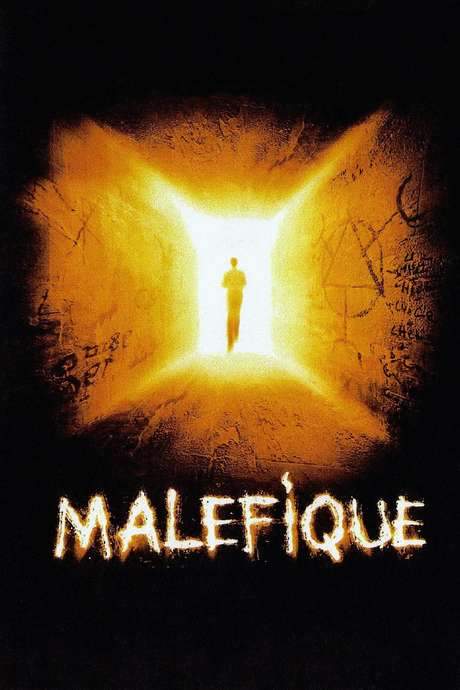
Maléfique 2002


Directed by

Eric Valette
Made by

Bee Movies
Where to Watch Maléfique
See current US streaming, rental, and purchase options for Maléfique (2002) via JustWatch.






Maléfique Plot Summary
Read the complete plot summary and ending explained for Maléfique (2002). From turning points to emotional moments, uncover what really happened and why it matters.
Carrère, a middle-class man convicted of financial fraud, arrives in a grim prison and finds himself sharing a cramped cell with three other inmates: Lassalle, an old librarian who murdered his wife; Pâquerette, a childlike lunatic who ate his infant sister; and Marcus, a muscular young transgender woman whose crime is not spoken aloud but whose longing for a different life crackles beneath the surface. The four men and one woman—each with their own secrets—tentatively form a fragile alliance as they try to make sense of their strange surroundings, a place where rules feel negotiable and danger lurks just behind the walls.
Behind a loose brick in the cell wall, they discover an old, hand-written journal belonging to a prisoner named Charles Danvers from the 1920s, who mysteriously disappeared. The book is filled with incantations and symbols of black magic. Skeptical at first, Carrère reads aloud one of the incantations, and a bright, burning symbol briefly materializes on the floor, as if the page itself had come alive. The glow unsettles the trio, and they begin to have disturbing visions. One morning, Pâquerette wakes to find that his fingers have vanished, a cruel hint that the book’s powers are not merely theatrical tricks but dangerous forces at work.
The cellmates wrestle with what to do about the book. In a rash moment, Pâquerette seizes the volume and starts to eat its pages, only to be overwhelmed by an unseen force that twists his body and snaps his spine and neck. The guards blame the three others and condemn them to spend life behind bars. Lassalle believes the book is defending itself, a sentient thing that will not be trifled with. Then a new prisoner named Picus arrives, a friendly, eccentric man who always carries a video camera, adding another layer of mystery to the cell’s already unsettled atmosphere. The staff claim ignorance about who the cellmates are talking about when Picus vanishes; the journal and the camera are left behind, and the last footage on the camera shows Picus reading an incantation from the book, after which a doorway of light appears on the wall and he steps through.
Carrère’s personal life is in tatters as well—his wife has left him, and he believes he will never see his beloved son again. The only relic he clings to is an action figure doll that belonged to his boy. The journal seems to offer his best chance to escape not just physically but emotionally, if escape is even possible at all. The cellmates read the same incantation that Picus read, and the doorway reappears. They step through and find themselves in a dirty, older prison cell, realizing they have entered Danvers’ world as it was in the 1920s. Carrère and Marcus grow angry, but Lassalle remains calm for the moment. Then, without warning, Lassalle kills Marcus with a sharpened rock. Carrère roars in fury, but Lassalle unmasks the true nature of the book’s powers: it was never meant to grant a simple escape. It was designed to reveal each prisoner’s deepest desires, but at a terrible price.
A flashback sequence reveals the fates of Danvers’ original cellmates and, more chillingly, Danvers’ own downfall. Obsessed with youth, Danvers utters his final spell and the book literally transforms him into a younger version of himself, only to have the reverse aging continue unchecked until he dissolves into nothingness as an unborn infant. Lassalle, who has always been both fascinated and terrified by the written word, seizes the book for one final act and merges with it, its powers crushing the life out of him. With Lassalle gone, Carrère becomes the sole survivor and speaks aloud his deepest wish—to see his son once more—and as his mouth opens in a silent scream, his eyes vanish.
The action pulls back to the outside world. Carrère’s estranged wife and son arrive to collect his belongings, and a prison official explains that Carrère and his cellmates have vanished without a trace. As they drive away, Carrère’s young son plays with the action figure that had lived in his father’s cell. In a final, quiet image, the doll’s head is shown in close-up, and the living eyes inside belong to Carrère, now able to truly see his son again in a way that the prison’s walls could never contain.
Maléfique Timeline
Follow the complete movie timeline of Maléfique (2002) with every major event in chronological order. Great for understanding complex plots and story progression.
Arrival and new cellmates
Carrere arrives at the prison and is assigned a shared cell. He meets three inmates: Lassalle, Paquerette, and Marcus, each with a dark backstory. The uneasy trio begins to size up their new living situation.
Discovery of Danvers's journal
Behind a loose brick, they uncover a handwritten journal from a former prisoner named Danvers. The book is filled with incantations and symbols of black magic. The discovery hints at powers that may defy their confinement.
Incantation spoken; symbol appears
Carrere reads aloud one incantation, and a bright, burning symbol materializes on the cell floor. The others react with fear and curiosity as the book's potential becomes personal. The moment marks the first tangible connection between the text and their reality.
Disturbing visions
As they study the book, each man begins to experience unsettling visions that blur the line between reality and the incantations. The atmosphere thickens with dread as the book seems to exert psychological pressure. The group senses the artifact is more dangerous than it appears.
Paquerette loses his fingers
One morning Paquerette wakes to find his fingers have vanished, a chilling sign that the book's power is altering their bodies. The remaining prisoners fear what else the book might demand. This event cements the book's threat and its control over them.
Paquerette dies; suspicion falls on others
The inmates debate what to do with the book; Paquerette seizures the volume and eats its pages, only to be overpowered by an unseen force. The book seems to twist his body, snapping his spine and killing him. The guards blame the other inmates, while Lassalle hints the book may be defending itself.
Picus arrives; strange visitor
A new prisoner named Picus arrives, carrying a video camera and a strange air of eccentricity. He disappears one morning, leaving his camera and the journal behind. The last footage shows Picus reading an incantation from the book and a doorway of light appearing on the wall.
Picus a hallucination; the book's reveal
When the guards claim they do not know who Picus is, the others learn that Picus was a hallucination conjured by the book to reveal its true powers. The book's influence becomes clearer as it manipulates perception. The prisoners realize they are dealing with something more than a conventional journal.
Carrere's personal loss
Carrere has been abandoned by his wife and fears losing his son forever. His only relic is a toy action figure from his child, symbolizing what he yearns to reclaim. The needle of despair pushes him toward the book as a possible way out.
Re-reading incantation; doorway to 1920s prison
The prisoners recite the same incantation that Picus read, and the cell wall bursts into light to form a doorway. They step through into a dirtier, older prison cell that is Danvers' space in the 1920s. The transition confirms that the book's power can move time rather than relocate the bodies.
Confrontation in the 1920s cell: Marcus killed
Inside the 1920s cell, tensions rise as Lassalle surprises Marcus and kills him with a sharpened rock. Carrere and the others realize the powers come at a terrible price. The scene marks a brutal shift in how they must use the book's magic.
Danvers' fate and the youth illusion
A flashback reveals Danvers' obsessive quest for youth and the spell that transforms him into a younger self, only to reverse and dissolve him into an unborn infant. The revelation exposes the dark price of seeking youth through the book. The act underscores the impossibility of escaping one’s desires.
Lassalle merges with the book and dies
Lassalle grasps the book and merges with it as the powers finally consume him. His obsession with the written word is both the danger and the key to their fates. The others watch as the last vestige of the old cellmate is extinguished.
Carrere becomes sole survivor; wish granted mutates
Carrere voices his deepest wish—to see his son again—and the book grants a warped form of that desire, but at the cost of his own humanity. His mouth opens in a silent scream and his eyes vanish, signaling his complete erasure from the present.
Outside the cell: vanishing; family reunion turned eerie
Outside the cell, Carrere's estranged wife and son arrive to collect his belongings, only to learn the prisoners have vanished. A prison official explains the disappearances as arbitrary. On the drive home, the son plays with an action figure and the doll’s head is revealed to hold Carrere's living eyes, suggesting his lingering connection to his son.
Maléfique Characters
Explore all characters from Maléfique (2002). Get detailed profiles with their roles, arcs, and key relationships explained.
Carrere
A middle-class family man imprisoned for financial fraud, Carrere clings to the book as his only path to seeing his son again. He is pragmatic and increasingly haunted by visions, becoming the group’s anchor as the journal’s pull intensifies. His longing for connection drives his choices, even as danger closes in around him.
Lassalle (Philippe Laudenbach)
An elderly, bookish prisoner who initially treats the journal with scepticism but is drawn to its occult power. He becomes both a fan and victim of the book, ultimately merging with it as the true nature of the power is revealed. His obsession exposes a fear of oblivion and a need to master forbidden knowledge.
Pâquerette (Dimitri Rataud)
A childlike, unstable inmate who is irresistibly drawn to the book’s powers. He violently transforms after attempting to consume its pages, illustrating the body’s corruption by magical forces. Paquerette’s death marks the brutal reach of the book and destabilizes the group’s dynamics.
Marcus (Clovis Cornillac)
A muscular, young transgender woman whose crime is not disclosed, Marcus longs for a gender transition. The story shows that desire alone is not enough to secure escape; the book demands a grave price for freedom. Marcus’s arc centers on identity, longing, and the limits of magical means.
Hippolyte Picus (Didier Bénureau)
A cheerful, eccentric new prisoner who always carries a video camera. He becomes a catalyst for the group’s encounters with the book, then vanishes—leaving behind only his camera and the journal. The final footage shows an incantation unleashing a doorway, hinting that the book fabricates appearances to reveal its powers.
Danvers (1920s prisoner)
The original occupant linked to the journal’s era, a prisoner whose obsession with youth drives his disappearance. His presence is reconstructed through the journal’s history, guiding later readers toward the book’s dark truth.
Maléfique Settings
Learn where and when Maléfique (2002) takes place. Explore the film’s settings, era, and how they shape the narrative.
Time period
1920s, Present Day
The narrative moves between the 1920s, centering on a vanished prisoner named Danvers, and the contemporary prison where Carrere and the others confront the book’s powers. The aging journal bridges eras, bringing a ghostly past into the present confinement. Time shifts underscore how the past’s secrets haunt the living and blur the line between escape and fate. The dual periods reinforce the theme that imprisonment can traverse centuries through myth and memory.
Location
Prison cell, France
The story unfolds primarily inside a stark French prison, where four inmates share a cramped cell. A hidden, hand-written journal found behind a wall brick becomes the doorway to strange phenomena, turning the space into a theatre of visions. The action also shifts into an older, dilapidated prison room from the 1920s, revealing the book’s past and linking past and present. The setting emphasizes confinement as both physical imprisonment and a psychological trap.
Maléfique Themes
Discover the main themes in Maléfique (2002). Analyze the deeper meanings, emotional layers, and social commentary behind the film.
🪄
Magic
A mysterious journal of incantations unleashes uncanny powers that bend reality. The book conjures bright doorways and visions, but it never guarantees true escape. Each inmate tests the limits of the magic, discovering that power comes with a disturbing price. The magical force reveals how forbidden knowledge can transform, corrupt, or consume those who seek it.
🔥
Desire Price
Characters pursue personal wishes—youth, transformation, reunion with loved ones—through the book’s rituals. The fulfillment of these desires exacts brutal consequences, up to death or irreversible change. The story insists that longing untempered by restraint carries a heavy toll. True freedom remains out of reach while the price keeps rising with every wish granted.
🔒
Confinement
The prison environment functions as a crucible for character and choice, turning walls into both physical barriers and psychological traps. The book’s powers trap the inmates in alternate realities, testing their will to stay human. The shift between present and past shows confinement as a timeless force shaping identity. Freedom, when it comes, is earned through sacrifice and acceptance of the costs of desire.

Coming soon on iOS and Android
The Plot Explained Mobile App
From blockbusters to hidden gems — dive into movie stories anytime, anywhere. Save your favorites, discover plots faster, and never miss a twist again.
Sign up to be the first to know when we launch. Your email stays private — always.
Explore the mobile appMaléfique Spoiler-Free Summary
Discover the spoiler-free summary of Maléfique (2002). Get a concise overview without any spoilers.
In the cold, claustrophobic corridors of a forgotten penitentiary, four inmates share a cramped cell that feels more like a pressure‑filled crucible than a place of confinement. When a loose brick reveals a hand‑written journal of obscure symbols and whispered incantations, the strangers glimpse a slim, dangerous hope: the promise that the dark arts might offer a way out. The film opens with that unsettling discovery, setting a tone that balances stark realism with a slow‑burning, almost tactile sense of the uncanny.
Carrère, a polished man whose life outside the walls has already begun to crumble, brings a weary determination to the group. Opposite him sits Lassalle, an aging librarian whose quiet curiosity masks a deeper fascination with the written word. Pâquerette offers a childlike, erratic energy that keeps the cell’s atmosphere constantly shifting, while Marcus—a muscular, introspective figure navigating a complex personal identity—adds both physical presence and a guarded sensitivity. Their fragile alliance is built on tentative trust, each prisoner projecting their own longing for freedom onto the mysterious tome, while the prison itself seems to breathe with an uneasy, negotiable set of rules.
A new arrival, Picus, wanders into the cell with an eccentric smile and a constantly rolling video camera, turning the already tense environment into a stage for whispered speculation. The prison’s grim architecture, dim lighting, and echoing corridors amplify the feeling that reality itself might be pliable under the book’s influence. As the inmates pore over the cryptic pages, the film swirls with a mood of quiet dread and lingering curiosity, inviting the audience to wonder whether the promise of escape is a genuine key or a deeper, more unsettling trap.
Movies with Similar Twists and Themes
Uncover films that echo the narrative beats, emotional arcs, or dramatic twists of the one you're exploring. These recommendations are handpicked based on story depth, thematic resonance, and spoiler-worthy moments — perfect for fans who crave more of the same intrigue.





Featured on this page

What's After the Movie?
Not sure whether to stay after the credits? Find out!
Check out our other apps:

SAT Sphere
Build confidence for the Digital SAT.

Mori Atlas
Discover wild places worth protecting.

Luntero
Search smarter for a home in Amsterdam.

Plot Explained
Unravel movie endings and hidden clues.

Pokechamp
Dive into Pokémon data and battle logic.

Driving Theory
Get ready for your European theory test.

Movie Dust
Plan your next cinema trip with ease.

Musemap
Find art and culture as you travel.

Selkobase
Compare credentials before committing.

Local Manual
Turn an unfamiliar country into practical next steps.

Lernavi
Compare school systems before your next move.

GymRoam
Find a workout stop wherever your plans take you.
Explore Our Movie Platform
New Movie Releases (2026)
Famous Movie Actors
Top Film Production Studios
Movie Plot Summaries & Endings
Major Movie Awards & Winners
Best Concert Films & Music Documentaries
Movie Collections and Curated Lists
© 2026 What's After the Movie. All rights reserved.
Privacy Policy