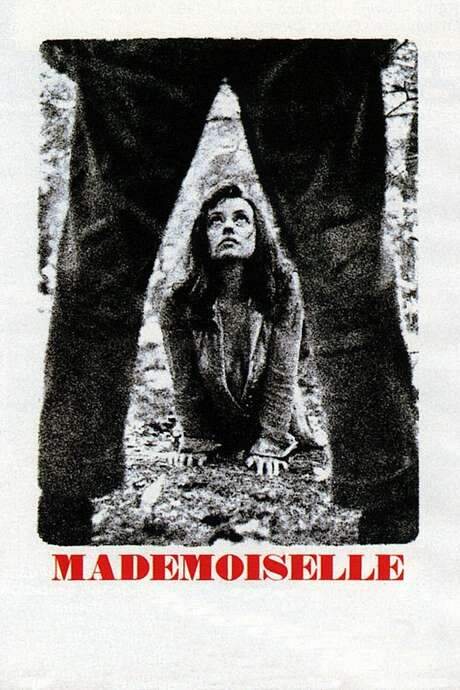
Mademoiselle 1966


Directed by

Tony Richardson
Made by

Woodfall Film Productions
Where to Watch Mademoiselle
See current US streaming, rental, and purchase options for Mademoiselle (1966) via JustWatch.








Mademoiselle Plot Summary
Read the complete plot summary and ending explained for Mademoiselle (1966). From turning points to emotional moments, uncover what really happened and why it matters.
In a quiet corner of rural France, a small farming village becomes the stage for jealousy, envy, and a creeping sense of danger when an itinerant Italian logger named Ettore Manni and his young son Bruno Keith Skinner sleep in a barn nearby. What starts as curiosity and wandering glances soon grows into something more troubling as Manou’s casual closeness with the village women stirs resentment among the men, who see his presence as a threat to their own standing and routines. The atmosphere in the village darkens as rumors spread about fires and a flood that seem to follow in his wake.
The real tension, however, centers on the local school teacher known as Mademoiselle Jeanne Moreau. Admired by many for her poised exterior and refined manners, she hides a private life that contrasts sharply with her public persona. Behind the doors of her apartment, she sports city footwear and chic clothing, and she dresses in more suggestive attire for occasions when she quietly toys with the village’s harmony. The fires and the flood are not accidents to her; they are instruments of a dangerous fixation aimed at Manou, a calculated attempt to draw his gaze and prove her pull over him.
In parallel, Manou’s son Bruno witnesses a disturbing double life. He sees the subtle kindness she sometimes shows in the classroom alongside sharper, sociopathic impulses that she unleashes in private. She initially favors him as a pupil, only to alternately demean and humiliate him with verbal abuse. Bruno gradually pieces together evidence that points to Mademoiselle, not his father, as the true orchestrator of the havoc—but as an outsider in the village, he keeps quiet.
The charade grows more ominous when livestock are poisoned, a devastating blow that the villagers misconstrue as the work of Manou. In a bid to restore order, a portion of the community takes matters into their own hands, seeking to punish the father before the truth can surface. Amid the escalating fear, Mademoiselle and Manou share a charged encounter in the forest, followed by a passionate night that leaves her returning to the village with the impression of someone who has been violated. The villagers press her for answers, and she confirms the worst with a single, chilling admission: “Yes.” Then she slips back into her apartment, leaving the truth unopened to the rest of the community.
As the tension peaks, the men of the village finally find Manou and strike him down, ending his presence in a brutal act that shakes everyone to their core. Mademoiselle departs the village with her secrets intact for the moment, but Bruno—the boy who saw too much—knows the truth and spits at the woman as she disappears from sight. The story leaves a lingering sense of tragedy, showing how appearances can mask dangerous depths and how the cruelty of rumors and fear can drive a community to lethal extremes.
Mademoiselle Timeline
Follow the complete movie timeline of Mademoiselle (1966) with every major event in chronological order. Great for understanding complex plots and story progression.
Arrival and barn sleep
Manou, a visiting Italian logger, arrives with his son Bruno and they sleep in a barn on the edge of the small French farming village. Their outsider status unsettles the tight-knit community from the start. The quiet opening seeds suspicion that will soon erupt into tragedy.
Tensions rise over dalliances and disasters
Manou's liaisons with local women spark jealousy among the men and provoke mistrust in the village. Rumors blame him for a spate of fires and a flood that devastate the area, even though he is not proven responsible. The atmosphere grows hostile as accusations spread.
Flashback: first fire and heroics
In a flashback, Mademoiselle sets the first fire accidentally and delights in watching Manou perform heroic rescues. The moment reveals her obsession with him and her willingness to ignite chaos for attention. It explains her later connection to the disasters.
Mademoiselle’s double life
Back in the present, Mademoiselle is publicly regarded as a paragon of character, yet in her apartment she dons city footwear and sexier outfits to plot mayhem. She uses this private persona to orchestrate disturbances intended to draw Manou’s attention. The contrast underscores the danger she represents.
Bruno’s private observations
Bruno witnesses Mademoiselle’s sociopathic behavior in private and in the classroom, where she humiliates him. He begins to collect clues that point to her as the mastermind behind the catastrophes. Yet as a foreign outsider, he keeps silent, torn between knowledge and caution.
Livestock poisoned; mob mood grows
As livestock die from poisoning, fear and anger sweep through the village and suspicion falls on Manou. The community grows convinced that an outsider is wrecking their livelihood, pushing them toward punitive actions. The line between justice and vengeance becomes dangerously blurred.
Forest meeting and dangerous liaison
Mademoiselle and Manou meet secretly in the forest, where their private tension erupts into a passionate encounter. They spend a night together, deepening their bond even as the village closes in around them. The secrecy raises the stakes for everyone involved.
Return and a claimed assault
Mademoiselle returns to the village with the air of someone who has been assaulted, prompting questions about what happened. When asked, she answers 'Yes' and retreats to her apartment. Her reply hardens the villagers’ suspicion of Manou and accelerates the crisis.
Mob violence ends Manou
The men of the village confront Manou and hack him to death, carrying out vigilante justice. The killing comes as the truth remains murky, a consequence of fear and manipulated appearances. The tragedy shifts the balance of the town; the real culprit remains hidden.
Mademoiselle departs, crime undisclosed
Mademoiselle leaves the village with her crimes undisclosed, slipping away as the community turns away from the matter. Bruno watches her depart, spitting at her in a final act of defiance. The move ends the immediate upheaval, but the truth remains unspoken.
Bruno’s bitter farewell
Bruno’s awareness lingers after the departure, and he refuses to forget what he has learned. He harbors the knowledge of Mademoiselle’s guilt while the adults pretend otherwise. The boy’s quiet defiance hints at the wounds left by the village’s choices.
Aftermath and unresolved guilt
The village bears scars from fires, a flood, and murder, with the true culprit never brought to light. Manou is dead; Mademoiselle has fled; Bruno remains haunted by what unfolded. The film closes on a somber note about how innocence can be entangled with deception and tragedy.
Mademoiselle Characters
Explore all characters from Mademoiselle (1966). Get detailed profiles with their roles, arcs, and key relationships explained.
Mademoiselle (Jeanne Moreau)
An elegant newcomer who is admired for her refined exterior but harbors a dangerous, repressed sexuality. She meticulously plans and executes actions—fires and a flood—to draw Manou's attention, all while maintaining a façade of impeccable character. Behind closed doors she indulges in city fashion and outfits, revealing a sociopathic thrill for manipulating others. Her crimes are driven by a desperate need to possess and control the object of her desire.
Manou (Ettore Manni)
A hardworking Italian logger living with his son Bruno, respected by the village for his bravery and generosity. He becomes the target of envy and suspicion from the local men, who overlook his integrity until false rumors spiral out of control. His heroic acts—displayed in flashbacks—contrast with the mob's brutality as violence closes in on him. Despite the rising danger, he remains dedicated to his son.
Bruno (Keith Skinner)
Manou's son, observant and cautious, who witnesses the village's escalating tensions. He initially trusts his father but gradually uncovers the truth about Mademoiselle's crimes. Trembling between loyalty and danger, he chooses silence as the community closes ranks. His awareness hints at the moral cost borne by the next generation.
Mademoiselle Settings
Learn where and when Mademoiselle (1966) takes place. Explore the film’s settings, era, and how they shape the narrative.
Location
France, small farming village
Set in a quiet rural area of France, the action unfolds in a compact farming village surrounded by fields and barns. The close-knit community's routines and norms foster rumor and suspicion when outsiders arrive. The bucolic countryside provides a tranquil backdrop that contrasts with the creeping tension as fires and a flood threaten the village.
Mademoiselle Themes
Discover the main themes in Mademoiselle (1966). Analyze the deeper meanings, emotional layers, and social commentary behind the film.
🤝
Social Dynamics
In the village, gossip, envy, and rigid social codes breed suspicion and scapegoating of the outsider Manou. The townsfolk bond over tradition and a shared sense of propriety, turning on anyone who disrupts the status quo. The film uses these dynamics to explore how a community polices itself through rumor and intimidation.
🔥
Obsession and Destruction
Mademoiselle's restrained sexuality and growing fixation on Manou drive her to orchestrate fires and a flood. Her calculated manipulation reveals a dark pleasure in watching events unfold and controlling the outcome. The disasters serve as a twisted stage for desire and power.
⚖️
Truth and Consequences
Bruno witnesses the truth about his father's innocence and the real culprit, but his outsider status keeps him silent. The villagers react with violent justice, punishing Manou while the true perpetrator remains hidden. The ending underscores moral ambiguity and the heavy cost of hidden crimes.

Coming soon on iOS and Android
The Plot Explained Mobile App
From blockbusters to hidden gems — dive into movie stories anytime, anywhere. Save your favorites, discover plots faster, and never miss a twist again.
Sign up to be the first to know when we launch. Your email stays private — always.
Explore the mobile appMademoiselle Spoiler-Free Summary
Discover the spoiler-free summary of Mademoiselle (1966). Get a concise overview without any spoilers.
In a sleepy farming village tucked away in the French countryside, the rhythms of daily life are suddenly brushed by the presence of an itinerant Italian logger, Ettore Manni, and his young son Bruno. Their arrival in a weather‑worn barn stirs quiet curiosity among the locals, while the men of the community watch warily, uneasy about any disruption to their familiar routines. The landscape—rolling fields, ancient stone houses, and a modest schoolhouse—becomes a subtle stage where whispers travel faster than the wind, hinting that even the most tranquil places can harbor restless undercurrents.
At the heart of the village stands the schoolteacher known only as Mademoiselle, a woman whose poise and refined manners have earned her the quiet admiration of neighbors and pupils alike. Beneath her polished exterior lies a world of restrained longing, expressed through the careful choices of her attire and the fleeting moments when she steps beyond the expectations of her role. Her interactions with the villagers are courteous yet layered, suggesting a tension between the persona she projects and the desires she keeps tightly sealed.
The film lingers on this delicate balance, allowing the countryside’s soft light and lingering fog to echo the inner conflict of its central figure. As rumors flutter through the fields and the arrival of the strangers adds an undercurrent of envy and suspicion, Mademoiselle finds herself drawn into a fragile dance of fascination and restraint. Observant eyes—particularly those of the logger’s son—notice the subtle shifts in her behavior, hinting at a story that will explore how repressed passion can ripple through a close‑knit community, leaving the audience poised between curiosity and an unsettling sense of anticipation.
Movies with Similar Twists and Themes
Uncover films that echo the narrative beats, emotional arcs, or dramatic twists of the one you're exploring. These recommendations are handpicked based on story depth, thematic resonance, and spoiler-worthy moments — perfect for fans who crave more of the same intrigue.




Featured on this page

What's After the Movie?
Not sure whether to stay after the credits? Find out!
Check out our other apps:

SAT Sphere
Build confidence for the Digital SAT.

Mori Atlas
Discover wild places worth protecting.

Luntero
Search smarter for a home in Amsterdam.

Plot Explained
Unravel movie endings and hidden clues.

Pokechamp
Dive into Pokémon data and battle logic.

Driving Theory
Get ready for your European theory test.

Movie Dust
Plan your next cinema trip with ease.

Musemap
Find art and culture as you travel.

Selkobase
Compare credentials before committing.

Local Manual
Turn an unfamiliar country into practical next steps.

Lernavi
Compare school systems before your next move.

GymRoam
Find a workout stop wherever your plans take you.
Explore Our Movie Platform
New Movie Releases (2026)
Famous Movie Actors
Top Film Production Studios
Movie Plot Summaries & Endings
Major Movie Awards & Winners
Best Concert Films & Music Documentaries
Movie Collections and Curated Lists
© 2026 What's After the Movie. All rights reserved.
Privacy Policy