
What Is Kitchen About?
The premise of Kitchen in 309 words, with nothing given away. The full story follows below.
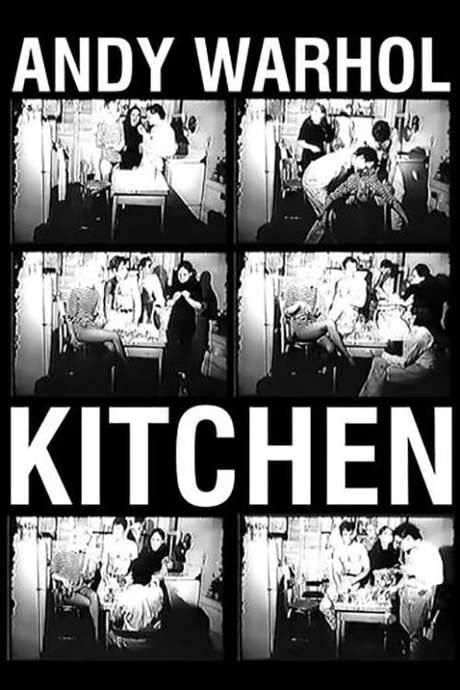
In Andy Warhol’s Kitchen, a single, static camera watches an immaculate white kitchen that becomes both set and laboratory for a heightened experiment in everyday performance. The film opens with a dead‑pan voice‑over that reads the credits as if announcing a documentary, immediately blurring the line between observation and artifice. Surrounded by ordinary objects—a sink, a trash basket, an electric mixer—the space feels simultaneously intimate and staged, inviting the audience to contemplate how the mundane can be transformed into a theatrical arena.
The tone is deliberately unsettling, a mixture of boredom, confusion, and quiet dread that seeps through the black‑and‑white frame. Warhol’s minimalist aesthetic strips away conventional storytelling, replacing narrative drive with rhythmic repetition, ambient noises, and a self‑referential awareness of the camera’s gaze. The result is a hypnotic tableau where presence is questioned, and every gesture hints at an underlying ritual rather than a clear plot.
At the heart of this confined world is Jo, a young woman whose charisma and restless energy dominate the kitchen’s limited geography. She is joined by Mickey, a counterpart whose tentative engagement with the space creates an uneasy chemistry. Their interactions are framed as improvised dialogue and physicality, suggesting both a collaborative creation and a subtle power play that never fully resolves. As they navigate the kitchen’s static borders, the two performers become both subjects and objects of the ever‑watching lens, embodying Warhol’s fascination with celebrity, performance, and the thin veneer separating art from life.
The film leaves viewers with a lingering sense of voyeurism and curiosity, as the static setting amplifies every idle movement and whispered line. By turning a simple kitchen into a stage for absurd comic theater, Kitchen asks what it means to be seen, to create, and to exist within a self‑constructed laboratory of self‑creation—leaving the audience eager to decode the quiet tensions that pulse beneath the surface.
What Happens in Kitchen?
The complete story of Kitchen, from the first scene to the last, in 764 words (about 3 minutes). Spoilers throughout. Names in the text link to 7 cast member pages.
Spoilers ahead
Devised to highlight Edie Sedgwick as Jo, this directionless black-and-white film opens with the sound of sneezing and a Warhol-style static camera fixed on an empty, white kitchen in a small apartment. The opening voiceover proclaims the reel’s credits in a dry, almost documentary tone: > “Reel one of Andy Warhol’s Kitchen, starring Edie Sedgwick as Jo and Roger Trudeau as Mickey, special assistance Buddy Wirtschafter, scenario by Ronald Tavel, directed by Andy Warhol.” The moment freezes the mood as Sedgwick’s voice lists the everyday objects in the kitchen, including a malted machine—an electric mixer—that becomes a repeated motif in the film, a symbol of domestic routine intersecting with performance. The voice also reveals a quirky secret: scripts are hidden on the set so actors can pretend to read books or glance at the wall calendar whenever lines slip away.
As Jo enters the kitchen, the scene broadens into a loose, almost improvised tableau. Rene Ricard appears as the Busboy and begins washing the dishes in the sink, grounding the action in mundane labor even as the mood remains unsettled. Jo, now on the scene, applies her makeup while a photographer—David McCabe—steps in, snaps a few shots, and then exits, leaving the room to drift again. Roger Trudeau as Mickey follows, and the two performers stumble through lines that seem barely remembered, their delivery as stiff as the furniture surrounding them. Jo then clambers onto the table to exercise, a bold display of legs and form that sits beside the clumsy, half-spoken conversations about sex. The dishwasher remains turned away from the camera, watching the spectators of this odd domestic drama.
A playful, almost punitive moment arrives when Jo pretends to discipline Mickey with a faux spanking, a gesture that sits at the edge of propriety and performance. When Mickey begins a long, earnest monologue, Jo reaches for the electric mixer and turns it on, drowning out all spoken dialogue with the rising grind of the motor. The result is a strange, rhythmic noise that prompts Jo to laugh and dance, surrendering the scene to sound over speech. The mood shifts from staged performance to a more abstract, almost hypnotic atmosphere, where the audience is left to interpret the silence and the tremor of the device’s hum.
The second reel appears with a new altarpiece of voices and credits. Jo studies her script again, and a male voice off-screen announces, “Reel 2 of Andy Warhol’s Kitchen starring Edie Sedgwick.” This meta-statement expands the sense of audience, crew, and onlookers threading through the film’s space. The narration then lists the rest of the cast and notes the technical involvement of Gerard Malanga, whose presence reinforces the collaborative texture of Warhol’s world and the film’s method of blending documentary cues with performative theater. The directions to the actors follow, keeping the sense of a rehearsal that never truly ends.
The malted machine returns, turned on and off in a repetitive, almost ritual fashion that anchors the scene in familiar domestic imagery while pushing it toward absurdity. The dialogue—deliberately aimless and passionless—continues as more actors drift into the kitchen, including [David McCabe], Donald Lyons, and Elecktrah Lobel, each contributing to the chaotic choreography of entrances and exits. Jo spills coffee across the table, a small accident that intensifies the sense that the room is a living stage rather than a fully realized home.
As the film leans further into the feel of a reality-television vignette, Jo sustains a burn on her hand from the stove, and the others react with a staggered mix of concern, indifference, and reflexive filming-like behavior. The illusion of being constantly watched grows stronger, as if the actors are aware of cameras that no longer feel present. In the final beats, Gerard Malanga reappears to take a cold drink from the fridge, a quiet exit that signals the end of the chaotic yet carefully designed performance.
This piece, though short and seemingly improvised, unfolds with a deliberate structure: a static, voyeuristic setup, a self-referential crookery of credits, and a steady erosion of narrative clarity into ritual and noise. The repeated motifs—the malted machine, the hidden scripts, the off-kilter exchanges about intimacy, and the creeping sense that the camera has eclipsed performance—are all elements that invite viewers to read Warhol’s Kitchen as a portrait of collaboration, spectacle, and the blurred lines between art, life, and television. The film remains loyal to its minimalist roots while embracing a stark, almost clinical presentation of its performers, turning an ordinary kitchen into a stage for a quiet, persistent exploration of presence, attention, and the boundaries of cinema itself.
Kitchen Timeline: Every Key Event in Order
14 key events in the order they happen, from “Opening shot and meta-credits” to “Malanga ends the movie with a drink”. Every event takes place in Kitchen.
- 1
Opening shot and meta-credits
The film opens with Warhol's static camera fixed on an empty white kitchen. Sneezing sounds punctuate the silent space as a voice-over introduces Reel One and lists Edie Sedgwick as Jo, along with the other participants. Sedgwick explains that scripts are hidden on the set so actors can pretend to read or check the calendar on the wall.
When:Reel 1 Where:Kitchen
- 2
Sedgwick reveals props and hidden scripts
Sedgwick's voice enumerates the objects in the kitchen, including the malted machine electric mixer. She reveals that scripts are hidden on the set so actors can find lines by pretending to read or glancing at the calendar. The moment signals the film's performative, self-inventing nature.
When:Reel 1 Where:Kitchen
- 3
Jo enters as Rene Ricard washes dishes
Jo enters the kitchen while Rene Ricard arrives and begins washing the dishes. Jo is in makeup and a photographer, David McCabe, briefly appears to photograph her before exiting. The sequence sets a rhythm of incidental actions that blur the line between performance and reality.
When:Reel 1 Where:Kitchen
- 4
Photographer captures Jo during makeup
David McCabe the photographer appears to take pictures of Jo during her makeup, then leaves the scene. The interaction is brief and disconnected from any conventional storytelling. The kitchen becomes a stage for quick interruptions.
When:Reel 1 Where:Kitchen
- 5
Mickey enters; lines fumble
Roger Trudeau as Mickey enters and the group begins a fumbling of lines. The energy is tentative and almost documentary, as if the actors are learning their parts in front of the camera. The improvised atmosphere foregrounds the film's anti-narrative approach.
When:Reel 1 Where:Kitchen
- 6
Jo climbs onto the table to exercise
Jo climbs onto the table to exercise, displaying her legs in a performative moment. The action emphasizes the film's deliberate silliness and challenge to traditional shot composition. The moment interrupts the dialogue as the cast shuffles around.
When:Reel 1 Where:Kitchen
- 7
Sex talk and silent dishwasher
Mickey and Jo exchange a halting dialogue about sex while the dishwasher remains a silent backdrop. The mismatch between spoken lines and the actions around them creates a hypnotic, static mood. The kitchen becomes a stage where ordinary chores collide with staged eroticism.
When:Reel 1 Where:Kitchen
- 8
Jo pretends to spank Mickey
Jo pretends to spank Mickey, adopting the role of his mother in a faux disciplinary gesture. The scene blurs authority, affection, and humor within the improvised setting. It contributes to the film's sense of playing with social roles.
When:Reel 1 Where:Kitchen
- 9
Mixer blast ends dialogue
When Mickey begins a monologue, Jo turns on the electric mixer, drowning out the dialogue with grinding noise. Jo laughs and dances with the mixer’s sound as the scene devolves into chaotic noise. The moment underscores the film's rejection of conventional performance.
When:Reel 1 Where:Kitchen
- 10
Second reel begins; credits and directions
The second reel opens with Jo studying her script while a male voice announces Reel 2 and lists the other actors and technical assistants. The on-screen directions to the actors are read aloud, highlighting the production's meta-textual nature. The mood shifts toward a behind-the-scenes feel.
When:Reel 2 Where:Kitchen
Show the other 4 events of Kitchen Hide the last 4 events
- 11
Malted machine cycles again
The malted machine is turned on and off again, punctuating the action with a mechanical hum. Other performers, including David McCabe, Donald Lyons, and Elektrah Lobel, enter and exit the chaotic space. The repetition reinforces the film's aloof, repetitive aesthetic.
When:Reel 2 Where:Kitchen
- 12
Aimless dialogue and spilled coffee
Dialogue becomes more aimless as the players drift in and out; Jo spills coffee onto the table. The exchange lacks conventional narrative drive, emphasizing texture over plot. The coffee stain mirrors the set's improvisational looseness.
When:Reel 2 Where:Kitchen
- 13
Reality-TV drift and burned hand
The film drifts toward a reality television-like mood as Jo burns her hand on the kitchen stove and others react nonchalantly. The actors seem to believe they are no longer being filmed and discontinue performing. The scene heightens the sense of unreality and detachment from traditional filmmaking.
When:Reel 2 Where:Kitchen
- 14
Malanga ends the movie with a drink
Malanga enters to take a cold drink from the fridge as the film ends, creating a quiet, almost mundane closing note amid the chaos. The closing moment reflects Warhol's blend of performance, voyeurism, and spontaneous texture. The kitchen remains the stage for this experimental piece.
When:End Where:Kitchen
Who Are the Main Characters in Kitchen?
8 characters, among them Jo (Edie Sedgwick), Mickey (Roger Trudeau) and Photographer (David McCabe): who each one is and the part they play in the story. 7 of them link to the actor’s page.
- J(
Jo (Edie Sedgwick)
Played by Edie Sedgwick
Jo treats the kitchen as a stage for cosmetic ritual, flirtation, and chaotic humor—shifting from playful command to performance art. Her actions manipulate audience perception while underscoring the emptiness of a scripted scene. She embodies a persona that thrives on attention within a minimal domestic setting.
- 🔥 Charismatic
- 🧪 Experimental
- ✨ Provocative
- M(
Mickey (Roger Trudeau)
Mickey is portrayed with a wooden, stumbling presence, contributing to the film’s sense of aimless spontaneity. He participates in the awkward dialogue and reactions, emphasizing the tension between intended performance and actual on-screen action.
- 🤏 Awkward
- 🧭 Domestic
- 🎭 Improvisation
- P(
Photographer (David McCabe)
Played by David McCabe
The photographer enters to document the scene and then exits, reinforcing the meta aspect of production. His presence frames the scene as an unfinished image, highlighting the voyeuristic aspect of watching a performance unfold.
- 📷 Observer
- 🎨 Visual
- 🧭 Art-world insider
- B(
Busboy (Rene Ricard)
Played by Rene Ricard
The busboy’s quiet labor at the sink provides counterpoint to Jo’s antics, grounding the scene in everyday work even as dialogue remains inert. His role hints at the backstage labor that keeps a production moving, even when the camera is distracted.
- 🧹 Quiet
- 🧭 Supporting
- 🧪 Experimental
- OD
Offscreen Direction (Ronald Tavel)
Played by Ronald Tavel
Ronald Tavel’s direction is heard offscreen, pushing performers through cues while the camera appears indifferent. He represents the controlling voice behind the chaos, shaping the action with voiceover and stage directions.
- 🎚️ Direction
- 🗣️ Meta
- 🧭 Scripted
- N(
Nikki (Elecktrah)
Played by Elecktrah
Nikki adds to the ensemble’s flux, contributing to the film’s cacophony and collective energy. Her presence reinforces the idea of a blended, improvisational cast rather than a fixed, cohesive troupe.
- 🎨 Ensemble
- 🔎 Experimental
- 🗒️ On-set
- G(
Gerald (Donald Lyons)
Played by Donald Lyons
Gerald appears as part of the on-set dynamics, joining the rhythmic entrances and exits that define the piece’s discontinuous flow. His involvement underscores the film’s assemblage nature.
- 🧑💼 On-set
- 🪶 Fragmented
- 🧪 Experimental
- N(
Nicky (Roger Trudeau)
Played by Roger Trudeau
Nicky contributes to the on-set energy through uncertain, spontaneous actions. The actor’s presence reinforces the film’s exploration of performance as a social construct rather than a fixed character.
- 🎭 On-set
- 🎨 Improvisation
- 🧪 Experimental
Where and When Is Kitchen Set?
Kitchen is set in Small white apartment kitchen. Here is why the place matters to the story.
Where
Small white apartment kitchen
In Kitchen, the action unfolds inside an empty, stark white apartment kitchen. The space functions as both set and stage for improvisation, with props like a malted mixer and a calendar guiding the absurd, ritual-like scenes. The minimalist kitchen emphasizes the film’s detachment from conventional narrative, turning a domestic space into a heady art piece.
- 🔳 Minimalist
- 🧬 Experimental
- 🗝️ Meta-performance
What Are the Themes of Kitchen?
3 ideas the story keeps returning to, among them Performance, Celebrity and Reality vs Film.
-
01
Performance
The work operates as a live-action performance rather than a traditional narrative, with lines being read only sporadically and then neglected as the camera lingers on action. The kitchen itself becomes the primary stage, where gesture, sound, and objects carry meaning beyond dialogue. The piece experiments with cinema as theater and questions the primacy of scripted storytelling.
-
02
Celebrity
Edie Sedgwick’s Jo anchors the piece, projecting star power into a mundane domestic setting. The film uses celebrity presence to blur glamour with banality, reducing fame to routine makeup, props, and performative exchanges. The meta-credits and on-set ambiance critique pop-culture’s fetish for spectacle.
-
03
Reality vs Film
Dialogue dissolves as actors drift into unguarded behavior, suggesting the act of filming has become indistinguishable from daily life. A grinding mixer drowns out speech, turning sensation into the primary experience. The film probes what counts as performance when the filmmaking apparatus overshadows the script.
What Kind of Film Is Kitchen?
Neutral in tone, with slow pacing and a complex story, going by the plot summary.
- Tone
- Neutral
- Pacing
- Slow
- Story
- Complex
- Intensity
- Low
- Ending
- Ambiguous
A static, minimalist short film that creates an atmosphere of clinical voyeurism and absurd boredom, transforming a mundane kitchen into a stage for a hypnotic and unsettling exploration of performance and the boundaries of cinema.
- clinical
- voyeuristic
- boredom
- absurd
- dreamlike
- hypnotic
- performance art
- domestic routine
- meta-fiction
- collaboration
Quiz
How well do you remember Kitchen? Test yourself on the story.
