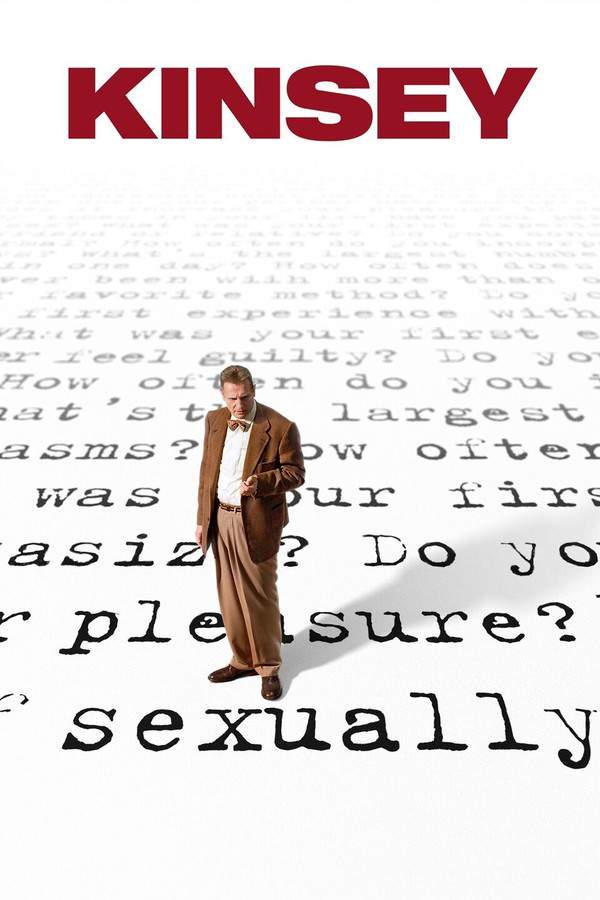
Kinsey 2004

Directed by

Bill Condon
Made by

Fox Searchlight Pictures
Where to Watch Kinsey
See current US streaming, rental, and purchase options for Kinsey (2004) via JustWatch.







Kinsey Plot Summary
Read the complete plot summary and ending explained for Kinsey (2004). From turning points to emotional moments, uncover what really happened and why it matters.
A professor specializing in zoology, particularly in insect biology, Alfred Kinsey struggles to understand his own nature despite his expertise with bugs. After marrying Clara McMillen, he soon realizes that human sexuality encompasses much more than merely observing insects in their mating rituals. His routine is disrupted when newlywed students pose a challenging question regarding human sexual behavior that leaves him perplexed.
Determined to uphold his scientific integrity, Kinsey begins an ambitious study into sexual behaviors, launching his inquiry with a questionnaire for his students. Clara wisely points out that students may not answer honestly on paper, preferring face-to-face interviews instead. Encouraged by her insight, Kinsey expands his research to encompass a broad spectrum of individuals across America, assembling a dedicated team of researchers at Indiana University, all funded by the Rockefeller Foundation.
During this period, the oppressive atmosphere of McCarthyism looms large, casting doubt and fear over Kinsey’s groundbreaking work, challenging the support he receives from both the University and the Foundation. However, undeterred, Kinsey publishes his revolutionary findings: the book on male sexuality in 1948 and subsequently on female sexuality in 1953. These works serve as pivotal contributions to a cultural shift in sexual attitudes, laying the groundwork for the sexual revolution of the 1960s. Throughout this exploration, Kinsey and his research team uncover a vast array of ‘acceptable’ sexual practices and grapple with their own evolving sexual identities, often with surprising and sometimes unsettling consequences.
Kinsey Timeline
Follow the complete movie timeline of Kinsey (2004) with every major event in chronological order. Great for understanding complex plots and story progression.
Professor Alfred Kinsey's Struggles
Alfred Kinsey, a professor specializing in zoology, struggles to understand human sexuality, despite his deep knowledge of insect behavior. His expertise in observing insect mating rituals highlights the complexity of human sexual nature, which intrigues and challenges him.
Marriage to Clara McMillen
Kinsey marries Clara McMillen, who becomes a crucial partner in his journey to explore human sexuality. Together, they navigate the complexities of marital life, with Clara providing insight that helps Kinsey reconsider traditional research methods.
Challenging Student Questions
Kinsey's routine is disrupted when newlywed students pose a provocative question about human sexual behavior. This inquiry serves as a catalyst for Kinsey, prompting him to delve deeper into the mysteries of human sexuality beyond his initial study of insects.
Initiating the Research Study
Determined to maintain his scientific integrity, Kinsey starts an ambitious study into sexual behaviors, initiating this process with a questionnaire aimed at his students. This decision marks the beginning of a groundbreaking exploration into human sexuality.
Adapting Research Methods
Recognizing the limitations of written questionnaires, Clara wisely advises Kinsey to conduct face-to-face interviews for more honest answers. This shift in methodology substantially broadens the scope and potential impact of his research.
Expanding the Research Team
Kinsey assembles a dedicated research team at Indiana University, recruiting members from diverse backgrounds. Their collaboration is fueled by funding from the Rockefeller Foundation, facilitating a comprehensive examination of sexual behaviors across the nation.
The Cloud of McCarthyism
As Kinsey’s research progresses, the oppressive climate of McCarthyism looms over his work. Doubt and fear arise regarding the nature of his studies, putting pressure on Kinsey’s support from both the University and the Rockefeller Foundation.
Publication of Groundbreaking Male Sexuality Research
In 1948, Kinsey publishes his revolutionary findings in his first book focusing on male sexuality. This publication challenges societal norms and elevates the conversation around human sexual behavior in America.
Exploration of Female Sexuality
Following the success of his first book, Kinsey publishes his significant work on female sexuality in 1953. This further cements his position as a pioneer in sexual studies, contributing to a broader understanding of women's sexual experiences.
Cultural Shift and Sexual Revolution
Kinsey's publications play a pivotal role in shifting cultural attitudes towards sexuality, laying the groundwork for the sexual revolution of the 1960s. His research prompts society to reassess traditional views on sexual behavior and acceptance.
Uncovering Sexual Practices
Throughout his inquiry, Kinsey and his team uncover a broad spectrum of 'acceptable' sexual practices. Their findings lead to an ongoing dialogue about sexual norms, provoking both acceptance and controversy in society.
Personal Journeys of Researchers
As the research progresses, Kinsey and his team grapple with their own evolving sexual identities. This introspective journey often yields surprising and unsettling consequences, reflecting the complex interplay between personal and professional lives.
Kinsey Characters
Explore all characters from Kinsey (2004). Get detailed profiles with their roles, arcs, and key relationships explained.
Alfred Kinsey (Liam Neeson)
Alfred Kinsey is a dedicated and curious zoologist who becomes deeply engrossed in the complexities of human sexuality. His character showcases a blend of scientific rigor and personal struggle as he navigates societal expectations and his evolving understanding of intimacy. Kinsey's journey reveals his commitment to uncovering truths despite societal backlash.
Clara McMillen (Laura Linney)
Clara McMillen is Kinsey's supportive wife, who offers keen insights that enrich her husband’s research. She embodies practicality and emotional intelligence, often guiding Kinsey to consider the human element in his scientific pursuits. Clara's role highlights the importance of partnership in facing the challenges posed by societal norms.
Kinsey Settings
Learn where and when Kinsey (2004) takes place. Explore the film’s settings, era, and how they shape the narrative.
Time period
1940s - 1950s
The story unfolds during the late 1940s to early 1950s, a transformative time in American history marked by the rise of the sexual revolution. This era also encompasses the social tensions of McCarthyism, which created a climate of fear and scrutiny. Kinsey's work emerges as a bold challenge to contemporary norms surrounding sexuality, contributing significantly to societal shifts.
Location
Indiana University, America
Indiana University serves as the primary setting for Alfred Kinsey's groundbreaking research into human sexuality. Known for its diverse academic environment, it provides Kinsey with the resources and support needed for his ambitious study. Throughout America, various locations are featured as Kinsey conducts interviews, showcasing a broad range of cultural attitudes towards sexuality.
Kinsey Themes
Discover the main themes in Kinsey (2004). Analyze the deeper meanings, emotional layers, and social commentary behind the film.
🔍
Sexuality
The central theme of the movie revolves around the exploration of human sexuality and the complexities that come with it. Kinsey's research challenges traditional views, encouraging individuals to understand and accept a broad spectrum of sexual practices. Through his findings, the film addresses the cultural impacts of sexual attitudes during a pivotal moment in history.
📚
Research
Kinsey's pursuit of knowledge reflects the importance of academic inquiry and the challenges faced by those who venture into controversial subjects. His commitment to scientific integrity embodies the struggle between ethics and societal norms. The film highlights the profound impact that diligent research can have on societal understanding.
⚖️
Freedom vs. Oppression
Set against the backdrop of McCarthyism, the film explores themes of freedom of expression and the oppressive forces that seek to inhibit it. Kinsey's work symbolizes a fight against the societal constraints of the time, emphasizing the importance of personal autonomy in exploring one's identity and desires.

Coming soon on iOS and Android
The Plot Explained Mobile App
From blockbusters to hidden gems — dive into movie stories anytime, anywhere. Save your favorites, discover plots faster, and never miss a twist again.
Sign up to be the first to know when we launch. Your email stays private — always.
Explore the mobile appKinsey Spoiler-Free Summary
Discover the spoiler-free summary of Kinsey (2004). Get a concise overview without any spoilers.
In the muted corridors of a mid‑century Midwestern university, a quiet fascination begins to stir. Alfred Kinsey, a meticulous professor of zoology whose expertise lies in the secret lives of insects, finds his scientific curiosity turning inward, toward the most intimate and elusive of human behaviors. The film paints a world where post‑war optimism is tinged with the lingering anxiety of an era that still clings to rigid conventions, and where the very act of asking questions feels both revolutionary and risky.
Beside him stands his wife, Clara McMillen, whose steadiness and insight act as a compass for his escalating doubts. Their partnership is marked by a blend of affection and intellectual partnership, hinting at a shared willingness to confront subjects most would prefer to ignore. As fresh voices from the classroom pose unsettling queries about desire, the couple is drawn into an unexpected crossroads between personal intimacy and public inquiry.
Motivated by these provocations, Kinsey assembles a small, dedicated team and secures the backing of a prominent foundation, setting the stage for a pioneering study that aims to map the hidden terrain of American sexuality. Yet the backdrop is far from tranquil: the looming specter of McCarthyism casts long shadows over academic freedom, fostering an atmosphere of suspicion that presses ever more tightly against the fledgling research. The tone remains measured and thoughtful, balancing the exhilaration of discovery with the quiet dread of potential backlash.
Within this delicate balance, the story explores the tension between the desire to understand human nature and the societal forces that resist such illumination. A subtle, curiosity‑driven atmosphere pervades, suggesting that the quest for knowledge may ripple far beyond the lab, quietly reshaping perceptions in a world wary of change.
Movies with Similar Twists and Themes
Uncover films that echo the narrative beats, emotional arcs, or dramatic twists of the one you're exploring. These recommendations are handpicked based on story depth, thematic resonance, and spoiler-worthy moments — perfect for fans who crave more of the same intrigue.



Featured on this page

What's After the Movie?
Not sure whether to stay after the credits? Find out!
Check out our other apps:

SAT Sphere
Build confidence for the Digital SAT.

Mori Atlas
Discover wild places worth protecting.

Luntero
Search smarter for a home in Amsterdam.

Plot Explained
Unravel movie endings and hidden clues.

Pokechamp
Dive into Pokémon data and battle logic.

Driving Theory
Get ready for your European theory test.

Movie Dust
Plan your next cinema trip with ease.

Musemap
Find art and culture as you travel.

Selkobase
Compare credentials before committing.

Local Manual
Turn an unfamiliar country into practical next steps.

Lernavi
Compare school systems before your next move.

GymRoam
Find a workout stop wherever your plans take you.
Explore Our Movie Platform
New Movie Releases (2026)
Famous Movie Actors
Top Film Production Studios
Movie Plot Summaries & Endings
Major Movie Awards & Winners
Best Concert Films & Music Documentaries
Movie Collections and Curated Lists
© 2026 What's After the Movie. All rights reserved.
Privacy Policy