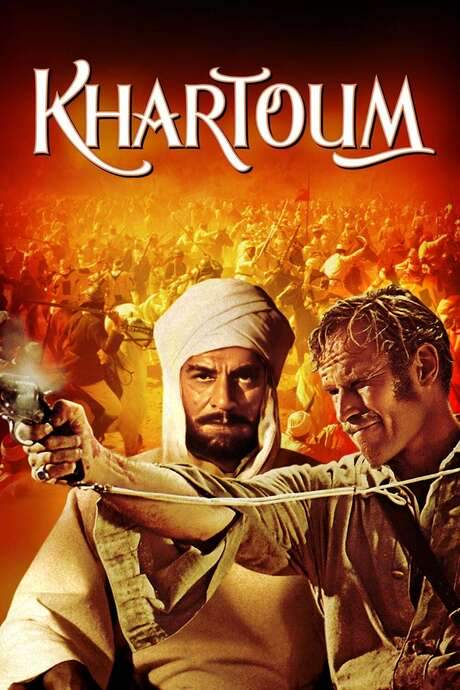
Khartoum 1966


Directed by
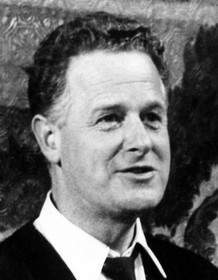
Basil Dearden

Where to Watch Khartoum
See current US streaming, rental, and purchase options for Khartoum (1966) via JustWatch.

fuboTV
HD
MGM Plus
HD
MGM Plus Roku Premium Channel
HD
MGM+ Amazon Channel
HD
Philo
HD
Tubi TV
SD
YouTube Free
HD
Amazon Video
HD
Apple TV Store
HD
Fandango At Home
HD
Google Play Movies
SD
YouTube
SD Streaming availability powered by 
Khartoum Plot Summary
Read the complete plot summary and ending explained for Khartoum (1966). From turning points to emotional moments, uncover what really happened and why it matters.
In 1883, in the Sudan, a force of 10,000 poorly trained but well-armed Egyptian troops is lured into the desert. Commanding the force is former Bombay Army soldier Colonel William “Billy” Hicks [Edward Underdown], now a private operator paid by the Egyptian government. He is overwhelmed by native tribesmen led by Muhammad Ahmed, the Nubian religious leader of the Samaniyya order who has proclaimed himself the Mahdi [Laurence Olivier]. The Mahdi’s followers slaughter the troops and seize the weapons, leaving Khartoum vulnerable and the British in a difficult moral and strategic bind.
Back in London, William Ewart Gladstone [Ralph Richardson], the prime minister, faces intense public pressure to avenge Hicks’s death. He is torn between political expediency and cautious restraint, knowing that a direct confrontation could escalate into a larger imperial clash. The option of sending a seasoned, controversial colonial figure—Major General Charles George Gordon—looms large. Gordon [Charlton Heston] brings a reputation for field leadership and deeply held religious convictions, but his appointment signals a willingness to take a highly personal, high-stakes risk. Lord Granville [Michael Hordern], the Foreign Secretary, recognizes that dispatching Gordon to Khartoum could deflect public anger and let the government avoid full accountability if things go wrong, a calculation that Gladstone weighs carefully for the sake of both policy and public sentiment.
Gordon is told that his mission is unofficial: evacuate troops and civilians with only a skeleton staff and virtually no guarantees from London. He accepts, albeit with a wary eye toward the limits of his authority. His sole aide is Colonel J. D. H. Stewart [Richard Johnson], a steadying presence amid mounting pressure. An early attempt to recruit Zobeir Pasha [Zia Mohyeddin] fails, and Gordon and Stewart press on toward Khartoum, where the general is greeted as a savior by the city’s residents upon his arrival in February 1884. He begins organizing defences and rallying the people, even as Stewart warns that this is not the mission he was sent to perform.
Gordon’s first act is to confront the Mahdi in the insurgent camp, accompanied by only a single servant. The exchange is tense and pointed, revealing the Mahdi’s resolve to seize Khartoum and punish its inhabitants as an example. Returning to the city, Gordon, a qualified engineer, wastes no time in digging a ditch to create a defensive moat between the White Nile and the Blue Nile, a practical measure born of necessity and foresight.
Across the sea, Gladstone becomes acutely aware of the city’s peril and orders Gordon to withdraw, but the general’s resolve remains unshaken. Stewart travels to London to plead the case, and public opinion grows ever louder in demanding relief. Gordon’s stance—resolute, impassioned, and increasingly isolated—persists even as the British government contends with the political costs of abandonment and the fear of appearing indecisive.
News arrives that a relief force, commanded by General Wolseley [Nigel Green], is being assembled in Britain. Yet as Khartoum’s waters recede in winter, shrinking the moat and thinning the city’s defenses, the smaller Egyptian army proves unable to withstand a massive onslaught from tens of thousands of Mahdist warriors. On 26 January 1885, Khartoum falls to the besieging forces. Gordon and the foreign garrison—together with tens of thousands of inhabitants—are slaughtered, despite a brief injunction from the Mahdi against killing Gordon personally. In a grim postscript, Gordon’s head is displayed on a pole as a stark symbol of the city’s fall.
The relief column arrives two days too late, and Khartoum’s ruin ushers in a period of withdrawal for Britain. The Mahdi dies six months later, but the political and moral shock helps spark a renewed, later British campaign in the Sudan. By 1898, Khartoum would be recaptured as part of a broader reassertion of imperial power, reshaping the region’s future in the hands of new leaders and new strategies.
In the end, the tale is one of ambition and restraint, courage and consequence, where leadership decisions ripple through politics, faith, and the fate of a city. The human stories—of Hicks’s doomed expedition, Gordon’s determined yet doomed stand, and the grinding push and pull between government policy and battlefield reality—remain central to understanding why Khartoum’s siege remains a touchstone of imperial history.
Khartoum Timeline
Follow the complete movie timeline of Khartoum (1966) with every major event in chronological order. Great for understanding complex plots and story progression.
Egyptian force lured into the desert
In 1883, a force of 10,000 Egyptian troops commanded by Colonel William Hicks is drawn into the Sudan desert and ambushed by Mahdist forces. The troops are defeated and their weapons captured, exposing the vulnerability of the occupying force. The brutal outcome foreshadows the coming collapse of dhimmi rule in the region.
Gladstone weighs Khartoum policy
Back in Britain, Prime Minister Gladstone faces intense public pressure to avenge Hicks. He decides to dispatch General Gordon to Khartoum as a politically expedient move, even though the mission is not officially sanctioned. The government hopes to dodge direct responsibility by placing the burden on Gordon.
Gordon travels to Khartoum
Gordon and his aide Stewart travel to Khartoum, and upon his February 1884 arrival he is hailed as the city's savior. He immediately begins organizing defences despite limited resources. The welcome bolsters his resolve as the crisis deepens.
Gordon meets the Mahdi
Gordon visits the Mahdi at an insurgent camp and engages in a tense parley. He learns that the Mahdi intends to take Khartoum and kill its inhabitants as an example of power. The exchange reveals the stark chasm between Gordon's mission and the Mahdi's aims.
Khartoum's defensive moat
Back in Khartoum, Gordon oversees the construction of defensive works and digs a moat between the White Nile and the Blue Nile. The improvised barrier is meant to slow any assault and buy time for relief. The city becomes a fortress under Gordon's engineering guidance.
Stewart travels to London to explain
Gordon's aide, Colonel Stewart, travels to London to explain the situation on the ground. His dispatches reveal the dire strategic scenario and the unsanctioned nature of Gordon's mission. The government becomes increasingly aware of the emergency.
Public outcry spurs a relief force
Months pass as a public outcry in Britain pressures Gladstone to send relief, but the Prime Minister delays with cautious expectations that Gordon might retreat. The decision leads to a delayed but eventual move to evacuate civilians and troops. The political tug-of-war shapes the crisis more than battlefield actions.
News of Wolseley's relief force
Gordon receives word that a relief force led by General Wolseley is being dispatched from Britain. The prospect of rescue hardens Gordon's stance as time runs out. The tension between relief efforts and Khartoum's siege continues to escalate.
Winter recedes and the moat is exposed
As winter ends, the Nile's waters recede and the moat dries, leaving Khartoum's small Egyptian army vulnerable to a larger Mahdist assault. The defensive line collapses under overwhelming odds. The garrison is forced to confront the inevitability of a major offensive.
Khartoum falls and Gordon is killed
On 26 January 1885, Khartoum falls to the Mahdist forces. Gordon and the foreign garrison and civilians are slaughtered, and Gordon's head is displayed on a pole—an infamous symbol of the siege's brutality. The relief force arrives too late to save the city.
Relief arrives two days late
The British relief column arrives two days after Khartoum has fallen. A last-ditch rescue is unable to turn the outcome, and the British withdraw from the Sudan soon after. The disaster reverberates back in Britain as a political and moral blow.
Mahdi dies; aftermath looms
The Mahdi dies about six months after Khartoum's fall, leaving the region in unrest and uncertainty. Public outrage in Britain over the catastrophe stirs debates about future intervention. The long shadow of Khartoum influences policy for years to come.
1898: Khartoum is recaptured
A decade after the disaster, Britain and its Egyptian allies invade the Sudan and recapture Khartoum in 1898. The victory restores colonial authority and marks a new chapter in the region's history. The episode shapes British imperial policy for years to come.
Khartoum Characters
Explore all characters from Khartoum (1966). Get detailed profiles with their roles, arcs, and key relationships explained.
Gen. Charles 'Chinese' Gordon (Charlton Heston)
A renowned British general tasked with evacuating troops, whose unorthodox leadership and deep faith drive his decisions. He disregards overt government orders, choosing action over caution, becoming both celebrated and controversial. His forceful, charismatic approach tests the boundaries between official policy and personal conviction.
Col. William Hicks (Edward Underdown)
A former Bombay Army colonel now operating as a private contractor paid by the Egyptian government. He is ultimately defeated by Mahdist forces, and his death sparks widespread public demand for British action. His fate becomes a catalyst for imperial decision-making.
Muhammad Ahmed (Laurence Olivier)
Nubian religious leader who proclaims himself Mahdi and commands the Mahdist forces. He seeks to seize Khartoum as a demonstration of power and religious purpose, presenting a formidable ideological and military challenge to the British garrison.
William Ewart Gladstone (Ralph Richardson)
British Prime Minister under intense public pressure to avenge Hicks. He is reluctant to commit troops directly, preferring to use Gordon’s mission to deflect responsibility. His decisions reveal the political tightrope of empire and domestic opinion.
Lord Granville (Michael Hordern)
Foreign Secretary who recognizes the political expediency of Gordon’s mission and the façade of responsibility it creates. He weighs diplomacy against imperial risk and public sentiment.
Gen. Wolseley (Nigel Green)
British relief commander whose planned expedition is large in scope but delayed by political and logistical considerations. He embodies the strategic side of imperial response to Khartoum’s crisis.
Colonel J. D. H. Stewart (Richard Johnson)
Gordon’s aide who travels to London to explain the Khartoum situation. Pragmatic and skeptical, he underscores the tension between on-the-ground realities and political assurances.
Zobeir Pasha (Zia Mohyeddin)
Former slaver who is approached in a bid to recruit local allies; his inability to assist underscores the complexities of local diplomacy and alliance-building in wartime Khartoum.
Sheikh Osman (Marne Maitland)
A local religious or tribal leader encountered by Gordon; represents the regional dimension of the conflict and the interplay between colonial figures and local authorities.
Major Kitchener (Peter Arne)
A British officer figure within the Khartoum milieu, contributing to the broader military context surrounding the siege and relief efforts.
Lord Hartington (Hugh Williams)
British aristocrat involved in the political-access layer of imperial decision-making, illustrating the upper-class dimension of governance during the crisis.
Khartoum Settings
Learn where and when Khartoum (1966) takes place. Explore the film’s settings, era, and how they shape the narrative.
Time period
1883-1885
The story unfolds in the late 19th century, beginning in 1883 with Egyptian troops lured into the desert and culminating in 1885 with the city's fall. British leaders grapple with public pressure to avenge Hicks while debating the proper use of military force. The period is defined by imperial politics, brinkmanship, and the consequences of intervention.
Location
Khartoum, Sudan
Khartoum sits at the confluence of the White Nile and Blue Nile in Sudan. In the 1880s it is a strategic stronghold and the focal point of British influence in the region. The film follows the siege and fall of Khartoum as Mahdist forces close in on the city.
Khartoum Themes
Discover the main themes in Khartoum (1966). Analyze the deeper meanings, emotional layers, and social commentary behind the film.
🏛️
Imperialism
The narrative centers on imperial decision-making driven by public opinion and political expediency. Gladstone and his ministers manipulate policy to manage risk and accountability, often using Gordon as a tool to avoid direct responsibility. The film highlights how empire wields diplomacy to project power while dodging blame, with real-world consequences for Khartoum and Britain.
🧭
Leadership
Gordon's independent, resolute leadership shapes the course of events in Khartoum. His personal conviction and religious faith influence tactics and risk-taking, blurring the line between duty and pride. The dynamic between Gordon and the government reveals tensions between autonomy and accountability in crisis decision-making.
⚔️
Conflict
The siege pits a small garrison against a vastly larger Mahdist army, underscoring the brutal realities of 19th-century warfare. The film emphasizes strategic moves like Gordon's moat and the overwhelming assault that leads to Khartoum's fall. The outcome reflects the limits of imperial power and the human cost of war.

Coming soon on iOS and Android
The Plot Explained Mobile App
From blockbusters to hidden gems — dive into movie stories anytime, anywhere. Save your favorites, discover plots faster, and never miss a twist again.
Sign up to be the first to know when we launch. Your email stays private — always.
Explore the mobile appKhartoum Spoiler-Free Summary
Discover the spoiler-free summary of Khartoum (1966). Get a concise overview without any spoilers.
The sweeping banks of the Nile frame a continent on the edge of transformation, where the heat of the desert meets the pulse of empire. In this Cinerama‑scaled tableau, the Anglo‑Egyptian Sudan teeters between the remnants of a beleaguered colonial administration and the surge of a fervent movement that threatens to reshuffle the balance of power. The film opens with a palpable sense of unfinished business, the river itself a silent witness to the clash of ideals, ambitions, and the stark realities of a land caught between worlds.
At the heart of the drama stands Charles George Gordon, a British general whose reputation for uncompromising duty and deep‑seated faith precedes him. Summoned by William Ewart Gladstone, the Prime Minister wrestling with the weight of public expectation and the cautious calculus of imperial politics, Gordon receives a stark, unofficial order: withdraw the remaining forces and civilians from Khartoum. Beside him, the steady Colonel J. D. H. Stewart provides a calm counterpoint to Gordon’s fiery resolve, while the distant figure of Muhammad Ahmed—the Mahdi—looms as the charismatic leader of an advancing force that embodies both religious zeal and political challenge. The interplay of these personalities sets up a compelling tension between personal conviction, governmental restraint, and the looming specter of a larger conflict.
The film’s tone is both grand and intimate, blending the majestic scope of sweeping river vistas with close‑up examinations of moral dilemma. It invites the audience to feel the weight of history pressing on individual choices, to sense the quiet desperation of a city awaiting its fate, and to contemplate the cost of leadership when duty collides with politics. Through measured pacing and a rich visual palette, the story promises a meditation on honor, responsibility, and the fragile line between evacuation and abandonment, all before the inevitable tide of events begins to rush forward.
Movies with Similar Twists and Themes
Uncover films that echo the narrative beats, emotional arcs, or dramatic twists of the one you're exploring. These recommendations are handpicked based on story depth, thematic resonance, and spoiler-worthy moments — perfect for fans who crave more of the same intrigue.
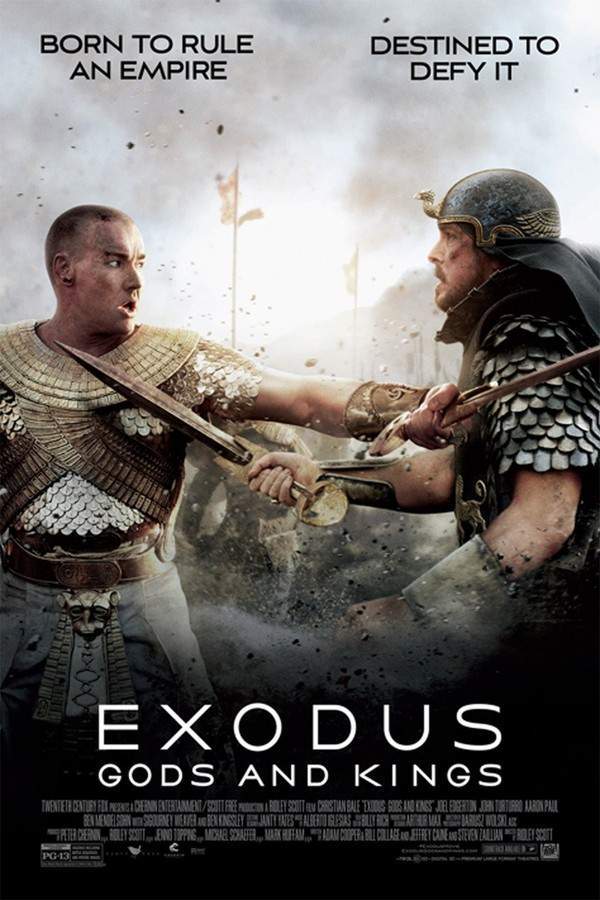

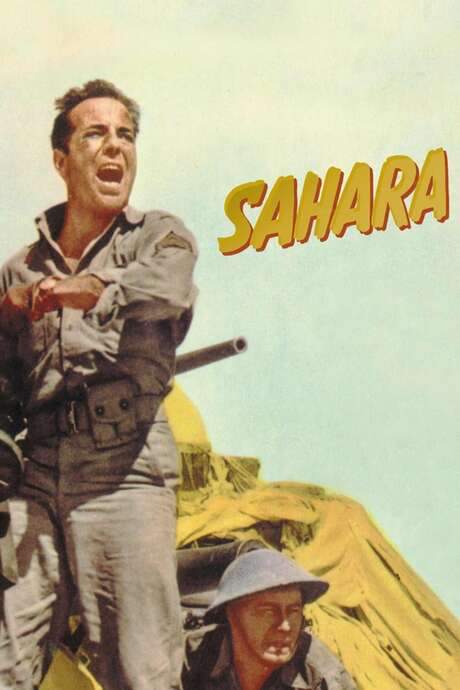





Featured on this page

What's After the Movie?
Not sure whether to stay after the credits? Find out!
Check out our other apps:

SAT Sphere
Build confidence for the Digital SAT.

Mori Atlas
Discover wild places worth protecting.

Luntero
Search smarter for a home in Amsterdam.

Plot Explained
Unravel movie endings and hidden clues.

Pokechamp
Dive into Pokémon data and battle logic.

Driving Theory
Get ready for your European theory test.

Movie Dust
Plan your next cinema trip with ease.

Musemap
Find art and culture as you travel.

Selkobase
Compare credentials before committing.

Local Manual
Turn an unfamiliar country into practical next steps.

Lernavi
Compare school systems before your next move.

GymRoam
Find a workout stop wherever your plans take you.
Explore Our Movie Platform
New Movie Releases (2026)
Famous Movie Actors
Top Film Production Studios
Movie Plot Summaries & Endings
Major Movie Awards & Winners
Best Concert Films & Music Documentaries
Movie Collections and Curated Lists
© 2026 What's After the Movie. All rights reserved.
Privacy Policy