What Is Sahara About?
The premise of Sahara in 344 words, with nothing given away. The full story follows below.
In the scorching heart of the Libyan desert, the Western Desert Campaign of World II unfolds against a backdrop of endless dunes, relentless sun, and a thin veneer of oasis hope. The landscape is both a battlefield and a crucible, where heat shimmers over sand and every breath reminds the weary of their fragile mortality. Within this austere setting, the tone is one of stark survival, gritty determination, and a quiet, almost reverent awe for the stark beauty that surrounds the combatants.
At the center of the story is Sgt. Joe Gunn, an American tank commander whose pragmatic instincts and unflappable resolve become the anchor for a ragtag band of Allied soldiers. Gunn’s leadership is less about grand strategy and more about improvisation—making the most of a battered M3 Lee, navigating the desert’s unforgiving emptiness, and keeping his crew focused when supplies run thin. His stoic demeanor masks a simmering concern for the lives under his charge, and his pragmatic outlook drives the group’s uneasy march across the dunes.
Around Gunn, a small but diverse crew coalesces: Doyle, the mechanically gifted gunner who keeps the engine humming; Waco Hoyt, the steady-eyed turret operator whose calm balances the tension; Captain Halliday, the lone officer whose experience adds a layer of formal command; and Tambul, a seasoned sergeant offering local knowledge and a bridge to the wider world beyond the sand. Their interactions blend camaraderie, subtle rivalry, and a shared sense of purpose, forging a bond that feels both improvised and inevitable in the face of the desert’s indifference.
Tasked with defending an isolated well—a lifeline of scarce water in an environment where thirst rivals bullets—they must hold this vital point against a determined German Afrika Korps battalion. The premise hinges on the clash between the relentless need for survival and the strategic importance of a single, vulnerable oasis. With the desert itself as an unforgiving adversary, the tension builds around how a modest group can leverage ingenuity, resolve, and the harsh terrain to protect a resource that could tip the balance of the wider conflict.
What Happens in Sahara?
The complete story of Sahara, from the first scene to the last, in 858 words (about 4 minutes). Spoilers throughout. Names in the text link to 10 cast member pages.
Spoilers ahead
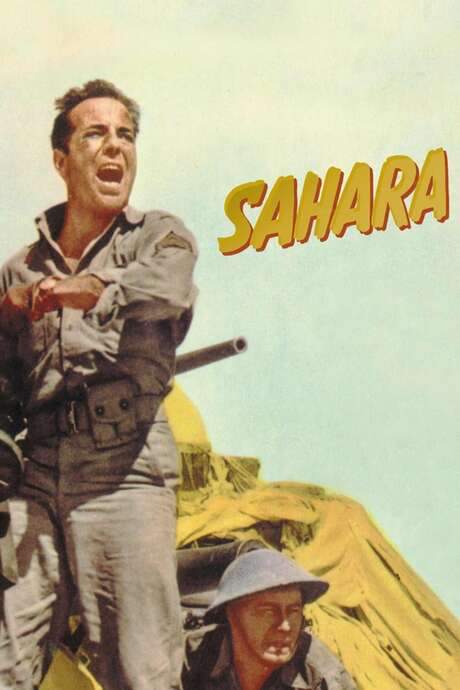
In 1942, the crew of Lulubelle, a United States Army M3 Lee tank attached to the British Eighth Army and led by Sgt. Joe Gunn, Humphrey Bogart, becomes separated from their unit during a general retreat from German forces after Tobruk falls. They push south across the blistering Libyan Desert, relying on grit and improvisation as they improvise a route with their mechanic and gunner in tow. Doyle, Dan Duryea, and Waco Hoyt, Bruce Bennett, form the core of the improvised crew, while they encounter a battered field hospital and briefly take aboard Captain Halliday, Richard Aherne, along with four Commonwealth soldiers and Free French Corporal Leroux, Louis Mercier. Halliday, the only officer among them, recognizes Gunn’s experience and hands over command, trusting Gunn’s practical leadership to steer them through a landscape that offers little mercy and even less water.
As the tank moves across the scorched sands, Tambul, Rex Ingram, a Sudan Defence Force Sergeant Major, appears with an Italian prisoner, Giuseppe, and Tambul volunteers to guide the group to a distant well at Hassan Barani. Gunn haltingly agrees to let Giuseppe join, despite his initial misgivings about the stranger in their ranks. The convoy’s fragile cohesion is tested when a Luftwaffe strike led by Captain von Schletow, Kurt Kreuger, strafes the procession, wounding Fred Clarkson, Lloyd Bridges in the blast. Von Schletow is himself shot down and captured, leaving Gunn’s group to cope with the consequences of a wounded comrade and the unsettling reality of a pursuing enemy.
At Hassan Barani, the well is dry, and the group confronts the bitter truth that thirst can be as deadly as enemy fire. Clarkson’s condition worsens, and they push on to Bir Acroma, where a trickle of water offers a grim reprieve. Yet as they haul as much water as they can, German scouts close in with a mechanized battalion hungry for both liquid and leverage. Gunn seizes a desperate option: he holds back from a direct clash and, instead, uses deception to stall the enemy, proposing that the well contains more water than it does, while sending Waco to fetch reinforcements. The ploy buys time but cannot erase the reality of their precarious situation.
The first sustained clash with Major von Falken, John Wengraf, arrives as the Germans reach the outskirts. Gunn maintains the illusion of abundance, and when negotiations briefly resume, von Falken’s confidence grows. The German commander refuses the ruse and presses a frontal assault, exacting a toll on the Allied defenders. In the heat of battle, Giuseppe is stabbed by von Schletow after voicing his defiance against fascism and his desire to escape, yet not before he can pass a crucial warning to Gunn. Tambul gives chase and shoots Von Schletow in a bid to break the German line, but Tambul himself falls to a gunfire that ends his life. The action heightens the stakes, and Leroux, Louis Mercier, faces a harsh betrayal as von Falken orders Leroux shot in the back as he attempts to return to Allied lines; the act starkly underscores the brutality of the siege.
The stalemate with von Falken’s forces deepens, and Gunn’s small force finds itself pressed from multiple directions. As the German assault swells, the battlefield unexpectedly shifts again when a shell crater near the well seems to tap into a hidden source of water, shocking the defenders with its sudden return. The Germans’ weapons drop their edge as panic and thirst mingle with fatigue, and Gunn, along with Bates, the remaining Allied survivor—Ozzie Bates, Patrick O’Moore—seizes the moment to disarm the encroaching soldiers and establish a fragile ceasefire.
With the German soldiers surrendering to the desolate desert and their weapons laid aside, the Allied group moves their prisoners east under the watch of Waco Hoyt, who had remained steady and vigilant throughout the ordeal. The news of a turning tide arrives in the form of Allied troops approaching, and the survivors are guided toward safety. The sequence of events culminates with word of the Allied victory at the First Battle of El Alamein, a turning point that sends Rommel’s Afrika Korps retreating and signals a renewed push by Allied forces across the desert.
Throughout the ordeal, Gunn embodies a blend of stubborn resolve and practical leadership, improvising in the face of dwindling resources and withering heat. The bond among the crew—Gunn at the helm, Doyle keeping the engine and weapons in check, and Waco supporting from the turret—becomes their last line of defense against an enemy that knows no mercy. The crew’s endurance is matched by the desert’s unforgiving vastness, every mile bringing them closer to a contested horizon where courage, cunning, and a measure of luck determine who survives and who does not.
In the end, the story remains a testament to the grit of a small band of soldiers who, against overwhelming odds, hold the line long enough for Allied forces to arrive and claim a hard-won victory. The desert’s heat and dust forge their resolve, and the battle’s outcome—decisive but costly—echoes through the survivors’ march toward the east, where the war’s tides begin to turn in favor of those who refused to yield.
Sahara Timeline: Every Key Event in Order
14 key events in the order they happen, from “Separation from the unit and desert retreat” to “The desert frontline shifts: victory at El Alamein”. 14 events name a place, across 13 locations.
- 1
Separation from the unit and desert retreat
After Tobruk falls, Gunn and his crew are separated from their regiment during the general retreat. They are forced to press south across the Libyan Desert with dwindling supplies and mounting uncertainty. The long, grueling trek tests their resolve from the outset.
When:1942 Where:Libyan Desert
- 2
Rescuing survivors from a bombed field hospital
The crew discovers a bombed-out field hospital and decides to pull survivors aboard. They rescue Captain Halliday, four Commonwealth soldiers, and Free French Corporal Leroux, expanding their improvised convoy. Halliday becomes the de facto officer, though Gunn’s experience remains the guiding force.
When:1942 Where:Bombed-out field hospital
- 3
Captain Halliday yields command to Gunn
Captain Halliday relinquishes command to Master Sergeant Joe Gunn, recognizing Gunn's greater battlefield experience. The transfer consolidates Gunn’s leadership over the growing group. The team continues onward under Gunn’s direction.
When:1942 Where:Field hospital vicinity
- 4
Meeting Tambul and the prisoner Giuseppe
Riding atop the tank, the group encounters Sudan Defence Force Sergeant Major Tambul and his Italian prisoner, Giuseppe. Tambul volunteers to guide them to a desert well at Hassan Barani, offering a potential lifeline. Gunn agrees to the detour in hopes of finding water and safety.
When:1942 Where:Near Hassan Barani
- 5
Giuseppe joins after initial reluctance
Gunn initially resists taking the Italian prisoner, but ultimately allows Giuseppe to accompany the group. His presence adds strain but also a measure of solidarity to the fragile march. The squad presses forward toward the scarce resources ahead.
When:1942 Where:On the march toward Hassan Barani
- 6
Luftwaffe attack and casualties
A Luftwaffe strafing run wounds Commonwealth soldier Clarkson. Captain von Schletow is shot down and captured, removing an immediate threat at that moment. The attack underscores the constant danger closing in from the air and on the ground.
When:1942 Where:Desert road near Hassan Barani
- 7
Hassan Barani well proves dry
At Hassan Barani the group discovers the well is dry, increasing the group's desperation for water. Clarkson dies from his wounds, highlighting the toll the journey is taking. The threat of dehydration now looms as a defining pressure.
When:1942 Where:Hassan Barani
- 8
Bir Acroma well and the German pursuit tightens
Tambul leads them to another desert well at Bir Acroma, but water remains scarce. While gathering what little they can, German scouts appear in a half-track, signaling a mechanized battalion closing in. The group steels itself for a difficult stand.
When:1942 Where:Bir Acroma
- 9
Gunn delays the Germans with a deceptive stall
Gunn tries to slow the German advance by suggesting there is more water than there is and by offering food in exchange for water. He sends Waco on a run for reinforcements by taking the half-track. The ruse buys time but deepens the peril the group faces.
When:1942 Where:Bir Acroma area
- 10
Parley, betrayal, and the deaths of Leroux and von Falken
During a tense parley, Leroux and Major von Falken reach a fragile agreement, but Leroux is shot in the back as he returns to his side. Gunn and Bates respond with return fire, killing von Falken and shifting the balance of the standoff. The betrayal shifts the conflict toward the defenders.
When:1942 Where:Near the well
Show the other 4 events of Sahara Hide the last 4 events
- 11
Tambul pursues von Schletow and is killed
Tambul chases Captain von Schletow and kills him in a bid to prevent a German breakthrough. He is shot dead in the pursuit, a costly sacrifice that underscores the price of leadership. Giuseppe had already fallen earlier, leaving the group more exposed.
When:1942 Where:Near German lines
- 12
Final assault gives way to an unlikely resurgence of water
What appears to be a final German assault dissolves into a surrender as a shell near the well taps into a hidden water source, refilling the well. The surviving Allied crew disarms the surrendering Germans, and the group sustains themselves through this unexpected moisture lifeline. The moment reverses the odds just as relief seems distant.
When:1942 Where:Near the well
- 13
Allied relief arrives and the path to El Alamein opens
As they march the German prisoners east, Allied troops arrive with Waco guiding the way. News of the Allied victory at the First Battle of El Alamein reaches the group, turning the tide in their favor and signaling a broader strategic shift. The survivors prepare for the next phase of the campaign.
When:1942 Where:Desert, en route to Allied lines
- 14
The desert frontline shifts: victory at El Alamein
The news of a major Allied victory at El Alamein marks a turning point for Rommel's Afrika Korps. Gunn, Bates, and their companions are finally drawn into the wider fight alongside freed Allied forces. The trial by fire in the Libyan Desert culminates in a pivot toward the war’s next chapters.
When:1942 Where:El Alamein vicinity
Who Are the Main Characters in Sahara?
10 characters, among them Master Sergeant Joe Gunn (Humphrey Bogart), Jimmy Doyle (Dan Duryea) and Waco Hoyt (Bruce Bennett): who each one is and the part they play in the story. Every profile links to the actor’s page.
-
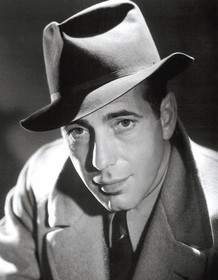
Master Sergeant Joe Gunn (Humphrey Bogart)
Played by Humphrey Bogart
A seasoned tank commander who assumes control when the unit is cut off from its battalion. Gunn is pragmatic, tough, and unflinching under pressure, using cunning and negotiation to delay German advances. His leadership anchors the group's resilience as they improvise defenses and outthink a larger force.
- 🪖 Leader
- 🧭 Strategist
- 🧠 Decisive
- JD
Jimmy Doyle (Dan Duryea)
Played by Dan Duryea
A loyal crew member whose presence provides a steady, if occasionally skeptical, perspective within the tank crew. Doyle supports Gunn's plans and contributes to the crew’s morale with practical, grounded thinking. He embodies the tension between bravado and duty in wartime endurance.
- 🧰 Loyal
- 🧭 Pragmatic
- 🗡 Bold
- WH
Waco Hoyt (Bruce Bennett)
Played by Bruce Bennett
The experienced crewman who acts as a stabilizing force aboard the tank. Waco offers measured judgment and helps execute Gunn’s strategies under the desert’s brutal conditions. His calm demeanor under fire reinforces the team’s cohesion.
- 🪖 Veteran
- 🧭 Calm
- 🛡 Protective
- CJ
Captain Jason Halliday (Richard Aherne)
Played by Richard Aherne
British medical officer who becomes the unit’s last formal officer when Captain Halliday cedes command to Gunn. Halliday brings professional discipline and medical expertise, supporting strategic decisions while recognizing Gunn’s leadership. He represents institutional authority in the improvisational war theater.
- 🩺 Medical Officer
- 🧭 Pragmatic
- 🗣 Professional
-
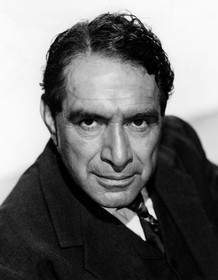
Giuseppe (J. Carrol Naish)
Played by J. Carrol Naish
A Free French/Italian prisoner who accompanies the group, offering sharp critique of fascism and danger of ideological rigidity. His presence adds moral tension and wartime politics to the march for water and safety. Giuseppe’s fate underscores the perils of war extending beyond the battlefield.
- 🗡 Rebel
- 🗣 Vocal
- 🇫🇷 Italian-Italian
- FL
Frenchie Leroux (Louis Mercier)
Played by Louis Mercier
Free French Corporal who contributes to the group’s cohesion with courage and linguistic skill. Leroux navigates the alliance between Allied forces and local troops, aiding the crew’s navigation through desert politics. His involvement reinforces the broader Allied effort beyond a single nation.
- 🪖 Allied
- 🗣 Communicator
- 🧭 Loyal
- SM
Sergeant Major Tambul (Rex Ingram)
Played by Rex Ingram
Sudan Defence Force leader who volunteers to guide the group to vital water sources. Tambul embodies desert resilience and regional knowledge, playing a critical role in locating wells and coordinating with local forces. He dies bravely while attempting to aid Gunn and his crew.
- 🪖 Leader
- 🗺 Navigator
- 🛡 Brave
- MV
Major von Falken (John Wengraf)
Played by John Wengraf
German army commander who orchestrates a persistent, stubborn assault and tries to pressure the Allied group with deception. Von Falken’s strategic insistence and willingness to barter water for guns heighten the tension of the siege. He is ultimately killed by Gunn, ending his command directly on the battlefield.
- ⚔️ Commander
- 🧠 Strategist
- 🗡 Ruthless
- CV
Captain von Schletow (Kurt Kreuger)
Played by Kurt Kreuger
Luftwaffe Captain who directly engages the Allied group and stabs Giuseppe in a display of aggression and contempt for dissent. His presence embodies the immediate threat of aerial and ground assault in the desert theater. He is neutralized during the confrontation as the siege unfolds.
- ✈️ Officer
- 🗡 Violent
- 🧭 Impatient
- OB
Ozzie Bates (Patrick O'Moore)
Played by Patrick O'Moore
One of the Allied survivors who endures the siege alongside Gunn and the others. Bates represents the ordinary soldier’s perseverance and the ultimate relief that comes with Allied reinforcement. His survival underscores the film’s emphasis on collective endurance.
- 🧭 Survivor
- 🗺 Reliable
- 🪖 Soldier
Where and When Is Sahara Set?
Sahara is set in Libyan Desert, Tobruk, Hassan Barani, Bir Acroma and El Alamein (1942). Here is why the time and place matter to the story.
When
1942
Set during the 1942 North African campaign of World War II, the film follows a retreating Allied unit across the Libyan Desert. The narrative escalates toward the First Battle of El Alamein, marking a turning point in the desert war. Timeframes weave through retreats, improvised defenses, and a final push as Allied troops close in on victory.
Where
Libyan Desert, Tobruk, Hassan Barani, Bir Acroma, El Alamein
The story unfolds in the Libyan Desert after the fall of Tobruk, placing Gunn and his crew in a harsh, arid battlefield. They move from a bombed-out field hospital to scarce water sources like Hassan Barani and Bir Acroma, where survival hinges on scarce resources. The environment drives the tactical stalemates with German forces and shapes the desperate stand near a critical water well amid the North African campaign.
- 🏜 Desert
- ⚔️ War
What Are the Themes of Sahara?
3 ideas the story keeps returning to, among them Leadership, Camaraderie and Sacrifice.
-
01
Leadership
Leadership emerges under fire as Gunn steps from behind the tank’s turret to command the group. He makes rapid, high-stakes decisions, balancing delay tactics with a strategic offer that tests the German commander. The theme explores how a single leader can organize disparate personalities into a cohesive defense when resources run dry.
-
02
Camaraderie
The crew, medical officers, and allied soldiers form a fragile bond born of shared danger. Trust is built through small acts of cooperation, from medical aid to tactical coordination, keeping morale alive in a desert that chews up resources. The group’s unity is essential to endure and outlast the enemy’s advances.
-
03
Sacrifice
Sacrifice threads through the narrative as individuals risk or lose their lives for the group's survival. Giuseppe’s defiance and subsequent death alongside Tambul’s valor highlight the cost of resistance and leadership under occupation. The climax underscores how survival often comes at the price of personal safety and political ideals.
What Kind of Film Is Sahara?
Tense in tone, with steady pacing and a straightforward story, going by the plot summary.
- Tone
- Tense
- Pacing
- Steady
- Story
- Straightforward
- Intensity
- High
- Ending
- Happy
A tense and gritty war survival film that pits a small band of soldiers against overwhelming odds in the harsh desert, creating a claustrophobic and exhausting experience ultimately defined by resilient hope.
- tense
- gritty
- desolate
- hopeful
- exhausting
- claustrophobic
- military survival
- wartime leadership
- resource scarcity
- desert warfare
Content notes: war violence, death of major characters, battlefield casualties.
Quiz
How well do you remember Sahara? Test yourself on the story.
Where to Watch Sahara
Stream it on Fawesome and YouTube Free, or rent or buy it from Amazon Video and Apple TV Store. US availability and prices from JustWatch.
Stream 2
 Fawesome
  YouTube Free




Streaming availability in the US, powered by