
I Start Counting 1970

Directed by

David Greene
Made by

Triumvirate Films
I Start Counting Plot Summary
Read the complete plot summary and ending explained for I Start Counting (1970). From turning points to emotional moments, uncover what really happened and why it matters.
Wynne Kinch, an adopted 14-year-old girl, Jenny Agutter harbors a crush on her 32-year-old stepbrother, George Bryan Marshall. From a charged start, she shadows him in a bathroom and notices scratches on his back. She also spots a jumper she knitted for him tossed into the rubbish, stained with blood—an unsettling clue that fuels her growing suspicion that he might be the local serial killer preying on teenage girls who remain at large. Even as this dangerous doubt gnaws at her, Wynne continues to entertain romantic fantasies about George and dreams of marrying him when she comes of age.
Throughout the film, she regularly visits the house she previously lived in with her adoptive family, a place that keeps echoing the memories of what she once had and what she imagines she could still attain. The routine visits sharpen the tension between perception and reality, as Wynne’s fixation slowly unravels the boundaries between affection, paranoia, and danger.
Later on, Wynne searches the back of George’s van, hoping to find clues but is forced to stay inside and hide when he climbs in and drives off. He heads to a house, and Wynne discovers that he is having an affair with a mentally unstable woman, whose blood was on the discarded jumper after she had slashed her wrists in a suicide attempt. The discovery intensifies the sense that danger surrounds Wynne, and her internal conflict deepens as she weighs trust, danger, and the possibility that the man she admires may be capable of atrocity.
Wynne’s best friend Corinne [Clare Sutcliffe] teases her about the crush on George, and during a family picnic Corinne flirts with him; he becomes irritated at her for acting like a “pathetic little mini-tart” and pins her down roughly on the ground. Corinne runs off and later phones Wynne to tell her she will stay out all night with an unnamed boy they both know. Worried about her friend, Wynne goes searching for Corinne at her former home and finds Corinne’s dead body. About to leave the house, Wynne is confronted and trapped inside by the bus conductor [Simon Ward], a figure whom Wynne and Corinne often meet on the bus. He confesses to having killed the girls. Wynne tries to escape, he chases her and she falls into the pond. While helping her out, he breaks down in distress, and the police arrive to bring the nightmare to a close.
The film ends on a somber note as Wynne and George watch their old house being demolished, a stark visual reminder of how the past has reshaped their present and future.
I Start Counting Timeline
Follow the complete movie timeline of I Start Counting (1970) with every major event in chronological order. Great for understanding complex plots and story progression.
Wynne spots scratches and blood-stained jumper
Wynne spies on George in the bathroom and notices several scratches on his back. She finds a jumper she made for him discarded in the rubbish, stained with blood, which makes her suspect he is the serial killer preying on local teens. Her fear and fascination fuse into a dangerous obsession as she watches him closely.
Crush persists; Wynne revisits the old family home
Despite the danger, Wynne's crush remains intense and she dreams of marrying George when she comes of age. She keeps returning to the house where she and George once lived with their adoptive family, clinging to fading memories. The line between fantasy and reality blurs as she obsesses over him.
Wynne tailing George’s van
Wynne tries to search the back of George's van for clues but is forced to hide when he drives off. She follows on foot, watching as he heads toward a house where more secrets might be revealed. The pursuit marks a turning point in her investigation and her relationship with him.
George’s affair revealed
Wynne discovers that George is involved with a mentally unstable woman, whose blood stains the jumper. The jumper's origin is tied to the woman who slit her wrists, reframing the blood-soaked clue as not a teen-killer's token but a tragedy connected to George's affair. Wynne's suspicion deepens but she is conflicted by her feelings for him.
Corinne teases Wynne at the picnic; confrontation
During a family picnic, Corinne flirts with George, provoking his anger. He pins her down roughly in front of Wynne, who watches in horror and confusion. Corinne runs off, and Wynne's worry about both her friend and George grows.
Corinne’s late-night call and Wynne worries
Corinne phones Wynne to say she will stay out all night with an unnamed boy. Wynne is anxious for Corinne's safety and resolves to search for her when her friend doesn't return. The concern pushes Wynne to confront the dangers surrounding George and Corinne.
Corinne's body is found
Wynne goes to Corinne's former home and discovers her dead body. The grim discovery confirms that a killer is active in their circle and raises the stakes of Wynne's suspicions about George. The tragedy also intensifies Wynne's sense of imminent danger.
Bus conductor confesses while trapping Wynne
As Wynne tries to leave the house, the bus conductor who Wynne and Corinne often meet on the bus traps her inside. He confesses to having killed the girls, and Wynne realizes the danger has reached a personal contact. She struggles to escape as the truth unfolds.
Escape attempt and pond confrontation
Wynne attempts to flee but is chased by the killer. She falls into a pond and fights to pull herself out as he looms closer. The moment is tense, with the environment turning into a trap that could seal her fate.
Police arrive; the killer breaks down
The police arrive just as Wynne is cornered, and the killer's composure collapses under the combined weight of fear and guilt. Wynne is saved from imminent harm, and the immediate threat ends. The killer's breakdown provides a emotional reckoning to the ordeal.
Ending: old house demolished
In the final scene, Wynne and George watch the old family house be demolished, symbolizing the destruction of their past and a fragile step toward normalcy. The image emphasizes distance between desire and reality as they move forward separately. The ending leaves Wynne's future ambiguous but safer.
Aftermath: lingering obsession and cautious hope
The events leave Wynne scarred and still obsessive, yet there is a hint of cautious hope for rebuilding a life with George within safer boundaries. The narrative closes on a note of uneasy resolution, acknowledging the complexities of desire and danger.
I Start Counting Characters
Explore all characters from I Start Counting (1970). Get detailed profiles with their roles, arcs, and key relationships explained.
Wynne Kinch (Jenny Agutter)
A 14-year-old girl living with adoptive parents who harbors a romantic fixation on her 32-year-old stepbrother, George. Her inner world is intense and private, mixing puppy-love with a growing sense of danger. She moves between curiosity, longing, and courageous acts as she investigates clues about George and the disappearances around town.
George Kinch (Bryan Marshall)
Wynne's 32-year-old adoptive stepbrother. He is presented as charming yet elusive, with a private life Wynne does not fully understand. His relationship with Wynne is complicated by later revelations of an affair with a mentally unstable woman and hints of darker secrets, complicating Wynne's suspicions.
Conductor (Simon Ward)
A bus conductor who Wynne encounters repeatedly; he becomes the town's killer figure in her mind. He is revealed as the killer when he confesses to the murders, escalating the tension as he pursues Wynne. The confrontation culminates in a chase that ends with police intervention.
Corinne (Clare Sutcliffe)
Wynne's best friend who teases her about the crush and flirts with George, complicating Wynne's feelings. She is impulsive and socially bold, pushing boundaries in a small-town setting. Corinne's death later in the story intensifies Wynne's fear and sense of loss.
Aunt Rene (Lally Bowers)
Aunt Rene represents the extended family dimension in Wynne's world, contributing to the domestic milieu of the story. Her presence underscores the routine, sometimes stifling, aspects of family life in the small town.
Mother (Madge Ryan)
The adoptive mother who anchors the family in domestic life. Her interactions with Wynne reflect care, control, and the tensions that arise as Wynne's obsessions and suspicions intensify.
Priest at Church (Lewis Fiander)
A town priest who represents the moral and religious backdrop of Wynne's world, providing direction or commentary on the events in the story.
Corinne (Clare Sutcliffe)
Duplicate entry to reflect the character already described above. (Included for cast alignment.)
Ice Cream Vendor (Phil Collins)
A minor figure encountered in a scene at an ice cream stand; his presence punctuates everyday life in the town.
Jim (Michael Feast)
A character who appears in town scenes; a secondary presence in Wynne's social circle.
Granddad (Billy Russell)
The elder member of Wynne's social circle; provides a memory connection to the past and the family’s history within the town.
Len (Gregory Phillips)
A teen character who appears in scenes at school or neighborhood in the town; part of Wynne's social circle.
Tramp (Gordon Richardson)
A minor offscreen-like figure encountered in the town; adds a sense of urban texture to Wynne's world.
Nun at School (Fanny Carby)
A nun encountered in school settings; part of the town's religious and educational framework.
Priest at School (Charles Lloyd Pack)
A priest seen at school, contributing to the community’s moral atmosphere.
Leonie (Lana Morris)
A town resident who appears in scenes; part of Wynne's social life.
Corinne (Clare Sutcliffe) - Additional
Additional reference for cast alignment in extended scenes; narrative impact remains tied to her earlier portrayal.
Ice Cream Vendor (Phil Collins) - Additional
Background note for cast alignment; same role as above referenced in scene contexts.
Man Waiting in Line to Buy Ice Cream (Jim Brady)
A minor background character seen in the ice cream shop scene.
I Start Counting Settings
Learn where and when I Start Counting (1970) takes place. Explore the film’s settings, era, and how they shape the narrative.
Location
English town
Set in a quiet English town and Wynne's adoptive family home, the story centers on intimate, everyday places. Key locations include Wynne's former house, George's van, a local bus, a pond, and the community spaces of a school and church. The town feels intimate and claustrophobic, heightening Wynne's obsession and the sense that danger lurks beneath ordinary life.
I Start Counting Themes
Discover the main themes in I Start Counting (1970). Analyze the deeper meanings, emotional layers, and social commentary behind the film.
💔
Forbidden Love
Wynne's crush on her 32-year-old stepbrother George drives the emotional core of the story. The film explores adolescence, desire, and the way sexual feelings can distort judgment in a close-knit environment. Her fantasies blur lines between family and romance, creating tension and danger as reality intrudes. The obsession exposes the fragility of boundaries in adulthood and youth alike.
🕵️
Mystery & Danger
A serial-killer subplot frames a sense of menace over a seemingly ordinary town. Wynne's suspicions push her toward risky, secretive acts as she probes George's life. The discovery of a confession from the bus conductor intensifies the danger and drives the pursuit to a physical confrontation. The film uses suspense to explore how truth can emerge from perilous situations.
🏚️
Family & Memory
The narrative juxtaposes domestic life with hidden violence, highlighting Wynne's sense of belonging and its fractures. The demolished house at the end serves as a stark symbol of memory, loss, and change for a family under strain. The interplay of memory and danger suggests that the past can haunt the present in unsettling ways. Through Wynne's eyes, the film questions what a family is and what it costs to uncover the truth.

Coming soon on iOS and Android
The Plot Explained Mobile App
From blockbusters to hidden gems — dive into movie stories anytime, anywhere. Save your favorites, discover plots faster, and never miss a twist again.
Sign up to be the first to know when we launch. Your email stays private — always.
Explore the mobile appI Start Counting Spoiler-Free Summary
Discover the spoiler-free summary of I Start Counting (1970). Get a concise overview without any spoilers.
In a quiet English suburb where ordinary life hums beneath a current of unease, the story follows Wynne Kinch, a fourteen‑year‑old adopted girl navigating the fragile edge between adolescence and adulthood. She lives under the same roof as her charismatic, thirty‑two‑year‑old stepbrother George, whose presence ignites both admiration and a restless curiosity that colors her every thought. The film settles into a gently unsettling tone, blending the everyday rhythm of school and family with an undercurrent that suggests something darker may be lurking just out of sight.
Wynne spends much of her time drifting between the present and memories of the house she once shared with her birth family, a place that seems to hold the promise of a different life. These visits act as a mirror, reflecting her longing for belonging while sharpening the line between affection and doubt. The world feels both familiar and slightly off‑kilter, as ordinary settings—bathrooms, school corridors, playgrounds—take on a faintly ominous glow, hinting that the ordinary may conceal hidden layers.
Friendship adds another texture to Wynne’s world through her best friend Corinne, whose teasing about the stepbrother’s allure adds a playful yet uneasy dynamic. Social gatherings, like family picnics, become stages where underlying tensions surface, and small gestures take on amplified significance. The interactions are charged with a mix of adolescent yearning and an emerging sense that something is not quite right.
The film cultivates an atmosphere of quiet dread balanced with the tender hopes of a young girl dreaming of love and stability. As the narrative unfolds, the past and present intertwine, leaving Wynne to navigate a maze of emotions, suspicions, and the ever‑present question of whether the people she trusts can truly be trusted. The tone remains immersive, drawing the viewer into a world where the line between nightmare and reality is artfully blurred.
Movies with Similar Twists and Themes
Uncover films that echo the narrative beats, emotional arcs, or dramatic twists of the one you're exploring. These recommendations are handpicked based on story depth, thematic resonance, and spoiler-worthy moments — perfect for fans who crave more of the same intrigue.


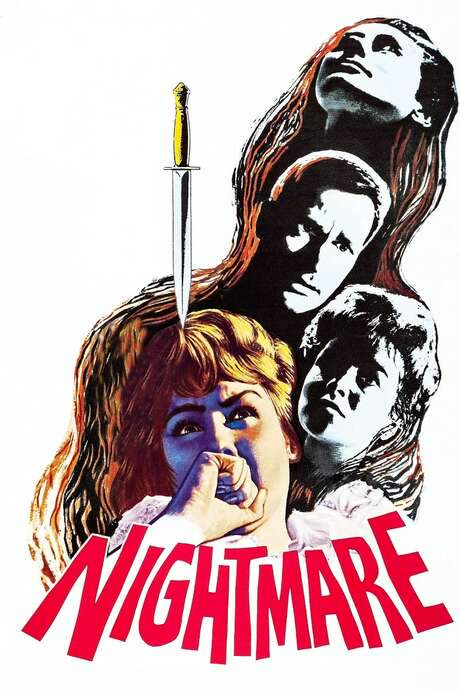


Featured on this page

What's After the Movie?
Not sure whether to stay after the credits? Find out!
Check out our other apps:

SAT Sphere
Build confidence for the Digital SAT.

Mori Atlas
Discover wild places worth protecting.

Luntero
Search smarter for a home in Amsterdam.

Plot Explained
Unravel movie endings and hidden clues.

Pokechamp
Dive into Pokémon data and battle logic.

Driving Theory
Get ready for your European theory test.

Movie Dust
Plan your next cinema trip with ease.

Musemap
Find art and culture as you travel.

Selkobase
Compare credentials before committing.

Local Manual
Turn an unfamiliar country into practical next steps.

Lernavi
Compare school systems before your next move.

GymRoam
Find a workout stop wherever your plans take you.
Explore Our Movie Platform
New Movie Releases (2026)
Famous Movie Actors
Top Film Production Studios
Movie Plot Summaries & Endings
Major Movie Awards & Winners
Best Concert Films & Music Documentaries
Movie Collections and Curated Lists
© 2026 What's After the Movie. All rights reserved.
Privacy Policy