What Is Homicide About?
The premise of Homicide in 336 words, with nothing given away. The full story follows below.
In a city where the hum of traffic masks deeper currents of faith and doubt, Bobby Gold patrols the streets as a homicide detective whose instincts have long been calibrated to facts, procedure, and the sharp edge of justice. When a seemingly routine robbery‑murder lands on his desk, the case promises the familiar grind of evidence, interrogations, and the chase for a suspect. Yet the investigation quickly proves to be more than a simple procedural assignment; it becomes a portal into a hidden layer of the city’s cultural fabric, one that forces Gold to confront the part of himself he has kept at arm’s length.
Partnered with the seasoned Tim Sullivan, Gold navigates the delicate balance between camaraderie and professional hierarchy. Their dynamic, built on decades of shared precinct life, provides both a anchor and a contrast as Gold’s personal history resurfaces. The detective’s Jewish background, a detail once peripheral, is thrust into relevance by the very nature of the case, prompting colleagues to suggest his heritage might grant him a unique perspective. This suggestion unsettles Gold, who is simultaneously drawn to, and wary of, the expectations that accompany his identity.
As the investigation unfolds, late‑night conversations with members of the local Jewish community become a quiet catalyst for an inner reckoning. Through these encounters, Gold feels the pull of a spiritual curiosity that has long been eclipsed by the demands of his badge. Questions of loyalty, belonging, and the true meaning of justice begin to surface, challenging the hardened detective to weigh the law he enforces against a burgeoning sense of personal truth.
The film drifts between gritty procedural realism and meditative introspection, creating a tone that is as much about the streets of the city as it is about the shadowed corridors of the soul. Bobby Gold stands at the crossroads of duty and awakening, his journey promising a tense, thought‑provoking exploration of how far a lawman will go when the case he pursues forces him to examine the very foundations of his belief.
What Happens in Homicide?
The complete story of Homicide, from the first scene to the last, in 658 words (about 3 minutes). Spoilers throughout.
Spoilers ahead
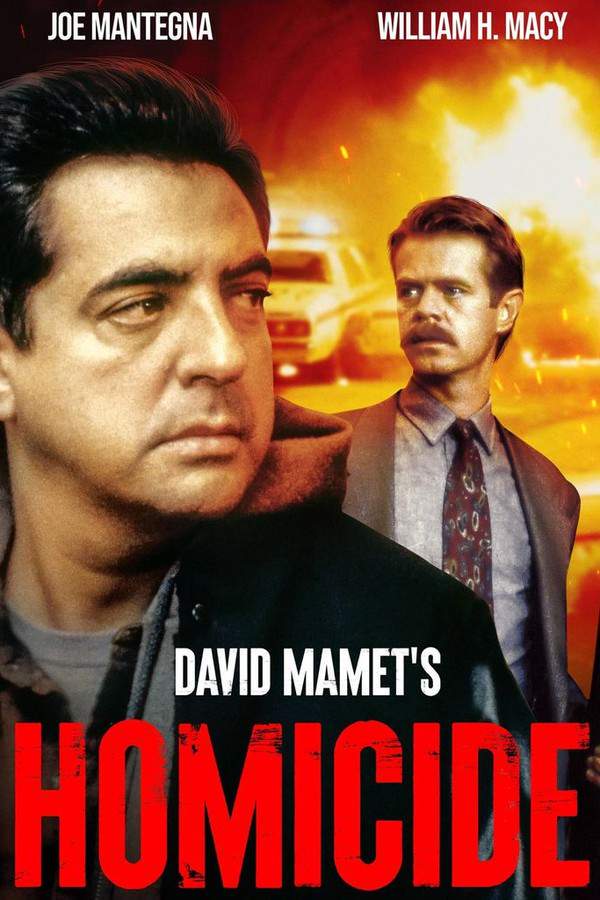
Bobby Gold, [William H. Macy], is a homicide detective on the trail of Robert Randolph, a dangerous drug dealer and cop-killer who sits on the FBI’s Ten Most Wanted List. While chasing an accomplice of Randolph, Gold and his partner, Tim Sullivan, [Joe Mantegna], stumble upon a brutal street crime: the elderly Jewish owner of a neighborhood candy store has been shot dead, and rumors of a fortune hidden in her basement swirl around the case. The son, a prominent doctor, leverages his influence to have Gold reassigned to the investigation, hoping that Gold’s own Jewish heritage will give him a deeper understanding of the family’s tragedy. Yet Gold remains professionally irritated by the distraction from a far bigger, higher-profile case, even as the case quietly begins to tug at his sense of identity and belonging.
What starts as routine police work soon broadens into something larger as late-night conversations with members of the local Jewish community provoke Gold to rethink himself and his loyalties. Through these interactions, he confronts feelings of inadequacy and a nagging sense of not fully fitting into the world he polices. A careful examination of the store owner’s background reveals a past connected to a Zionist organization operating within the city, and Gold’s curiosity shifts toward understanding a community that seems both emboldened and endangered by hidden forces.
Gold learns that the elderly woman once helped arm a Jewish liberation group, a unit dedicated to protecting its people from threats within the city. When he is asked to help steal a list of group members from police evidence to shield the organization, Gold refuses, and the group leaders rebuff him for denying his faith. In a bid to keep the group safe, he reluctantly seeks help from a Jewish woman within the circle, who directs him to a toy shop turned secret stronghold—an alarming repository of Nazi propaganda that confirms the group’s worst fears about antisemitism and danger.
Enraged, Gold lashes out and detonates a bomb the woman had given him, destroying the toy shop and the stronghold. This act deepens the rift between him and his colleagues, as the group then presses him to retrieve the confidential list from police archives. When Gold refuses again, they respond by presenting him with photographs of his actions at the toy shop, effectively blackmailing him into cooperation.
The case against Randolph intensifies, and a crucial raid unfolds with Gold running late after his confrontation with the Jewish group. In the chaos, Sullivan is fatally shot in Gold’s arms, a loss that amplifies Gold’s fury and sense of responsibility. Overcome with rage, he blurts out a racial slur before charging into the building to catch up with Randolph. In the ensuing pursuit, Gold loses his weapon and finds a heavy chain to use as a weapon, finally closing in on Randolph as he tries to escape through a basement exit.
Randolph shoots Gold and taunts him as he clears a metal grate blocking his escape. In a moment of grim calculation, Gold reveals a personal truth—that Randolph’s mother was the one who betrayed him to the authorities—before the antagonist fatally wounds Gold with a final shot to the arm. A fake passport, arranged by Gold’s mother, is produced as a desperate safeguard, but the moment is interrupted when a police officer off screen shoots Randolph in the chest, ending his flight.
Back at the precinct, Gold returns to a reception of mixed, uneasy responses from his fellow officers, who seem distant in the wake of Sullivan’s death and the fallout from Gold’s actions. He is informed that he is now “off homicide.” The investigation closes with a troubling revelation: the old woman’s supposed fortune was not the motive after all, and she was killed by two Black kids aiming to take the reward, a detail that further complicates Gold’s sense of justice and his place within a community that now questions whether he can truly belong.
Homicide Timeline: Every Key Event in Order
13 key events in the order they happen, from “Detective Gold confronts a separate murder scene” to “The aftermath: isolation and the truth of the fortune”. 13 events name a place, across 11 locations.
- 1
Detective Gold confronts a separate murder scene
Gold and his partner Tim Sullivan are on the trail of Randolph when they stumble upon the murder of an elderly Jewish candy-store owner in a ghetto. The rumor of a fortune hidden in her basement fuels the case with suspicion and curiosity. This early scene subtly shifts Gold's focus from a high-profile pursuit to a more personal investigation.
When:Night Where:Ghetto candy-store
- 2
Doctor leverages influence to assign Gold to the case
The deceased woman's son, a doctor, uses his clout to have Gold reassigned to the case, hoping Gold’s Jewish background will make him more empathetic to the community. Gold resents being pulled off a higher-profile case and feels the politics of ethnicity complicate his work. The development foreshadows how identity will influence the investigation.
When:Evening Where:Police department
- 3
Gold’s uneasy ties to the Jewish community begin
Gold's interactions with the Jewish community test his allegiance to the badge against a growing sense of belonging. He confronts his own insecurity about fitting in and senses a growing pride in the community's resilience. These encounters plant seeds of a Jewish consciousness that will shape his choices.
When:Evening Where:Community circle
- 4
Night survey uncovers a Zionist network
A nighttime survey of the crime scene reveals a crucial detail from the victim’s past and hints at a Zionist organization operating in the city. The discovery broadens the case from a simple murder to a political network with real stakes. Gold’s curiosity deepens as he senses a larger conflict at play.
When:Night Where:Crime scene / city
- 5
Gold seeks entry into the Zionist group
Feeling pulled toward the group, Gold tries to join the Zionist organization, testing his loyalty to the badge against an emerging Jewish identity. He is welcomed with suspicion and pressure, navigating the line between law and communal allegiance. The pursuit signals a turning point in his personal code.
When:Night Where:Jewish group meeting place
- 6
Revelation: the old woman ran guns for a liberation group
Gold learns the old woman once ran guns for a Jewish liberation group, a history that reinforces the group's sense of danger and their need to protect their people. This past complicates his view of the organization and elevates the stakes of his choices. The discovery deepens the tension between duty and loyalty.
When:Past Where:Police evidence room
- 7
Group pressures Gold to steal a member list
When asked to steal a list of group member names from police evidence to shield the organization, Gold objects and refuses to betray his oath. The leaders rebuke him for denying his faith, underscoring how personal loyalty and religious allegiance are intertwined with the operation. The rift between Gold and the group widens.
When:Evening Where:Police evidence room
- 8
A Jewish ally leads to a Nazi-stronghold toy shop
A Jewish woman guides Gold to a toy shop in the city that doubles as a secret stronghold for Nazi sympathizers, a place filled with anti-Jewish propaganda. The visit confirms the community’s fears and shows the real, present danger they face. Gold’s anger grows as he senses the depth of the threat.
When:Night Where:Toy shop
- 9
Gold destroys the stronghold with a bomb
Following the woman’s guidance, Gold uses a bomb to destroy the stronghold, blowing up the toy shop. The act starkly exposes the Nazi presence in the city and validates the group’s fears about antisemitism and violence. The raid marks a dramatic turn in Gold’s methods and loyalties.
When:Night Where:Toy shop
- 10
Group coercion escalates with photographs
The Zionist group confronts Gold again, demanding compliance and showing him photographs of his actions at the toy shop to coerce his aid. The images weaponize memory and guilt, forcing Gold to weigh his personal ethics against communal pressure. The coercion foreshadows the collision between duty and loyalty.
When:Night Where:Jewish group meeting
Show the other 3 events of Homicide Hide the last 3 events
- 11
Raid on Randolph; Sullivan dies in Gold’s arms
During a raid to apprehend Randolph, Gold arrives too late due to the prior meeting with the Jewish group. Tim Sullivan dies in Gold’s arms from a gunshot, leaving Gold devastated and furious. He charges through the building in a frenzy, loses his gun, and hunts Randolph with a makeshift weapon as the chase culminates in a brutal confrontation.
When:Mid-raid Where:Building / raid location
- 12
Confrontation, revelation about the mother, and Randolph’s fall
In a tense basement pursuit, Randolph shoots Gold in the arm while mocking him. Gold reveals that it was Randolph’s mother who turned him in, and a police officer off-screen then shoots Randolph in the chest, ending the threat. The moment shatters any simple sense of justice and loyalty and exposes the complexity of the case.
When:End of raid Where:Basement / escape route
- 13
The aftermath: isolation and the truth of the fortune
Gold returns to the precinct to a cool, distant reception from fellow officers who are wary of the fallout from the events. He learns that the old woman was killed by two black kids seeking the supposed fortune hidden in her basement, a revelation that complicates his understanding of motive and community guilt. The case leaves him isolated, grappling with the cost of truth and loyalty.
When:After raid Where:Police precinct
Who Are the Main Characters in Homicide?
3 characters, among them Bobby Gold (William H. Macy), Tim Sullivan (Joe Mantegna) and Robert Randolph: who each one is and the part they play in the story. 2 of them link to the actor’s page.
-
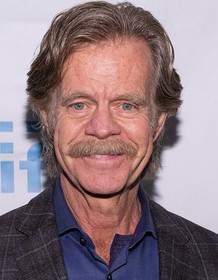
Bobby Gold (William H. Macy)
Played by William H. Macy
A homicide detective whose empathy toward the Jewish community grows after encountering antisemitic threats. He struggles to balance loyalty to the badge with a new sense of Jewish consciousness, which pulls him into and against a Zionist group. His actions reveal a willingness to bend rules under the pressure of belief, culminating in dramatic confrontations and a sense of moral ambiguity.
- 🕵️ Detective
- 🧭 Identity
- 🤝 Loyalty
-

Tim Sullivan (Joe Mantegna)
Played by Joe Mantegna
Gold’s partner who provides contrast to his evolving self—more traditional, grounded in police duties. He becomes a casualty of the case, dying in Gold’s arms, which leaves Gold scarred and more determined (or haunted) by the case’s events. His death amplifies the personal stakes in the investigation.
- 🤝 Partner
- 🛡️ Duty
- 😢 Tragedy
- RR
Robert Randolph
A drug-dealer and cop-killer on the FBI’s Ten Most Wanted List who drives the chase’s high-stakes energy. His taunting, violent confrontations push Gold to a breaking point and highlight the criminal underworld’s brutality.
- 🧭 Antagonist
- 🔪 Violence
Where and When Is Homicide Set?
Homicide is set in Urban city, Ghetto district and Police precinct (Early 1990s). Here is why the time and place matter to the story.
When
Early 1990s
Set in the early 1990s urban landscape, the film reflects contemporary policing and crime culture. It centers on a homicide investigation entwined with antisemitic tensions and a Zionist group operating within the city. The era’s social anxieties and law-enforcement tactics shape how characters navigate loyalty and danger.
Where
Urban city, Ghetto district, Police precinct
The story unfolds in a dense urban setting centered on a poorer ghetto district and the adjacent police precinct. The streets hold tension between law enforcement and marginalized communities, with a candy store murder catalyzing the investigation. A secret Nazi propaganda stronghold and a Zionist group reveal the city’s hidden currents of power, fear, and ideology.
- 🌆 Urban
- 🧭 Community
- 🏢 Police
What Are the Themes of Homicide?
4 ideas the story keeps returning to, among them Identity, Racism & Violence and Duty & Morality.
-
01
Identity
Detective Bobby Gold’s awakening to his Jewish identity shapes his choices and loyalties. He searches for belonging beyond the badge, testing trust with a Zionist group and confronting the community’s expectations.
-
02
Racism & Violence
The narrative exposes ethnic tensions and the brutal consequences of prejudice. Gold’s use of a racial slur in rage underscores the emotional costs of bigotry, while the Nazi stronghold embodies explicit extremist violence.
-
03
Duty & Morality
Gold grapples with the duty to his badge versus personal conscience and the demands of groups around him. The tension between law and private justice drives pivotal, morally gray choices, including violent acts to protect or avenge.
-
04
Communal Fear & Power
The film portrays organized community groups—both protective and threatening—and how their power shapes individuals and neighborhoods. Antisemitism, political paranoia, and the symbol-laden spaces highlight the fragility of safety in the city.
What Kind of Film Is Homicide?
Bleak in tone, with steady pacing and a moderate story, going by the plot summary.
- Tone
- Bleak
- Pacing
- Steady
- Story
- Moderate
- Intensity
- High
- Ending
- Bleak
A grim and morally complex police thriller that follows a detective's descent into disillusionment as a routine case unravels his identity, leading to betrayal and a profound sense of loss.
- anxious
- gritty
- morally conflicted
- somber
- disillusioned
- claustrophobic
- identity crisis
- police procedural
- racial prejudice
- moral dilemma
Content notes: murder, death of partner, racial slur, bomb explosion, blackmail.
Where to Watch Homicide
Stream it on Criterion Channel and fuboTV, or rent or buy it from Google Play Movies and YouTube. US availability and prices from JustWatch.
 Criterion Channel
  fuboTV
  Plex
Plex  Plex Channel

Streaming availability in the US, powered by