
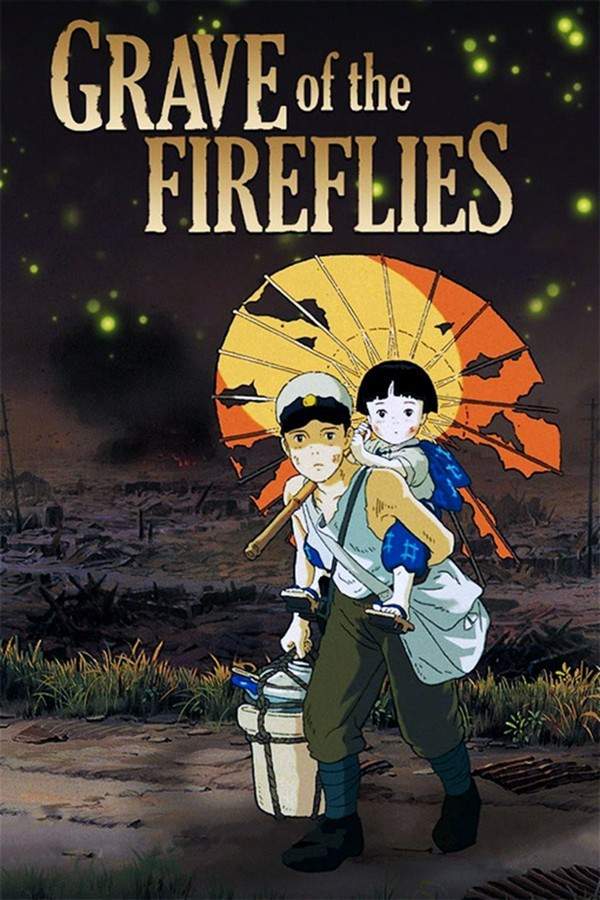
Grave of the Fireflies 2005

Directed by

Tōya Satō

Grave of the Fireflies Plot Summary
Read the complete plot summary and ending explained for Grave of the Fireflies (2005). From turning points to emotional moments, uncover what really happened and why it matters.
In March 1945, American bombers devastate Kobe during the waning days of the Pacific War. Seita and his sister Setsuko, children of an Imperial Japanese Navy captain, survive, but their mother dies. Seita conceals their mother’s death from Setsuko and the two children soon move in with a stern aunt. He retrieves a cache he had buried before the bombing and, while he gives most of it to his aunt, he keeps a single tin of Sakuma drops for Setsuko. The aunt pressures him to sell his mother’s silk kimonos to buy rice, a move that devastates Setsuko and strains their fragile situation.
As rations dwindle, the aunt grows resentful of the children, and Seita does little to earn the food she prepares. At her urging, he withdraws some money from their mother’s bank account to buy a charcoal stove and other supplies. After another air raid, they retreat to an abandoned bomb shelter, where they try to light the darkness by releasing fireflies from the marshes. The next morning, the fireflies lie still; Setsuko buries them and laments that their aunt has told her their mother died, then softly asks why the fireflies had to die so soon.
The family’s hardship deepens when rice runs scarce. A compassionate farmer suggests that Seita swallow his pride and return to his aunt, but he refuses, choosing instead to steal crops and break into homes during air raids. A farmer catches him and brings him to the police, yet a sympathetic officer lets him go. Setsuko falls ill, and a doctor explains she is malnourished. Seita withdraws the last of the money from their mother’s bank account and learns with a heavy heart that Japan has surrendered and that their father is most likely dead as well.
Returning with food, Seita finds Setsuko in a state of delirium; she dies as he finishes preparing the meals for her. He cremates her body and her doll in a straw casket, carrying her ashes in the candy tin alongside his father’s photograph. A few weeks later, Seita dies of starvation at a Sannomiya train station, surrounded by others who are also malnourished. A janitor, tasked with clearing the dead before American arrival, discovers the candy tin and discards it into a field. Setsuko’s ashes spill from the container, and her spirit rises, joined by Seita’s, beside a cloud of fireflies. The two board a ghostly train and look back on the events that led to their deaths as silent, observant travelers. Their spirits arrive at a hilltop bench overlooking present-day Kobe, surrounded by fireflies, where they are finally at peace.
Grave of the Fireflies Timeline
Follow the complete movie timeline of Grave of the Fireflies (2005) with every major event in chronological order. Great for understanding complex plots and story progression.
Kobe bombing and mother's death
American bombers devastate Kobe in March 1945 during the late Pacific War. Seita and his sister Setsuko survive the bombing, but their mother dies amid the chaos. The siblings are left to face a ruined city and an uncertain future.
Seita conceals his mother's death from Setsuko
After the bombing, Seita hides the fact that their mother has died to spare Setsuko's feelings. He tries to maintain a sense of normalcy for his younger sister. The lie strains their already fragile situation but temporarily shields her from grief.
Siblings move in with an aunt
The two children move to live with their aunt, who becomes increasingly resentful of their presence. The adult's harsh attitude contrasts with the boys' attempts to keep Setsuko fed and safe. The home environment grows tense as food and shelter become scarce.
Cache retrieved; Seita gives everything to aunt, keeps Sakuma drops tin
Seita digs up a supply cache he buried before the bombing and presents almost everything to his aunt. He keeps only a tin of Sakuma drops for Setsuko, hoping the candy will comfort her. The act underscores the siblings' dwindling resources and Seita's protective instinct.
Aunt persuades selling mother's kimonos for rice
The aunt pressures Seita to sell his mother's silk kimonos to buy rice, effectively erasing a link to their past. Setsuko's distress grows as she witnesses another family heirloom being sacrificed for food. The family's morale continues to deteriorate under hunger and grief.
Seita withdraws money to buy stove and supplies
From their mother's bank account, Seita withdraws money to purchase a charcoal stove and other essentials. He hopes the stove will improve their conditions, even as the war tightens its grip. The act foreshadows the widening gap between needs and resources.
Air raid forces relocation to an abandoned bomb shelter
Another air raid drives the siblings into an abandoned bomb shelter. They seek refuge from the destruction outside and try to endure with whatever they can scavange. The shelter becomes a fragile sanctuary in which they confront hunger and fear.
Fireflies light the shelter, die; Setsuko learns of her mother's death
The siblings capture fireflies from the marshes to light the shelter's darkness. By the next morning the fireflies have perished, leaving Setsuko to bury them. She then discovers, through the aunt's words, that their mother is dead and asks why the fireflies had to die so soon.
Rations dwindle; Seita steals crops; farmer captures him; police release him
With rations running out, Seita steals crops and breaks into homes during air raids. A farmer catches him and brings him to the police, but a sympathetic officer lets him go. The near capture underscores the harsh conditions and Seita's desperation.
Setsuko falls ill; doctor diagnoses malnutrition
Setsuko's health deteriorates as malnutrition takes its toll. A doctor confirms she is suffering from severe malnutrition and warns that hunger is endangering her life. Seita's anxiety and guilt intensify as the situation worsens.
Japan's surrender; Seita learns father likely dead
News of Japan's surrender shocks the siblings, ending any hope of rescue from higher authorities. Seita is distraught to realize their father is almost certainly dead as most of Japan's naval fleet has been sunk. The realization compounds their grief and isolation.
Seita brings food; Setsuko dies during preparation
Seita returns with food and finds Setsuko delirious; she dies as he finishes preparing the meal. Grief consumes him as he contemplates the loss of his sister and the collapse of their world. He mourns in silence, realizing there is no rescue in sight.
Seita cremates Setsuko and carries ashes in candy tin
Seita cremates Setsuko's body and places her ashes, along with his father's photograph, in a straw casket inside a candy tin. He holds onto this fragile memory as the war closes in around him. The tin becomes a symbol of family and the last link to hope.
Seita dies of starvation at Sannomiya station; janitor discards tin
Weeks later, Seita dies of starvation at the Sannomiya train station, surrounded by other starving people. A janitor sorts through his possessions and discards the candy tin, unaware of its contents. The tin's fate mirrors the oblivion of the war-torn era.
Spirits reach hilltop bench among fireflies
Setsuko's ashes scatter, and her spirit is joined by Seita's as they rise together with a cloud of fireflies. They board a ghostly train and silently reflect on the events that led to Seita's death. The journey ends on a hilltop overlooking Kobe, where their memories linger among the fireflies.
Grave of the Fireflies Characters
Explore all characters from Grave of the Fireflies (2005). Get detailed profiles with their roles, arcs, and key relationships explained.
Seita (Hoshi Ishida)
Seita is a proud, protective older brother who tries to shield his sister Setsuko from the harsh truth of their mother’s death while navigating the chaos of wartime Kobe. He becomes increasingly desperate to feed and shelter them, making difficult choices to survive. His stubbornness and sense of pride, coupled with hunger and fear, lead him toward actions that have tragic consequences.
Setsuko (Mao Sasaki)
Setsuko is a bright, curious child whose innocence illuminates the human impact of war. She clings to small comforts and asks gentle questions that expose the cruelty around her. Her illness and vulnerability reveal the fragility of childhood in a city shattered by conflict, making her experiences central to the film’s emotional gravity.
Grave of the Fireflies Settings
Learn where and when Grave of the Fireflies (2005) takes place. Explore the film’s settings, era, and how they shape the narrative.
Time period
March 1945
The events take place in the waning days of the Pacific War, when air raids ravage cities and rations shrink to nothing. The film follows the slow collapse of normal life as the surrender of Japan becomes a looming, undeniable reality. Amid this upheaval, the siblings’ choices are driven by hunger, fear, and the struggle to stay together.
Location
Kobe, Japan, Sannomiya
The story unfolds in Kobe, Japan during March 1945, against a backdrop of bombed streets and scarce resources. Seita and Setsuko seek safety first in an abandoned bomb shelter and later among marshes where they coax light from fireflies. The narrative also touches on nearby sites like Sannomiya, underscoring how the war’s reach shapes everyday life and survival.
Grave of the Fireflies Themes
Discover the main themes in Grave of the Fireflies (2005). Analyze the deeper meanings, emotional layers, and social commentary behind the film.
⚔️
War's Cost
War imposes a brutal price on civilians, stripping away safety, food, and hope. The narrative centers on children bearing the heaviest consequences, as homes are destroyed and basic needs vanish. Visual motifs of light and death emphasize the hidden casualties of conflict and the fragility of life under bombardment. The film critiques how state violence reverberates through ordinary lives long after the explosions.
💔
Family Struggle
The siblings' bond is tested by poverty, neglect, and tough moral choices forced by scarcity. Seita tries to shield Setsuko from grim truths, yet pride and denial deepen their vulnerability. The story probes how care systems crumble in wartime, forcing acts of self-reliance that can fracture trust and love. Together, their relationship becomes a quiet arena where resilience and desperation fight for control.
🕯️
Light and Loss
Fireflies in the shelter symbolize fragile light amid darkness, a childlike hope that flickers and fades. The contrast between nourishment and deprivation marks the shift from everyday survival to the mourning of loss. Setsuko's illness and death crystallize the personal cost of war, turning memory into a form of solace. The sisters' and brother's spirits later rise as memory and devotion traverse beyond hunger.

Coming soon on iOS and Android
The Plot Explained Mobile App
From blockbusters to hidden gems — dive into movie stories anytime, anywhere. Save your favorites, discover plots faster, and never miss a twist again.
Sign up to be the first to know when we launch. Your email stays private — always.
Explore the mobile appGrave of the Fireflies Spoiler-Free Summary
Discover the spoiler-free summary of Grave of the Fireflies (2005). Get a concise overview without any spoilers.
In the final months of World War II, the coastal city of Kobe lies scarred by relentless air raids. Smoke drifts over bomb‑rubble, and the once‑bustling streets have turned into a hushed landscape where survival is measured in scarce meals and quiet moments. The film captures this stark environment with a muted palette, letting the lingering sounds of distant aircraft and the whisper of wind through shattered windows shape a world that feels both intimate and devastated.
At the heart of this fragile setting are two siblings, Seita and Setsuko. Their father, a naval officer, is away fighting; their mother has already been lost to the war. Thrust into the care of a strict relative, the children must quickly learn to navigate a household defined by tight discipline and the ever‑present ache of longing for the family they once knew. The bond between brother and sister unfolds with a tender, almost reverent quality, hinting at a deep well of affection that sustains them amid the surrounding chaos.
Everyday life becomes a delicate balance between hope and hardship. Ration cards, dwindling supplies, and the constant threat of further bombings create a backdrop of anxiety that shadows each small triumph. The siblings’ attempts to find comfort in simple pleasures—quiet games, shared stories, and the soft glow of twilight—are rendered with a lyrical grace that underscores both their innocence and the harshness of their reality. The atmosphere oscillates between fragile optimism and a quiet resignation, inviting viewers to feel the weight of each fleeting smile.
Through its careful composition and restrained storytelling, the film weaves a lingering sense of melancholy, allowing the audience to sense the inexorable pull of war on ordinary lives. Subtle visual motifs, such as the fleeting dance of fireflies against night‑filled skies, serve as gentle reminders of fleeting beauty in a world dimmed by conflict, hinting at the deeper emotional currents that will guide the siblings’ journey.
Movies with Similar Twists and Themes
Uncover films that echo the narrative beats, emotional arcs, or dramatic twists of the one you're exploring. These recommendations are handpicked based on story depth, thematic resonance, and spoiler-worthy moments — perfect for fans who crave more of the same intrigue.

Featured on this page

What's After the Movie?
Not sure whether to stay after the credits? Find out!
Check out our other apps:

SAT Sphere
Build confidence for the Digital SAT.

Mori Atlas
Discover wild places worth protecting.

Luntero
Search smarter for a home in Amsterdam.

Plot Explained
Unravel movie endings and hidden clues.

Pokechamp
Dive into Pokémon data and battle logic.

Driving Theory
Get ready for your European theory test.

Movie Dust
Plan your next cinema trip with ease.

Musemap
Find art and culture as you travel.

Selkobase
Compare credentials before committing.

Local Manual
Turn an unfamiliar country into practical next steps.

Lernavi
Compare school systems before your next move.

GymRoam
Find a workout stop wherever your plans take you.
Explore Our Movie Platform
New Movie Releases (2026)
Famous Movie Actors
Top Film Production Studios
Movie Plot Summaries & Endings
Major Movie Awards & Winners
Best Concert Films & Music Documentaries
Movie Collections and Curated Lists
© 2026 What's After the Movie. All rights reserved.
Privacy Policy