What Is Gigot About?
The premise of Gigot in 321 words, with nothing given away. The full story follows below.
In the rain‑slick streets of 1920s Paris, a modest basement beneath the bustling Ménilmontant district becomes the quiet stage for a story that balances yearning with laughter. The neighborhood hums with the clatter of markets, the echo of church bells, and the shadows of people trying to survive, creating a world where melancholy and mirth sit side by side. The film paints this slice of the French capital with a soft, almost painterly palette, letting the everyday texture of the city breathe life into every scene.
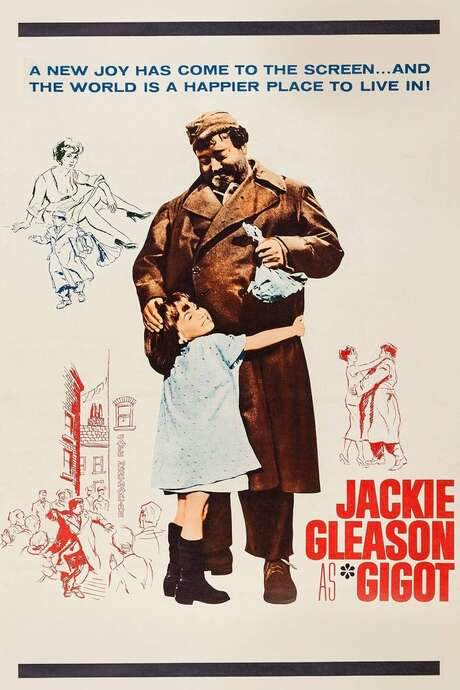
Gigot is the film’s heart: a mute janitor whose silence speaks louder than words. Though his world is often reduced to menial chores and dismissive glances, his actions ripple with unexpected generosity. He moves through the cramped corridors with a gentle clumsiness that invites both chuckles and compassion, turning ordinary moments—feeding a mouse, polishing a floor—into small acts of quiet heroism. His expressive face and physical comedy, entirely wordless, set the tone for a poignant yet light‑hearted tale.
When a weary woman named Colette and her bright six‑year‑old daughter Nicole drift into his narrow refuge, a delicate bond begins to form. Colette, living on the fringes of respectability, brings a fragile hope for a better future, while Nicole offers an unguarded curiosity that draws Gigot out of his cautious routine. Their interactions are marked by simple gestures and shared smiles, suggesting that even in a world of hardship, connection can blossom without a single spoken line.
The movie swirls between gentle comedy and understated drama, its mood lifted by a whimsical score that underscores the characters’ silent dialogue. Jackie Gleason’s performance as Gigot showcases his talent for physical expression, allowing the audience to feel the character’s inner life through movement alone. Together, the setting, the mute protagonist, and the tender relationships craft an immersive portrait of kindness striving against the odds, inviting viewers to discover the quiet joy that can illuminate even the darkest alleys.
What Happens in Gigot?
The complete story of Gigot, from the first scene to the last, in 842 words (about 4 minutes). Spoilers throughout. Names in the text link to 1 cast member page.
Spoilers ahead
Gigot Jackie Gleason is a mute Frenchman who lives a spare, struggle-filled life in a damp basement tucked away in the Ménilmontant district of Paris during the 1920s. His days are spent as a janitor for the building owned by a stern landlady, and he moves through a world that regularly condescends to him and toys with him. Yet beneath the rough surface lies a quiet, enduring kindness that shines through in the way he treats the neighborhood children and the animals he feeds. One unusual habit marks his experience of life: he is irresistibly moved by funeral processions, and he finds himself attending them with a crush of emotions, crying alongside strangers even if he didn’t know the person who has died.
A turn comes when, after an incident at a pub, he stumbles upon Colette [Katherine Kath] and her six-year-old daughter Nicole, sheltering them in his dingy basement. Colette is wary at first, but exhaustion and cold compel her to accept his help. From that moment, Gigot’s gentleness becomes a defining thread in the story; he dotes on Nicole and discovers that she knows little about the world beyond their immediate need for warmth and safety. When she points to a crucifix and asks about God, Gigot’s struggle to explain the mystery of faith becomes a poignant image of communication without words. He tries to convey the idea of Christ as the savior, but Nicole cannot grasp the explanation; in a moment of frustration, Gigot lashes out with self-paced actions, only to have Nicole calm him with a simple imitation of his own gestures.
To keep Nicole entertained, Gigot digs into his old gramophone and dresses up as a waiter to feed his pet mouse, turning their basement into a stage for small joys. He becomes steadfastly protective, even running beside Nicole on a merry-go-round to ensure she doesn’t fall. He also intervenes to defend Colette’s dignity when she is involved with a man who has a history with prostitutes, stepping in to shield her from trouble and danger. That intervention leaves Gigot bruised; the man and his cohorts retaliate and beat him, a reminder of how fragile kindness can be in a harsh world.
Colette, frustrated by her precarious situation and her longing for a stable life, tells Gigot she needs a “man of means” to give Nicole a better future. Given only a short window to prove his worth, Gigot then finds himself pulled into a risky act: a bakery’s unattended till presents a tempting, ill-gotten opportunity. The bakery’s couple, who have long exploited him, are away, and Gigot takes what they have left behind. With those stolen coins, he buys clothes for Colette and Nicole, dons a new look with a straw boater and a shave, and treats them to a lavish meal at a restaurant. The moment is a rare flash of happiness, a brief glimpse of a possible normal life.
Yet happiness is fragile. Colette’s ex-boyfriend returns, eager to reclaim her, and Colette finds herself torn again. She envisions walking away with Nicole, but her pimp persuades her to wait, delaying any real escape to a safer life. The next morning, two bumbling bureaucrats arrive to move Gigot to a home for the feeble-minded, and the bakery theft is discovered, pulling Gigot further into suspicion. When Colette returns, she finds Gigot and Nicole missing, and the pair become fugitives in their own city.
They retreat to an abandoned basement chamber beneath the streets of Paris, where Gigot’s dances for Nicole become a lifeline of joy amid danger. But the building’s timbers give way during their playful moment, and they narrowly escape a collapse that leaves Nicole unconscious. Gigot rushes her to the church, where a priest calls a doctor, yet the little girl’s resolve to hear the music—her need for the gramophone—drives Gigot to risk everything to retrieve it.
As they move through the crowded streets, the mob closes in, and the gramophone slides from Gigot’s grasp onto a coal loader’s conveyor. Determined to save the source of joy for Nicole, Gigot climbs into the loader despite the danger and is dumped into the river with the gramophone in his arms. The crowd believes he’s dead, and the town, overwhelmed by remorse for their earlier cruelty, stages a funeral for him—burying only his hat as a token of mourning. Gigot survives, though, and hides, watching his own funeral procession from the sidelines. When the crowd finally spots him, recognition sparks a fresh chase that only deepens the cycle of pursuit and pity that has defined his life.
In this tale of quiet resilience and communal conscience, the human need for compassion collides with fear, judgment, and the memory of kindness withheld. The film invites us to consider how a single gentle soul can briefly illuminate a city’s shadows, even as misunderstanding and fear threaten to swallow him again. The story remains intimate in its focus on Gigot’s silent bravery, Colette’s longing for a better future, and Nicole’s innocent faith in the world’s small, hopeful moments.
Gigot Timeline: Every Key Event in Order
12 key events in the order they happen, from “Gigot's quiet life in Ménilmontant” to “The reveal and the chase resumes”. 12 events name a place, across 12 locations.
- 1
Gigot's quiet life in Ménilmontant
Gigot is a mute janitor living in a squalid Parisian building in the Ménilmontant district. He endures condescension from neighbors but remains kind and protective toward children and animals. His days are punctuated by a fascination with funeral processions he cannot help but cry along with.
When:1920s Where:Ménilmontant, Paris
- 2
Chance encounter: Colette and Nicole seek shelter
After being beaten in a pub, Colette and her young daughter Nicole huddle in a doorway seeking shelter. Gigot brings them to his dim basement to offer food, warmth, and a bed. Exhausted yet grateful, Colette accepts his help.
When:Evening Where:Doorway, Paris
- 3
Shelter and suspicion
Inside the basement, Gigot grows fond of Nicole and is struck by her ignorance of church and God. He tries to explain faith but struggles, even punching himself to illustrate, leaving Nicole worried and trying to comfort him with a gesture of reassurance.
When:Night Where:Gigot's basement, Paris
- 4
Gigot's attempt to teach and reassure
Gigot entertains Nicole with his old gramophone and feeds her, even dressing as a waiter to coax a smile from the girl. He also steps in to protect Colette's dignity when a man pays for her services on a bench near the merry-go-round. The confrontation leaves him battered by the aggressors.
When:Night Where:Basement and nearby playground, Paris
- 5
A desperate attempt to prove himself
Colette pressures Gigot to prove he can provide a stable life, giving him only an hour to show his worth. Seizing a moment, he spots an unattended bakery till and takes money to secure a future for them.
When:Following morning Where:Bakery, Paris
- 6
The spree: new clothes and a feast
With stolen funds, Gigot buys clothes for Colette and Nicole, a straw hat, and even a shave for himself. He treats them to a grand meal at a restaurant, imagining a life where they are cared for.
When:Afternoon Where:Clothing shops and restaurant, Paris
- 7
Morning threat from authorities
The next morning, two bumbling bureaucrats threaten to deport Gigot to a home for the feeble-minded. The bakery discovers the theft, and Colette returns to find Gigot and Nicole missing, suggesting they have vanished into a hidden part of the city.
When:Morning Where:Street and bakery, Paris
- 8
Hidden basement and a dangerous play
Gigot and Nicole hide in an abandoned basement chamber beneath the streets, and Gigot entertains her with dancing and song. Their carefree play is interrupted when the roof timbers threaten to collapse and Nicole nearly faints.
When:Afternoon Where:Abandoned basement chamber, Paris
- 9
The church, the gramophone, and the mob
After a frantic escape from the startled crowd, Gigot rushes toward the church to fetch a doctor for Nicole. On the way back, he is spotted by the angry mob and flees, clutching the gramophone he saved for Nicole.
When:Late afternoon/evening Where:Church and Paris streets
- 10
The coal loader tragedy
In the chase, the gramophone falls onto the conveyor of a coal loader, and Gigot climbs inside to retrieve it despite warning cries. The device dumps him and the gramophone down a chute into the river, while a crowd applauds the failed rescue and his hat floats away.
When:Evening Where:Coal loader and river, Paris
- 11
Funeral for the presumed dead
Believing Gigot to be dead, the locals organize a solemn funeral, burying only his hat as a stand-in. Gigot, however, has survived and hides nearby, watching the procession with a mix of sorrow and irony.
When:Evening Where:Funeral site, Paris
- 12
The reveal and the chase resumes
From his hiding place, Gigot witnesses the makeshift funeral and realizes the procession is for him. He is spotted by the crowd, and the chase begins anew as they try to accost him once more.
When:Night Where:Parish streets, Paris
Who Are the Main Characters in Gigot?
4 characters, among them Gigot (Jackie Gleason), Collette (Katherine Kath) and Nicole: who each one is and the part they play in the story. 3 of them link to the actor’s page.
-

Gigot (Jackie Gleason)
Played by Jackie Gleason
A mute French janitor living in a Paris basement who endears himself to a six-year-old girl, Nicole, and her mother Collette through simple acts of kindness. Though routinely mocked by neighbors and exploited by others, he remains decent and protective, showing a capacity for self-sacrifice. He struggles to convey his beliefs and love to Nicole, often turning to music and gestures to communicate. His faith in small gestures and loyalty to Nicole defines his world.
- 💖 Kindness
- 🛡️ Protector
- 🤐 Silent
- C(
Collette (Katherine Kath)
Played by Katherine Kath
A weary mother who seeks a stable life for herself and her daughter Nicole. She accepts Gigot's shelter but is pressured by her ex-boyfriend and a pimp to return to street life. Her choices reflect the pressures of urban survival and the lure of a more secure, though questionable, life. The relationship with Gigot shows a fragile bond formed under strain.
- 👩👧 Mother
- 💔 Temptation
- 🧭 Survival
- N
Nicole
A six-year-old girl sheltered in Gigot's basement who is naïve about the world, unaware of church and God, and relies on Gigot to protect and entertain her. Her innocence and curiosity drive Gigot to try to explain things and to work hard to secure a future for both of them.
- 🧒 Child
- 🪄 Innocence
- 🫶 Trust
- RT
Rhubarb the Cat (Orangey the Cat)
Played by Orangey the Cat
Gigot's pet cat who is fed by him and brings a moment of companionship amid the struggles. The cat becomes part of the small, hopeful world he builds around Nicole and Collette.
- 🐈 Animal
- 🪶 Companionship
Where and When Is Gigot Set?
Gigot is set in Paris and Ménilmontant district (1920s). Here is why the time and place matter to the story.
When
1920s
The story unfolds in 1920s Paris, a period of post-World War I recovery and urban bustle. The Ménilmontant neighborhood reflects a city of sharp contrasts between poverty and small acts of generosity. Public life—pubs, jobs, and crowded apartments—shapes the rhythms of daily survival for Gigot and those around him.
Where
Paris, Ménilmontant district
Gigot's world is rooted in the Ménilmontant district of Paris, a dense urban quarter where small basements and stairwells form a living landscape. He dwells in a dingy cellar beneath his landlady's building, a stark contrast to the bustle above. The neighborhood is shown as tough and unsentimental, often testing those who live on its margins, including Gigot and his young ward Nicole.
- 🏙️ Paris
- 🧭 Working-class neighborhood
- 🕰️ 1920s
What Are the Themes of Gigot?
4 ideas the story keeps returning to, among them Compassion, Cruelty and Sacrifice.
-
01
Compassion
Gigot's kindness toward Colette and Nicole drives the plot. He shelters them from the rain, shares what little he has, and offers a bed and meals. His protective, selfless nature contrasts with the condescension he faces from neighbours, underscoring how compassion can alter a marginalized life. Through small acts of care, the film explores the dignity that kindness can bestow on someone society overlooks.
-
02
Cruelty
Colette and Gigot encounter hostility from locals, rivals, and even bureaucrats who label Gigot as feeble-minded. The film depicts prejudice and contempt toward a mute, marginalized man, culminating in a mob's pursuit and attempts to place him in a home. The theft by Gigot's moment of desperation triggers moral outrage and collective judgment.
-
03
Sacrifice
Gigot repeatedly risks his safety to protect Nicole's happiness and to help Colette. He uses stolen money to provide clothes, food, and a proper meal for the trio, even as he faces punishment. His decision to fetch the gramophone at great personal danger shows a willingness to sacrifice himself for Nicole's joy. The climax—narrowly escaping the mob and the danger of the river—embodies a selfless, protective instinct.
-
04
Silence
Gigot is mute, unable to verbally convey the meaning of a church or faith to Nicole; his attempts reveal a struggle to bridge communication gaps. The story uses visual comedy and physical expression to convey emotion and intent. Nicole's learning process and Gigot's inability to explain religion highlight themes of innocence, misunderstanding, and found family. The film treats silence as a form of communication that can carry deep meaning.
What Kind of Film Is Gigot?
Bittersweet in tone, with slow pacing and a straightforward story, going by the plot summary.
- Tone
- Bittersweet
- Pacing
- Slow
- Story
- Straightforward
- Intensity
- Medium
- Ending
- Bittersweet
A gentle, melancholic comedy-drama that follows a kind mute man's tender, heartbreaking relationship with a small girl, capturing moments of pure joy against a backdrop of poverty and cruelty.
- heartfelt
- melancholic
- gentle
- lonely
- tender
- poignant
- found family
- kindness
- poverty
- loneliness
Content notes: child endangerment, physical assault, emotional abuse.
Quiz
How well do you remember Gigot? Test yourself on the story.
Where to Watch Gigot
. US availability and prices from JustWatch.
Streaming availability in the US, powered by