What Is Funan About?
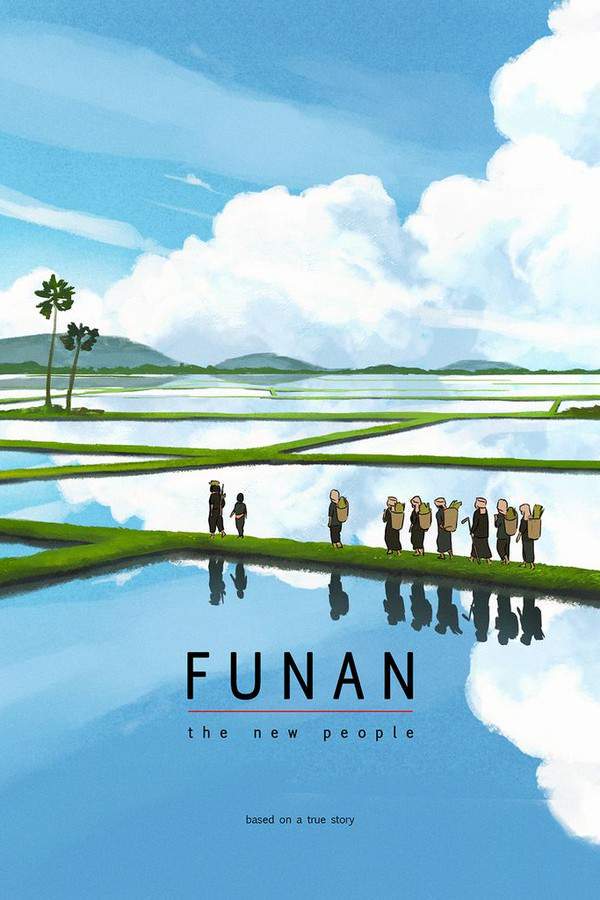
The premise of Funan in 285 words, with nothing given away. The full story follows below.
In the bleak aftermath of 1975, Cambodia is reshaped by a sweeping revolutionary force that turns bustling cities into ghostly, regimented landscapes. The air is heavy with uncertainty, and ordinary life collapses under the weight of collective expectation and austere order. Amid the stark fields and the ever‑present hum of marching boots, the world feels both intimate and unforgiving, a place where the line between survival and surrender is drawn in sand and blood.
Chou, a young mother living in Phnom Penh, is abruptly torn from the rhythm of her home when the new regime orders a forced evacuation. With a husband and a small circle of relatives, she packs only memories before the convoy rolls out, leaving behind the laughter of her four‑year‑old son. The journey is a blur of crowded wagons and whispered farewells, and the separation becomes the ache that underpins every breath she takes. Her love for her child, combined with the unyielding spirit of those around her, forms a quiet resolve that refuses to be extinguished.
The landscape shifts from city streets to labor camps where the days are measured in toil and the nights in yearning. Work is relentless, food scarce, and hope a fragile ember that flickers in the shadows of watchtowers. Yet Chou discovers a deep well of determination, driving her to contemplate a daring trek beyond the confines of the camps. The tone of the story is one of stark realism softened by an unspoken promise that perseverance can carve a path through even the darkest of times. As whispers of potential freedom glide on the wind, the audience is left to wonder how far a mother’s love can carry her through a world turned upside‑down.
What Happens in Funan?
The complete story of Funan, from the first scene to the last, in 680 words (about 3 minutes). Spoilers throughout. Names in the text link to 7 cast member pages.
Spoilers ahead
In Phnom Penh, Chou lives with her husband Khuon, their youngest son Sovanh, and the extended family, including Khuon’s brother Meng, Chou’s mother Mom and their grandmother, along with their other children Hout, Tuch, and Lili. In 1975, the Khmer Rouge topple the government and force the family to evacuate the city. On the brutal journey, Sovanh and his grandmother become separated from the group, and the guards forbid Chou from trying to locate them.
When they reach the neighboring town, they discover that their cousin Sok has become one of the revolutionaries and the entire town has been turned into a commune. The family is stripped of possessions and pressed into grueling labor with barely any food. Chou asks after her son and is assured he’s in a different labor camp but is forbidden to see him. Meng wants to leave, but Khuon insists they have no choice but to be subservient. At Chou’s insistence, Khuon tries to cross the river to find Sovanh, but is captured and beaten. Tuch falls ill, and the family spends their last valuables to a woman from the camp, known for sleeping with the Khmer Rouge, in the hope of obtaining medicine. Tuch dies before help can return. The woman herself returns with her own son left in Chou’s care, and Sok later takes pity on Khuon and allows him to try to find Sovanh, but by the time he arrives, the child has been moved again.
Throughout, Sovanh lives on with his grandma, and a girl he befriends at his work camp. Horrific deaths unfold around him, and the girl ultimately sacrifices herself to help Sovanh avoid capture while they steal food.
Meng makes a break for the border — Khuon runs after to wish him luck but is caught by a Khmer Rouge guard. Sok kills him, saving Khuon’s life. Khuon and Chou return, but a vengeful Khmer Rouge kills Sok in retribution. The group is moved again on trains, and Chou is separated from the child she’d been trusted to watch. The train stops when one of the Khmer Rouge’s daughters drowns in a well, and Khuon helps save her, angering Chou. Soon after, the men and women are driven to separate camps, leaving only Chou, her mother, and Lili. Months pass. The Khmer Rouge woman who would have drowned, Peuv, attempts to thank the group by sneaking food to Chou and her family, but Chou rejects it as a way to maintain dignity. Chou’s mother notices that one of the guards fancies Lili and encourages her to use this to obtain food, but it is implied that the guard rapes her, and Lili hangs herself. Afterward, Hout returns from the men’s camp, saying he was separated from Khuon; he finds the guard who harmed Lili and burns him alive in a thatched hut, but is killed, along with an innocent old woman accused of being a sympathizer. Chou’s mother dies of starvation.
Years pass and an emaciated Khuon finds Chou in an infirmary. He tells her he’s found Sovanh, and she gathers the last of her strength to move on. The Cambodian-Vietnamese War begins, and as Vietnamese forces advance, the couple makes a final break for the Thailand border. Peuv covers for them, allowing their escape. After journeying far and wide, they finally locate a group of children, among them Sovanh, seemingly abandoned.
Reunited, the family makes one final push toward Thailand. Along the way, they encounter a mob of vigilantes who are about to kill Khmer Rouge members; Chou confronts them, tearing open her shirt to show she has suffered as they have and successfully saves Peuv. They are urged to follow them to Thailand, but she refuses, as she still has family in Cambodia. The trio reaches the border, and Khuon scouts ahead. As Chou and Sovanh watch, Khuon is spotted by Khmer Rouge guards; he deliberately runs away, allowing his family to slip past the border, and is shot. Sovanh and Chou, the last of their family, walk hand in hand through a field toward Thailand.
Funan Timeline: Every Key Event in Order
14 key events in the order they happen, from “Evacuation from Phnom Penh and separation of Sovanh” to “Final border crossing: sacrifice and hand-in-hand to Thailand”. 14 events name a place, across 12 locations.
- 1
Evacuation from Phnom Penh and separation of Sovanh
In 1975, the Khmer Rouge toppled the government and forcibly evacuated Chou's family from Phnom Penh. The march to the countryside separates Sovanh from his grandmother, and the guards forbid Chou from trying to locate him. The family begins a brutal, uncertain journey under constant surveillance.
When:1975 Where:Phnom Penh, road out of the city
- 2
Arrival at a commune town and loss of possessions
The family reaches a neighboring town turned into a commune where their possessions are stripped and they are pressed into hard labor with barely any food. Chou learns Sovanh is in a different labor camp, and contact with him is prohibited. The atmosphere is suffocating and unpredictable, setting the tone for their years of toil.
When:1975 Where:Neighboring town / commune
- 3
Khuon attempts to search for Sovanh and is beaten
Chou's husband Khuon insists on risking the search for Sovanh and crosses a perilous river toward potential camps. He is quickly captured by Khmer Rouge guards and beaten, illustrating the regime's brutal control over family members. Meng's earlier wish to leave hints at broader family desperation, even as the rest of the clan endures.
When:1975 Where:River crossing near the commune
- 4
Tuch falls ill; medicine quest ends in tragedy
Tuch falls ill, and the family spends their last valuables on a camp woman who might obtain medicine. Tuch dies before help can arrive, and the woman returns with her own son to Chou's care but is beaten by other camp women before dying. The episode underscores the environment of scarcity and despair.
When:1975-76 Where:Camp
- 5
Sok allows another search but Sovanh is moved
Sok, a relative, shows pity by permitting Khuon another attempt to locate Sovanh. By the time he reaches the spot, Sovanh has already been moved to another location. The prolonged search continues amid ongoing displacement and danger.
When:1975-76 Where:Camp / travel route
- 6
Sovanh endures camp life and a sacrificial friendship
Sovanh stays with his grandmother at a work camp and befriends a girl he meets there. As horrific deaths unfold around him, the girl sacrifices herself to help Sovanh avoid capture while they steal food. These moments of courage stand out against the brutality surrounding them.
When:1976-1978 Where:Work camp in the countryside
- 7
Meng's escape attempt and Sok's fatal intervention
Meng makes a break for the border, and Sok kills him to save Khuon's life. Later, a vengeful Khmer Rouge member kills Sok in retaliation, deepening the family’s peril. The chain of violence continues to ripple through the clan.
When:late 1970s Where:Border region / camp area
- 8
Train transport and the well incident
The family is moved by train and separated from the child they were trusted to look after. The journey stops when one Khmer Rouge daughter nearly drowns in a well, and Khuon saves her, which angers Chou and highlights the regime's callous indifference to life.
When:late 1970s Where:Train route; nearby well
- 9
Separation into camps and a stay of modest hunger
Men and women are driven to separate camps, and months pass with little relief. Peuv, a Khmer Rouge woman, secretly sneaks food to Chou's family, but Chou refuses to accept it in order to preserve dignity. The period tests their resolve and humanity.
When:late 1970s - early 1980s Where:Separate camps
- 10
Lili's death and the hidden sufferings of the family
Lili's fate unfolds after it is implied she is coerced by a guard; overwhelmed by fear and hunger, she hangs herself. This tragedy compounds the family's grief and the brutality surrounding them in the camps.
When:late 1970s - early 1980s Where:Camp
Show the other 4 events of Funan Hide the last 4 events
- 11
Hout returns and retaliation; famine claims another
Hout returns from the men's camp with a burning desire for revenge against the guard he believes harmed Lili. He kills the guard and is killed in the ensuing chaos, along with an innocent old woman accused of sympathy. Chou's mother dies of starvation amid the turmoil.
When:late 1970s - early 1980s Where:Camp
- 12
Sovanh is found and a plan to break to the border forms
Years pass and an emaciated Khuon finds Chou in an infirmary. He tells her Sovanh has been found, and with the Cambodian-Vietnamese War starting, they make a final, dangerous plan to escape and reunite with him, aided by Peuv who covers their path.
When:late 1970s - 1980s Where:Infirmary and camp area
- 13
Reunion with Sovanh among a group of children
After a long journey, the family finds a group of seemingly abandoned children and recognizes Sovanh among them, confirming a long-awaited reunion. The moment marks a fragile hope amid years of separation and hardship.
When:late 1970s - early 1980s Where:Remote settlement / group of children
- 14
Final border crossing: sacrifice and hand-in-hand to Thailand
They reach the border with Thailand, chased by vigilantes killing Khmer Rouge members. Khuon sacrifices himself by running ahead to clear a path, allowing Chou and Sovanh to cross hand in hand. Chou refuses to abandon Cambodia's remaining family and chooses to continue the fight for their future.
When:early 1980s Where:Thailand border
Who Are the Main Characters in Funan?
10 characters, among them Khuon (Louis Garrel), Chou (Bérénice Bejo) and Meng (Brice Montagne): who each one is and the part they play in the story. 7 of them link to the actor’s page.
-

Khuon (Louis Garrel)
Played by Louis Garrel
A protective husband who endures physical danger and moral pressure to keep his family alive. He attempts to search for Sovanh, is captured and beaten, and ultimately sacrifices himself at the border to allow his loved ones to escape.
- 🧭 Family safety
- 🪖 War survivor
- ❤️ Husband and father
-

Chou (Bérénice Bejo)
Played by Bérénice Bejo
The family matriarch who endures starvation, manipulation, and separation with a quiet, stubborn dignity. She refuses help to preserve dignity, fights for her son, and ultimately reunites with Sovanh before one final escape to the border.
- 💪 Resilient
- 🥲 Maternal strength
- 🛡️ Protector
- M(
Meng (Brice Montagne)
Played by Brice Montagne
Khuon's brother who longs to leave the oppressive camp but is constrained by loyalty and circumstance. He attempts to cross the border, is killed by Sok, and his death underscores the peril that besets everyone.
- 🧭 Escape risk
- ⚖️ Family loyalty
- 💔 Tragic fate
- S
Sovanh
Chou and Khuon's son who is separated from his family and endures labor camp life with a friend. His journey parallels his parents' struggle as they search for him and strive to reunite.
- 👶 Child in peril
- 🪧 Separation trauma
- 🧒 Hope
- L(
Lili (Lila Lacombe)
Played by Lila Lacombe
The youngest daughter who becomes a focal point of danger and sorrow, facing exploitation and tragedy within the camp, with her ultimate actions shaping the family’s resolve.
- 👧 Child
- 🕯️ Suffering
- 🕊️ Free will
- H(
Hout (Maxime Baudoin)
Played by Maxime Baudoin
The elder child who returns from the men's camp and witnesses the consequences of violence and betrayal; his anger leads to a violent act that seals his fate.
- 👦 Rebellion
- 🔥 Rage
- 🪦 Tragic hero
- T(
Tuch (Tom Trouffier)
Played by Tom Trouffier
The younger brother who falls ill and dies in the camp, his death highlighting the scarcity of medicine and the cruel conditions of life under Khmer Rouge.
- 🩺 Illness
- 💀 Death
- 🧭 Suffering
- M(
Mom (Céline Ronté)
Played by Céline Ronté
Chou's mother who endures starvation and loss, symbolizing the toll of the regime on elders and the unwavering endurance of generations.
- 👵 Elder resilience
- 🧵 Family matriarch
- 💔 Starvation
- S
Sok
A cousin who becomes a Khmer Rouge revolutionary; he aids Khuon by killing Meng to save him, but is later killed in retaliation.
- 🪖 Rebel
- ⚔️ Cutting loyalty
- 💀 Tragic end
- P
Peuv
A Khmer Rouge woman who shows complicated kindness, slipping food to Chou’s family at one point while dealing with expectations and fear.
- 🪶 Compassion amid cruelty
- 🥘 Hunger aid
- 🗝️ Power dynamics
Where and When Is Funan Set?
Funan is set in Phnom Penh, Cambodia and Thai border (1975-1979). Here is why the time and place matter to the story.
When
1975-1979
The story unfolds during the early years of the Khmer Rouge regime, beginning with the 1975 capture of Phnom Penh and ending as Vietnamese forces advance and the family makes a final bid for the Thai border. Across this period, families are separated, camps are established, and resources are scarce. The timeline also includes the onset of the Cambodian-Vietnamese War, intensifying the drive to escape.
Where
Phnom Penh, Cambodia, Thai border
Phnom Penh is the starting point for Chou and Khuon's family, a city that falls under Khmer Rouge control in 1975. The regime forces mass evacuations, breaking apart families and pushing people into labor camps. The journey spans rural towns and border regions as the family fights for survival amid famine, violence, and constant fear.
- 🏙️ City
- ⚔️ War-torn
- 🧭 Border crossing
What Are the Themes of Funan?
3 ideas the story keeps returning to, among them War Reality, Family Bonds and Trauma Memory.
-
01
War Reality
The film centers on the brutality of war and its dehumanizing effects on civilians. Families are uprooted, communities are dissolved, and survival hinges on endurance rather than strategy. The soldiers and guards govern with fear, creating a pervasive sense of danger. The narrative uses intimate moments to reveal how ordinary people bear extraordinary violence.
-
02
Family Bonds
Funan follows a family whose love and loyalty are tested by exile, separation, and peril. Parents fight to keep their children safe, while siblings and extended relatives perform quiet acts of courage. The story emphasizes intergenerational care, shared hope, and the stubborn resilience that keeps families intact despite the chaos. Even in the darkest moments, family solidarity provides a reason to endure.
-
03
Trauma Memory
The film delves into the lasting trauma of genocide and war, portraying memories that haunt the survivors long after the immediate danger passes. Deaths, starvation, and betrayal accumulate into a legacy that shapes characters' choices. The narrative treats pain as something carried across generations, surfacing in moments of resolve and moral defiance. Recollection becomes a means of bearing witness to atrocity.
What Kind of Film Is Funan?
Bleak in tone, with steady pacing and a straightforward story, going by the plot summary.
- Tone
- Bleak
- Pacing
- Steady
- Story
- Straightforward
- Intensity
- High
- Ending
- Bittersweet
A deeply harrowing and sorrowful journey through the Cambodian genocide, where unrelenting tragedy tests the limits of human endurance, culminating in a bittersweet survival.
- oppressive
- sorrowful
- harrowing
- desperate
- somber
- tragic
- survival
- genocide
- forced labor
- familial separation
Content notes: war violence, genocide, forced labor, starvation, child death, suicide.
Quiz
How well do you remember Funan? Test yourself on the story.