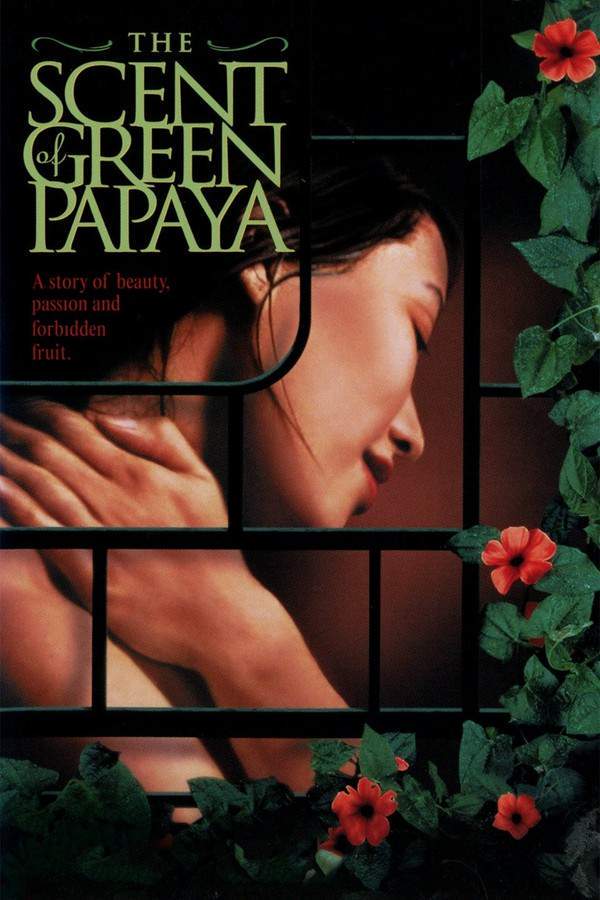
The Scent of Green Papaya 1994


Directed by

Tran Anh Hung
Made by

MKL Distribution
Where to Watch The Scent of Green Papaya
See current US streaming, rental, and purchase options for The Scent of Green Papaya (1994) via JustWatch.









The Scent of Green Papaya Plot Summary
Read the complete plot summary and ending explained for The Scent of Green Papaya (1994). From turning points to emotional moments, uncover what really happened and why it matters.
A young girl named Mùi finds herself in the role of a servant for a family in pre-unification Saigon (1951), which, despite its former wealth, is now slipping into genteel poverty, largely due to the husband’s reckless spending and unfaithfulness. The family’s financial stability hinges on the wife’s modest fabric and textile shop. The husband’s widowed mother, an invalid who rarely leaves her upstairs room, constantly blames her daughter-in-law, insisting, > “You have a man, but you don’t know how to keep him happy.” The family dynamics are strained: the eldest son prefers the company of friends, the bookish middle son finds amusement in tormenting insects, and the youngest son idolizes his father while displaying willful and disruptive behavior, often filled with resentment. In contrast, Mùi is a figure of peace and deep curiosity about the world around her. The wife, who once lost a young daughter during one of her husband’s frequent absences, shows kindness to Mùi, treating her as if she were her own child.
When the husband embarks on his fourth and ultimately final disappearance, he absconds with his wife’s scant savings and jewelry. His absence stretches long enough that the family faces severe hunger and deprivation. Upon his return, he brings back some of the stolen jewelry, but soon collapses after arriving home. In a desperate bid to prepare for his medical needs, the wife sells an heirloom vase and other cherished items, prompting a doctor to be called. While Mùi witnesses the doctor treating her husband with acupuncture, friendly musicians play cheerful tunes outside the room. Yet, when he passes away, the wife faints, leaving the family in shock and despair.
Fast forward ten years, the family has continued to deteriorate; two of the sons have left, and the wife has taken on the role of the grandmother, now tragic and rarely seen. On the family shrine, the photographs of the grandmother and the husband now share space with others who have departed. It’s deemed that the family can no longer afford Mùi’s services. With a heavy heart, the wife gifts Mùi a silk dress and some gold jewelry before she moves on to work for the wealthy friend of her eldest son, who has become a concert pianist engaged to be married. However, he appears to be more enamored with his piano than with his lavish fiancée.
One fateful night, while the fiancée babbles on, the pianist’s playing takes on a stormy intensity as he tries to ignore her. After she leaves, intending to spy through the window, she witnesses something extraordinary: when Mùi enters the room, the pianist’s music transforms into a blend of passion and tranquility. Later that night, he discreetly visits Mùi in her quarters and shuts the door behind him. When the fiancée discovers this, filled with rage, she slaps Mùi, damages some of the pianist’s belongings, and leaves her engagement ring on a table. Upon returning, he nonchalantly picks up the ring, and their secret connection grows deeper as he begins teaching Mùi how to read and write. In the poignant final scene, a visibly pregnant Mùi is seen reading poetry to him, her face adorned with a radiant smile.
The Scent of Green Papaya Timeline
Follow the complete movie timeline of The Scent of Green Papaya (1994) with every major event in chronological order. Great for understanding complex plots and story progression.
Mùi's Arrival
Mùi arrives at the household in pre-unification Saigon, taking on the role of a servant for the struggling family. The family's former wealth has diminished, largely due to the husband's irresponsible behavior and the wife's attempt to maintain a modest living through her fabric shop.
Strained Family Dynamics
The family's dynamic is complicated with the husband’s widowed mother constantly criticizing the wife. Meanwhile, the three sons exhibit their own unique issues, from rebellion to indifference, creating a tense atmosphere within the household.
The Husband's Disappearance
The husband goes missing for the fourth time, taking with him his wife’s savings and jewelry. His absence plunges the family into a state of desperation, as they begin to face hunger and poverty.
The Husband Returns
When the husband eventually returns, he brings back a portion of the stolen items. However, he collapses right after arriving home, leading the family to panic and concern over his health.
Desperate Measures
In a bid to provide medical assistance for her husband, the wife sells cherished family heirlooms, including a valued vase. The doctor is summoned to treat the ailing husband, but the atmosphere is heavy with anxiety and grief.
Tragic Loss
Despite efforts to save him, the husband passes away, leaving the family devastated. The wife faints upon receiving the news, causing a ripple of despair throughout the household as they grapple with their loss.
The Family's Decline
Ten years have passed, and the family continues its downward spiral. Two sons have left home, leaving the wife to take on the image of a tragic grandmother, rarely seen, and mourning the family's blighted legacy.
Mùi's Departure
The family can no longer afford Mùi's services, prompting the wife to part with her. With a heavy heart, she gifts Mùi a silk dress and some jewelry before Mùi moves on to work for the well-off friend of her eldest son.
The Pianist's Engagement
Mùi begins working for the eldest son, who has become a concert pianist engaged to a lavish fiancée. However, he appears to be emotionally distant, more attuned to his music than his forthcoming wedding.
A Night of Transformation
During a fateful night filled with tension, the fiancée discovers Mùi entering the room where the pianist plays. The music changes dramatically, reflecting the deepening connection between Mùi and the pianist, marking a pivotal moment in their relationship.
Conflict and Connection
Following the pianist’s secret visit to Mùi, the fiancée confronts her in a fit of rage, slapping her and leaving behind her engagement ring. This confrontation only serves to deepen the bond between Mùi and the pianist as they navigate their newfound feelings.
Learning to Read
As their relationship blossoms, the pianist takes it upon himself to teach Mùi how to read and write. This learning process symbolizes hope and a new beginning for Mùi, who longs for a life beyond servitude.
Mùi's Joyful Transformation
In a beautifully poignant final scene, Mùi, now visibly pregnant, is seen reading poetry to the pianist. Her face radiates joy and fulfillment, representing her transformative journey from servant to a loved companion, embodying dreams of a brighter future.
The Scent of Green Papaya Characters
Explore all characters from The Scent of Green Papaya (1994). Get detailed profiles with their roles, arcs, and key relationships explained.
Mùi
Mùi is a young, curious girl serving a family in Saigon, whose innocence contrasts sharply with the complexities of her employers' lives. She embodies tranquility and peace, often providing emotional relief amidst familial chaos. Over time, she grows from a mere servant to a significant influence in the life of a concert pianist, reflecting her evolution and inner strength.
The Wife
The Wife is depicted as a tragic figure, burdened by her husband's reckless behavior and their family's decline. She demonstrates resilience and kindness, treating Mùi as her own child, which highlights her nurturing qualities. As the family's circumstances deteriorate, her transformation into a grandmother showcases the heavy toll of loss and responsibility she bears.
The Pianist
The Pianist is a talented young man deeply engrossed in his music, which reveals his complex emotional landscape. Despite his engagement, his connection with Mùi introduces a conflict between social expectations and personal desires. Through their interactions, he grows as an individual, showcasing a blend of passion and vulnerability.
The Scent of Green Papaya Settings
Learn where and when The Scent of Green Papaya (1994) takes place. Explore the film’s settings, era, and how they shape the narrative.
Time period
1951
The film is set in 1951 during a tumultuous time in Vietnam's history, leading up to the country's eventual unification. This period was characterized by political unrest and social changes that affected the daily lives of families, as depicted in the narrative. The events that unfold against this backdrop illustrate the emotional and economic challenges faced by individuals and families.
Location
Saigon
Saigon, now known as Ho Chi Minh City, is a vibrant urban center in Vietnam rich in history. In the 1950s, it was a city marked by its cultural complexity, transitioning from wealth to genteel poverty due to socio-economic challenges. Once a bustling hub of trade and luxury, it became a backdrop for the familial struggles and dynamics in 'The Scent of Green Papaya.'
The Scent of Green Papaya Themes
Discover the main themes in The Scent of Green Papaya (1994). Analyze the deeper meanings, emotional layers, and social commentary behind the film.
💔
Family Struggles
The theme of family struggles runs deeply throughout the film, highlighting the challenges faced by the characters in navigating their relationships and financial difficulties. Tensions between family members manifest in their interactions and decisions, particularly between the wife and her husband, as well as among the children. Ultimately, these dynamics showcase the impacts of love, loss, and resilience within the family unit.
🎹
Hidden Passions
Hidden passions underscore the emotional undertones of the story, especially through the character of Mùi and her connection with the pianist. Their bond is seen as a refuge from the turmoil surrounding them, representing hope and aspiration in a world filled with constraints. This theme is beautifully portrayed through music, which serves as a conduit for their unspoken desires and love.
🌱
Growth and Change
The theme of growth and change is captured through Mùi's journey from a servant to a pivotal figure in the pianist’s life. Mùi's character embodies innocence and curiosity, which evolve as she becomes more involved in the lives of those around her. Her transformation reflects the broader changes occurring in society, emphasizing personal development amidst familial strife.

Coming soon on iOS and Android
The Plot Explained Mobile App
From blockbusters to hidden gems — dive into movie stories anytime, anywhere. Save your favorites, discover plots faster, and never miss a twist again.
Sign up to be the first to know when we launch. Your email stays private — always.
Explore the mobile appThe Scent of Green Papaya Spoiler-Free Summary
Discover the spoiler-free summary of The Scent of Green Papaya (1994). Get a concise overview without any spoilers.
In the slow‑lit streets of 1950s Saigon, a city caught between colonial grandeur and the stir of a new era, a young servant moves through the corridors of a once‑wealthy household. The house, now whispering of faded prosperity, buzzes with the clatter of daily chores, the soft rustle of silk, and the occasional strain of a piano drifting from an open window. Amid the fading wallpaper and the scent of fried dough, the world feels both intimate and expansive, a place where every footstep echoes with the quiet hopes of those who live within its walls.
Mui arrives as a gentle presence, a curious mind seeking solace in the simple pleasures of sound and scent. She carries a quiet resilience, absorbing the rhythms of the family’s strained existence while offering a calm that seems to steadify the shifting atmosphere. The household’s matriarch treats her with a tenderness that blurs the line between servant and daughter, creating a tender space where Mui can explore her own identity beyond duty.
Beyond the kitchen and the cramped rooms, the city’s cultural pulse is embodied in the music of a local pianist, Khuyen. Their encounters are brief but charged, each shared melody hinting at a deeper connection that transcends social boundaries. The piano becomes a conduit for unspoken longing, its notes weaving through the tapestry of Saigon’s bustling markets, rain‑slicked alleys, and the lingering scent of green papaya that lingers in the air.
The film moves with a lyrical, almost meditative rhythm, balancing moments of quiet introspection with bursts of vibrant color and sound. It paints a portrait of loyalty and yearning, of personal dreams set against the backdrop of a changing Vietnam, inviting the viewer to linger in the spaces between duty and desire, and to wonder what possibilities lie just beyond the next gentle chord.
Movies with Similar Twists and Themes
Uncover films that echo the narrative beats, emotional arcs, or dramatic twists of the one you're exploring. These recommendations are handpicked based on story depth, thematic resonance, and spoiler-worthy moments — perfect for fans who crave more of the same intrigue.



Featured on this page

What's After the Movie?
Not sure whether to stay after the credits? Find out!
Check out our other apps:

SAT Sphere
Build confidence for the Digital SAT.

Mori Atlas
Discover wild places worth protecting.

Luntero
Search smarter for a home in Amsterdam.

Plot Explained
Unravel movie endings and hidden clues.

Pokechamp
Dive into Pokémon data and battle logic.

Driving Theory
Get ready for your European theory test.

Movie Dust
Plan your next cinema trip with ease.

Musemap
Find art and culture as you travel.

Selkobase
Compare credentials before committing.

Local Manual
Turn an unfamiliar country into practical next steps.

Lernavi
Compare school systems before your next move.

GymRoam
Find a workout stop wherever your plans take you.
Explore Our Movie Platform
New Movie Releases (2026)
Famous Movie Actors
Top Film Production Studios
Movie Plot Summaries & Endings
Major Movie Awards & Winners
Best Concert Films & Music Documentaries
Movie Collections and Curated Lists
© 2026 What's After the Movie. All rights reserved.
Privacy Policy