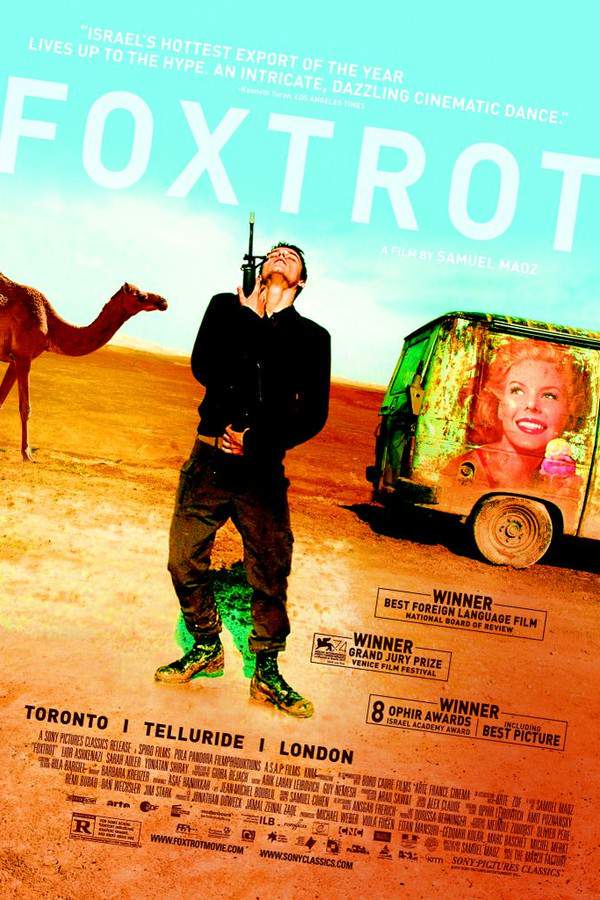
What Is Foxtrot About?
The premise of Foxtrot in 325 words, with nothing given away. The full story follows below.
In the quiet, sun‑baked streets of Tel Aviv, Michael and Dafna Feldman live a life that seems comfortably ordered until a single, stark telegram shatters their routine. The loss of their son, Jonathan, a young soldier, thrusts the couple into a world where official channels move with a detached precision that feels both bureaucratic and bewilderingly opaque. The city’s familiar sounds—murmuring traffic, distant prayers, the hum of daily commerce—grow into a backdrop for an almost clinical process that demands paperwork, waiting rooms, and endless phone calls, all while the personal grief swells unchecked.
The film settles into a mood that is simultaneously intimate and unsettling, employing a restrained visual palette that lets the starkness of the couple’s sorrow shine through. Long, lingering shots capture the emptiness of their apartment, the muted tones of office corridors, and the way sunlight filters through blinds, casting patterns that mirror the fragmented state of their emotions. A subtle, surreal undercurrent runs through these moments, suggesting that the line between external procedures and internal turmoil is permeable, and that Michael’s inner landscape begins to echo the confusing, disorienting experiences he imagines his son endured.
Michael and Dafna are portrayed as two halves of a whole that now must navigate a shared yet deeply private abyss. Their interactions oscillate between tender recollections of Jonathan’s childhood and the sharp, sometimes clumsy attempts to support one another amid a tide of unanswered questions. The narrative hints at the weight of inherited memories—military service, past losses, familial expectations—without spelling them out, allowing the audience to feel the pressure of history pressing on the present.
Through its measured pacing and a tone that balances melancholy with an almost quiet absurdity, the story invites viewers to contemplate how grief is processed when it collides with the machinery of the state. The film’s atmosphere lingers, leaving a sense of unresolved tension that mirrors the Feldmans’ own search for meaning in a world that offers no easy answers.
What Happens in Foxtrot?
The complete story of Foxtrot, from the first scene to the last, in 586 words (about 3 minutes). Spoilers throughout. Names in the text link to 2 cast member pages.
Spoilers ahead
From the start, Michael Feldman and Daphna Feldman are introduced as a well-to-do Tel Aviv couple whose world tilts when they learn their son, Jonathan, has died in the line of duty. The Israel Defense Forces deliver the news with a clinical detachment, withholding details about where and how Jonathan died or whether his body has been recovered. Only hours later does a follow-up notification arrive, revealing—almost in passing—that a grave mix-up occurred and it was another Jonathan Feldman who was killed. An irate Michael presses for his son’s return, insisting on bringing him home immediately and pulling strings to speed up the homecoming, even as the authorities promise Jonathan will arrive by the next day.
At a remote outpost, Jonathan and three other soldiers guard a desolate checkpoint, living in a dilapidated cargo container that leans into the mud as night settles in. The days blend into long, quiet hours, and to pass the time, the young man recounts a memory from his father’s past—a treasured heirloom preserved through the Holocaust that was traded for a porn magazine. The routine takes a darker turn late one night when a misjudgment—one soldier mistaking a beer can that rolled from the Palestinians’ car for a grenade—sparks a violent escalation. Jonathan kills four young Palestinians, and the incident triggers a formal report. Senior IDF officers arrive on the scene and move quickly to bury the car with the dead inside, a decision made under a cloud of fear and consequence. They are warned not to disclose what happened, and as the tension tightens, a senior officer receives a call from Michael’s connection, who relays a chilling message: Jonathan will be returning home with him.
Six months pass, and Michael and Daphna reunite to commemorate their son’s twentieth birthday. The mood is heavy with unresolved grief and guilt, and it’s revealed that Jonathan died on his way home rather than merely returning from service. The pain has driven the couple apart; each blames the other’s choices and temperament for the tragedy. In a moment of shared intoxication, they reflect on their son’s final drawing—an image of a bulldozer carrying a car. Each interprets it through a prism of blame and longing: one suggests the other is the bulldozer, while they themselves are the car, a symbolic reversal of power and vulnerability that speaks to their fractured relationship.
As the evening unfolds, Michael opens up about the darker memories he has carried from his time in the army—witnessing the deaths of several comrades, memories that left him feeling complicit. He describes Jonathan’s birth as a kind of absolution for those other losses, while Daphna’s own dilemma during pregnancy—whether to continue or abort—adds another layer of internal conflict to their already strained marriage.
In the final scene, the momentum of the tale returns to a visceral, precarious moment. Jonathan is being driven back toward Tel Aviv in a military vehicle along a narrow, rutted desert road. The journey takes a sudden turn when the convoy swerves to avoid a camel and the vehicle veers off course, rolling down an embankment. The camera lingers on the aftermath with a stark, unsettled quiet, underscoring the fragile line between duty, memory, and unresolved grief.
A dense meditation on memory, guilt, and the costs of a life lived under the pressures of conflict, the film lingers in the mind with its quiet, relentless examination of how parents—tethered to a son they never truly had back—thread their way through fear, blame, and the search for meaning.
Foxtrot Timeline: Every Key Event in Order
12 key events in the order they happen, from “News of Jonathan's death reaches the Feldman parents” to “Final drive home ends in tragedy”. 12 events name a place, across 8 locations.
- 1
News of Jonathan's death reaches the Feldman parents
Michael and Daphna learn their son, Jonathan, has died in the line of duty. The IDF refuses to tell them where, how, or whether his body was recovered, leaving them with uncertainty and grief. The shock of the news shatters their sense of control over their family’s fate.
When:Day of notification Where:Tel Aviv, Israel
- 2
Mix-up confirmed: another Jonathan Feldman is dead
A few hours later, the Feldmans are told there has been a misidentification and it was another Jonathan Feldman who was killed. Relief is tempered by confusion and fear as they try to process what this means for their son. The possibility of bringing Jonathan home becomes a precarious hope.
When:Hours after initial news Where:IDF briefing room, Tel Aviv
- 3
Demand for immediate homecoming
Michael pushes to return Jonathan home as soon as possible, leveraging a favor to hasten the process. The promise is made that Jonathan will come home by the next day, but Michael continues pressing for an even faster outcome. Daphna wrestles with hope and fear in equal measure.
When:Same day Where:Tel Aviv, Israel
- 4
Jonathan at the remote outpost
At a desolate outpost, Jonathan and three other soldiers man a checkpoint, living in a cargo container that leans toward the mud. To pass the long nights, Jonathan tells the story of how his father once traded a treasured heirloom preserved through the Holocaust for a porn magazine.
When:Earlier (months before homecoming) Where:Remote outpost checkpoint, desert
- 5
The night of the fatal incident
One night, a car containing four Palestinians is mistaken for a weapon when a beer can rolls out of it. Jonathan shoots four Palestinians in the ensuing confusion. The soldiers call in the incident, and a bulldozer arrives to bury the car with the deceased inside.
When:Night Where:Outpost checkpoint, desert
- 6
Warning and cover-up
Senior IDF officers warn the soldiers not to disclose what happened, treating it as an internal matter. The truth is guarded, leaving the soldiers to shoulder the burden of the event without accountability. The incident weighs on Jonathan and his crew as they await further orders.
When:Shortly after the incident Where:Outpost command center
- 7
A call promises a return home
A call from Michael's connection informs Jonathan that he will be returning home with him. The message reopens the possibility of a family reunion and renews hope amid the tension and secrecy surrounding the case.
When:Shortly after the incident Where:Outpost
- 8
Six months later: birthday and a painful truth
Michael and Daphna reunite for Jonathan's twentieth birthday, but the mood is haunted by loss. It is revealed that Jonathan died on his way home, and the couple has already separated due to their shared blame and grief. The family memoir becomes a battlefield of memory.
When:Six months later Where:Tel Aviv, Israel
- 9
Memory, meaning, and the final drawing
The couple grapples with Jonathan's final drawing—a bulldozer carrying a car—and debates who is the bulldozer and who is the car. They share a moment high on drugs as they search for meaning and absolution. Michael reveals the weight of his wartime memories and guilt.
When:Six months later Where:Home
- 10
Michael's confession about his past losses
Michael reveals that, during his own army service, he witnessed the deaths of several members of his unit and blamed himself for them. Jonathan’s birth had felt like absolution for those past losses, reinforcing the fragile link between parenthood and guilt. Daphna’s conflict about the pregnancy remains unresolved.
When:Six months later Where:Home
- 11
Tensions tighten into a quiet fracture
Grief strains the couple's relationship, alternating between tenderness and blame. The home becomes a venue for memories that threaten to rupture their marriage. The sense that something irreparable has occurred hangs over their interactions.
When:Six months later Where:Home
- 12
Final drive home ends in tragedy
In the final scene, Jonathan rides in a military vehicle toward Tel Aviv when the driver swerves to avoid a camel and the vehicle rolls down an embankment. The anticipated homecoming collapses into a new form of grief, leaving the family with a haunting silence. The film closes on the consequences of delay and miscommunication.
When:End scene Where:Desert road toward Tel Aviv
Who Are the Main Characters in Foxtrot?
3 characters, among them Michael Feldman (Lior Ashkenazi), Daphna Feldman (Sarah Adler) and Jonathan Feldman: who each one is and the part they play in the story. 2 of them link to the actor’s page.
-

Michael Feldman (Lior Ashkenazi)
Played by Lior Ashkenazi
A wealthy Tel Aviv father who demands his son’s return and carries the burden of past military casualties. His impatience and insistence reveal a man who ties personal absolution to his son’s fate, fueling tension within his family.
- 💼 Wealthy
- 🕊️ Grief
- 🧭 Family dynamics
- DF
Daphna Feldman (Sarah Adler)
Played by Sarah Adler
Jonathan’s mother, deeply grieved and emotionally conflicted. She grapples with the idea of motherhood and her past pregnancy, mirroring the film’s central tensions between desire, duty, and fate.
- 💔 Grief
- 🧭 Family conflict
- 🧠 Trauma
- JF
Jonathan Feldman
The son whose death triggers the family’s unraveling. His onsite stories reveal how memory and duty intertwine, and his fate ultimately tests the limits of parental love.
- 🪖 Soldier
- 💔 Loss
- 🕊️ Grief
Where and When Is Foxtrot Set?
Foxtrot is set in Tel Aviv, remote desert military outpost and desert checkpoint. Here is why the place matters to the story.
Where
Tel Aviv, remote desert military outpost, desert checkpoint
An affluent urban center in Tel Aviv frames the Feldman family’s life, contrasting with a desolate Israeli outpost in the desert where Jonathan serves. The desert outpost sits at a remote checkpoint, with a cargo container shelter that gradually sinks into the mud. The journey between city and frontline becomes a recurring symbol of distance, duty, and the costs of wartime bureaucracy.
- 🏙️ Urban
- 🏜️ Desert
- 🗺️ Military
What Are the Themes of Foxtrot?
3 ideas the story keeps returning to, among them Grief, Duty vs. Family and Memory & Trauma.
-
01
Grief
The film centers on the aftermath of Jonathan’s death and the parents’ struggle to cope with loss. Grief distorts communication, fueling blame and distance between Michael and Daphna. The promise of a return is weaponized against their longing for closure, exposing how tragedy erodes family bonds.
-
02
Duty vs. Family
Foxtrot places the military chain of command against the needs of a grieving family. IDF officials enforce silence and procedures that blur truth and certainty, while the parents press for an immediate homecoming. The tension reveals how institutions can fracture personal relationships under the weight of duty.
-
03
Memory & Trauma
Jonathan’s stories and the scars from the army linger in the adults’ memories, shaping their present actions and perceptions. The final birthday scene and the revelations of earlier casualties show how remembered events reorganize family history. The film uses memory as a battlefield where guilt and absolution contend for meaning.
What Kind of Film Is Foxtrot?
Melancholic in tone, with slow pacing and a moderate story, going by the plot summary.
- Tone
- Melancholic
- Pacing
- Slow
- Story
- Moderate
- Intensity
- High
- Ending
- Sad
A profoundly heavy and slow-paced drama that immerses the viewer in the surreal and disorienting grief of parents grappling with loss, institutional absurdity, and their own fractured relationship.
- grief-stricken
- somber
- oppressive
- surreal
- disorienting
- tense
- grief and loss
- military service
- parental guilt
- bureaucratic absurdity
Content notes: death of a child, war violence, grief, traumatic memory.
Quiz
How well do you remember Foxtrot? Test yourself on the story.
Where to Watch Foxtrot
Rent or buy it from Amazon Video and Apple TV Store. US availability and prices from JustWatch.





Streaming availability in the US, powered by