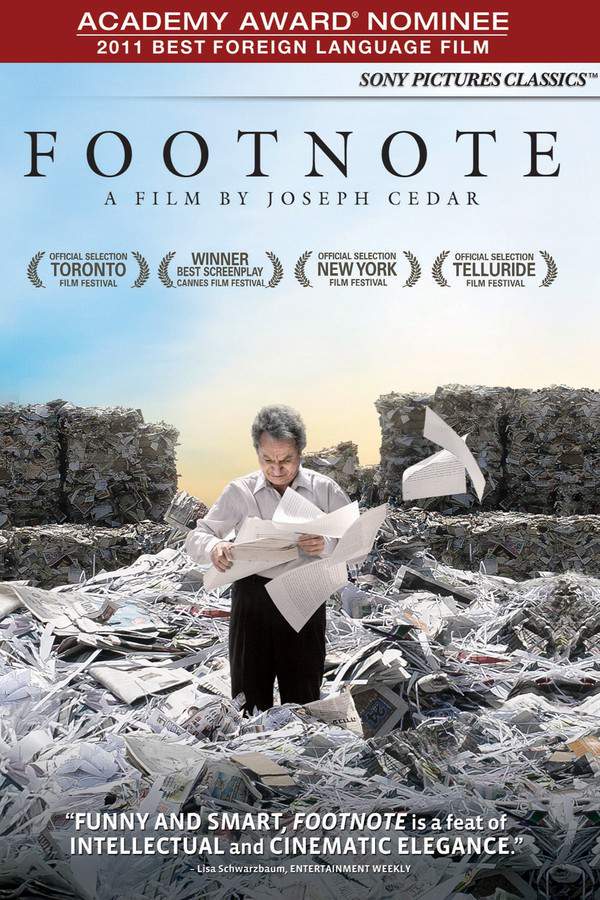
What Is Footnote About?
The premise of Footnote in 341 words, with nothing given away. The full story follows below.
In the hushed corridors of the Hebrew University of Jerusalem, a world of ancient texts collides with modern ambition. The film opens on the meticulous study of the Jerusalem Talmud, where scholars spend their days untangling centuries‑old debates, their lives threaded through the very footnotes they annotate. This academic enclave, steeped in tradition yet buzzing with contemporary discourse, forms the quiet backdrop for a story that explores how personal legacies are measured against the weight of history.
At its heart are two generations of Talmudic experts. Eliezer Shkolnik, a devoted philologist, has spent his career polishing the minutiae of textual tradition, his reputation built on rigorous, old‑school methods that have earned him respect more than acclaim. His son, Uriel Shkolnik, radiates charisma and public appeal, a rising star whose lectures draw crowds and whose scholarly voice seems destined for broader recognition. Their contrasting personalities—father’s stubborn devotion to purity and son’s magnetic outreach—create a dynamic that feels both familial and intellectual, a quiet tension that underscores every shared conversation.
The looming prospect of Israel’s highest cultural honor casts a long shadow over their relationship. For Eliezer, the prize represents a lifetime’s yearning for validation, a chance to step out of the comparative obscurity that has followed his work. For Uriel, the same accolade threatens to upend the delicate balance between his own aspirations and his father’s expectations, prompting questions of loyalty, ambition, and the cost of public glory. The film whispers of an impending ceremony, the palpable anxiety of a family on the brink of a decision that could redefine both their legacies.
Rendered with a restrained, poetic visual style, the narrative moves with the measured cadence of scholarly debate while never losing its emotional undercurrent. The mood is one of quiet intensity, where each lingering glance and subtle pause hints at deeper currents beneath the surface. As tradition and innovation intersect, the story invites the audience to contemplate what it means to be seen, heard, and remembered in a world where the smallest footnote can carry the weight of a lifetime.
What Happens in Footnote?
The complete story of Footnote, from the first scene to the last, in 631 words (about 3 minutes). Spoilers throughout. Names in the text link to 2 cast member pages.
Spoilers ahead
Eliezer Shkolnik, Shlomo Bar-Aba, is a meticulous philologist who dedicates his career to the textual tradition of the Jerusalem Talmud. He and his son Uriel, Lior Ashkenazi, are both professors in the Talmudic Research department at the Hebrew University of Jerusalem. Uriel stands out as a charismatic academic, beloved by students and the public alike, and his rising profile brings him public recognition when he is elected as a member of the Israel Academy of Sciences and Humanities. The contrast between father and son is stark: Eliezer remains stubbornly old-school, a purist in his research methods who is widely seen as unpopular, unrewarded, and trapped in the shadow of a rival scholar, Prof. Yehuda Grossman, who published similar findings just before him. Eliezer’s yearning is simple and aching—he dreams of the prestigious Israel Prize, hoping it will finally validate a lifetime of work that has largely gone unrecognized.
Then a surprising call arrives. Eliezer learns that he has been named this year’s laureate, and the news is poised to alter everything. The next day, Uriel is summoned to an urgent meeting with the Israel Prize committee and is told, to his shock, that the announcement was a mistake: it is he, not his father, who should receive the prize. The committee suggests a path to fix the situation, but Uriel hesitates, knowing that confessing the truth to his father could devastate him. He asks to handle the revelation himself, and in the tense exchange with the committee’s head, Prof. Grossman, Uriel loses his temper momentarily and shoves him. After the outburst, he retreats, intent on delivering the news to his father in person.
Uriel then reveals a painful truth: he has been submitting his father’s name for the Israel Prize every year, and he suspects Grossman of actively stymieing Eliezer’s chances. Grossman counters that Eliezer never published anything of lasting significance, and his only real “claim to fame” is a passing footnote in someone else’s celebrated work. Faced with this imbalance, Uriel agrees to a deal: the Prize will go to Eliezer, but with two conditions—Uriel must draft the committee’s recommendation, and he may never become a candidate himself. The decision weighs heavily on him, yet he accepts.
Meanwhile, Eliezer is interviewed by the newspaper Haaretz about his achievements and, perhaps unintentionally, casts doubt on his son’s methods and contributions. The article unsettles Uriel, who is angry but chooses to keep the secret. He eventually confides the truth to his mother, who remains the quiet keeper of the family secret. The tension intensifies when Eliezer, preparing for a television appearance, notices a rare and telling Talmudic expression in the wording of the committee’s recommendation. He rushes back to his study to scrutinize the phrase, cross-checking its published uses, and slowly realizes that the text appeared to be authored by his son. He reconstructs the earlier phone conversation with the Minister of Education, noticing that she addressed him by his last name, as if speaking to his son, further suggesting that the minister believed she was speaking to Uriel.
On the day of the prize ceremony, Eliezer and his wife make their way to the Jerusalem International Convention Center to prepare for the event. The atmosphere is thick with stress and distraction as the family awaits the moment when the laureates are announced. The film closes on a charged, unresolved note, stepping into the moment just before the official call to the stage.
This portrait, built with careful fidelity to its characters and their rifts, invites readers to weigh recognition, merit, and the costs of intergenerational ambition in an academic world where tradition and innovation collide. The film’s quiet intensity rests as much on the personal dynamics between a father and son as on the public ceremony that could redefine their legacies.
Footnote Timeline: Every Key Event in Order
12 key events in the order they happen, from “Old-school purist vs rising star” to “The film ends at the threshold of recognition”. 12 events name a place, across 11 locations.
- 1
Old-school purist vs rising star
Eliezer Shkolnik is a stubborn philologist whose traditional methods clash with the newer approaches his son uses. He remains unpopular and unrecognized, frustrated that his lifelong research seems to yield little acknowledgment. He witnesses Uriel's charisma and growing popularity among students and the public, highlighting the rift between father and son.
When:present day Where:Hebrew University of Jerusalem
- 2
Uriel's ascent and recognition
Uriel becomes a charismatic figure at the university, beloved by students and the general public. His work earns him election to the Israel Academy of Sciences and Humanities, signaling institutional validation. The success of his career sharpens the contrast with his father's obscurity and bitterness.
When:present day Where:Israel Academy of Sciences and Humanities / Hebrew University, Jerusalem
- 3
Israel Prize laureate news reaches Eliezer
Eliezer receives a phone call from the Minister of Education's office announcing that he has been elected this year's Israel Prize laureate. The moment marks the pinnacle of official recognition for the old-school scholar. The sense of triumph is tinged with the anxiety of how this will affect his relationship with his son.
When:the day of the call Where:Eliezer's home/office
- 4
Urgent meeting uncovers a surprising error
The following day, Uriel is summoned to an urgent Israel Prize committee meeting and learns, to his shock, that the prize was meant for his father, not him. He confronts the committee, arguing that an error must be corrected. In a heated moment, he shoves committee head Grossman, revealing the depth of his frustration and stakes in the outcome.
When:the day after Eliezer's prize notification Where:Israel Prize committee meeting room
- 5
Uriel confesses the pattern of support
Uriel relents and asks to break the news to his father personally, but he also reveals that he has submitted his father's name for the Israel Prize year after year. He accuses Grossman of manipulating the recognition in Eliezer's favor. The revelation exposes a long-running family-driven attempt to secure the prize.
When:the same day Where:Committee meeting room
- 6
Conditions set by the prize committee
Grossman agrees to salvage the situation but imposes two conditions: Uriel must write the committee's recommendation, and he can never be a candidate for the prize himself. The terms leave Uriel both shocked and resigned to relinquishing his own potential prize in order to help his father.
When:post-meeting Where:Israel Prize committee office
- 7
Uriel drafts the recommendation; Haaretz interview unfolds
Uriel begins drafting the official recommendation, choosing words carefully to shape the outcome. At the same time, Eliezer is interviewed by Haaretz, where he challenges the legitimacy of Uriel's research and the new methods in a public forum. The publication cements public debate over merit and recognition.
When:after the meeting Where:National Library / Haaretz interview location
- 8
Haaretz piece fuels tension; secret remains hidden
The Haaretz interview goes to print, provoking anger in Uriel while he maintains silence about the underlying truth. Eliezer's public recognition grows, yet the private truth about the prize's origin remains concealed within the family. The quiet secret begins to weigh on the household.
When:after the interview Where:Newspaper office/print edition
- 9
Mother becomes keeper of the secret
Uriel slips a whispered confession to his mother, asking her to keep the truth hidden. She agrees to carry the secret, avoiding disclosure to others for the time being. The family maintains a fragile balance as the public narrative continues outward.
When:in the following days Where:Home
- 10
Eliezer uncovers the author behind the recommendation
During preparations for a television appearance, Eliezer notices an unfamiliar Talmudic expression in the prize committee's recommendation and cross-checks its published uses. He concludes the text must have been written by Uriel. He also reconstructs his phone conversation with the Minister of Education, realizing she addressed him by his last name, thinking she was speaking to his son.
When:on the day of the TV appearance Where:Eliezer's study
- 11
The day of the prize ceremony arrives
Eliezer and his wife arrive at the Jerusalem International Convention Center, each weighed down by tension and distraction. Eliezer is visibly stressed as he readies himself for a ceremony that could redefine his career and his relationship with Uriel. The atmosphere is thick with anticipation and unresolved conflict.
When:the day of the prize ceremony Where:Jerusalem International Convention Center
- 12
The film ends at the threshold of recognition
As the laureates are about to be called, the movie stops, leaving the outcome unresolved. The audience is left with the question of who will be lauded and how the truth behind the prize will finally come to light. The tension between father and son remains an open question, fueling reflection on merit, recognition, and family.
When:the moment before the laureates are announced Where:Jerusalem International Convention Center
Who Are the Main Characters in Footnote?
3 characters, among them Eliezer Shkolnik (Shlomo Bar-Aba), Uriel Shkolnik (Lior Ashkenazi) and Yehuda Grossman: who each one is and the part they play in the story. 2 of them link to the actor’s page.
-
Eliezer Shkolnik (Shlomo Bar-Aba)
Played by Shlomo Bar-Aba
A stubborn, old-school philologist who feels eclipsed by younger methods and his son’s rising fame. His pursuit of the Israel Prize is haunted by bitterness and a longing for recognition, making him socially distant and suspicious of change. His rigid approach clashes with modern scholarship, fueling a fierce personal and professional drive to be acknowledged.
- 🧠 Intellectual
- 🕍 Traditional
- 🥇 Aspirational
-
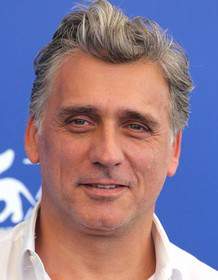
Uriel Shkolnik (Lior Ashkenazi)
Played by Lior Ashkenazi
A charismatic and popular professor whose public success masks a deeper vulnerability. He navigates academic politics with wit and pressure, ultimately orchestrating circumstances to secure his father’s recognition while concealing a crucial truth. His choices reveal a tension between familial loyalty and professional ethics.
- ✨ Charismatic
- 🗳️ Influential
- 🧩 Strategic
- YG
Yehuda Grossman
A rival scholar and head of the prize committee who dismisses Eliezer’s work, portraying him as a mere footnote. He embodies institutional gatekeeping, challenging every move and becoming the catalyst for the central moral conflict. His actions expose the politics and vanity behind prestigious awards.
- 🏛️ Gatekeeper
- 🧭 Pragmatic
- 🥊 Competitive
Where and When Is Footnote Set?
Footnote is set in Jerusalem and Israel (Early 2010s). Here is why the time and place matter to the story.
When
Early 2010s
Set in contemporary Israel, the film follows university life, media scrutiny, and a prestigious national prize. It reflects present-day academic culture, where tradition meets modern research methods and public recognition. The pacing centers on a single prize cycle and the personal drama surrounding it.
Where
Jerusalem, Israel
The events unfold mainly in Jerusalem, with the Hebrew University’s Talmudic Research department as a central setting. The city’s academic halls, libraries, and media offices frame the tension between tradition and modern scholarship. The Israel Prize ceremony and related venues like the Jerusalem International Convention Center anchor the national-scale stakes of the story.
- 🎓 Academic
- 🏛️ Jerusalem institutions
- ⏳ Contemporary
What Are the Themes of Footnote?
3 ideas the story keeps returning to, among them Truth vs Prestige, Academic Rivalry and Ethics and Loyalty.
-
01
Truth vs Prestige
The narrative pits the pursuit of genuine scholarly insight against the hunger for recognition. Uriel’s careful construction of a prize nomination clashes with Eliezer’s insistence on traditional methods, exposing how truth can be filtered by prestige. The film explores the cost of reputational game-playing on family and integrity.
-
02
Academic Rivalry
Old-school methods clash with modern research approaches, fueling rivalry between Eliezer and Grossman. Their competition highlights how institutions reward visibility over substance, and how personal grudges shape scholarly legacies. The dynamics reveal the politics of prizes within a prestigious academic ecosystem.
-
03
Ethics and Loyalty
The secret that Uriel keeps threatens the father-son bond and forces characters to weigh loyalty against truth. As revelations unfold, the line between protection and deception becomes blurred. The culmination tests what family loyalty can endure in the face of institutions and public perception.
What Kind of Film Is Footnote?
Tense in tone, with slow pacing and a moderate story, going by the plot summary.
- Tone
- Tense
- Pacing
- Slow
- Story
- Moderate
- Intensity
- Medium
- Ending
- Ambiguous
A slow-paced, intellectually tense drama that explores the quiet anguish of a father-son rivalry in academia, building a heavy atmosphere of unspoken resentment and unresolved conflict.
- cerebral
- anxious
- unsettling
- melancholic
- quiet
- claustrophobic
- academic rivalry
- father son relationship
- unrecognized merit
- professional jealousy
Quiz
How well do you remember Footnote? Test yourself on the story.
Where to Watch Footnote
Rent or buy it from Amazon Video and Apple TV Store. US availability and prices from JustWatch.





Streaming availability in the US, powered by