



Early Summer Plot Summary
Read the complete plot summary and ending explained for Early Summer (1972). From turning points to emotional moments, uncover what really happened and why it matters.
Noriko is a 28-year-old secretary living in Kamakura, Kanagawa with her extended Mamiya family, which includes her parents, Shūkichi and Shige, as well as her older brother Kōichi, a physician, his wife Fumiko, and their young sons, Minoru and Isamu. The family dynamic shifts when an elderly uncle arrives, reminding everyone of the societal expectation for Noriko to settle down and marry.
At her workplace, Noriko’s boss, Satake, suggests a match with a businessman and golfer, Mr. Manabe, who is 40 years old. This proposition leads to the emergence of two distinct circles among Noriko’s friends—those who are married and those who are not. In this milieu, Aya Tamura stands out as Noriko’s closest ally in the single group, often enjoying light-hearted teasing from both sides.
The gentle pressure from her family to accept the proposed match grows stronger as they collectively believe it is a suitable option for her age. Things take a surprising turn when childhood friend Kenkichi Yabe, a doctor and widower with a young daughter, arranges tea with Noriko and gifts her a sheaf of wheat. This sheaf holds deep emotional value as it is a token from a brother who perished in World War II, entrusted to Yabe to pass on to Noriko.
As fate would have it, Yabe’s professional assignment leads him to Akita, a place which Noriko and Aya poke fun at for its rural accent. Nevertheless, when Yabe’s mother, Tami, impulsively proposes that Noriko marry him and accompany them north, she consents. This decision, however, leaves her family in a quiet state of devastation, guiding her to question her choice, as they suggest that this match might not be the best path for her.
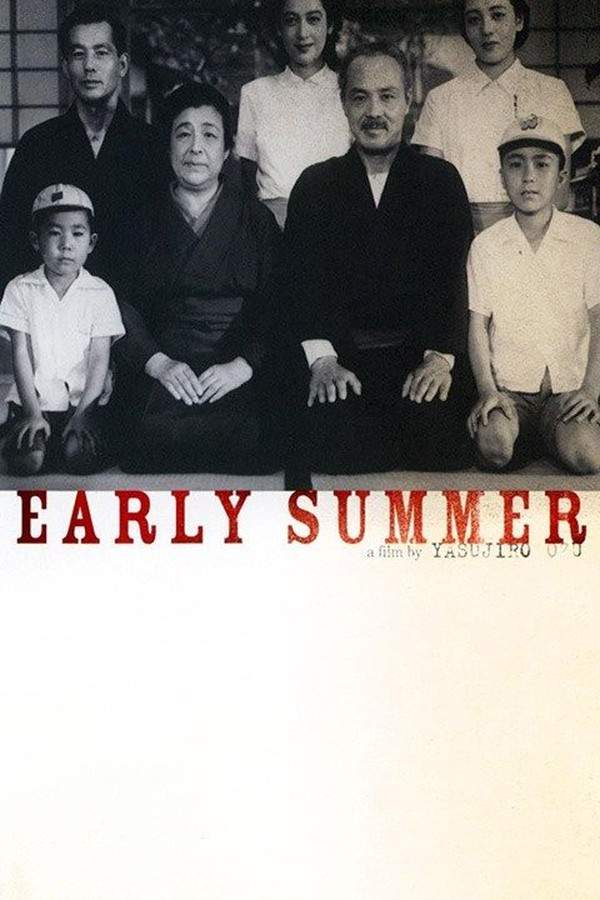
Despite their initial disappointment, Noriko remains steadfast, and her family begins to come to terms with her decision. The moving moment of a family photograph signifies their acceptance, with her parents finding solace in the hope that Noriko and Kenkichi might eventually return to Tokyo, allowing for future family reunions. As they prepare for this change, Noriko’s parents make their own plans to move to the countryside with her elderly uncle.
The film culminates in a poignant visual of Noriko’s parents observing a bride in traditional attire walking down a serene country road. This final scene, paired with the image of a barley field ripening in the background, beautifully encapsulates the themes of family, tradition, and the bittersweet nature of change.
Early Summer Timeline
Follow the complete movie timeline of Early Summer (1972) with every major event in chronological order. Great for understanding complex plots and story progression.
Noriko's Family Dynamics
Noriko, a 28-year-old secretary, lives with her extended family in Kamakura, Kanagawa. The arrival of an elderly uncle disrupts the family's equilibrium and brings societal expectations of marriage to the forefront for Noriko.
Proposal from Boss
At her workplace, Noriko's boss, Satake, proposes a match for her with a 40-year-old businessman and golfer, Mr. Manabe. This suggestion highlights the pressure on Noriko to settle down amidst her divided friend group.
Friendship Dynamics
Noriko's social circle is defined by two distinct groups: the married and the single. Aya Tamura emerges as her closest friend within the single group, providing companionship and light-hearted banter amid mounting familial and societal pressures.
Childhood Friend Reunion
Kenkichi Yabe, Noriko's childhood friend and a widowed doctor, reconnects with her, bringing along a sheaf of wheat as a heartfelt gift. This sheaf symbolizes connection, being a cherished token from her deceased brother, which Yabe was entrusted to pass on.
Assignment to Akita
Circumstances lead Yabe to be assigned to Akita, a rural area often teased by Noriko and Aya. Despite their light-hearted mockery, this assignment portends a significant shift in Noriko's life as familial pressures surrounding marriage intensify.
Marriage Proposal from Yabe's Mother
Yabe's mother, Tami, unexpectedly proposes that Noriko marry her son and move with them to Akita. Faced with this impulsive suggestion, Noriko chooses to accept, leading to a wave of quiet devastation among her family.
Family Devastation
Noriko's decision to pursue marriage with Yabe creates an atmosphere of silent despair among her parents and brother. They worry that this choice may not be the best for her future, prompting her to reflect on her decision.
Acceptance of Noriko's Choice
Despite their initial disappointment and concerns, Noriko's family gradually begins to accept her decision to marry Yabe. The acceptance becomes evident during a moving family photograph session, symbolizing unity in the face of change.
Plans for the Future
As Noriko prepares for her new life, her parents make plans to move to the countryside alongside her elderly uncle. Their change in residence illustrates the family's adaptation to a new phase in their lives following Noriko's decision.
Final Reflection of Change
The film reaches a poignant climax as Noriko's parents witness a bride in traditional attire walking down a serene country road. This symbolic moment, along with a ripening barley field, beautifully captures the family's evolving relationships and the bittersweet nature of life's transitions.
Early Summer Characters
Explore all characters from Early Summer (1972). Get detailed profiles with their roles, arcs, and key relationships explained.
Noriko
Noriko is a 28-year-old secretary who balances the expectations of her family with her own desires. She exhibits a strong sense of independence yet faces pressure to conform to traditional marriage roles. As she grapples with significant life choices, Noriko's emotional growth and resilience become evident.
Shūkichi
Shūkichi, Noriko's father, represents the traditional paternal figure who desires to see his daughter settle down. His conflicting emotions around acceptance of Noriko's choices highlight the generational gaps in perspectives on family and relationships.
Aya Tamura
Aya is Noriko's supportive friend in the single group, providing emotional support while also sharing light-hearted moments. Her character reflects the camaraderie among women navigating societal changes in their relationships.
Kenkichi Yabe
Kenkichi is a childhood friend of Noriko who is now a widower and a father. He embodies a blend of past connections and new beginnings, presenting a heartfelt choice for Noriko amidst pressure to marry. His character adds depth to the themes of love and loss.
Early Summer Settings
Learn where and when Early Summer (1972) takes place. Explore the film’s settings, era, and how they shape the narrative.
Time period
The film is set in a post-World War II Japan, a time of recovery and societal change. Traditional family structures and societal expectations intersect with modern perspectives on marriage and independence, creating tension and complexity in personal relationships.
Location
Kamakura, Akita
Kamakura is a picturesque coastal city in Kanagawa, known for its historic temples, shrines, and beautiful beaches. It serves as a family home for Noriko, where the dynamics of her extended family play out. Akita, on the other hand, is a more rural area that contrasts with Kamakura's urban environment, known for its distinct dialect and natural beauty.
Early Summer Themes
Discover the main themes in Early Summer (1972). Analyze the deeper meanings, emotional layers, and social commentary behind the film.
👰
Marriage & Tradition
The theme of marriage is central to Noriko's story, representing both societal pressures and personal desires. Family expectations weigh heavily on her decision to wed, reflecting traditional views on women's roles during this time. As Noriko navigates her choices, the film examines the balance between individual wishes and ingrained customs.
🌾
Change & Acceptance
The narrative explores the bittersweet nature of change as Noriko's family confronts her decision to marry and move away. Their journey towards acceptance illustrates the emotional struggles families endure when adapting to new realities. The final imagery emphasizes how change can lead to new beginnings despite initial heartbreak.

Early Summer Spoiler-Free Summary
Discover the spoiler-free summary of Early Summer (1972). Get a concise overview without any spoilers.
In post‑war Japan, the quiet seaside town of Kamakura serves as a gentle backdrop for a family still stitching its lives together after the turmoil. Noriko, a 28‑year‑old secretary, lives under one roof with her parents, Shūkichi and Shige, her older brother Kōichi, his wife Fumiko, and their two young sons. The arrival of an elderly uncle stirs old routines, reminding everyone that the house, like the nation, is still searching for a new equilibrium. The everyday sounds of traffic, the rustle of newspaper headlines, and the soft hum of a lingering traditional household create a world where modern aspirations quietly clash with lingering customs.
Within this close‑knit household, Noriko feels the weight of expectation pressing against her own yearning for autonomy. She watches the subtle divide form among her friends: some have settled into marriage, while others, like her confidante Aya Tamura, linger in the single‑life, exchanging teasing remarks that mask deeper uncertainties. The tender humor of their conversations and the lingering scent of tea offer a respite from the pressing question of what a woman her age should choose, setting a tone that is both introspective and lightly buoyant.
At work, her superior Satake gently proposes a conventional match with Mr. Manabe, a polished businessman and avid golfer whose stability seems to promise a smooth continuation of societal expectations. Simultaneously, a childhood connection resurfaces when Kenkichi Yabe, a widowed doctor, reappears with a simple, meaningful token—a sheaf of wheat that once belonged to a lost brother—evoking memories of a past that never quite faded. These two divergent possibilities hint at the film’s central tension: the pull between a secure, predictable future and the alluring, if uncertain, path of rekindled affection.
The atmosphere is one of quiet contemplation, rendered in soft, natural lighting that captures the rhythm of everyday life while underscoring the subtle currents of change. Through measured pacing and nuanced performances, the story invites viewers to linger on the delicate balance between duty and desire, tradition and personal growth, leaving the outcome of Noriko’s choices tantalizingly open as the narrative gently unfolds.
Featured on this page

What's After the Movie?
Not sure whether to stay after the credits? Find out!




Explore Our Movie Platform
New Movie Releases (2026)
Famous Movie Actors
Top Film Production Studios
Movie Plot Summaries & Endings
Major Movie Awards & Winners
Best Concert Films & Music Documentaries
Movie Collections and Curated Lists
© 2026 What's After the Movie. All rights reserved.